Low-Code/No-Code in Conveyor Integration: A Game Changer
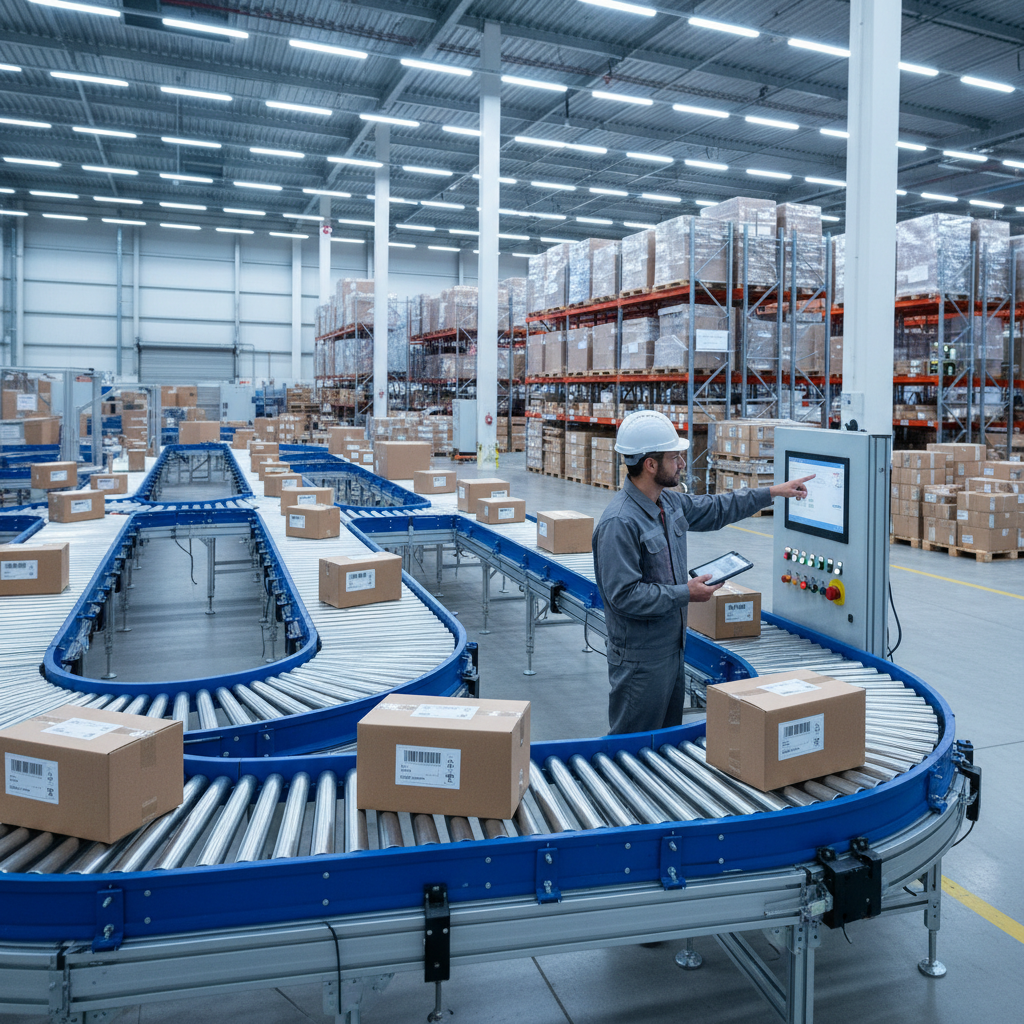
Low-code/no-code platforms are transforming conveyor system integration. By replacing complex PLC programming with intuitive graphical interfaces, warehouses can reduce implementation times by up to 80% and empower their own technical staff to modify and scale operations.

In the fast-paced world of European logistics, the ability to adapt is paramount. Market demands shift, product dimensions change, and seasonal peaks require rapid reconfiguration of warehouse processes. Traditionally, modifying conveyor system logic was a bottleneck—a complex, time-consuming task reserved for specialized PLC programmers. Today, a new paradigm is emerging: low-code and no-code platforms are democratizing conveyor control, making integration more flexible, faster, and significantly more cost-effective.
Definition
Low-code/no-code platforms provide a graphical user interface (GUI) to develop and modify applications and control logic, minimizing or eliminating the need for traditional hand-coding. In conveyor system integration, this means warehouse managers or technicians can reconfigure sorting rules, adjust motor speeds, or integrate new equipment using drag-and-drop blocks instead of writing complex code for a Warehouse Control System (WCS) or PLC.
Key Numbers
| Metric | Typical range (EU 2026) | Notes |
|---|---|---|
| Time Reduction (Logic Deployment) | 60-80% | Compared to traditional PLC/WCS hard-coding for a new integration. |
| Cost Saving (Integration) | €15,000 - €40,000 | Per major conveyor line modification or initial setup, based on reduced engineering hours. |
| Reconfiguration Time | 2-8 hours | For tasks like changing a divert rule, which could take days with a PLC programmer. |
| Training Time | 10-20 hours | For an on-site technician to become proficient in making basic modifications. |
| Error Rate Reduction | 25-40% | Fewer manual coding errors due to pre-tested, standardized logic blocks. |
| ROI Period | 1-2 years | Achieved through reduced dependency on external specialists and faster project completion. |
The Traditional Challenge: Rigid PLC Programming
For decades, the Programmable Logic Controller (PLC) has been the brain of industrial automation. These robust computers are exceptional at executing high-speed, repetitive tasks with immense reliability. However, their strength is also their weakness: they require specialized knowledge of languages like Ladder Logic or Structured Text. Any change, whether adding a new sorting destination, adjusting the speed of a belt conveyor section, or integrating a new barcode scanner, required a PLC programmer. This process typically involved:- Defining the new logic requirements.
- Hiring an external specialist or scheduling an in-house expert.
- Writing and bench-testing the code.
- Shutting down the conveyor line for implementation and debugging.
- Extensive testing to ensure no new bugs were introduced.
How Low-Code/No-Code Platforms Transform Integration
Low-code platforms act as a user-friendly abstraction layer on top of the complex underlying hardware and software, often integrating with the WCS or even directly with hardware controllers. Instead of code, the user interacts with a visual canvas.Visual Flow-Building
Imagine you want to change a sorting rule. With a no-code interface, the process looks entirely different:- Input: Drag a "Barcode Scan" block onto the canvas.
- Condition: Connect it to a "Decision" block. Configure it graphically: "If barcode prefix starts with 'DE-', then..."
- Action: Connect the "true" output to an "Activate Diverter Arm #3" block. Connect the "false" output to a "Continue on Main Line" block.
- Deploy: Click a "Publish" or "Deploy" button. The platform translates this visual flow into the machine-level commands the PLC or motor controllers understand and pushes the update live, often with zero downtime.
Low-Code vs. No-Code: A Key Distinction
While often used interchangeably, there is a difference. Understanding this helps in selecting the right solution. No-code is purely visual and requires zero coding, ideal for standard processes. Low-code allows for custom scripts or code extensions within the visual environment, offering more power for complex or unique situations.| Feature | No-Code Platform | Low-Code Platform |
|---|---|---|
| Primary User | Operations Managers, On-site Technicians | IT Staff, In-house Engineers, Tech-savvy Operations Managers |
| Flexibility | High (within pre-defined capabilities) | Very High (allows for custom code snippets for unique logic) |
| Use Case | Standard routing, sorting, accumulation logic. | Complex logic, custom API integrations, integrating legacy systems. |
| Implementation Speed | Fastest (hours to days) | Fast (days to a week) |
| Example | Visually re-routing all parcels for a specific postal code to a different packing station. | Building a custom dashboard that pulls data from the conveyor and an external ERP system via a custom script. |
Tangible Benefits in a European Context
For distribution centers in densely populated regions like the Benelux, Germany, or France, these benefits are concrete.Cost Reduction
The primary saving comes from drastically reduced reliance on expensive, third-party PLC/WCS engineers, whose rates can range from €800 to €1,500 per day in Western Europe. A modification that might take a specialist three days (€2,400 - €4,500) can often be completed by an in-house technician in half a day using a low-code platform.Speed and Agility
An e-commerce company experiencing a sudden surge in orders for a specific product can reconfigure their sorting and packing lines in a matter of hours to prioritize that SKU. This agility allows businesses to capitalize on micro-trends and handle promotions without extensive pre-planning. Many companies find their processes are a barrier to growth, a problem that flexible automation directly addresses. As we've detailed before, companies often outgrow their processes, and low-code is a powerful tool to prevent this.Reduced Risk and Downtime
Because low-code platforms use standardized, pre-vetted logic blocks, the risk of human error during coding is significantly lower. Many platforms also include simulation modes, allowing teams to test new logic flows virtually before deploying them to the live production environment. This prevents costly downtime caused by bugs in custom code.The Future: AI-Powered Low-Code and Autonomous Control
The next evolution is already underway. AI will be integrated into these platforms to suggest or even autonomously implement logic changes. For instance, an AI-powered WCS could analyze throughput data and suggest, "Throughput to packing station 4 is 30% lower than others. Suggest rerouting 15% of parcels from Zone B to Station 4 during peak hours." The manager would simply approve this change with a single click. This convergence of low-code, AI, and hardware control is the cornerstone of the truly "lights-out" and adaptable warehouse of the near future.Easy Systems: Your Partner for Flexible and Intelligent Automation
At Easy Systems, we understand that modern logistics is about software and flexibility as much as it is about robust hardware. Our modular conveyor systems are designed from the ground up for easy integration and modification. We champion intelligent control solutions that put power back into the hands of operators, reducing dependency on external programmers and lowering the total cost of ownership. We provide conveyor solutions that are not just ready for today’s challenges but are architected to be easily adapted for tomorrow’s opportunities. By combining high-quality, modular hardware with intelligent, flexible control software, we deliver systems that grow and adapt with your business, ensuring your investment remains valuable for years to come.Frequently asked questions
What is a low-code platform for conveyor systems?+
A low-code platform for conveyor systems is a software tool with a graphical interface that allows users to design, configure, and modify conveyor logic with minimal coding. It uses pre-built, drag-and-drop modules instead of complex code, allowing a warehouse in Germany, for example, to reconfigure a sorting line in 4 hours instead of 4 days.
How much faster is no-code integration compared to PLC programming?+
No-code integration can be up to 80% faster than traditional PLC programming. What might take a specialist engineer 40 hours to code and debug can often be accomplished by an on-site technician in less than 8 hours using a visual, drag-and-drop interface, drastically speeding up project delivery.
Can I modify my conveyor system myself with a no-code platform?+
Yes, that is a primary benefit. No-code platforms are designed for operational staff and on-site technicians, not just programmers. After a brief training period, typically 10-20 hours, your own team can handle tasks like changing sorting rules or adjusting conveyor speeds without needing to hire an external PLC specialist.
What are the typical cost savings of using low-code for conveyor integration?+
In a typical mid-sized European warehouse, using a low-code platform can save between €15,000 and €40,000 in initial integration costs. These savings come from reduced hours for specialized programmers, faster project completion, and fewer errors that cause downtime during commissioning.
Is a low-code solution flexible enough for complex warehouse logic?+
Generally, yes. While no-code is best for standard tasks, low-code platforms offer a balance. They handle 80-90% of logic via visual blocks but allow for custom code snippets for unique rules or integrations. This provides the flexibility needed for most complex scenarios, such as integrating with a custom ERP, without requiring a fully custom-coded solution.
How does low-code help during peak seasons like Black Friday?+
Low-code provides critical agility for seasonal peaks. A warehouse can re-route entire conveyor lines to temporary packing stations in just a few hours to handle a 300% increase in order volume. This rapid scalability would be impossible with traditional systems, which might require weeks of advance planning and coding to make similar changes.

The Easy Systems engineering team designs, integrates and commissions conveyor systems and warehouse automation across Belgium, the Netherlands and Luxembourg. Combined experience covers roller and belt conveyors, sorters, AGV/AMR fleets, AutoStore, shuttle AS/RS and WMS/WCS integration for distribution centers and e-commerce fulfillment operations.
- Conveyor design (roller, belt, modular plastic)
- Sortation & merge logic
- AGV / AMR fleet integration
- AutoStore & shuttle AS/RS
- WMS / WCS integration