Low-Code/No-Code for Rapid Conveyor Deployment in Benelux
Low-code/no-code platforms are revolutionizing conveyor system deployment in the Benelux. They empower non-technical staff to configure and adapt logistics workflows, drastically reducing implementation time and reliance on specialized PLC programmers.
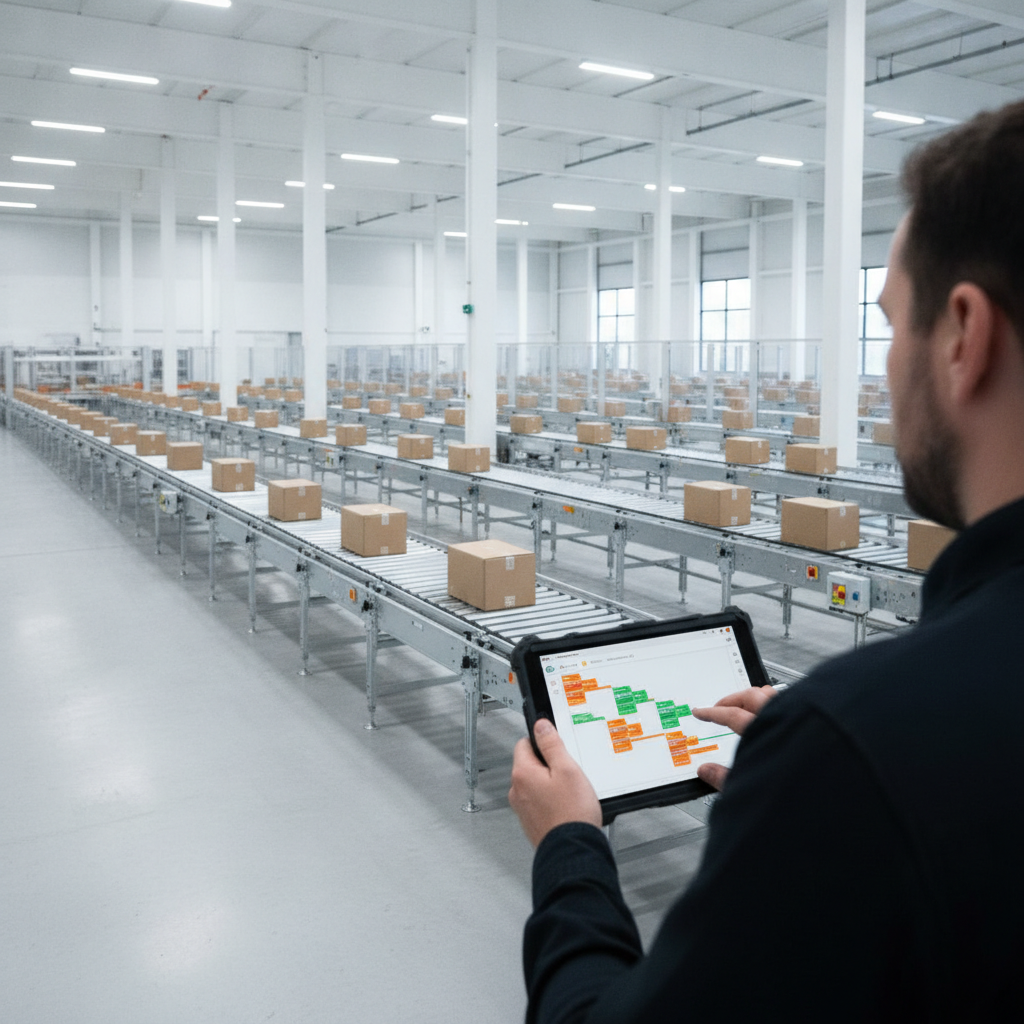
The relentless pace of e-commerce and logistics in the Benelux region demands warehouse automation that is not only efficient but also agile. Traditional conveyor system implementation, heavily reliant on custom PLC programming, is often slow and rigid. This is where low-code and no-code platforms are creating a paradigm shift, enabling rapid deployment and flexible adaptation of conveyor logic, empowering warehouse operators rather than programmers.
Definition
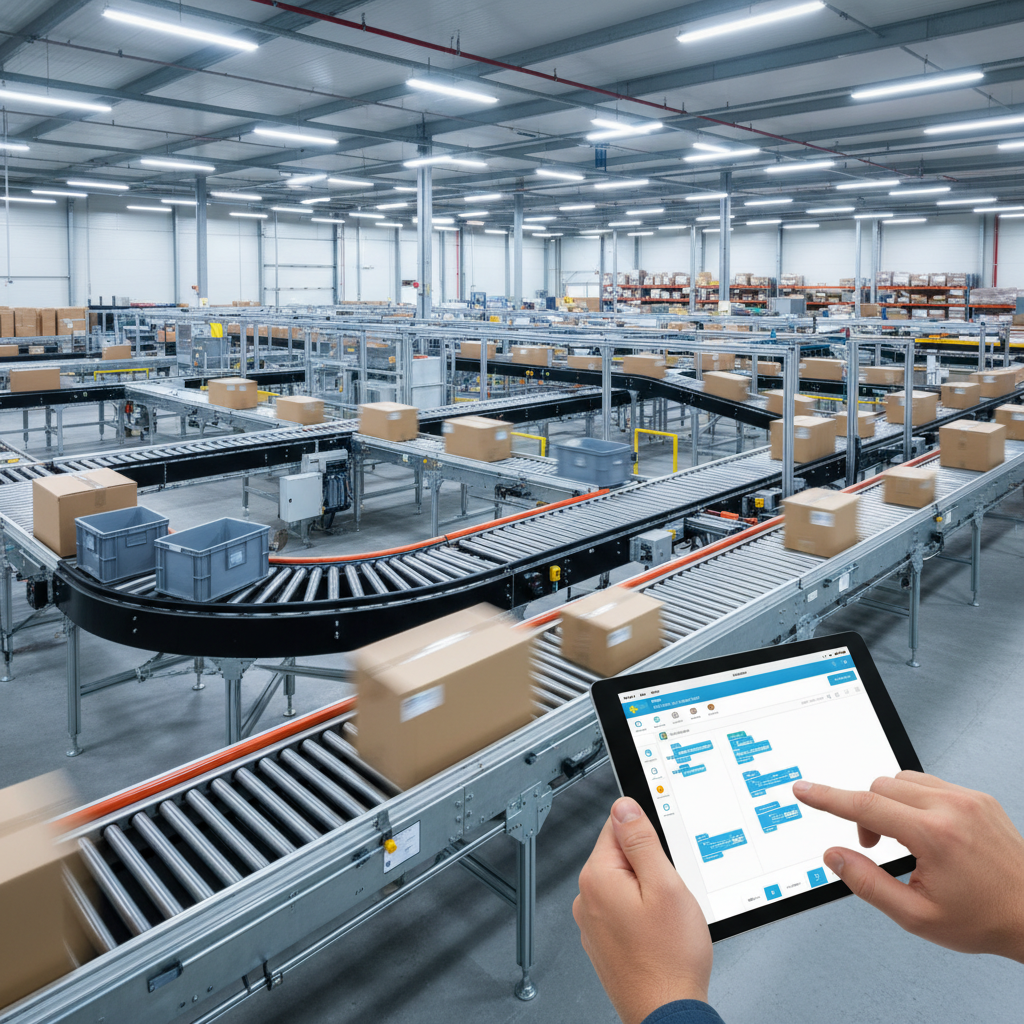
Low-code/no-code platforms provide a graphical user interface (GUI) to develop and configure software applications, including the control logic for conveyor systems. Instead of writing thousands of lines of complex code, users can drag, drop, and connect pre-built functional blocks to define material flow, sortation rules, and system behavior, drastically simplifying and accelerating the setup process.
Key Numbers
| Metric | Typical range (EU 2026) | Notes |
|---|---|---|
| Deployment Time Reduction | 30% - 50% | Compared to traditional, code-heavy PLC/WCS projects. |
| Initial Setup Cost | €20,000 - €150,000 | For a medium-sized conveyor line; significantly lower due to reduced programming hours. |
| ROI Period | 1.5 - 2.5 years | Faster ROI due to quicker deployment and reduced operational disruption. |
| Operator Training Time | 8 - 16 hours | Basic configuration changes can be taught quickly to on-site personnel. |
| System Reconfiguration Time | < 4 hours | For common changes like adding a new divert or changing sortation logic. |
| Dependency on Specialist Programmers | Reduced by >60% | Frees up specialized developers for high-value custom tasks. |
The Traditional Bottleneck: PLC Programming
Historically, any change to a conveyor system—from altering sorting destinations to adjusting accumulation times—required a specialized PLC (Programmable Logic Controller) programmer. This process was cumbersome:
- Define Scope: A logistics manager identifies a needed change.
- Briefing: The manager briefs a project lead, who then translates the need into a technical specification for a PLC programmer.
- Programming: A programmer writes, tests, and debugs code in languages like Ladder Logic or Structured Text. This can take days or weeks.
- Deployment: The new code is deployed, often requiring system downtime, typically scheduled for nights or weekends.
This rigid, multi-layered approach creates significant delays and costs, making it difficult for warehouses in the fast-paced Benelux market (Belgium, Netherlands, Luxembourg) to adapt to shifting customer demands or supply chain disruptions.
How Low-Code Transforms Conveyor Implementation
Low-code platforms abstract away the underlying code complexity. They sit between the high-level Warehouse Management System (WMS) and the low-level machine controllers (PLCs), functioning as an agile Warehouse Control System (WCS) or Warehouse Execution System (WES).
Drag-and-Drop Functionality
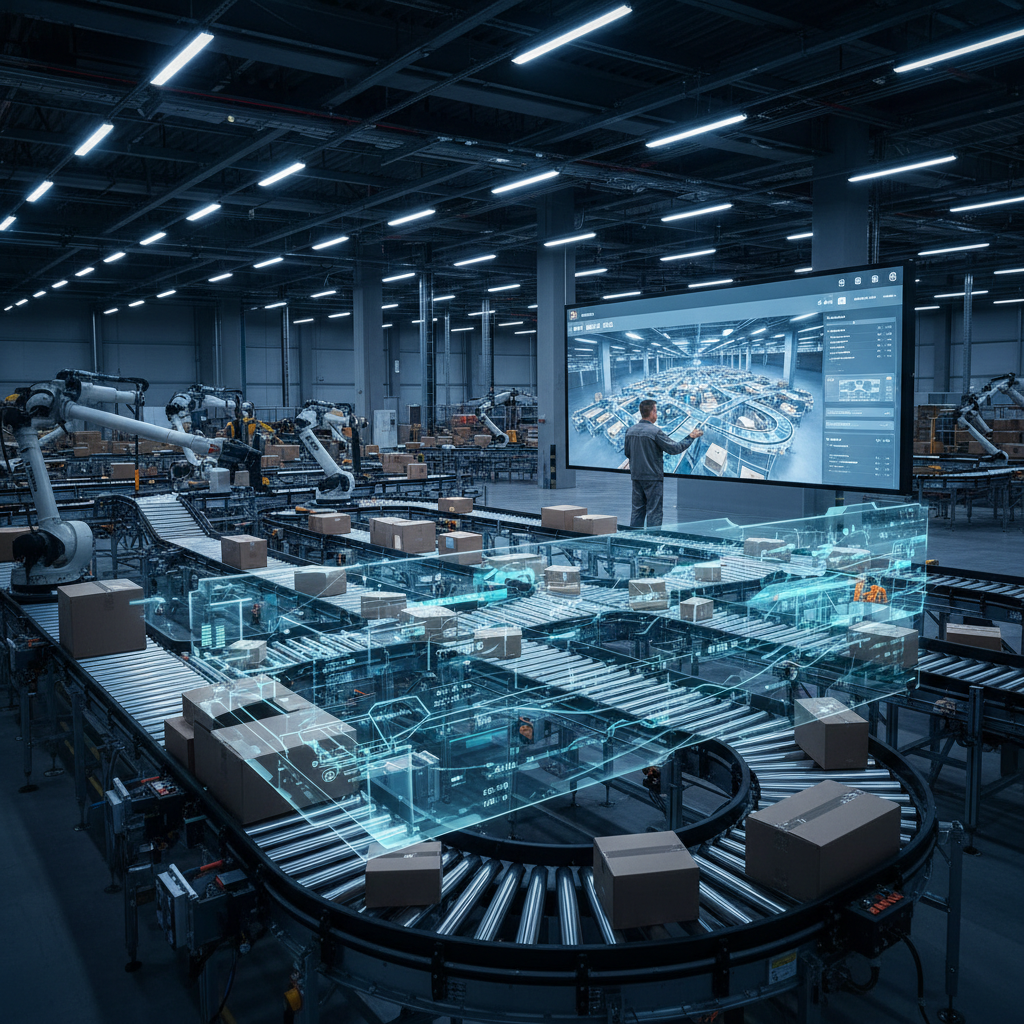
Imagine your conveyor system as a digital twin on a screen. Need to divert parcels for a specific postal code to a different packing station? With a low-code interface, an authorized logistics operator can simply drag a "divert" module onto the virtual conveyor line, select the trigger condition (e.g., "postal code starts with 10xx"), and link it to the desired output. The platform then translates this visual logic into the necessary commands for the PLCs controlling the physical hardware. This eliminates the need for a programmer for routine adjustments.
Pre-built Logic Blocks
These platforms come with libraries of pre-built, pre-tested logic blocks for common warehouse functions. These include modules for:
- Zone Routing: Directing totes or parcels through specific conveyor zones.
- Accumulation: Managing buffering and product release, including zero-pressure accumulation logic.
- Sorting: Defining rules for divert arms, pushers, or cross-belt sorters based on barcode, weight, or dimension.
- Merging: Controlling the induction of items from multiple lines onto a single trunk line.
Comparing Implementation Approaches
| Feature | Traditional PLC/WCS Programming | Low-Code/No-Code Platform |
|---|---|---|
| Primary User | Specialized PLC/Software Engineer | Logistics Manager / On-site Technician |
| Implementation Speed | Slow (weeks to months) | Fast (days to weeks) |
| Cost of Changes | High (programmer hours, project management) | Low (included in SaaS or license fee; internal staff time) |
| Flexibility | Low; changes are a formal project | High; iterative changes are simple and fast |
| Required Skillset | Deep knowledge of Ladder Logic, C++, etc. | Process logic understanding, basic UI training |
| System Downtime for Updates | Often requires significant scheduled downtime | Minor changes can often be deployed with minimal or zero downtime |
The Benelux Context: A Perfect Fit
The logistics landscape in the Benelux is characterized by high labor costs, a dense network of distribution centers serving multiple countries, and extreme e-commerce penetration. This creates a perfect storm where operational agility is paramount.
For a 3PL provider in Venlo or an e-commerce hub near Antwerp, the ability to quickly re-slot clients, change sorting strategies for a new carrier, or reconfigure lines for a temporary promotional event is a massive competitive advantage. Low-code makes this possible. As discussed in our analysis on scaling business processes, technology must enable, not hinder, growth. Low-code ensures the physical automation can keep pace with business strategy.
Easy Systems: Your Partner for Agile Conveyor Automation
At Easy Systems, we understand that modern logistics requires more than just robust hardware; it demands intelligent, adaptable control. We design and deliver modular conveyor systems that are perfectly suited for control by modern, low-code WCS/WES platforms. Our plug-and-play modules, from roller conveyors to belt transfers, are built with standardization in mind, providing the reliable physical foundation for your agile automation strategy. We work with you to design a system that not only meets your throughput needs today but can be easily and quickly reconfigured using intuitive software tomorrow, ensuring your Benelux operations remain competitive and future-proof.
Frequently asked questions
What is the main benefit of using a low-code platform for conveyor systems?+
The main benefit is a drastic reduction in implementation and modification time, often by 30-40%. It allows logistics managers in Benelux warehouses to reconfigure sorting or routing logic in hours, not weeks, without needing specialized PLC programmers.
Can no-code platforms completely replace PLC programmers?+
Not completely. PLC programmers are still essential for the initial, low-level hardware integration and for developing complex, highly customized automation routines. Low-code platforms handle the higher-level process logic, reducing the dependency on programmers for day-to-day operational changes.
How much does a low-code conveyor control system cost in the Benelux?+
Initial costs for a system controlling a medium-sized conveyor line typically range from €20,000 to €150,000. While there's an upfront software investment, it's often offset by a 30% reduction in traditional programming and integration costs, leading to a faster ROI.
Are low-code solutions reliable enough for a 24/7 warehouse operation?+
Yes. These platforms are built on robust, enterprise-grade architecture. The logic is translated into proven PLC commands, ensuring industrial-grade reliability. The platform itself provides an additional layer of monitoring and diagnostics, often improving overall system uptime which can reach 99.8%.
What skills are needed to use a low-code platform for conveyors?+
Users need a strong understanding of the warehouse's material flow and logistics processes. Technical skills are minimal; training typically takes less than 16 hours to cover the graphical interface, drag-and-drop features, and basic configuration of pre-built modules for sorting and routing.

The Easy Systems engineering team designs, integrates and commissions conveyor systems and warehouse automation across Belgium, the Netherlands and Luxembourg. Combined experience covers roller and belt conveyors, sorters, AGV/AMR fleets, AutoStore, shuttle AS/RS and WMS/WCS integration for distribution centers and e-commerce fulfillment operations.
- Conveyor design (roller, belt, modular plastic)
- Sortation & merge logic
- AGV / AMR fleet integration
- AutoStore & shuttle AS/RS
- WMS / WCS integration