Low-Code/No-Code for Legacy Conveyor System Integration
Learn how European warehouses are leveraging low-code/no-code platforms to modernize legacy conveyor systems. This approach bridges the gap between old hardware and new software, cutting integration costs and extending asset lifespan without heavy coding.
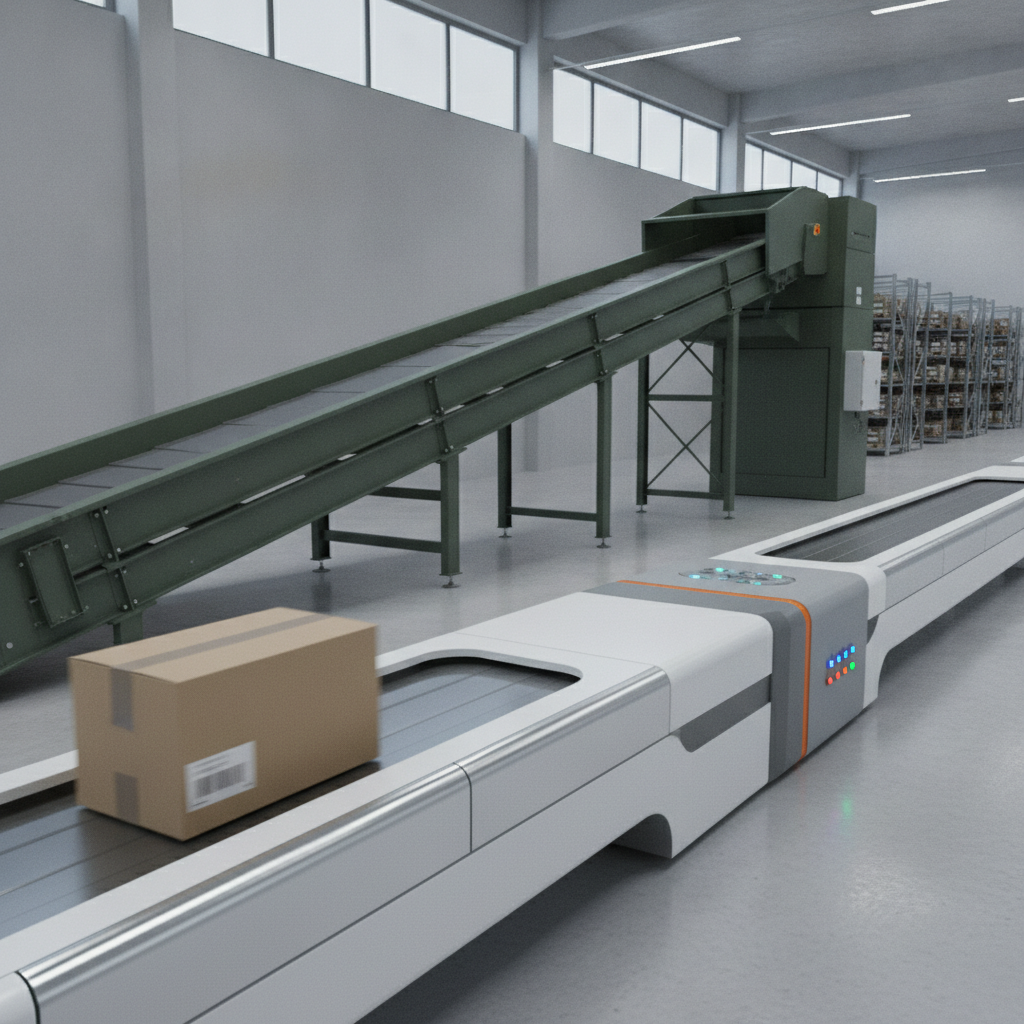
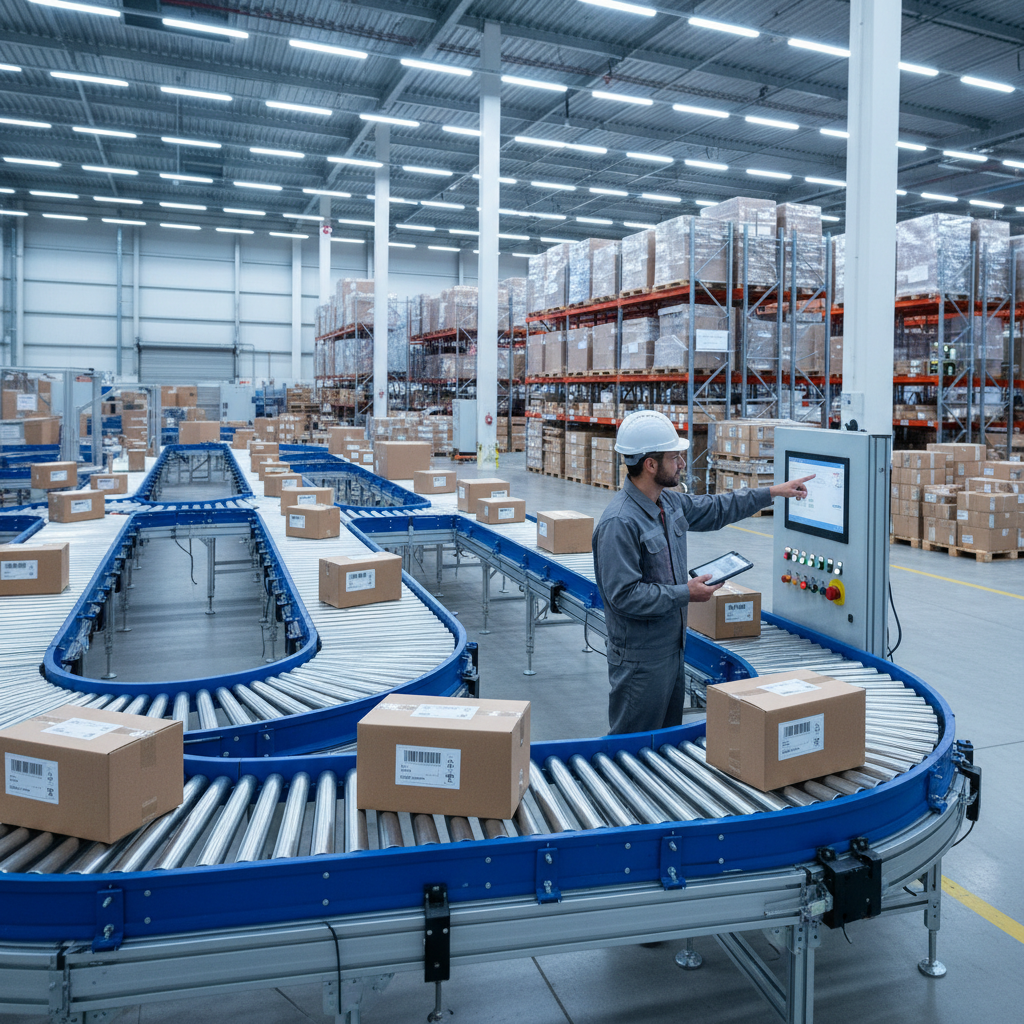
Many European distribution centers operate with reliable but dated conveyor hardware. While mechanically sound, these legacy systems often lack the digital connectivity to function in a modern, automated ecosystem. Replacing them entirely is prohibitively expensive. This is where low-code and no-code platforms are creating a paradigm shift, offering a cost-effective, agile solution to breathe new life into existing infrastructure.
Definition
Low-code/no-code integration is the use of software platforms that allow users to connect systems, build applications, and automate processes using graphical user interfaces and pre-built modules instead of traditional, line-by-line programming. In logistics, this approach enables warehouse staff to link older PLC-controlled conveyors to a central WES or WMS with minimal custom coding.
Key Numbers
| Metric | Typical range (EU 2026) | Notes |
|---|---|---|
| Integration Cost Reduction | 50% - 70% | Compared to custom middleware/PLC reprogramming. |
| Deployment Time Reduction | 40% - 60% | Reduced coding, testing, and debugging cycles. |
| Required Training Hours | 10 - 40 hours | For operational staff to make basic logic changes. |
| ROI for Integration Project | 1 - 2.5 years | Based on extended asset life and efficiency gains. |
| Data Polling/Update Rate | 50ms - 500ms | Achievable latency between legacy PLC and modern WES. |
| Subscription Cost (SaaS) | €2,000 - €15,000 /year | Depends on number of connections (tags) and data volume. |
The Core Challenge: Bridging the Digital Gap
Legacy conveyor systems, particularly those installed before 2010, are often controlled by isolated Programmable Logic Controllers (PLCs). These controllers are robust but speak outdated or proprietary protocols. They weren't designed to communicate with modern, API-driven Warehouse Execution Systems (WES) or Warehouse Management Systems (WMS). This creates a digital silo. The conveyor moves boxes, but the central brain of the warehouse has no visibility or control, leading to inefficiencies, manual workarounds, and an inability to implement dynamic strategies like zone routing.
Traditional Integration: Slow and Expensive
The conventional method to solve this involves a significant software engineering effort:
- Hiring specialists: PLC programmers and software developers who understand both the low-level industrial protocols and modern IT architectures are scarce and expensive.
- Custom Middleware: Developing a custom software bridge to translate PLC data for the WMS. This is a months-long project involving extensive coding, testing, and debugging.
- Rigidity: Once built, this custom middleware is inflexible. Any change in operational logic—like adding a new divert or changing a sorting rule—requires another round of development.
This high cost and rigidity often lead businesses to delay modernization, causing their processes to stagnate even as the company grows. As we've seen with many clients, business growth is not always matched by process evolution, creating significant operational bottlenecks.
How Low-Code Platforms Provide the Solution
Low-code platforms act as a universal translator and a visual workflow builder. They are specifically designed to connect disparate systems through a concept known as "connectors" or "adapters."
Key Features for Conveyor Integration
- Pre-built Connectors: These platforms come with libraries of connectors for hundreds of industrial and IT systems. This includes connectors for PLCs (e.g., Siemens S7, Allen-Bradley), communication standards like OPC UA, and modern REST/SOAP APIs used by WMS/WES.
- Visual Workflow Engine: Instead of writing code, an operations manager can drag and drop logical blocks to define a process. For example: "WHEN `Sensor_A` on `Conveyor_1` turns TRUE, THEN call `WMS_API` to get destination, IF destination is `Packing_Zone_B`, THEN activate `Diverter_3`."
- Data Transformation: They provide tools to easily map and transform data. A simple binary signal from a PLC (0/1) can be transformed into a meaningful JSON message (e.g., `{"status": "box_present"}`) for the WMS.
A Practical European Example
Consider a 15-year-old roller conveyor system in a German automotive parts warehouse. The system uses Siemens S5 PLCs. The goal is to integrate it with a new cloud-based WES to enable dynamic routing based on real-time orders. Using a low-code platform, the integration specialist can select the "Siemens S5" connector and the "REST API" connector. They visually map the PLC memory addresses (e.g., sensor inputs, motor outputs) to API calls, transforming the raw data into a format the WES understands. The entire logic can be built and tested in less than a week, for a cost under €20,000, versus a 3-month, €100,000+ custom project.
Comparing Integration Approaches
The difference between traditional custom coding and a low-code approach is stark, particularly for small to medium-sized enterprises (SMEs) where budget and IT resources are limited.
| Aspect | Traditional Custom Integration | Low-Code Platform Integration |
|---|---|---|
| Initial Cost | High (€50,000 - €250,000+) | Low to Moderate (€5,000 - €40,000) |
| Time to Deploy | 3 - 9 months | 1 - 4 weeks |
| Required Skills | Specialist PLC & backend developers | IT-savvy operations manager, process engineer |
| Flexibility to Change | Low; requires new development cycle | High; changes can be made in hours via GUI |
| Maintenance & Support | Dependent on original developer/in-house team | Handled by platform vendor (updates, security) |
Extending Asset Life and Boosting ROI
By wrapping a digital, flexible layer around mechanically sound hardware, low-code platforms directly extend the useful life of legacy conveyors. A system that might have been destined for a multi-million Euro replacement can now function effectively for another 5-10 years. This significantly alters the ROI calculation. Instead of a massive capital expenditure (CAPEX) on new hardware, the investment becomes a much smaller operating expense (OPEX) for the low-code platform subscription and a small integration project cost. This makes modernization accessible and financially viable, enabling warehouses to benefit from intelligent automation without breaking the bank. For a deeper dive into optimizing warehouse software layers, our WMS, WCS, and WES Integration Guide provides a comprehensive overview.
Positioning as a Trusted Partner: Easy Systems
At Easy Systems, we understand that warehouse automation is not just about installing new hardware; it's about intelligent integration and process optimization. While we engineer state-of-the-art modular conveyor systems, we recognize the reality of mixed-hardware environments. Our philosophy is pragmatic: leverage what works and upgrade what doesn't. We can act as your strategic partner in identifying which parts of your legacy system are worth preserving. By integrating our modern, modular conveyors with your existing assets—potentially using low-code strategies for connectivity—we create a cohesive, future-proof ecosystem. This hybrid approach, combining the best of old and new, ensures you achieve maximum ROI and operational agility without the unnecessary expense of a complete overhaul. Trust Easy Systems to design a solution that respects your budget and grows with your business.
Frequently asked questions
What is the main benefit of using low-code for conveyor integration?+
The main benefit is a drastic reduction in time and cost. Integration projects that traditionally took 3-6 months and cost over €100,000 can often be completed in a few weeks for under €40,000, making modernization much more accessible for European SMEs.
Can a low-code platform communicate with very old PLCs?+
Yes, many leading low-code/no-code platforms (like Ignition, Node-RED, or Kepware) have extensive driver libraries that support decades-old PLC models from Siemens, Allen-Bradley, and others. They often use standards like OPC UA as a bridge, ensuring compatibility with hardware from the 1990s and 2000s.
Do I need a programmer to manage a low-code integrated system?+
No, not for day-to-day changes. While the initial setup may require an integration specialist, the goal is to empower your on-site operations managers or process engineers. They can use the graphical interface to tweak logic or change parameters in a matter of hours, without writing a single line of code.
Is a low-code integration reliable enough for a 24/7 warehouse?+
Absolutely. These platforms are built for industrial environments and are highly robust. They offer features like high-availability, failover, and detailed logging. When configured correctly, a low-code integration layer can achieve uptime rates exceeding 99.9%, on par with traditional coded solutions.
How does low-code integration affect my data security?+
Reputable low-code platforms are designed with modern security standards in mind. They manage connections through secure protocols, offer user-based permissions, and are often deployed on-premise or in a private cloud, keeping your operational data within your control. This is often more secure than custom-built solutions that may not undergo rigorous security audits.

The Easy Systems engineering team designs, integrates and commissions conveyor systems and warehouse automation across Belgium, the Netherlands and Luxembourg. Combined experience covers roller and belt conveyors, sorters, AGV/AMR fleets, AutoStore, shuttle AS/RS and WMS/WCS integration for distribution centers and e-commerce fulfillment operations.
- Conveyor design (roller, belt, modular plastic)
- Sortation & merge logic
- AGV / AMR fleet integration
- AutoStore & shuttle AS/RS
- WMS / WCS integration