Low-Code Platforms: The Future of Flexible Conveyor Control?
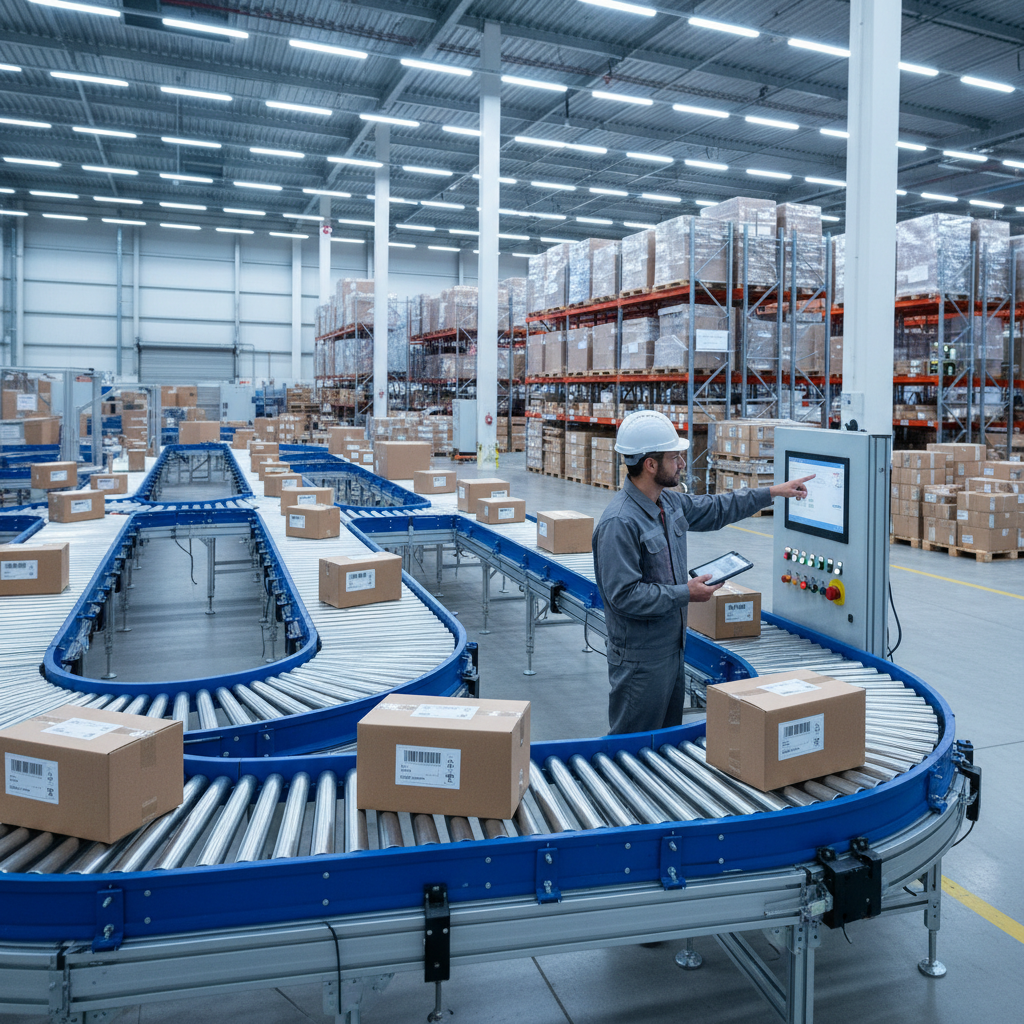
Low-code/no-code platforms empower warehouse staff to reconfigure conveyor logic without deep PLC programming knowledge, drastically cutting adaptation times for new products or workflows and boosting operational agility.

In today's fast-paced logistics landscape, the ability to quickly adapt warehouse processes is no longer a luxury—it's a competitive necessity. Traditional conveyor systems, while robust, often rely on complex, hard-coded PLC logic that requires specialized expertise to modify. This creates a bottleneck, slowing down changes and increasing costs. Enter low-code and no-code platforms, a transformative trend that democratizes conveyor control, empowering on-site teams to implement changes with unprecedented speed and flexibility.
Definition
Low-code/no-code platforms provide a graphical user interface (GUI) with pre-built, drag-and-drop modules to create or modify application software. In a conveyor system context, this allows users to define logic for sorting, routing, and accumulation without writing traditional PLC or script code, effectively abstracting the complexity of the underlying hardware control.
Key Numbers
| Metric | Typical range (EU 2026) | Notes |
|---|---|---|
| Implementation Time Reduction | 50-70% | Reduction in time to deploy a new sorting rule vs. traditional PLC reprogramming. |
| Cost per Change Request | €100 - €500 | Internal or external cost using low-code, vs. €1,000 - €5,000 for PLC expert intervention. |
| Training Time for Operators | 8 - 16 hours | Time for a logistics operator to learn basic reconfiguration, vs. hundreds of hours for PLC programming. |
| Required Skill Level | Technical Operator / Process Engineer | Does not require a dedicated Automation Engineer or external specialist. |
| Integration with WMS/WES | < 24 hours | Typical time to establish a data connection with a higher-level system using pre-built connectors. |
| Typical Investment (Software) | €5,000 - €25,000 / year | Subscription-based (SaaS) model for the low-code platform, excluding hardware. |
The Rigidity of Traditional Conveyor Control
Historically, conveyor systems are controlled by Programmable Logic Controllers (PLCs). These industrial computers are the workhorses of automation, known for their reliability and real-time processing capabilities. However, they are programmed in specialized languages like Ladder Logic or Structured Text, skills that are not widespread among typical warehouse maintenance staff. When a business needs to change a process—for instance, introducing a new box size, altering a sorting destination, or changing accumulation logic—it triggers a cumbersome and costly workflow:
- Define a Change Request: The operations manager details the required change.
- Engage a Specialist: The company must schedule an internal automation engineer or, more often, an external contractor.
- Code, Test, Deploy: The programmer writes, tests (often offline), and deploys the new PLC code, which may require system downtime.
This process can take anywhere from a few days to several weeks, creating significant operational friction. In an e-commerce environment where product mixes and promotional campaigns change constantly, this lack of agility is a major liability. Companies find that their processes fail to scale with their growth precisely because of these rigidities.
How Low-Code Platforms Bridge the Gap
Low-code platforms act as a user-friendly abstraction layer between the high-level Warehouse Execution System (WES) and the low-level PLC. Instead of programming the PLC directly, engineers or even trained operators use a visual interface to define the conveyor's behavior.
A Practical Example: Changing Sort-to-Store Logic
Imagine a European distribution center that sorts incoming goods to different replenishment zones. A new marketing campaign requires that a specific SKU, previously sent to Zone A, must now be diverted to a promotional packing station in Zone C for two weeks.
- Traditional Method: An external PLC programmer is called. They need 1-2 days to arrive, modify the Ladder Logic, test the changes, and deploy. Total cost: €1,500 in fees plus potential downtime.
- Low-Code Method: The on-site shift supervisor opens the web-based low-code interface. They drag a "filter by SKU" block into the logic flow for the main sortation line, enter the specific SKU number, and connect its output to the "divert to Zone C" command. They save and deploy the change in under 15 minutes. Total cost: Negligible.
This agility allows warehouses to test new workflows, handle exceptions gracefully, and scale operations without being held hostage by complex codebases. For a deeper dive into modern sortation technologies, our Guide to Sortation Systems offers a comprehensive overview.
Comparing Control System Architectures
The choice of control system has significant implications for flexibility, cost, and scalability. The table below compares the traditional approach with a low-code enabled architecture.
| Aspect | Traditional PLC-Centric Control | Low-Code Enabled Control |
|---|---|---|
| Modification Speed | Slow (days to weeks) | Fast (minutes to hours) |
| Required Skills | Specialized PLC Programmer (e.g., Siemens TIA Portal, Rockwell Studio 5000) | Process Engineer or trained technician with logical thinking skills |
| Cost of Change | High (€1,000 - €5,000 per significant change) | Low (often included in operator's duties) |
| User Interface | Complex IDE (Integrated Development Environment) | Visual, web-based drag-and-drop interface |
| System Visibility | Opaque; logic is "black-boxed" in the PLC code | Transparent; logic flows are visualized and easily understood |
| Ideal Application | Static, high-speed, and unchanging processes | Dynamic environments with frequent changes (e-commerce, 3PL) |
Key Features of Low-Code Conveyor Platforms
Visual Flow Builder
The core of any low-code platform is its visual editor. Users manipulate blocks representing logical operations (e.g., "Read Barcode," "Weigh Item," "Divert if Weight > 5kg," "Activate Zero-Pressure Accumulation"). By connecting these blocks, they build a flowchart that represents the desired physical behavior of the conveyor system.
Pre-built Integrations
Modern platforms come with connectors for common hardware (scanners, weigh scales, sensors) and software (WMS, ERP systems). This drastically simplifies the process of getting different parts of the warehouse ecosystem to communicate, leveraging standards like OPC UA for machine-to-machine communication.
Simulation and Digital Twin Capabilities
A major advantage is the ability to test new logic in a simulated environment before deploying it to the live system. This "digital twin" approach prevents costly physical errors and allows for thorough vetting of changes without impacting ongoing operations. Operators can see a virtual representation of the conveyor and cartons, confirming the logic works as intended before a single physical box is moved.
Challenges and Considerations
While powerful, low-code is not a panacea. For extremely high-speed or safety-critical applications, direct PLC control remains the most robust solution due to its deterministic, real-time performance. Low-code platforms are excellent for orchestration and decision-making logic (the "brains"), while the PLC still handles the microsecond-level motor control and safety interlocks (the "reflexes"). A successful implementation depends on a hybrid architecture where the PLC executes commands determined by the more flexible low-code layer.
Easy Systems: Your Partner for Flexible Automation
In the competitive European market, agility is paramount. At Easy Systems, we design and deliver conveyor solutions with flexibility at their core. We understand that your business needs will evolve, and your automation should be an enabler, not a constraint. By leveraging modular design and modern control architectures, we build systems that are easy to adapt and scale. Whether it's integrating a new sorting station or reconfiguring your entire layout, our solutions are designed to minimize downtime and empower your team. We help you move from rigid, hard-coded processes to a fluid, responsive operation ready for future growth, ensuring your logistics infrastructure becomes a true competitive advantage.
Frequently asked questions
What is the main advantage of using low-code for conveyor systems?+
The primary advantage is agility. Low-code allows warehouse teams to reconfigure conveyor logic—like sorting rules or routing paths—in hours instead of weeks, reducing reliance on specialized PLC programmers and cutting modification costs by over 50%.
Can a low-code platform replace a PLC in a conveyor system?+
Not entirely. A low-code platform typically manages the high-level decision logic and workflow orchestration. The PLC is still essential for real-time, high-speed control of motors and safety functions. They work together in a hybrid architecture for optimal performance and flexibility.
How much does it cost to implement a low-code control system?+
Software costs for a low-code platform in a logistics context typically range from €5,000 to €25,000 per year on a subscription basis. This model often proves more cost-effective than paying for repeated PLC programmer interventions, which can cost €1,000-€5,000 per change.
Is it difficult to learn how to use a low-code platform for conveyors?+
No, they are designed for usability. A process engineer or a technically-inclined warehouse operator can typically learn the basics of reconfiguring logic within 8 to 16 hours of training, a fraction of the time required to master traditional PLC programming.
Which types of warehouses benefit most from low-code conveyor controls?+
Warehouses with dynamic, changing processes see the most benefit. This includes e-commerce fulfillment centers with shifting product assortments, 3PL providers managing multiple clients with different needs, and distribution hubs that frequently adapt to promotional campaigns.

The Easy Systems editorial desk reviews and fact-checks every Conveyor-Design article against Benelux project experience. Editors translate engineering decisions — throughput, peak factors, layout, integration — into plain-language guides for operations managers, project leads and decision-makers.
- Warehouse layout & slotting
- Order-profile analysis
- Vendor-neutral comparison
- Benelux logistics market