Low-Code Platforms for Flexible SME Conveyor Systems
Low-code and no-code platforms are revolutionizing conveyor system automation for SMEs. They empower non-technical staff to configure, adapt, and scale material handling flows, drastically reducing reliance on specialist programmers and external vendors.

In the fast-paced world of logistics, the ability to adapt is not just an advantage; it's a prerequisite for survival. For small and medium-sized enterprises (SMEs) across Europe, this challenge is particularly acute. Market demands shift, product dimensions change, and seasonal peaks require rapid adjustments. Yet, for many, the very backbone of their operation—the conveyor system—remains rigid, locked down by complex code and dependent on specialist, expensive programmers. This is where low-code and no-code platforms emerge as a transformative force, democratizing automation and handing control back to the warehouse floor.
Definition
Low-code/no-code for conveyor systems refers to software platforms that use a visual, drag-and-drop interface to create, modify, and manage the control logic of material handling equipment. This approach replaces complex, text-based PLC (Programmable Logic Controller) or Warehouse Control System (WCS) programming, enabling non-technical users to implement sophisticated automation rules with minimal training.
Key Numbers
| Metric | Typical Range (EU 2026) | Notes |
|---|---|---|
| Upfront Cost Reduction | 30% - 70% | Compared to traditional PLC/WCS development for a new system. |
| Deployment Time (for changes) | 1 - 4 hours | For tasks like re-routing a line or changing sortation criteria, vs. 2-5 days for PLC changes. |
| Investment per Conveyor Line | €5,000 - €25,000 | Software license and initial setup, depending on complexity and scale. |
| Staff Training Time | 8 - 16 hours | For a warehouse manager or technician to become proficient, vs. 100+ hours for basic PLC programming. |
| Reduced reliance on specialists | > 90% | Reduction in calls to external programmers for routine operational changes. |
| ROI | 12 - 24 months | Achieved through lower initial cost, reduced downtime, and operational flexibility. |
The Bottleneck of Traditional Conveyor Control
Traditionally, the "brain" of a conveyor system has been the Programmable Logic Controller (PLC). These robust industrial computers are programmed using specialized, often cryptic, languages like Ladder Logic or Structured Text. While powerful and reliable, this approach creates significant hurdles for SMEs:
- High Costs: PLC programmers are scarce and expensive. A simple change in sorting logic can result in a bill for thousands of euros.
- Lack of Speed: The process is slow. A change request must be specified, quoted, scheduled, programmed, tested, and deployed—a process that can take weeks, during which the operational inefficiency persists.
- Vendor Lock-In: The code is often proprietary and poorly documented. The SME becomes entirely dependent on the original integrator or a single programmer, leaving them vulnerable to price hikes and availability issues.
- Inflexibility: The system is inherently rigid. What happens when you introduce a new box size, a promotional packaging, or want to re-route flow from packing station 3 to station 5 during peak hours? You wait.
How Low-Code Changes the Game
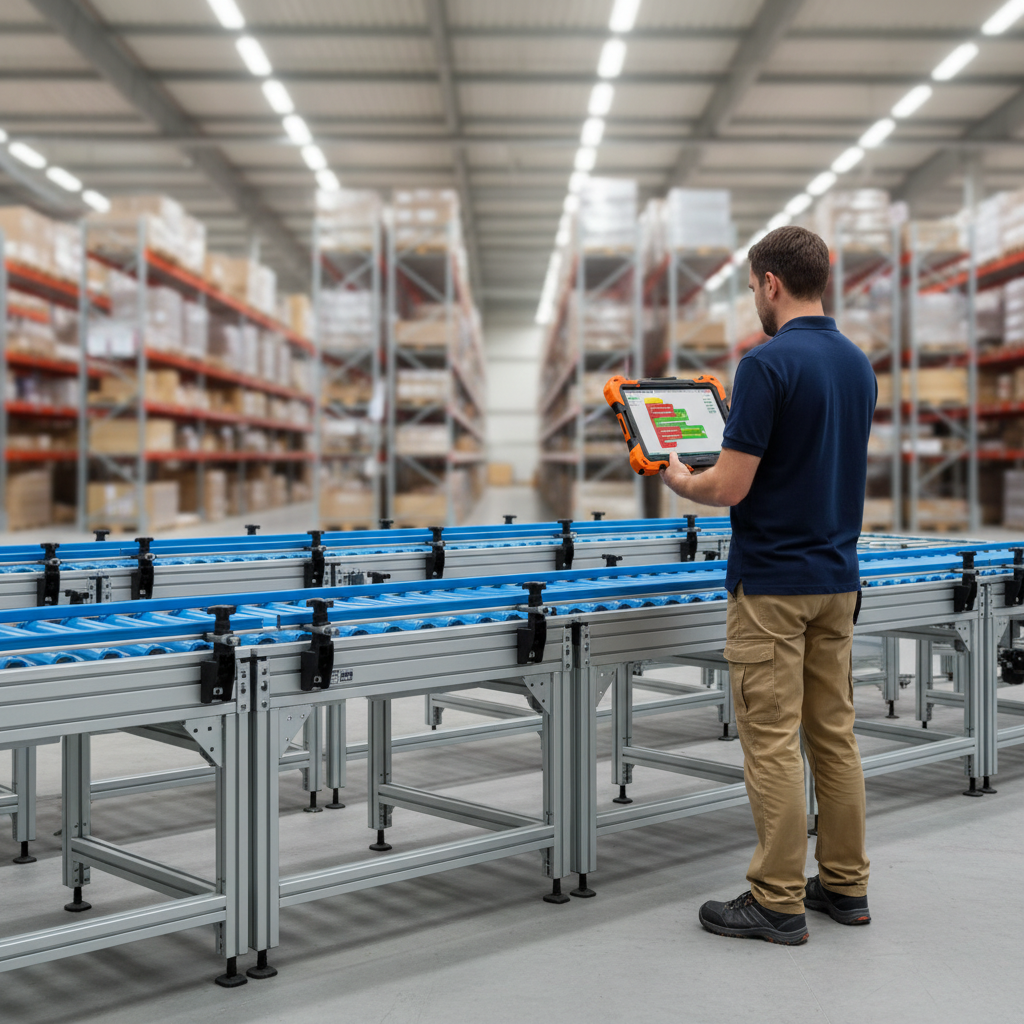
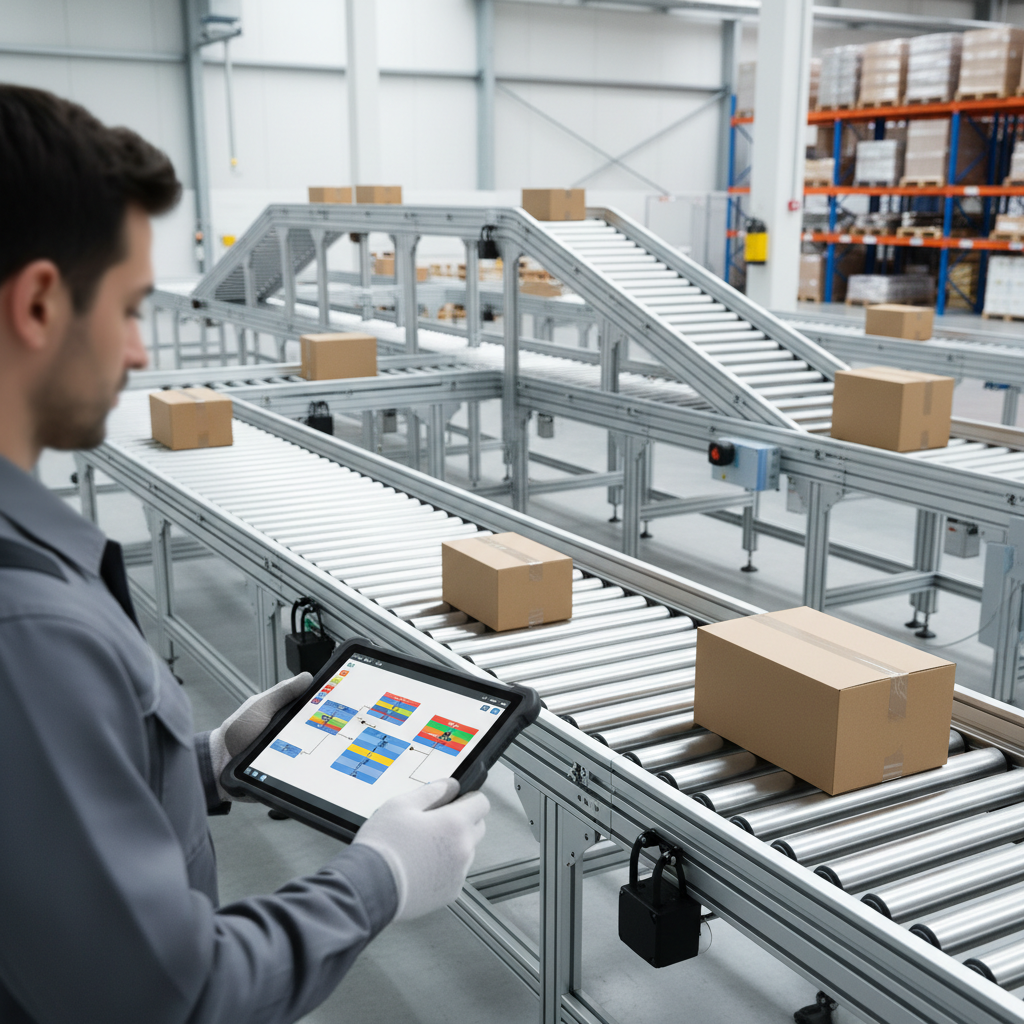
Low-code platforms insert a user-friendly abstraction layer between the user and the complex machine control layer. Instead of writing code, a process owner or warehouse manager interacts with a graphical user interface (GUI). They can literally "draw" the logic of their conveyor system.
Imagine a digital twin of your warehouse floor. To change a sorting rule, you click on a diverge point, and a dropdown menu presents the available criteria (e.g., barcode, weight, destination). You select the new rule, drag a connection to the correct destination lane, and hit "deploy." The platform translates this visual instruction into the necessary machine-level code and updates the system in near-real-time. This is not a future dream; it is a reality in modern European warehouses.
Comparison: PLC vs. WCS vs. Low-Code Control
It's crucial to understand where low-code fits. It doesn't always replace the PLC entirely but rather orchestrates the logic at a higher, more accessible level. It can be seen as a more flexible and user-friendly evolution of a traditional Warehouse Control System (WCS).
| Aspect | Traditional PLC Control | Traditional WCS | Low-Code Platform |
|---|---|---|---|
| User Interface | Code-based (Ladder Logic etc.) | Often complex, tabular interfaces | Visual, drag-and-drop, graphical |
| Modification Speed | Days to Weeks | Hours to Days | Minutes to Hours |
| Required Skills | Specialized Automation Engineer | Trained IT/Operations Staff | On-site Technician, Process Owner |
| Ideal For | High-speed, safety-critical machine control | Large, stable operations with an established WMS | Dynamic SME environments requiring frequent changes |
Integrating with the Broader Software Stack
A key strength of modern low-code platforms is their ability to communicate seamlessly with other warehouse systems. They are designed to be the connective tissue between your physical equipment and your management software. For more on this, see our guide on WMS, WCS, and WES integration. Through standardized protocols like OPC UA, REST APIs, and pre-built connectors, a low-code platform can:
- Receive order information from the WMS (Warehouse Management System).
- Send sortation commands to the conveyor based on that information.
- Report back on successful package diversion or errors.
- Integrate with scanners, scales, and print-and-apply labellers.
Tangible Benefits for European SMEs
For an SME in Germany facing labour shortages or a 3PL in the Netherlands dealing with fluctuating e-commerce clients, this flexibility is a game-changer. Some businesses are finding that their processes are not keeping up with their growth, a problem that low-code solutions can directly address. As detailed in our partner analysis, many companies find that companies grow, but their processes don't always grow with them. A low-code platform for conveyor control provides the agility needed to scale processes effectively.
The core benefits manifest in several ways:
- Drastic Cost Reduction: The most immediate saving is on programming fees. What once cost €3,000 in external consultant fees can now be done in-house in an hour.
- Operational Agility: An e-commerce SME can run a flash sale, and within an hour, reconfigure their conveyor system to handle a surge in single-item orders, diverting them to a special packing zone. This level of responsiveness is impossible with rigid systems.
- Reduced Downtime: When a change is needed, it’s implemented faster. This reduces the time the line is stopped or running inefficiently. It also empowers on-site maintenance to troubleshoot logic flows without waiting for a remote programmer.
- Employee Empowerment: It puts the power in the hands of the people who know the process best—the warehouse managers and technicians. This boosts morale and creates a more engaged, proactive workforce.
The Future: AI-Povered Low-Code
The journey doesn't end here. The next evolution is the integration of Artificial Intelligence (AI) and Machine Learning (ML) into these platforms. Imagine a system that monitors package flow and suggests a change to the sorting logic to prevent a bottleneck before it even happens. Or an AI that analyzes historical data to automatically generate the most efficient conveyor routing for a new product launch. This "self-driving" warehouse logic is the next frontier, and low-code platforms are the foundation upon which it will be built.
Easy Systems: Your Partner for Agile Conveyor Automation
Understanding the theory of low-code is one thing; implementing it effectively is another. At Easy Systems, we specialize in designing and building modular, flexible conveyor systems that are perfectly suited for the low-code revolution. Our philosophy is that the hardware must be as adaptable as the software that controls it. We construct our systems using pre-engineered, modular components that can be quickly reconfigured, just like a low-code software flow.
We work with you to understand your current processes and future ambitions. We then design a conveyor solution that not only meets your immediate needs but is also ready for the agile, data-driven world of modern logistics. By combining our robust, modular hardware with the right control strategy—be it PLC, WCS, or a cutting-edge low-code platform—we help European SMEs reclaim control, reduce costs, and build a truly flexible future.
Frequently asked questions
Can a low-code platform completely replace my PLCs?+
Not always. For high-speed, safety-critical functions at the machine level, PLCs remain essential. Low-code platforms typically act as an orchestration layer, telling groups of PLCs what to do. They replace the complex WCS/WES-level programming, not the base-level motor control, typically making changes up to 90% faster for business logic.
How much does a no-code conveyor solution cost for an SME?+
While hardware costs vary, the software component for a low-code platform typically ranges from €5,000 to €25,000 for an initial setup on a medium-sized conveyor line. This is often 50-70% cheaper than the custom development costs for a traditional, code-heavy WCS project.
Is it difficult to train staff to use a no-code platform?+
No, and that's the primary advantage. Staff who are familiar with warehouse processes and can use a smartphone or a tablet can typically become proficient in modifying conveyor logic within 8 to 16 hours of training. This is a fraction of the hundreds of hours required for PLC programming.
What if my conveyor hardware is from different manufacturers?+
This is a key consideration. The best low-code platforms are hardware-agnostic and use open standards like OPC UA to communicate. This allows you to orchestrate logic across a diverse range of equipment, avoiding vendor lock-in. A typical implementation can support 5-10 different hardware brands simultaneously.
Can a low-code platform help with energy savings?+
Yes. By creating more sophisticated logic, you can ensure conveyors only run when needed (e.g., using zero-pressure accumulation logic) rather than continuously. This can reduce the energy consumption of a conveyor line by 15% to 30%, contributing directly to a lower operational cost and carbon footprint.
How does low-code integrate with my existing WMS?+
Modern low-code platforms are built for integration. They typically offer pre-built connectors or use standard REST APIs to communicate with your WMS. This allows for a seamless flow of information, where an order from the WMS can automatically trigger a specific routing action on the conveyor with a latency of less than 200 milliseconds.

The Easy Systems engineering team designs, integrates and commissions conveyor systems and warehouse automation across Belgium, the Netherlands and Luxembourg. Combined experience covers roller and belt conveyors, sorters, AGV/AMR fleets, AutoStore, shuttle AS/RS and WMS/WCS integration for distribution centers and e-commerce fulfillment operations.
- Conveyor design (roller, belt, modular plastic)
- Sortation & merge logic
- AGV / AMR fleet integration
- AutoStore & shuttle AS/RS
- WMS / WCS integration