How Low-Code Platforms Accelerate Conveyor System Deployment
Low-code/no-code platforms are transforming conveyor system integration by enabling faster design, configuration, and deployment. This shift empowers non-programmers to build and modify logistics workflows, significantly reducing project timelines and costs.
In the fast-paced world of European logistics, the speed of deploying and adapting automation is a primary competitive advantage. Traditionally, the design and implementation of conveyor systems have been a bottleneck, heavily reliant on specialized engineers and complex coding. Today, a new paradigm is emerging: low-code and no-code platforms are democratizing conveyor control, enabling rapid deployment and unprecedented flexibility for warehouse operators.
Definition
In the context of material handling, a low-code/no-code platform is a software environment that allows users to design, configure, and modify the control logic of conveyor systems using graphical user interfaces and pre-built modules instead of writing traditional lines of programming code (like PLC ladder logic). This significantly lowers the technical barrier for creating and managing sophisticated automation workflows.
Key Numbers
| Metric | Typical range (EU 2026) | Notes |
|---|---|---|
| Project Time Reduction | 30-50% | Reduces time from initial design to go-live. |
| Implementation Speed | 4-6 weeks | Compared to 10-12 weeks for traditional, code-heavy projects. |
| Cost Savings (Initial) | €15,000 - €50,000+ | Savings on specialized programming and engineering hours for a medium-sized system. |
| Reconfiguration Time | < 4 hours | Time needed to change a sorting rule or add a new conveyor zone. |
| Error Rate Reduction | >30% | Fewer manual coding errors and easier debugging via visual flows. |
| Required Training | 8-16 hours | For an on-site maintenance technician to become proficient in making changes. |
The Traditional Bottleneck: Custom PLC Programming
For decades, the brain of any conveyor system has been the Programmable Logic Controller (PLC). These industrial computers are robust and reliable, but they require highly specialized knowledge of programming languages like Ladder Logic or Structured Text. This dependency creates several challenges:- Scarcity of Talent: Finding and retaining skilled PLC programmers is a significant challenge across Europe, leading to project delays and high costs.
- Rigidity: Once programmed, a PLC-based system is inflexible. Any change—from adjusting the speed of a single motor to altering a sorting destination—requires a programmer to connect to the controller, modify the code, test it, and deploy it. This process can take days and introduces risk.
- High Costs: The reliance on specialized engineers for both initial setup and subsequent modifications results in high total cost of ownership (TCO).
- Communication Gaps: Operational managers who understand the desired physical workflow often struggle to communicate their needs precisely to the programmers, leading to misunderstandings and rework.
Core Benefits of Low-Code for Warehouse Automation
Low-code platforms abstract away the underlying code, presenting the system's logic in a visual, intuitive format. This fundamentally changes the dynamics of conveyor system management.Speed: From Months to Weeks
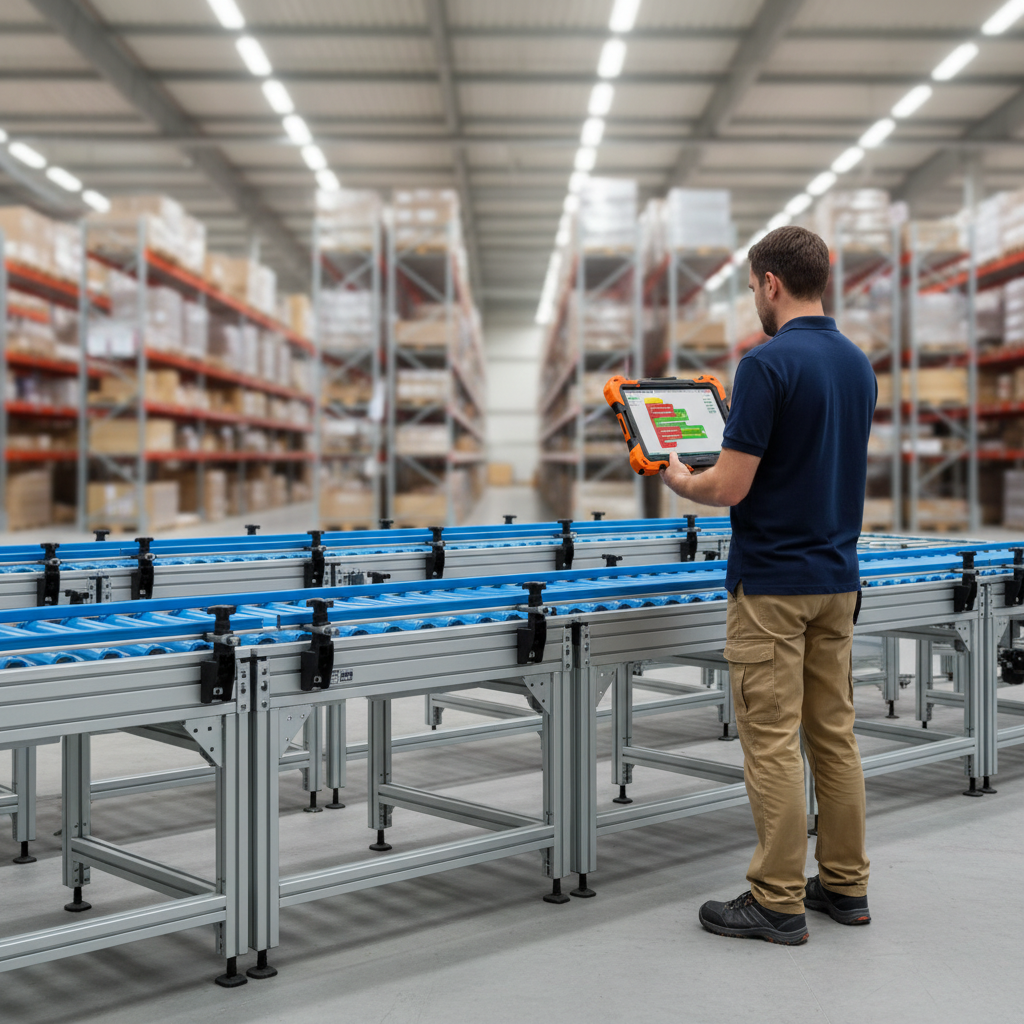
Instead of writing thousands of lines of code, engineers and even on-site technicians can drag and drop pre-built functional blocks representing motors, sensors, and decision points. A workflow for a zero-pressure accumulation conveyor, which might take a PLC programmer a full day to code and debug, can be assembled and simulated visually in under an hour. This accelerates the entire commissioning process, turning a 3-month project into a 6-week rollout.
Cost Reduction: Beyond Initial Capex
The primary cost saving comes from the drastic reduction in engineering hours. However, the operational savings are even more significant. When a business need changes—for example, a 3PL provider onboards a new client with different package handling rules—the warehouse's own maintenance team can implement the required logic changes themselves. This eliminates the need for expensive external support calls and minimizes downtime, directly impacting profitability. As discussed in growth-focused articles, process agility is key, and low-code delivers exactly that.
Empowerment: Bridging the IT/OT Gap
Low-code platforms empower the people who know the operational process best: the warehouse managers and maintenance technicians. They can directly translate their operational knowledge into system logic without a "translator" (the PLC programmer). This reduces errors, improves buy-in from the team, and fosters a culture of continuous improvement on the warehouse floor.
Low-Code vs. Traditional PLC: A Direct Comparison
| Aspect | Traditional PLC Programming | Low-Code/No-Code Platform |
|---|---|---|
| Interface | Text-based code (Ladder Logic, ST) | Visual, drag-and-drop graphical interface |
| Required Skillset | Specialized PLC Programmer | Mechanically-inclined technician, process engineer |
| Typical Setup Time | 10-12 weeks | 4-6 weeks |
| Flexibility to Change | Low. Requires code modification and testing. | High. Changes made visually in hours. |
| Modification Cost | High (Programmer time: €100-€150/hour) | Low (Can be done by trained internal staff) |
| Debugging | Complex, requires code tracing | Visual, shows the logical path of a product |
Integrating Low-Code with Your Existing Warehouse Stack
A modern conveyor system does not operate in a vacuum. It must communicate seamlessly with higher-level software. Low-code platforms are designed for this interconnectivity. They typically feature pre-built connectors for:
Frequently asked questions
How much faster is a low-code conveyor implementation?+
A conveyor system implementation using a low-code platform can be 30-50% faster than a traditional PLC-based project. A medium-sized project that would typically take 10-12 weeks can often be completed in just 4-6 weeks, from final design approval to going live.
Can low-code platforms handle complex sorting logic?+
Yes. Modern low-code platforms are powerful enough to manage complex sorting logic, including routing by barcode, weight, or destination, and integrating with vision systems. The logic is built visually, which can make it easier to design and debug complex scenarios involving hundreds of potential outcomes.
What is the typical cost saving when using low-code for conveyors?+
Initial cost savings are typically between 15-25%, primarily from reduced engineering and programming hours. For a €200,000 project, this can mean a saving of €30,000-€50,000. The long-term savings from faster, cheaper modifications can be even more substantial.
Do I need programming skills to manage a low-code conveyor system?+
No, you do not need traditional programming skills. The core idea is to empower non-programmers. A mechanically or technically inclined person can become proficient in modifying and managing the system with as little as 8-16 hours of training on the specific platform.
How does a low-code platform integrate with a WMS?+
Low-code platforms typically integrate with a WMS (Warehouse Management System) or <a href="/glossary#wcs">WCS</a> (Warehouse Control System) via standard APIs or protocols like REST, MQTT, or OPC UA. This allows the WMS to send high-level commands, like "send package X to dock 7," while the low-code platform manages the detailed conveyor and motor-level execution.

The Easy Systems engineering team designs, integrates and commissions conveyor systems and warehouse automation across Belgium, the Netherlands and Luxembourg. Combined experience covers roller and belt conveyors, sorters, AGV/AMR fleets, AutoStore, shuttle AS/RS and WMS/WCS integration for distribution centers and e-commerce fulfillment operations.
- Conveyor design (roller, belt, modular plastic)
- Sortation & merge logic
- AGV / AMR fleet integration
- AutoStore & shuttle AS/RS
- WMS / WCS integration