Human-Robot Collaboration in Warehouse Picking: A Benelux Guide
Discover how the synergy between collaborative robots (cobots) and intelligent conveyor systems is revolutionizing warehouse picking in the Benelux, increasing throughput by up to 50% while improving ergonomics for human operators.
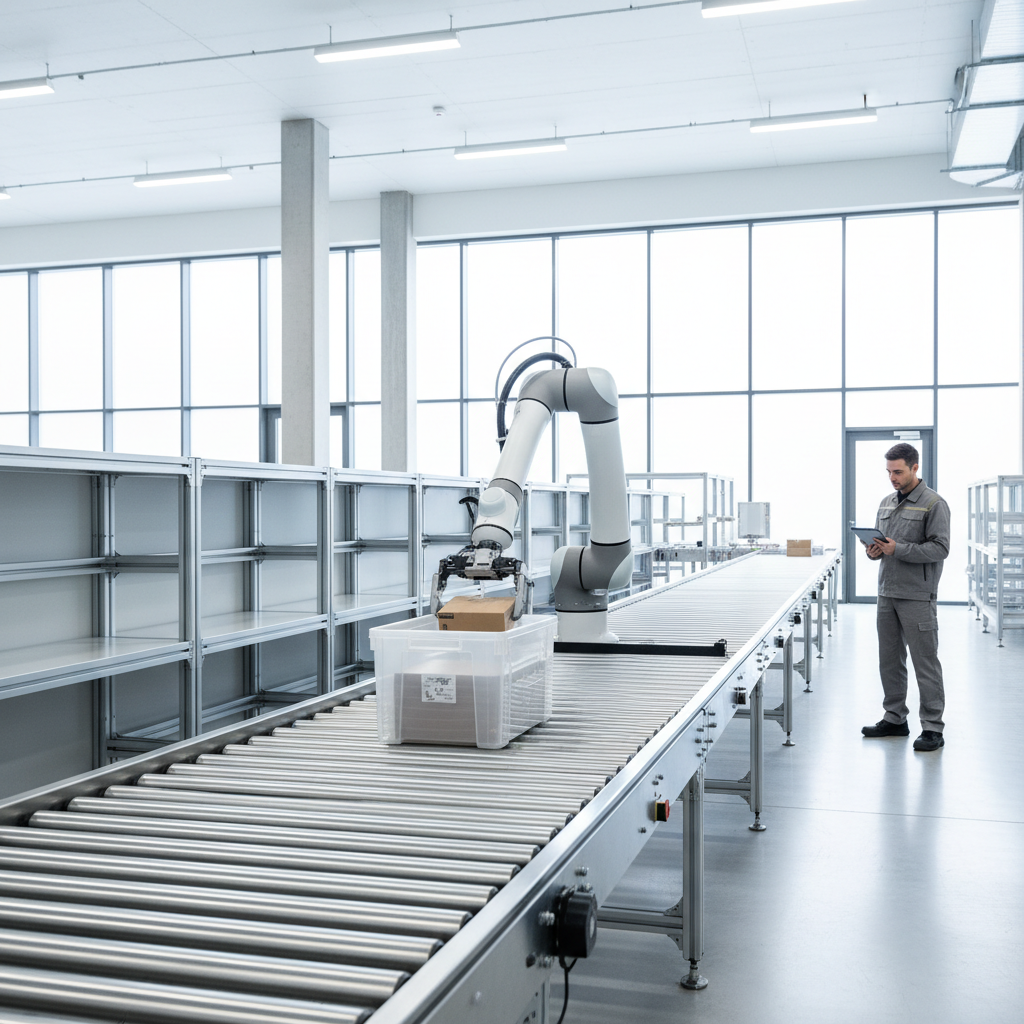
In the high-density, fast-paced logistics landscape of the Benelux, warehouses are under immense pressure to increase throughput and accuracy while grappling with labor shortages and rising operational costs. Human-Robot Collaboration (HRC) has emerged as a powerful solution, creating a symbiotic relationship where human workers and collaborative robots (cobots) work together. This article explores the synergy between cobots and conveyor systems in warehouse picking, a combination that is setting new benchmarks for efficiency and workplace ergonomics in Belgium, the Netherlands, and Luxembourg.
Definition
Human-Robot Collaboration (HRC) in a logistics context is a workflow design where human workers and collaborative robots (cobots) perform tasks simultaneously in a shared workspace. Unlike traditional industrial robots that operate in caged-off areas, cobots are designed to safely interact with humans, combining human cognitive abilities, dexterity, and problem-solving skills with the strength, endurance, and precision of a robot.
Key Numbers
| Metric | Typical Range (EU 2026) | Notes |
|---|---|---|
| Picking Rate (per HRC station) | 300-500 picks/hour | Dependent on item size, weight, and system integration. |
| Investment (per station) | €40,000 - €100,000 | Includes cobot, gripper, safety, vision, and basic conveyor integration. |
| Return on Investment (ROI) | 1.5 - 3 years | Calculated based on labor cost savings and productivity gains in a 2-shift operation. |
| Typical Cobot Payload | 5 - 12 kg | Sufficient for most e-commerce and piece-picking operations. |
| Conveyor Speed (in HRC cell) | 0.3 - 0.7 m/s | Must be synchronized with cobot cycle time for smooth operation. |
| Error Rate Reduction | up to 80% | Vision-guided picking significantly improves accuracy over manual methods. |
The Core Synergy: Why Cobots and Conveyors Are a Perfect Match
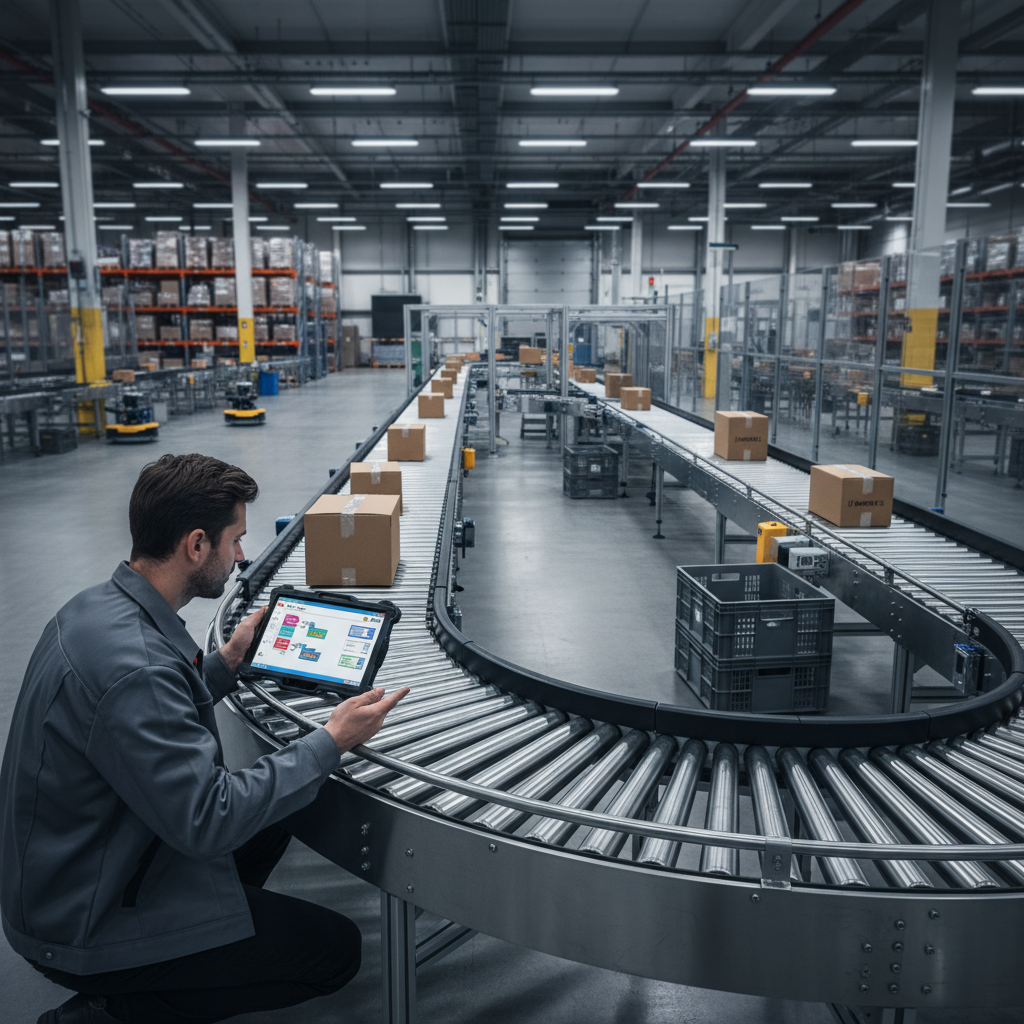
The true power of HRC in picking is unlocked when cobots are integrated with a robust conveyor system. This combination creates a seamless, efficient Goods-to-Person (GTP) workflow, but with a flexible, robotic twist.
Here’s the typical process:
- Infeed: A conveyor system, often a modular roller conveyor, delivers source totes (containing multiple SKUs) from storage—such as an AS/RS or a manual picking zone—to the HRC station.
- Picking: The human worker might consolidate items or prepare orders, while the cobot, guided by a 3D vision system, performs the highly repetitive task of picking individual items from the source tote.
- Placing: The cobot places the picked item into an order tote destined for a specific customer.
- Outfeed: Once an order tote is complete, a second conveyor line automatically transports it away to packing, shipping, or the next zone.
This decoupling of tasks is critical. The human is no longer a "walker and searcher" but a "picker and supervisor." The conveyor system handles all material transport into and out of the station, eliminating wasted movement and maximizing the productivity of both the human and the cobot. The efficiency gains are significant, turning a strenuous manual process into a streamlined, ergonomic, and high-throughput operation.
HRC Models in Benelux Warehouses
While the concept is straightforward, its implementation can vary. The Benelux, with its mix of large-scale fulfillment centers and specialized urban warehouses, sees a variety of HRC models.
Static Cobot Picking Stations
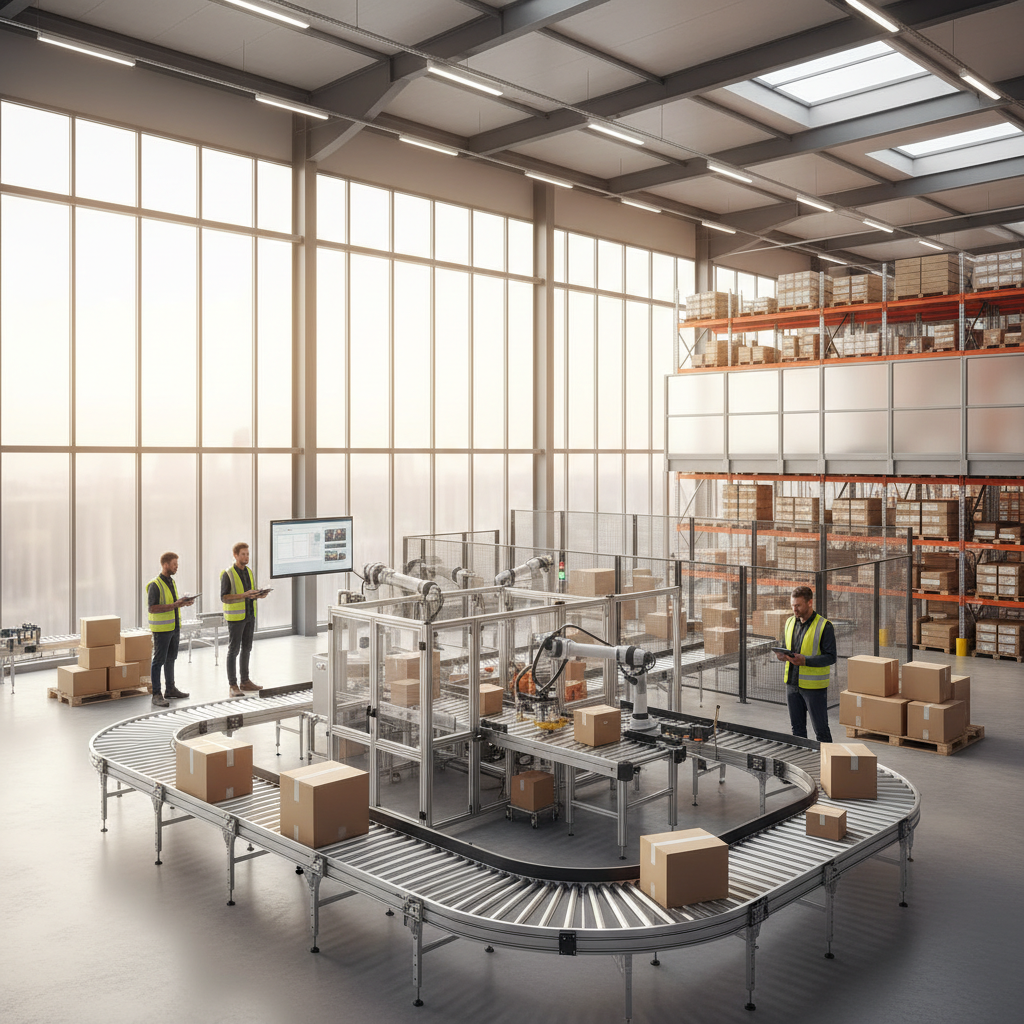
This is the most common and cost-effective model. The cobot arm is fixed at a workstation, typically positioned between an infeed and outfeed conveyor. The human worker operates in the same space, either alongside the cobot or on the opposite side of the conveyor. This setup is ideal for high-volume picking of a predictable range of SKUs and can be easily retrofitted into existing warehouse layouts.
Cobots on Mobile Platforms
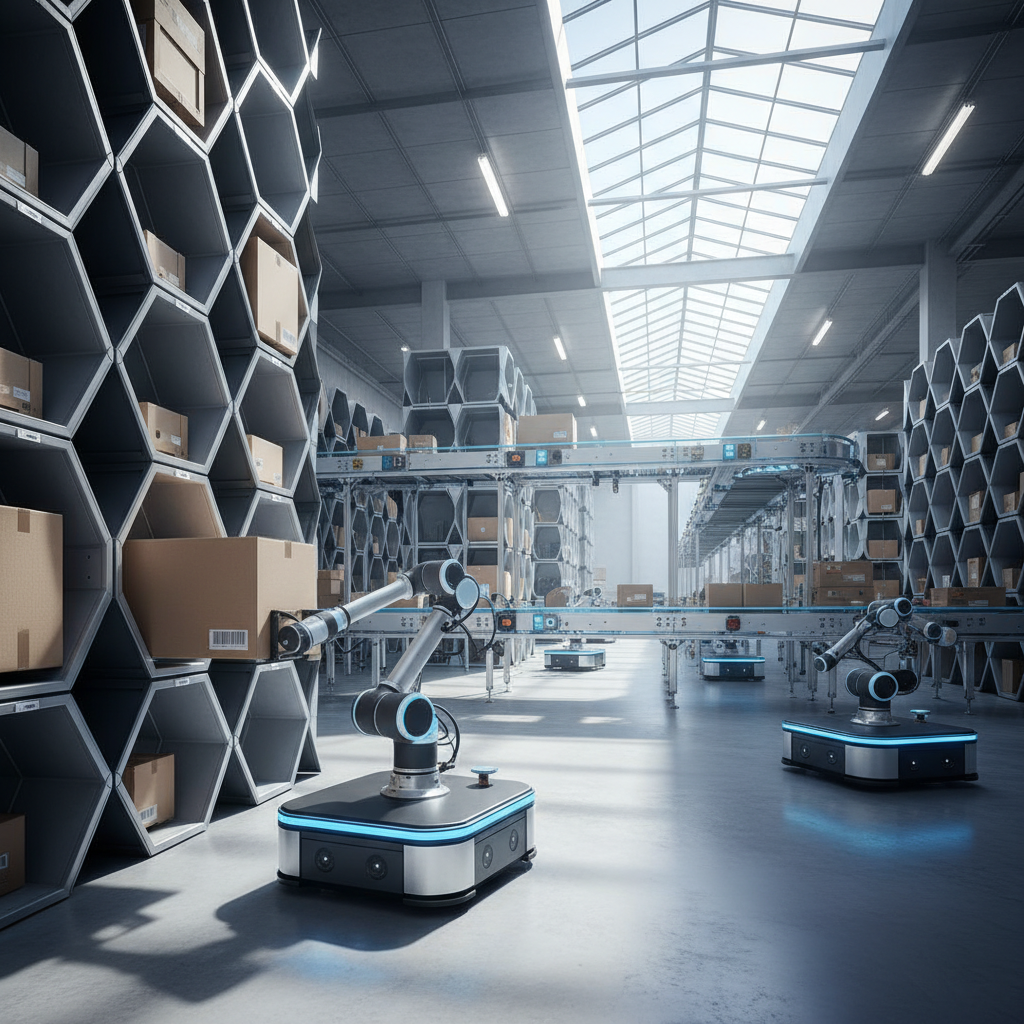
A more advanced and flexible approach involves mounting a cobot onto an Autonomous Mobile Robot (AMR). This "mobile cobot" can navigate the warehouse autonomously, moving between different picking aisles, conveyor spurs, and packing stations. While the investment is higher, this model offers unparalleled flexibility, bringing automation to the goods rather than the other way around. This blurs the line between traditional GTP and person-to-goods models, creating a dynamic new paradigm. To understand the underlying mobility technology better, refer to our in-depth AGV vs AMR guide.
Comparative Analysis of Picking Technologies
To understand the value proposition of HRC, it's useful to compare it with other common picking methods employed in modern warehouses.
| Technology | Picking Speed (PPH) | Accuracy | Initial Cost | Flexibility | Ergonomics |
|---|---|---|---|---|---|
| Manual Picking (Person-to-Goods) | 60-150 | Low-Medium | Very Low | Very High | Poor |
| Pick-to-Light & Conveyors | 200-450 | High | Medium | Medium | Good |
| Goods-to-Person (AS/RS) | 400-600 | Very High | Very High | Low | Excellent |
| HRC (Cobot + Conveyor) | 300-500 | Very High | High | High | Excellent |
Key Components of an HRC Picking Cell
A successful HRC station is more than just a robot and a conveyor. It's a carefully integrated cell of hardware and software components:
- Collaborative Robot Arm: The core of the system, chosen for its reach, payload (typically 5-12 kg), and speed.
- End-Effector (Gripper): A critical component, often using vacuum suction cups or mechanical fingers, designed to handle a wide variety of product shapes, sizes, and materials.
- 3D Vision System: The "eyes" of the cobot, allowing it to identify items, calculate the best way to pick them up from a cluttered tote, and place them accurately.
- Safety Sensors: Although cobots have built-in force-limiting sensors, additional area scanners are often used to slow or stop the robot if a human gets unexpectedly close, ensuring full compliance with EU safety standards like ISO/TS 15066.
- Conveyor System: Modular belt or roller conveyors, often with zero-pressure accumulation (ZPA) logic to buffer totes and ensure a smooth, continuous flow to and from the cobot.
- Warehouse Software: A Warehouse Execution System (WES) or Warehouse Control System (WCS) is essential to orchestrate the entire process, sending orders from the WMS to the HRC cell and coordinating the actions of the human, cobot, and conveyors.
Implementation Challenges and Solutions for the Benelux
Integrating HRC is not a simple plug-and-play affair. Benelux companies must consider several factors. The complexity of integrating different systems—robot, vision, safety, and conveyors—can be daunting. This mirrors a common issue where companies grow, but their internal processes don't keep pace, a challenge detailed in the post ‘Bedrijven groeien, maar hun processen groeien niet altijd mee’. The solution often lies in partnering with an integrator who understands both robotics and material flow, and who can provide standardized, pre-engineered solutions to reduce deployment time and risk.
Easy Systems: Your Partner for Integrated HRC Conveyor Solutions
While the cobot is often the star of the show, its performance is entirely dependent on the efficiency of the material handling system that feeds it. At Easy Systems, we specialize in designing and delivering the conveyor backbone that makes Human-Robot Collaboration possible. Our modular roller and belt conveyor systems are engineered to integrate seamlessly with any cobot, vision system, and warehouse software.
We understand the unique demands of the Benelux market—the need for speed, reliability, and spatial efficiency. Our experts work with you and your robotics partner to design a holistic HRC cell where material flow is perfectly synchronized with robotic action. From zero-pressure accumulation zones that buffer totes for the robot, to ergonomic workstation design that optimizes human tasks, we provide the intelligent conveyor infrastructure that turns a standalone cobot into a fully productive, integrated part of your warehouse operation. Trust Easy Systems to be the vital link that connects your people, your robots, and your path to greater efficiency.
Frequently asked questions
What is the average cost of a cobot picking station in the Netherlands or Belgium?+
The average investment for a complete cobot picking station in the Benelux ranges from €40,000 to €100,000. This price includes the robot arm, gripper, 3D vision, safety scanners, and basic conveyor integration. The final cost depends on the complexity and the specific performance requirements.
How much faster is picking with a cobot compared to manual picking?+
A well-integrated HRC station can significantly boost productivity. While a manual picker might achieve 100-150 picks per hour in a traditional setup, an HRC cell with a cobot and human working together can consistently reach 300-500 picks per hour, a 2-3x improvement.
Are cobots safe to work with in a busy warehouse?+
Yes, collaborative robots are specifically designed for safety in shared human-robot workspaces. They feature force and torque-limiting sensors and operate at controlled speeds, typically under 1.5 m/s. They must comply with strict European safety standards like ISO 10218 and ISO/TS 15066.
What kind of conveyor system works best with cobots?+
Modular roller conveyors or belt conveyors with Zero-Pressure Accumulation (ZPA) are ideal. ZPA technology allows totes to queue up without touching, ensuring that a steady supply of items is presented to the cobot cell without back-pressure, which is critical for smooth, uninterrupted operation.
Can cobots be integrated with our existing Warehouse Management System (WMS)?+
Yes, but typically not directly. Integration is managed by a middle-layer software called a Warehouse Execution System (WES) or Warehouse Control System (WCS). The WMS sends order pools to the WES, which then orchestrates the real-time tasks for the cobot, conveyors, and human operator.
What is the typical payload for a picking cobot in e-commerce?+
For typical e-commerce fulfillment and piece-picking, the required payload is relatively low. Most collaborative robots used in these applications have a payload capacity between 5 kg and 12 kg, which is more than sufficient for handling the vast majority of consumer goods.

The Easy Systems editorial desk reviews and fact-checks every Conveyor-Design article against Benelux project experience. Editors translate engineering decisions — throughput, peak factors, layout, integration — into plain-language guides for operations managers, project leads and decision-makers.
- Warehouse layout & slotting
- Order-profile analysis
- Vendor-neutral comparison
- Benelux logistics market