From Manual to Automated: A Step-by-Step Guide for Benelux SMEs
This guide provides a practical roadmap for small and medium-sized enterprises in the Benelux to successfully transition from manual labour to warehouse automation, detailing costs, benefits, and key technologies.
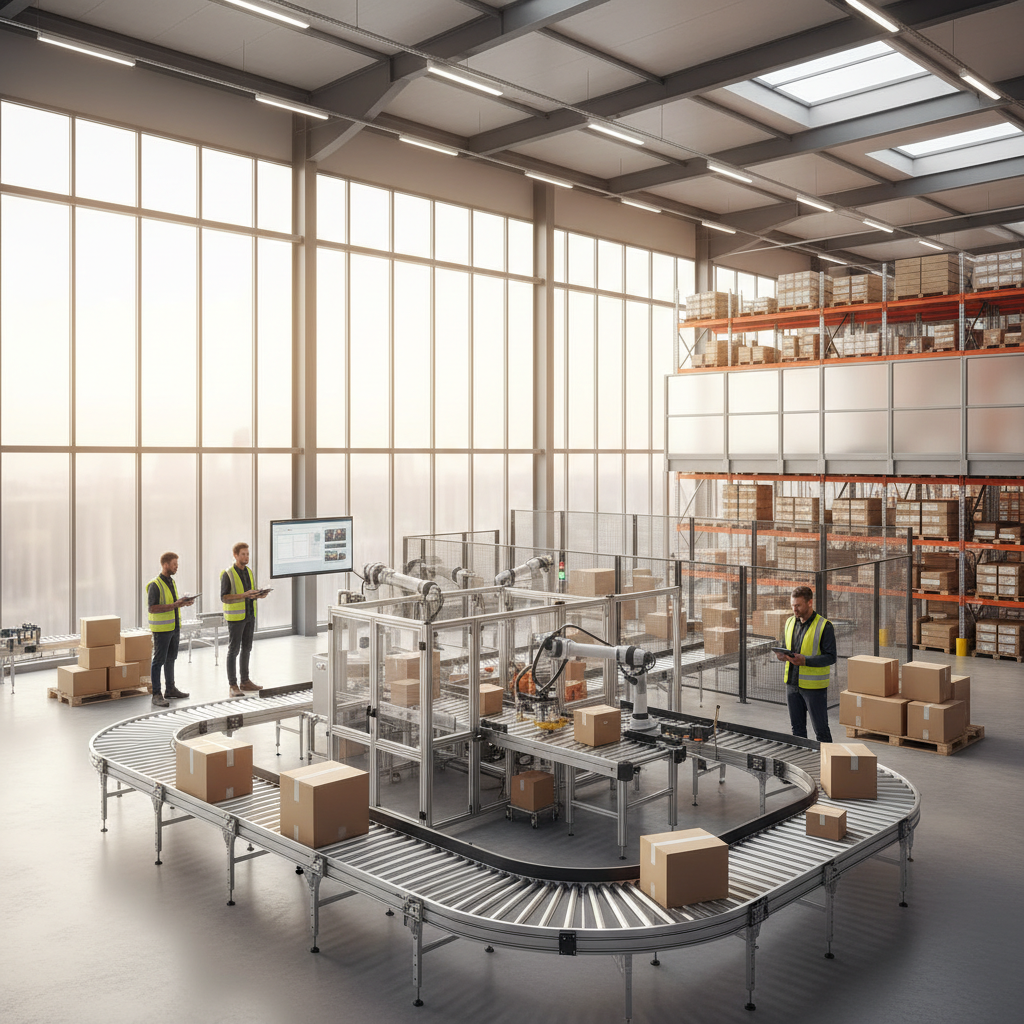
For many small and medium-sized enterprises (SMEs) in the Benelux, the pressure to optimize is relentless. Rising labour costs, staff shortages, and increasing customer expectations for speed and accuracy make manual warehouse operations a significant bottleneck to growth. This guide provides a concrete, step-by-step plan for transitioning from manual processes to scalable automation, tailored for the specific economic and logistical landscape of Belgium, the Netherlands, and Luxembourg.
Definition
Warehouse automation for SMEs refers to the strategic integration of technology—from simple conveyor belts to more advanced robotics—to replace repetitive, error-prone, and physically demanding manual tasks in a warehouse. The goal is not full, lights-out automation, but a targeted, scalable investment to improve efficiency, accuracy, and working conditions with a clear return on investment.
Key Numbers
| Metric | Typical Range (Benelux 2026) | Notes |
|---|---|---|
| Initial Automation Investment (SME) | €15,000 - €250,000 | Covers entry-level conveyors up to basic sorting or AMR systems. |
| Throughput Increase (per process) | 25% - 200% | Depends on technology; e.g., simple transport vs. automated picking. |
| Typical ROI Period | 1.5 - 4 years | Faster ROI for solutions targeting high-labour cost areas like picking. |
| Order Accuracy Improvement | Up to 99.9%+ | Automation drastically reduces human errors in picking and sorting. |
| Reduction in Manual Handling | 30% - 70% | Reduces risk of injury and frees up staff for value-added tasks. |
| Energy Consumption (conveyor) | 0.2 - 0.7 kWh/hour | Modern 24V DC systems (MDR) are highly energy-efficient. |
Phase 1: Analyze and Map Your Current Operations
Before considering any hardware, the first step is a thorough analysis of your existing warehouse processes. You cannot optimize what you don't measure. This involves creating a detailed map of your entire workflow, from goods-in to dispatch. Use methods like Value Stream Mapping (VSM) to visually represent the flow of materials and information.
During this phase, focus on collecting hard data:
- Labour Hours: How many hours are spent on each task (receiving, put-away, picking, packing, shipping)?
- Throughput: How many orders or items are processed per hour/day?
- Error Rates: What is your current picking and packing error rate?
- Travel Time: How much time do employees spend walking through the warehouse? In many manual operations, this can account for over 50% of their time.
This analysis will reveal your primary bottlenecks. Is it the time taken to move goods from receiving to storage? Is it the manual picking process? Or is packing the slowest step? The answer will define your automation priorities.
Phase 2: Define Clear Goals and Scope
With your data in hand, you can set Specific, Measurable, Achievable, Relevant, and Time-bound (SMART) goals. Avoid vague objectives like "improve efficiency." Instead, aim for targets like:
- "Increase order picking throughput from 80 to 120 picks per person per hour within 12 months."
- "Reduce packing errors by 75% by the end of Q4."
- "Decrease the time required to transport goods from the dock to the storage racks by 50%."
Start with a Pilot Project
For an SME, attempting to automate the entire warehouse at once is a recipe for disaster. The key is to select a single, well-defined process for a pilot project. This minimizes risk, keeps the initial investment manageable, and provides a clear case study for future expansion. Good candidates for a first project are often found in internal transport, which is repetitive and labour-intensive.
Phase 3: Choosing the Right Entry-Level Technology
Once you've identified the process to automate, you can select the appropriate technology. For SMEs in the Benelux, starting with proven, scalable, and cost-effective solutions is crucial. Here’s a comparison of common entry points:
| Technology | Best For | Typical Cost (Benelux SME) | Impact on Throughput |
|---|---|---|---|
| Roller Conveyors (Gravity or Powered) | Connecting fixed points (e.g., packing to shipping, along a picking line). Moving boxes, totes, or pallets. | €10,000 - €40,000 for a basic line | Medium: Increases flow, reduces walking time significantly. |
| Belt Conveyors | Moving items of irregular shape/size, incline/decline transport, or paced assembly/packing lines. | €15,000 - €50,000 for a small system | Medium-High: Provides continuous flow and controlled movement. |
| Entry-Level Sortation (e.g., diverter arms) | Sorting low-to-medium volumes of packages to different destinations (e.g., shipping carriers, packing stations). | €40,000 - €100,000 | High: Drastically reduces manual sorting time and errors. |
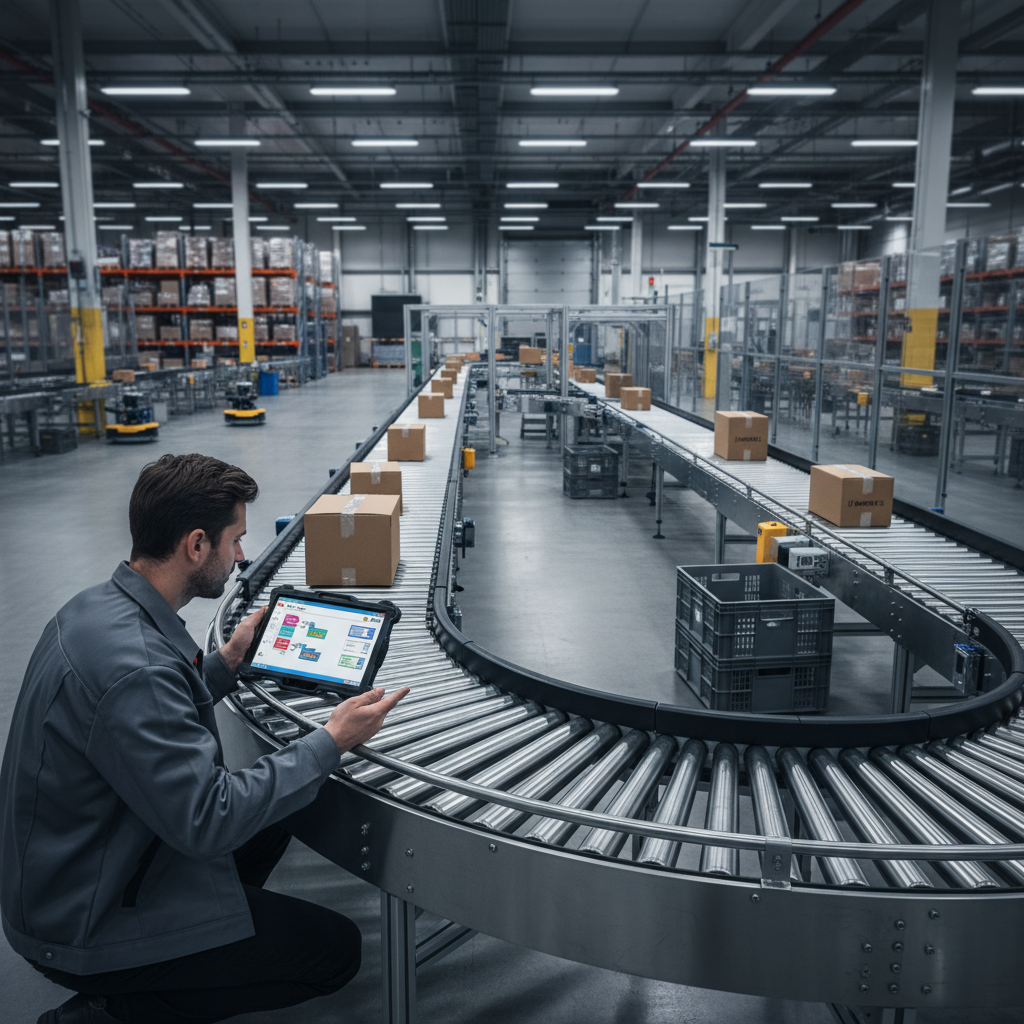
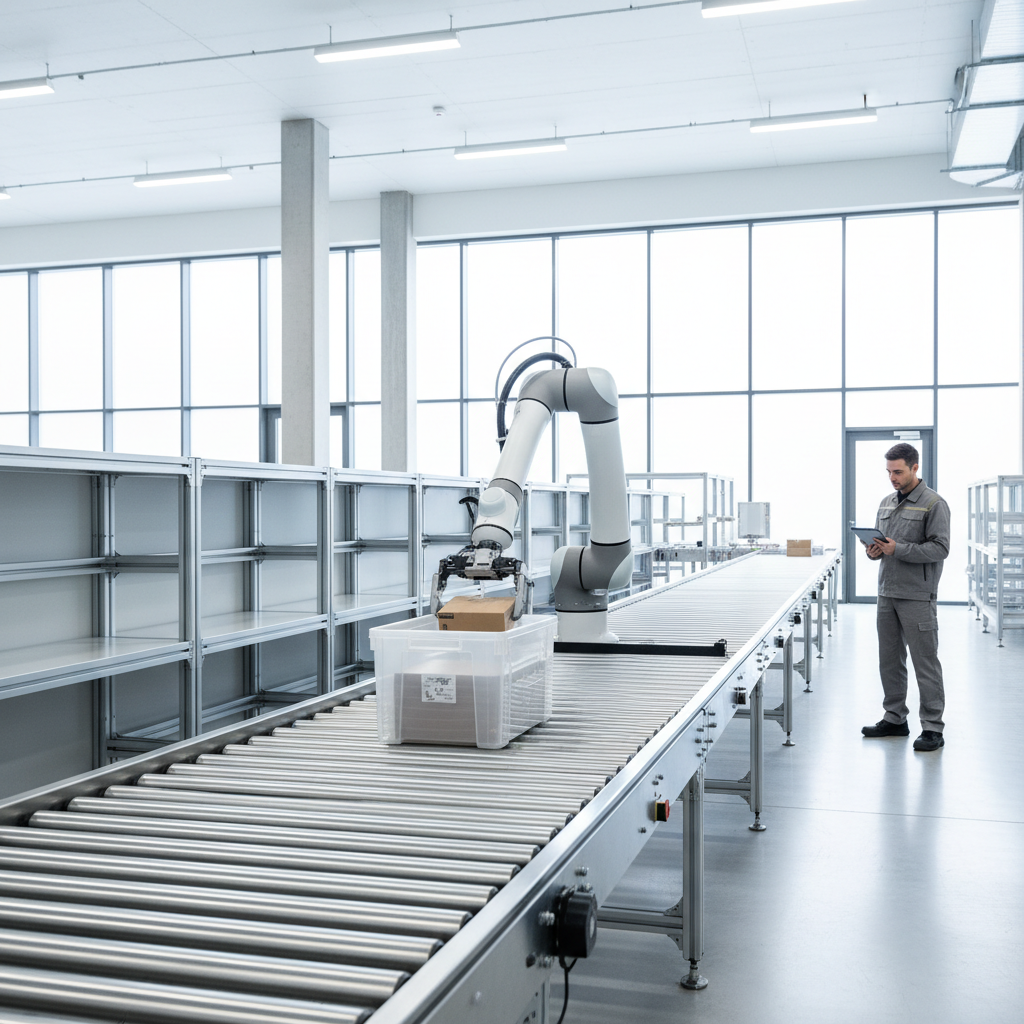
For many SMEs, a simple powered roller conveyor system is the perfect first step. It solves the "walking problem" by bringing items to the operator, immediately boosting productivity for a relatively modest investment.
Phase 4: Implementation and Software Integration
Implementing hardware is only half the battle. How it communicates with your existing systems is what unlocks its true potential. Standalone conveyors that simply move boxes from A to B are useful, but integration with a Warehouse Management System (WMS) elevates the solution.
For example, by integrating a conveyor with your WMS, you can:
- Automatically scan barcodes to track package contents.
- Route totes to the correct packing station based on order data.
- Confirm order completion in real-time as a package leaves the conveyor.
A competent integration partner will ensure that the hardware (the conveyor) and the software (your WMS or a middleware layer like a WCS) speak the same language. For a deeper dive, read our guide on WMS and WCS integration.
Managing the Human Element
Automation changes roles; it doesn't just eliminate them. It's crucial to involve your team early. Communicate the goals—to reduce strenuous tasks and errors, not to replace people. Provide thorough training so employees feel confident and in control of the new technology. Their new roles will shift from manual labour to system oversight, quality control, and exception handling—more valuable and engaging work.
Phase 5: Measuring ROI and Scaling Up
After your pilot system has been running for a few months (e.g., 3-6 months), it's time to measure its performance against the SMART goals you set in Phase 2. Track the same KPIs you measured in your initial analysis and calculate the actual Return on Investment (ROI).
Calculating ROI
A simple ROI calculation is: (Gain from Investment - Cost of Investment) / Cost of Investment
- Cost of Investment: Total cost of hardware, software, installation, and training.
- Gain from Investment: Quantify the benefits. This is primarily labour savings (e.g., 2 employees at €45,000/year each = €90,000 gain) but should also include cost savings from reduced errors and gains from increased throughput.
A positive ROI within your target timeframe (e.g., 2.5 years) provides a powerful business case to scale the automation to other parts of your warehouse. Many businesses find that as they grow, their processes don't always scale effectively. As detailed in a post on our partner site, companies grow, but their processes don’t always keep up, which is exactly the problem that phased automation solves.
Your Partner in Scalable Automation
The journey from a manual to an automated warehouse can seem daunting for an SME, but it’s a necessary step to remain competitive in the Benelux market. The key is a structured, phased approach that prioritizes clear goals and a measurable ROI. You don’t need a multi-million euro budget to get started.
At Easy Systems, we specialize in designing and implementing modular, scalable conveyor and material handling solutions specifically for the needs of growing businesses in Europe. We understand that your first automation project is a critical step. We partner with you from the initial process analysis to the final implementation and beyond, ensuring your investment is practical, future-proof, and delivers measurable results from day one. Our modular systems are designed to grow with you, allowing you to scale your automation as your business expands.
Frequently asked questions
How much does it cost for a small business to automate its warehouse in the Benelux?+
Initial automation for an SME in the Benelux can start from €15,000 to €50,000 for entry-level systems like roller conveyors or automated packing stations. More complex projects involving AGVs or small sorting systems typically range from €80,000 to €250,000.
What is the first step to warehouse automation for an SME?+
The first and most critical step is a detailed process analysis. Before buying any equipment, you must map your current workflows, measure key performance indicators (KPIs), and identify the most significant bottlenecks or labour-intensive tasks. This data drives all future decisions.
Can warehouse automation be implemented without a WMS?+
Yes, simple automation like standalone conveyor lines can operate without a WMS. However, for any process involving data, routing, or tracking, integration with a Warehouse Management System (WMS) is essential for achieving full efficiency gains, which can be up to 30% higher.
What is the typical ROI for warehouse automation?+
For SMEs in Europe, the typical Return on Investment (ROI) for an automation project is between 1.5 and 4 years. The ROI is faster when automating tasks with high manual labour costs, such as order picking or packing, where efficiency gains can exceed 100%.
How do I choose the right automation technology for my business?+
The right technology depends on your specific bottleneck. For moving goods between fixed points, a belt conveyor is ideal and can handle up to 3,000 items per hour. For sorting, a small sorter is effective. For flexible transport, AMRs are a good option. Always start with the problem, not the solution.
What are the biggest challenges when automating a warehouse?+
The biggest challenges for SMEs are underestimating the importance of process analysis, poor data quality, and a lack of employee buy-in. A phased implementation and clear communication, managed with an experienced partner, are key to overcoming these hurdles.

The Easy Systems engineering team designs, integrates and commissions conveyor systems and warehouse automation across Belgium, the Netherlands and Luxembourg. Combined experience covers roller and belt conveyors, sorters, AGV/AMR fleets, AutoStore, shuttle AS/RS and WMS/WCS integration for distribution centers and e-commerce fulfillment operations.
- Conveyor design (roller, belt, modular plastic)
- Sortation & merge logic
- AGV / AMR fleet integration
- AutoStore & shuttle AS/RS
- WMS / WCS integration