Flexible Conveyor Routes: Agility in Benelux Manufacturing
Discover how modern, flexible conveyor routes are essential for agile manufacturing and distribution in the Benelux. This article explores modular design, key technologies like MDR, and the concrete benefits for adapting to changing market demands.
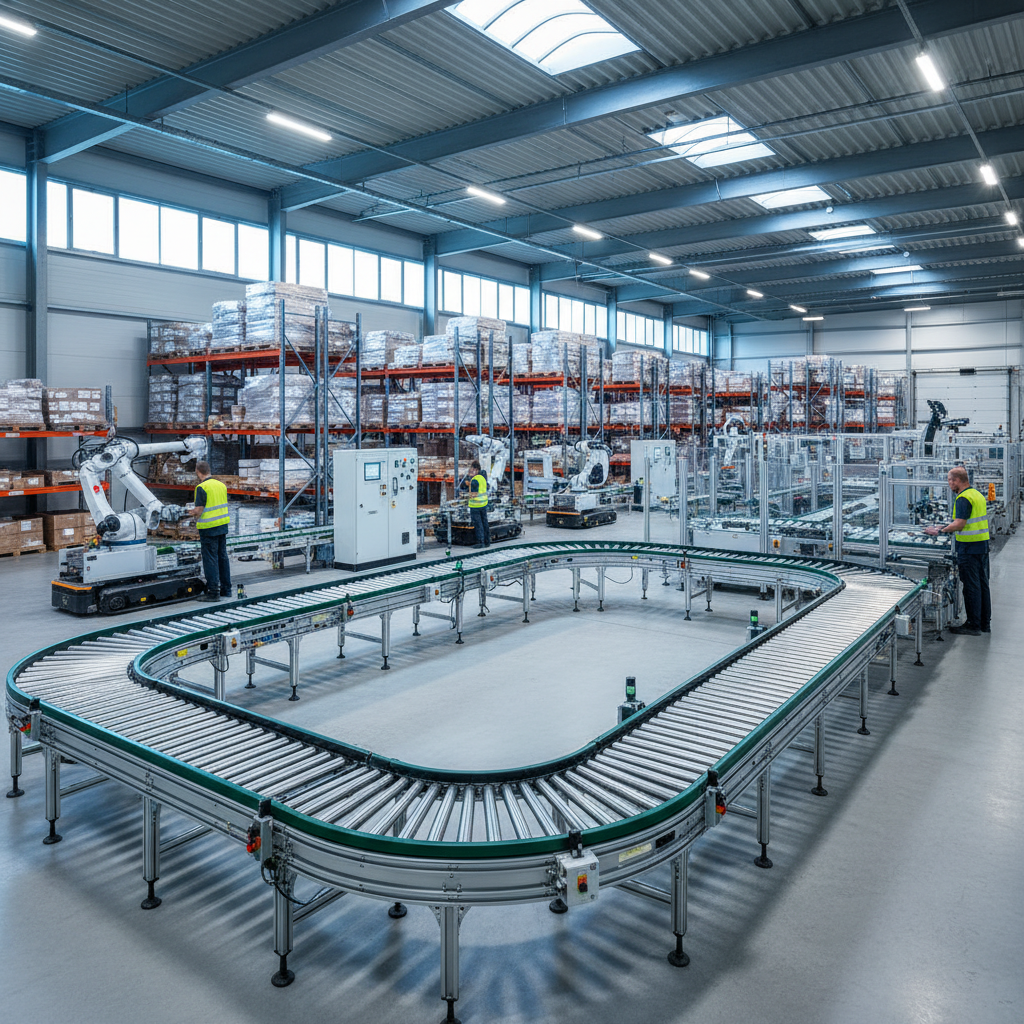
Key numbers
| Metric | Typical range (EU 2026) | Notes |
|---|---|---|
| Reconfiguration Time (10m zone) | 2-4 person-hours | Assumes plug-and-play MDR connections. Traditional systems require days for welding/wiring. |
| Initial Investment Premium | 15-30% higher than fixed | Higher upfront cost for modularity is offset by long-term flexibility and lower lifecycle costs. |
| Return on Investment (ROI) | 1.5 - 3 years | Achieved through lower reconfiguration costs, higher uptime, and deferred capital expenditure. |
| Energy Reduction (MDR vs. AC motor) | 40-60% | Motorized rollers run on-demand (zonal), unlike constantly running central motors. |
| Throughput Capacity (Parcels) | 1,500 - 4,000 parcels/hour | Dependent on belt speed (e.g., 0.5-1.5 m/s) and individual item size/weight. |
| Typical System Lifespan | 15-20 years | Individual modules can be replaced or upgraded, extending overall system utility. |
In the fast-paced logistics landscape of the Benelux—a pivotal European trade hub—the ability to adapt is not just an advantage; it's a necessity. Static, welded-frame conveyor systems that once symbolized permanence and stability are now becoming bottlenecks. The future belongs to agility, and flexible conveyor routes are the backbone of this new operational paradigm, enabling businesses to pivot with market shifts, product changes, and demand fluctuations.
Definition
A flexible conveyor route is a material handling system constructed from modular components that can be quickly and easily reconfigured. This inherent modularity allows for changes in path, length, and function (e.g., merging, diverting, accumulating) to adapt to new products, processes, or facility layouts with minimal downtime and engineering effort.
Why Agility is Crucial in the Benelux Market
The Benelux region, with its world-class ports in Antwerp and Rotterdam, serves as a gateway to Europe. This strategic position brings unique pressures. Businesses here deal with an enormous diversity of goods, high-volume throughput, and the intense demands of e-commerce fulfillment. Key drivers for agility include:
- SKU Proliferation: E-commerce and consumer demand for customization have led to an explosion in the number of Stock Keeping Units (SKUs). A warehouse layout optimized for 10,000 SKUs may be inefficient for 30,000.
- Seasonal Peaks: The retail and e-commerce sectors experience dramatic volume swings during holidays like Christmas, Sinterklaas, and Black Friday. Flexible routes allow for temporary lines to be set up for packing or returns processing and dismantled just as quickly.
- Product Lifecycle Changes: In manufacturing, particularly in sectors like electronics and automotive, product model updates require production line adjustments. Flexible conveyors allow for these changes without a complete overhaul of the factory floor.
- Supply Chain Volatility: A shift in supplier location or a change in packaging dimensions can disrupt a fixed logistics flow. Modular systems can be adjusted in hours or days to accommodate such changes.
Core Components of a Flexible Conveyor System
The magic of a flexible conveyor system lies in its Lego-like construction. Unlike traditional systems that are welded together on-site, modular systems are pre-engineered for interoperability. The primary building blocks include:
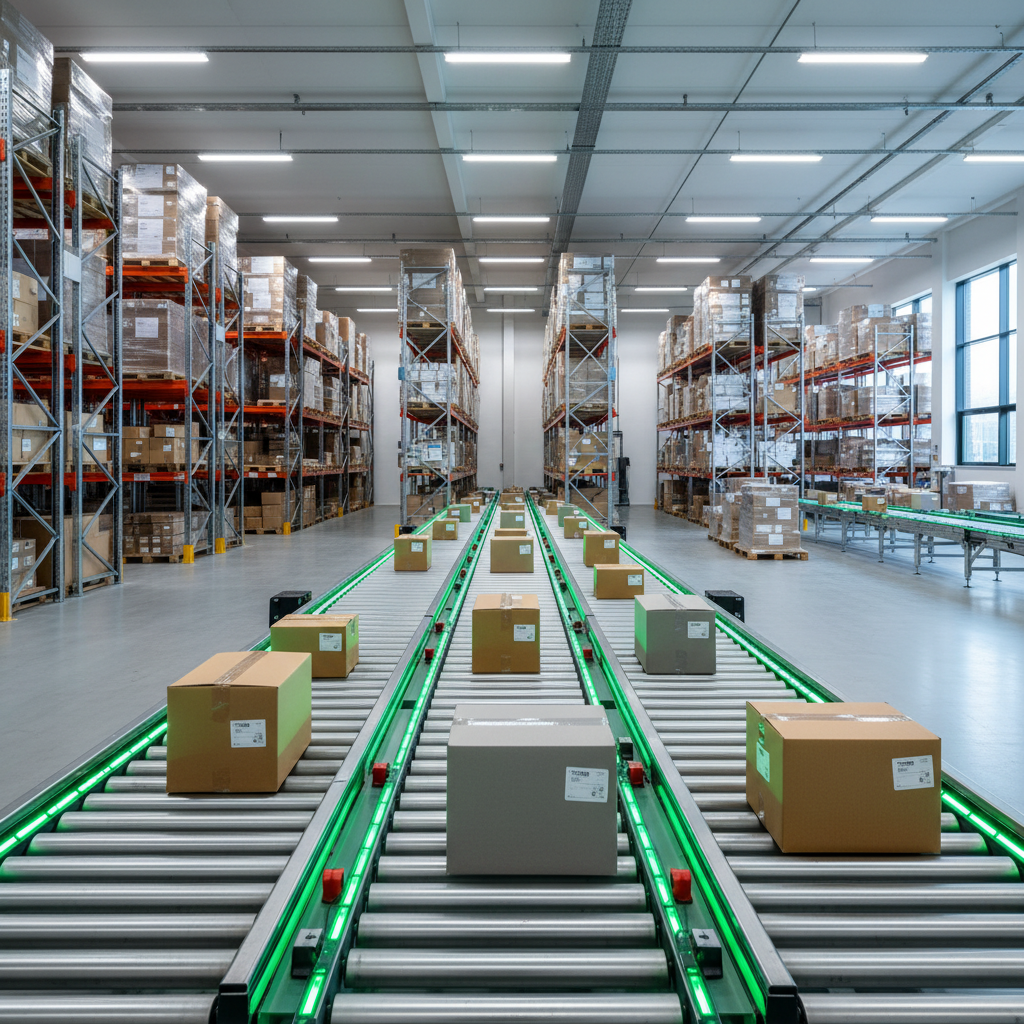
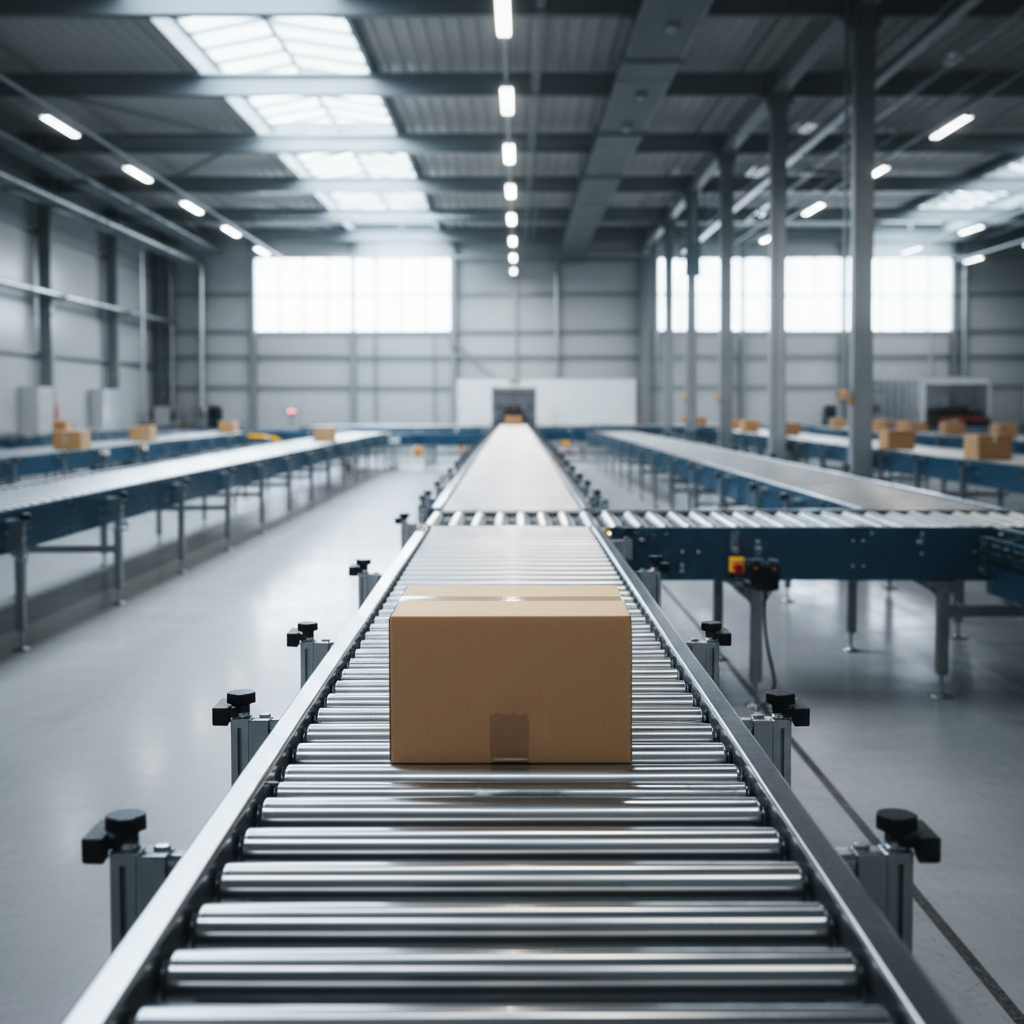
- Modular Sections: Straight sections, curves (e.g., 45° or 90°), and junctions are manufactured in standard lengths (e.g., 1m, 2m, 3m) and widths (e.g., 400mm, 600mm, 800mm). This standardization is key for interchangeability. A roller conveyor is one of the most common types used in these modular setups.
- Standardized Connectors: Mechanical and electrical connectors are designed for quick coupling and decoupling. This eliminates the need for on-site welding or complex wiring during reconfiguration. A section can be unbolted and replaced in minutes.
- Mobile Supports: Instead of being bolted to the floor, many modular systems use adjustable, lockable casters. This allows entire sections to be rolled to a new location, dramatically speeding up layout changes.
- Plug-and-Play Electronics: Components like sensors, diverters, and motors are designed to be "plug-and-play," automatically recognized by the control system when moved or added.
Technology Driving Dynamic Routing
Modularity in hardware is only half the story. The intelligence that enables true flexibility comes from modern control technology. A central PLC (Programmable Logic Controller) is the brain, but the following technologies provide the dynamic capabilities:
Motorized Drive Rollers (MDR)
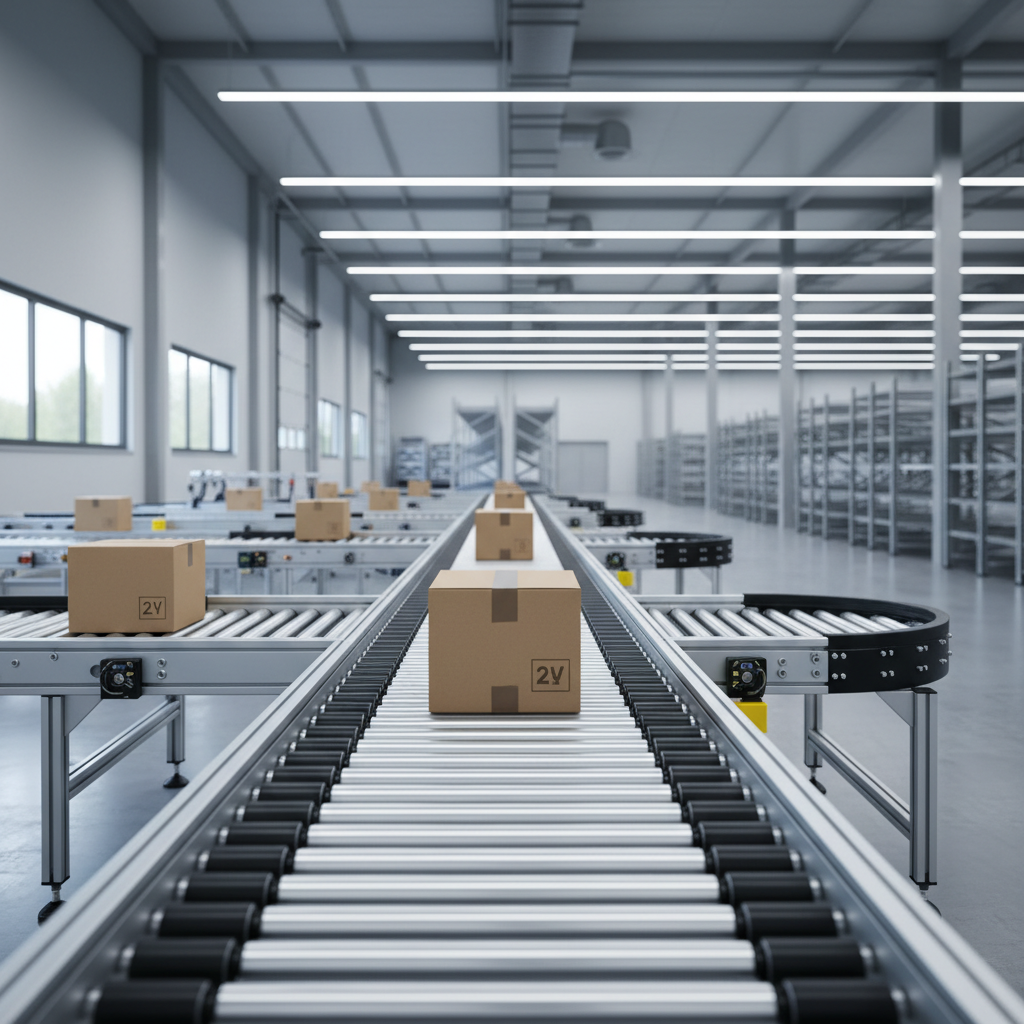
Instead of a single large motor driving long sections of conveyor via belts or chains, Motorized Drive Rollers (MDR) distribute power and control. Each "zone" (typically 1-1.5 meters) has its own 24V DC roller motor. This allows for granular control: zones can turn on and off independently, creating zero-pressure accumulation and saving significant energy (up to 70% compared to traditional AC motors that run continuously).
Warehouse Execution System (WES)
While a WMS manages inventory, a Warehouse Execution System (WES) acts as the traffic controller for the warehouse floor. The WES dynamically releases orders and directs the flow of goods based on real-time conditions. If a packing station is overloaded, the WES can instantly command the conveyor PLC to reroute boxes to an available station, ensuring a balanced workload and continuous flow. The integration of WMS, WCS, and WES is a critical element in achieving this level of automated agility. For those looking to understand these systems better, our guide on WMS and WCS integration offers a deep dive.
Comparing Fixed vs. Flexible Conveyor Systems
Choosing between a traditional fixed system and a modern flexible one involves a trade-off between initial cost and long-term agility. The table below outlines the key differences:
| Feature | Fixed Conveyor System | Flexible/Modular Conveyor System |
|---|---|---|
| Initial Investment | Lower | 15-25% Higher |
| Reconfiguration Time | 3-6 weeks | 2-5 days |
| Scalability | Low; requires significant rework | High; add/remove/change modules easily |
| Downtime During Changes | High | Minimal |
| Ideal Application | Stable, high-volume, unchanging processes | Dynamic environments with fluctuating demand |
| Long-Term ROI | Good for stable processes | Excellent for agile businesses |
Implementation Scenarios in Benelux Industries
E-commerce Fulfillment in the Netherlands
A Dutch e-commerce company handling fashion apparel faced a massive challenge with returns after the holiday season. Using their flexible conveyor system, they erected a temporary 30-meter returns processing line in a section of their warehouse in just one day. This line diverted returned packages for inspection, repacking, and restocking, preventing their main outbound shipping lines from getting congested. After four weeks, the temporary line was dismantled in hours.
Automotive Parts Manufacturing in Belgium
A manufacturer of car dashboards in Belgium needed to adapt a line to accommodate parts for a new electric vehicle model. The new dashboard had different dimensions and required an additional quality check point. With their modular conveyor system, they inserted a new 2-meter inspection station and widened two curve sections from 600mm to 800mm over a single weekend, ensuring production could start on Monday morning without any delay.
Cost-Benefit Analysis: Investment vs. Long-Term ROI
Consider a logistics hub in Luxembourg that needs to reconfigure its main sorting output lines once a year due to changing carrier requirements.
A traditional system might have an initial cost of €200,000. The annual reconfiguration involves cutting, welding, and re-wiring, costing an estimated €40,000 and causing 3 weeks of downtime, translating to significant lost revenue.
A flexible, modular system costs approximately €240,000 (20% more). However, its annual reconfiguration involves two technicians unbolting and rearranging modules over a weekend. The cost is around €4,000 in labor, with zero operational downtime. The higher initial investment is paid back after the second reconfiguration, and the business gains immense competitive advantage through its newfound agility.
Successful implementation isn't just about buying modules; it's about intelligent design. As detailed in a recent analysis on business process scalability, many companies find that their operational processes don't scale as effectively as their growth. An experienced system integrator helps design a layout that meets current needs while anticipating future pivots, ensuring the technology serves the business strategy, not the other way around.
Easy Systems: Your Partner for Agile Conveyor Solutions
In a market that demands constant adaptation, your material handling system should be an enabler of change, not an obstacle. At Easy Systems, we specialize in designing and implementing modular and flexible conveyor routes tailored to the unique demands of the Benelux market. We don’t just sell hardware; we provide agile solutions.
Our approach focuses on future-proofing your operations. By combining robust, modular hardware with intelligent, scalable software controls, we empower your distribution center or manufacturing facility to embrace change. Whether you need to handle seasonal peaks, introduce new product lines, or completely rethink your workflow, our systems are designed to evolve with you. Partner with us to build a resilient, agile, and highly efficient logistics backbone for your business.
Frequently asked questions
What defines a "flexible" conveyor route?+
A flexible conveyor is a modular system built for rapid reconfiguration. Unlike fixed systems, its Lego-like design with standardized sections (e.g., 1m to 3m lengths) and plug-and-play connectors allows a 50-meter line to be physically altered in under 8 hours. This adaptability is key for handling fluctuating production demands and new SKUs without the costly downtime associated with traditional, welded-frame systems.
How much faster is reconfiguring a flexible conveyor system compared to a traditional one?+
Reconfiguring a modular conveyor is significantly faster. A typical layout adjustment that takes a traditional welded system 3-4 weeks can be done in just 2-3 days with a flexible system. This represents a downtime reduction of over 80%, allowing facilities to adapt to seasonal peaks or product changes with minimal disruption to their hourly output, which can exceed 3,000 parcels.
What is the typical cost and ROI for a flexible conveyor system?+
The initial investment is typically 15-30% higher than for a fixed, welded system. However, the return on investment (ROI) is compelling, often realized within 18 to 36 months. This rapid payback is driven by significantly lower reconfiguration costs, reduced downtime, and the ability to scale the system incrementally as operational needs grow over its 15+ year typical lifespan.
What core technology enables modern flexible conveyors?+
Motorized Drive Roller (MDR) technology is crucial. Instead of one large motor, MDR systems use individual 24V DC rollers to create independent zones that run on-demand. This approach cuts energy consumption by up to 60% compared to traditional conveyors. Paired with plug-and-play fieldbus controls, MDR provides the simple, decentralized intelligence needed for flexible material flow and zero-pressure accumulation.
How does flexible conveyance help manage SKU proliferation?+
Flexible conveyors directly address SKU proliferation by allowing for fast adaptation of sorting and picking layouts. As SKU counts grow beyond 30,000, fixed systems become inefficient. A modular system allows for the easy addition of new sorting lanes or packing stations over a single weekend. This ensures the facility’s throughput (e.g., handling over 2,500 SKUs per hour) matches evolving inventory profiles without major rework.

The Easy Systems editorial desk reviews and fact-checks every Conveyor-Design article against Benelux project experience. Editors translate engineering decisions — throughput, peak factors, layout, integration — into plain-language guides for operations managers, project leads and decision-makers.
- Warehouse layout & slotting
- Order-profile analysis
- Vendor-neutral comparison
- Benelux logistics market