Ergonomic Aspects of Conveyor Systems: Fewer Injuries, More Productivity in the Benelux
Properly designed ergonomic conveyor systems are crucial for reducing workplace injuries and increasing operational efficiency in Benelux logistics hubs. This guide details how to optimize conveyor height, reach, and workflow to prevent strains and enhance throughput.
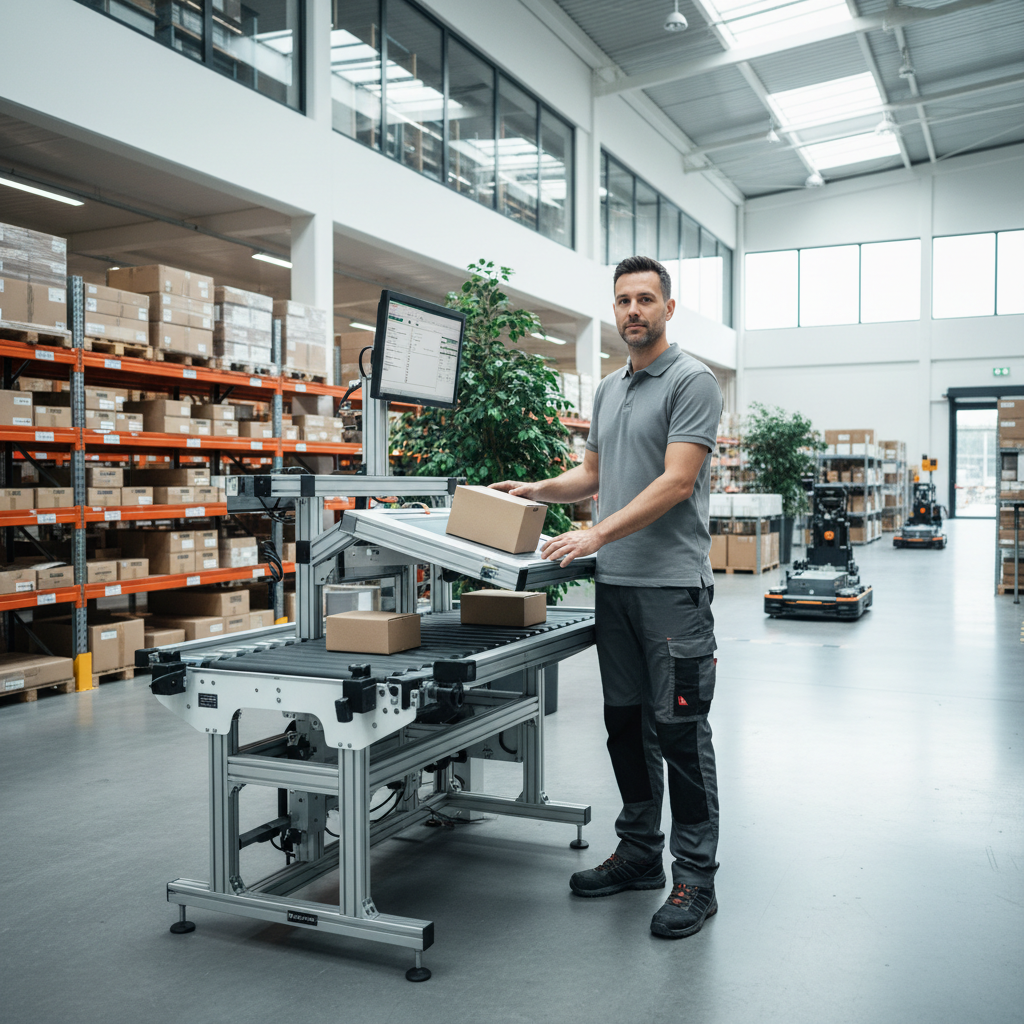
In the high-stakes, fast-paced logistics landscape of the Benelux, every second and every movement counts. While automation is advancing, manual handling remains a critical part of many warehouse processes. This reliance on human operators brings a significant challenge: the risk of work-related musculoskeletal disorders (MSDs). Ergonomically designed conveyor systems are not a luxury but a fundamental necessity for ensuring employee well-being, regulatory compliance, and sustained productivity.
Definition
An ergonomic conveyor system is designed to fit the task to the worker, not the worker to the task. It minimizes physical stress by optimizing factors like height, reach distances, and item orientation, directly reducing the risk of work-related musculoskeletal disorders (MSDs) and improving efficiency. The goal is to create a seamless, safe, and productive interface between the operator and the material flow.
Key Numbers
| Metric | Typical range (EU 2026) | Notes |
|---|---|---|
| MSD Reduction Potential | 20% - 35% | With proper implementation of adjustable stations. |
| Productivity Increase | 15% - 25% | Per operator; due to reduced fatigue and optimized flow. |
| Optimal Conveyor Height | 800 mm - 1200 mm | Adjustable for 5th percentile female to 95th percentile male. |
| Investment Cost (€/m) | €1,500 - €4,000 | Includes ergonomic features like adjustable height/tilt. |
| Typical ROI | 2 - 3 years | Through reduced sick days and increased throughput. |
| Max Manual Handling Weight (ideal) | < 15 kg | At optimal height; decreases with extended reach. |
Why Ergonomics in Benelux Warehouses is Non-Negotiable
The Benelux region, with its high concentration of distribution centers around strategic hubs like Venlo, Antwerp, and Rotterdam, is the logistical heart of Europe. This density creates intense competition for skilled labor and puts a premium on operational efficiency. Furthermore, an aging workforce and stringent EU and national regulations (like the Dutch Arbowet) on occupational health and safety make proactive ergonomic design a critical business strategy. Ignoring ergonomics leads not only to employee suffering but also to tangible business costs, including high staff turnover, increased absenteeism, and potential legal penalties.
Core Principles of Ergonomic Conveyor Design
Effective ergonomic design focuses on several key principles to mitigate physical stress on operators.
1. The "Strike Zone": Optimal Height and Reach
The most fundamental principle is to keep tasks within the operator's "power zone" or "strike zone"—the area between the shoulders and mid-thigh. Work performed in this zone requires the least amount of energy and puts minimal strain on the spine and shoulders.
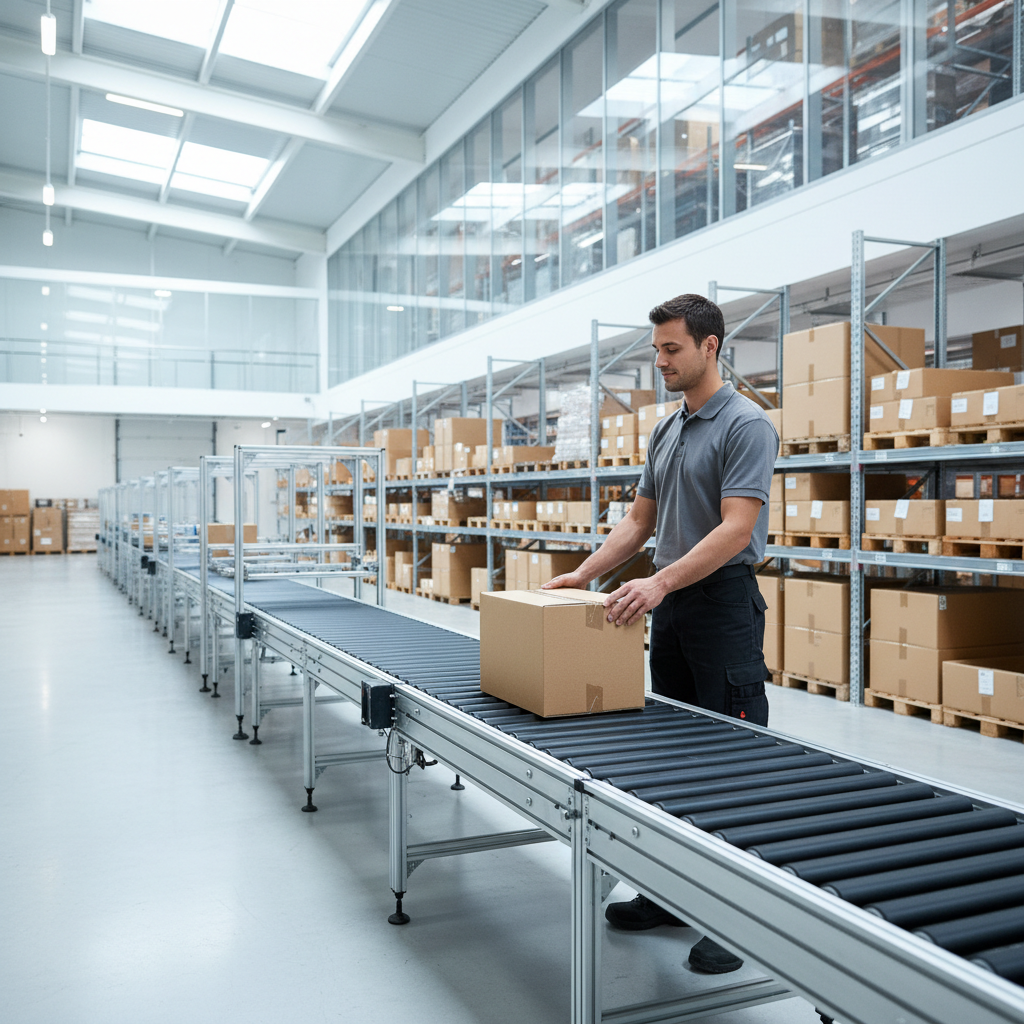
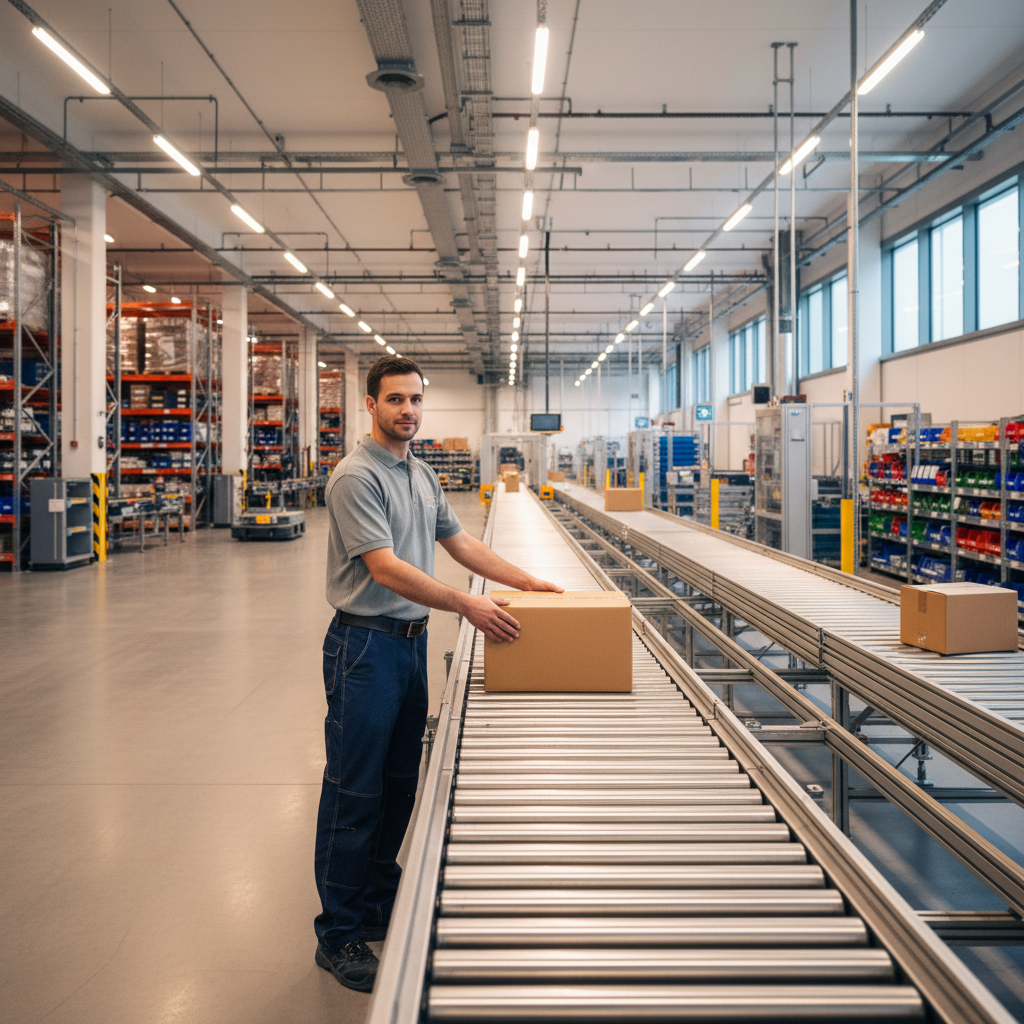
- Height: Conveyors should be positioned so that operators can work with their arms comfortably at their sides and elbows at a 90-degree angle. For a diverse workforce, this means an adjustable height range, typically from 800 mm to 1200 mm. A fixed-height conveyor is almost always a compromise that causes strain for a significant portion of users.
- Reach: Reaching across a wide conveyor is a common cause of back and shoulder injuries. The optimal forward reach is generally limited to 450 mm. Conveyors wider than 600-700 mm should be accessible from both sides or incorporate features to bring products closer to the operator.
2. Minimizing Force and Repetition
Repetitive strain injuries (RSIs) are common in packing, picking, and sorting tasks. The goal is to reduce both the number of repetitions and the force required for each action.
- Lifting and Lowering: If operators must lift items, ensure they are below the recommended 15 kg limit. For heavier items, mechanical aids are essential. A spiral conveyor is an excellent ergonomic choice for vertical movement between floors, eliminating the need for manual transport up and down mezzanines.
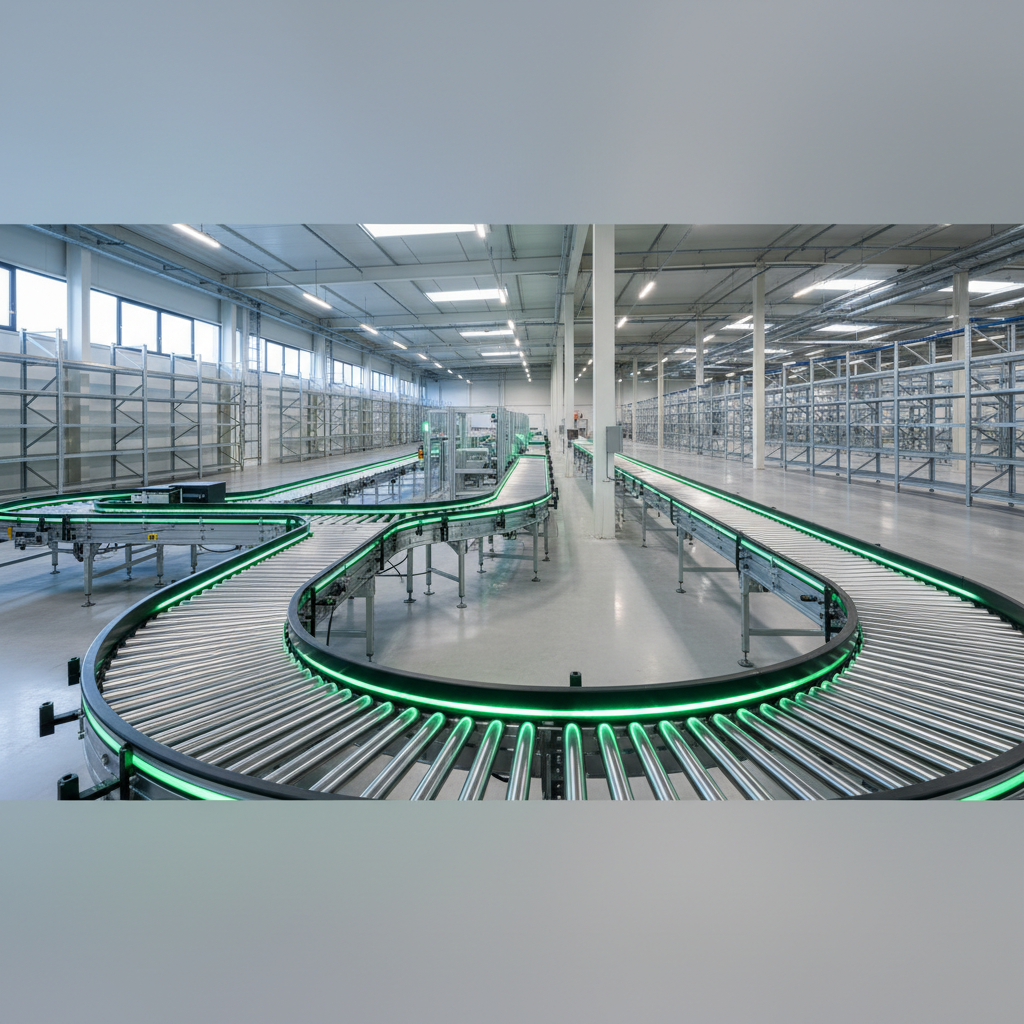
- Pushing and Pulling: On manual lines, using a low-friction roller conveyor can significantly reduce the force needed to move boxes. Motor Driven Roller (MDR) technology can further assist by providing powered movement in zones, requiring zero physical effort from the operator.
3. Reducing Awkward Postures
Twisting the torso while lifting, bending down to pick from a pallet, or overreaching are recipes for injury. The system layout should promote neutral postures.
- Twisting: Workstations should be designed so that operators can face their work directly. Turntables or curved conveyor sections can be used to reorient products, eliminating the need for operators to twist their bodies.
- Bending: Pallet lifts, tilt tables, or de-palletizing stations can raise goods to the optimal conveyor height, preventing operators from repeatedly bending to floor level.
Comparing Ergonomic Solutions: A Practical Guide
Different conveyor components and workstations offer varying levels of ergonomic benefit. The right choice depends on the specific task, product, and throughput requirements.
| Feature | Ergonomic Risk | Mitigation & Use Case | Typical Cost (€) |
|---|---|---|---|
| Standard Fixed-Height Conveyor | High | Best for pure transportation where no manual interaction occurs. If used for packing, it must be set at an ideal height for the average user, creating a risk for others. | €400 - €800 / meter |
| Adjustable-Height Workstation | Low | Allows each operator to set their ideal work height. Essential for multi-shift operations with a diverse workforce. | €2,500 - €4,500 / station |
| Workstation with Tilter | Medium to Low | Tilts bins or totes (e.g., at 30°) towards the operator, reducing reach and bending to access items at the bottom. Ideal for decanting and high-volume picking. | €3,000 - €6,000 / station |
| Zero-Pressure Accumulation Conveyor | Low | Prevents product pile-ups and pressure, allowing operators to pick up items without struggling against the weight of subsequent packages. This creates a calmer, safer, and more controlled workflow. | €900 - €1,500 / meter |
Calculating the ROI of Ergonomic Investments
Investing in ergonomics delivers a clear and measurable return. Consider a distribution center in the Netherlands with 50 operators performing manual handling tasks. If 5% of them experience an MSD in a year, that's 2-3 incidents. With an average cost per incident (direct medical + indirect absenteeism + lost productivity) of €15,000, the annual cost is €30,000-€45,000. An investment of €75,000 in adjustable workstations and tilting mechanisms that reduces these incidents by 80% and increases overall operator productivity by 15% would yield:
- Injury Cost Savings: €24,000 - €36,000 per year.
- Productivity Gain: A 15% gain on 50 operators is a significant boost in throughput, often valued at over €50,000 annually.
Furthermore, as many companies find out, growth in orders does not mean processes scale automatically. Investing in a solid, ergonomic base is crucial for sustainable expansion, a topic we've explored in-depth here: Bedrijven groeien, maar processen niet altijd mee.
The Next Level: Integrating Ergonomics with Automation
True ergonomic excellence is achieved when manual strain is eliminated, not just reduced. This is where automation plays a key role. Goods-to-Person (G2P) technologies like AS/RS or shuttle systems deliver items directly to an operator at an ergonomically optimized workstation. This completely removes travel time and the associated strains of walking, bending, and carrying. Ergonomic pick stations are a critical component at the discharge points of automated sortation systems, ensuring that the high throughput of the machinery is not bottlenecked by manual handling issues. Here, the task is simplified to a highly controlled, low-strain movement, maximizing both safety and CPH (cartons per hour).
Easy Systems: Your Partner for Ergonomic and Productive Warehouse Design
At Easy Systems, we understand that a conveyor system is more than just a way to move products; it’s the backbone of your warehouse and a critical interface for your employees. We design and build modular conveyor solutions with a deep understanding of the ergonomic demands of the Benelux logistics market. Our expertise lies in creating systems that strike the perfect balance between operator well-being, throughput targets, and budgetary realities. From a simple roller conveyor to a fully integrated packing line with adjustable stations, we engineer solutions that reduce physical strain, ensure compliance, and unlock the full productive potential of your workforce. Trust us to be your partner in building a safer, more efficient, and more profitable warehouse.
Frequently asked questions
What is the ideal height for an ergonomic conveyor?+
The ideal height is between 800 mm and 1200 mm, within the operator's "power zone" (mid-thigh to shoulder). Adjustable-height conveyors are best to accommodate different workers, as a fixed height can cause strain for over 50% of users. This simple adjustment can significantly reduce back and shoulder fatigue.
How much can ergonomic conveyors reduce injuries?+
Properly implemented ergonomic solutions can reduce work-related musculoskeletal disorders (MSDs) by 20-35%. This translates to significant savings, as a single MSD case in the Benelux can cost a company over €10,000 in direct and indirect costs.
What are common ergonomic hazards with conveyor systems?+
Common hazards include repetitive lifting, bending to pick items from low levels, overreaching across wide conveyors (over 600 mm), and manually handling packages heavier than 15 kg. Fixed heights and constant high speeds are major contributing factors that increase operator strain.
What is the ROI on an investment in ergonomic equipment?+
The return on investment (ROI) for ergonomic conveyor systems is typically 2 to 3 years. This is achieved through reduced absenteeism, lower insurance premiums, fewer compensation claims, and a measurable 15-25% increase in operator productivity and accuracy.
Are ergonomic conveyors mandatory in Belgium and the Netherlands?+
While no law specifies "ergonomic conveyors," employers in the Benelux are legally bound by EU and national directives (e.g., Arbowet in NL) to provide a safe workplace. This includes minimizing manual handling risks, making ergonomic assessments and subsequent solutions a de facto requirement for compliance.

The Easy Systems editorial desk reviews and fact-checks every Conveyor-Design article against Benelux project experience. Editors translate engineering decisions — throughput, peak factors, layout, integration — into plain-language guides for operations managers, project leads and decision-makers.
- Warehouse layout & slotting
- Order-profile analysis
- Vendor-neutral comparison
- Benelux logistics market