Energy Efficiency in Conveyor Systems: Benelux Strategies
For Operations and Engineering Managers in the Benelux, optimizing conveyor system energy efficiency is key. Strategies like adopting MDR technology and intelligent controls can cut annual energy costs by 30-50%, often saving over €15,000 per year on a medium-sized system.
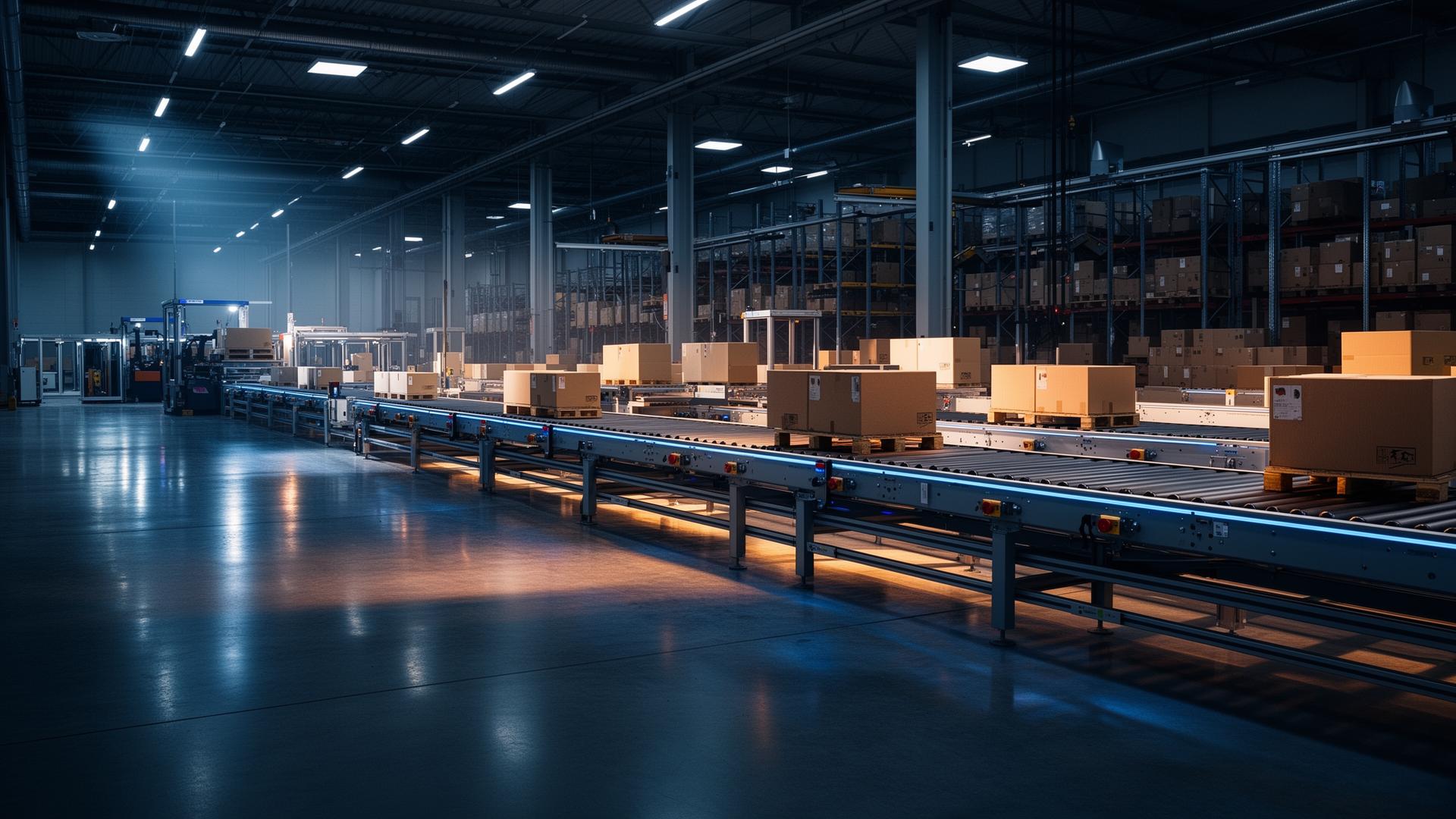
In the high-stakes, narrow-margin world of Benelux logistics, energy consumption has shifted from a background operational cost to a critical competitive differentiator. For Operations and Engineering Managers, the extensive network of conveyor systems in a distribution center represents a major opportunity for significant cost savings and sustainability gains. This article provides practical, actionable strategies for enhancing the energy efficiency of your material handling systems, tailored to the European regulatory and economic landscape.
Definition
Energy efficiency in conveyor systems refers to the optimization of all components and control systems to transport the maximum volume of goods using the minimum amount of electrical power. It involves a holistic approach, encompassing motor technology, control logic, component selection, and maintenance practices to reduce kWh consumption per item moved.
Key Numbers
| Metric | Typical range (EU 2026) | Notes |
|---|---|---|
| Energy Savings Potential | 30-50% | Compared to legacy AC motor systems. |
| Investment (MDR Retrofit) | €300 - €500 per meter | Depends on system complexity and roller density. |
| Annual Savings per 100m Line | €15,000 - €30,000 | Based on €0.25/kWh and typical 2-shift operation. |
| Return on Investment (ROI) | 2 - 4 years | Accelerated by government subsidies and rising energy prices. |
| MDR Motor Power | 30 - 100 Watts | Per roller/zone, versus several kW for a single AC motor. |
| Energy Use (AC Motor) | 1.5 - 2.5 kWh/hour | For a continuously running 30m belt conveyor. |
| Energy Use (MDR System) | 0.5 - 1.0 kWh/hour | For an equivalent 30m system with ZPA logic. |
Strategy 1: Embrace Motorized Drive Roller (MDR) Technology
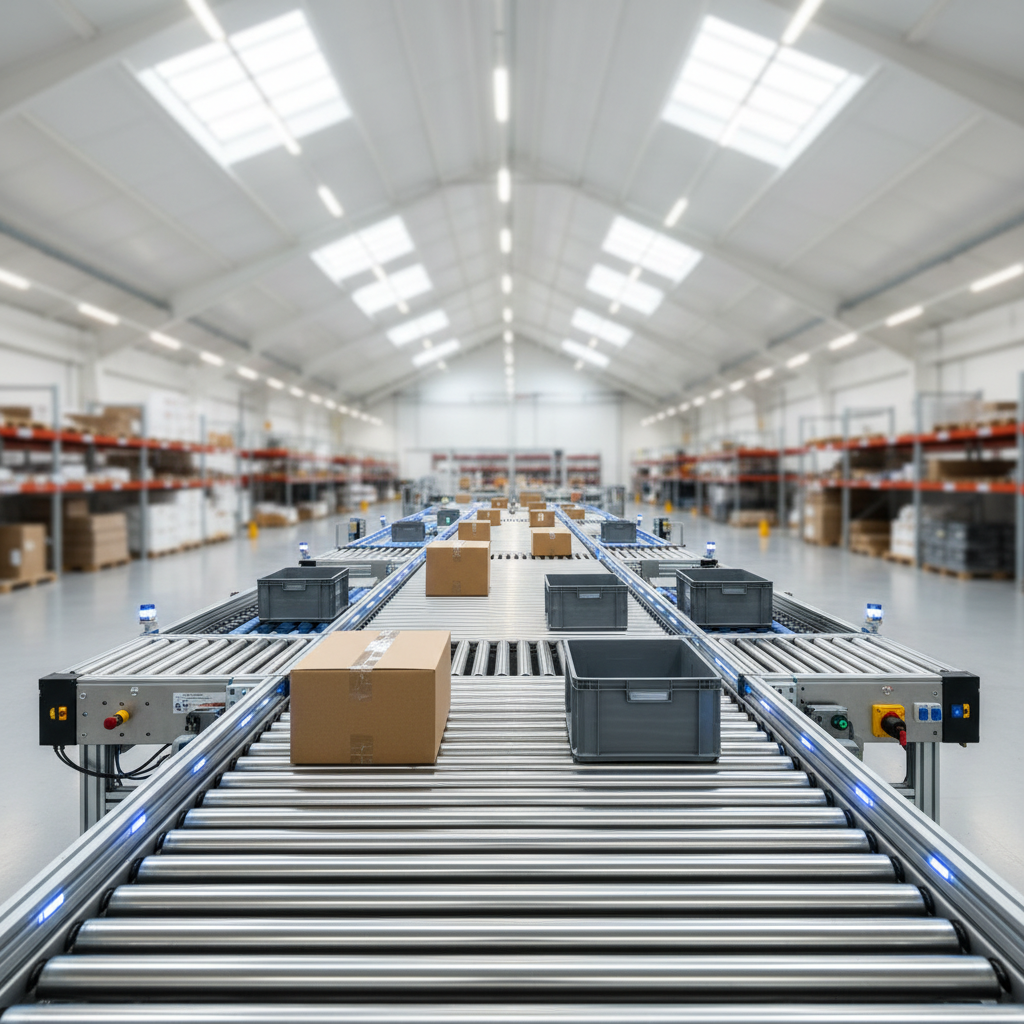
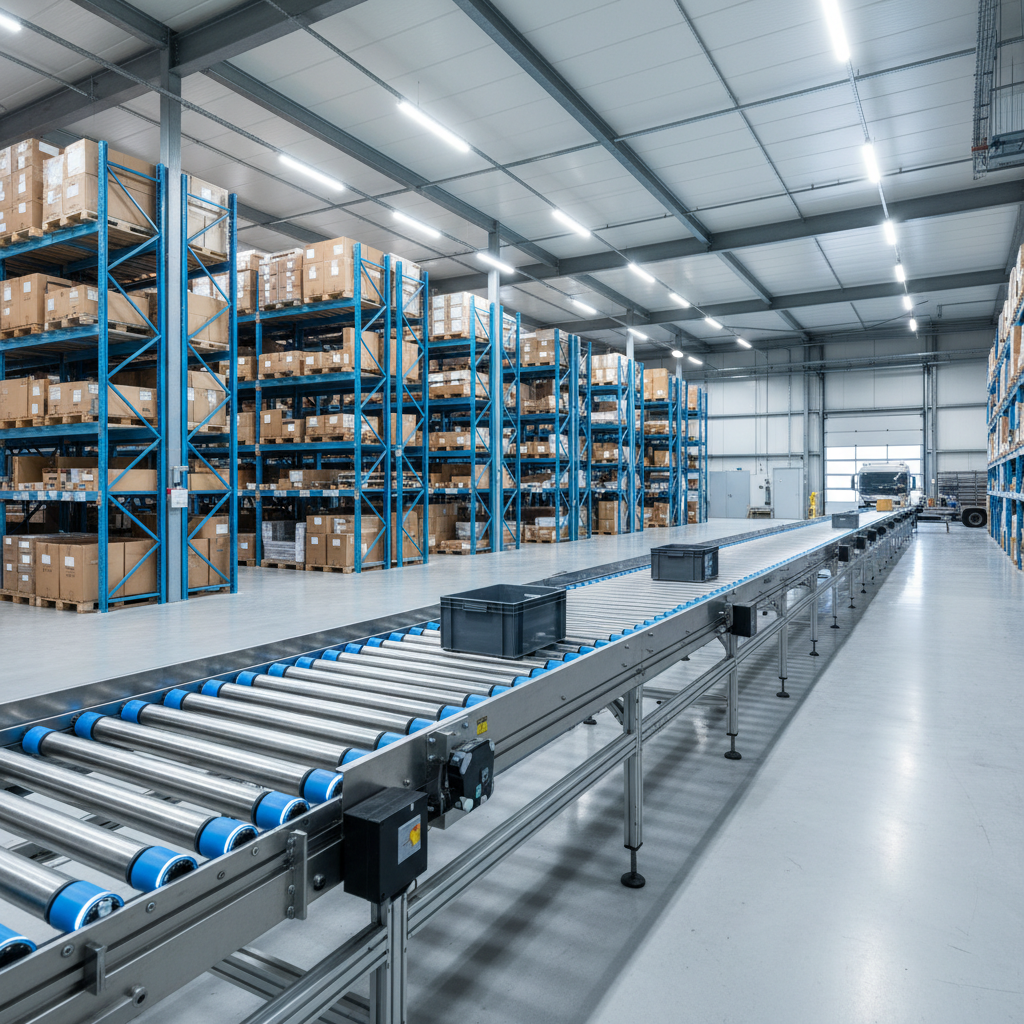
The single most impactful change you can make is transitioning from traditional conveyor systems—often powered by a single, large AC motor running continuously—to a decentralized system using Motorized Drive Roller (MDR) technology. Each MDR is a 24V DC roller with an integrated motor, creating discrete zones that are powered only when a product is present.
The Power of Decentralization
Instead of a single 3-phase AC motor consuming kilowatts continuously, an MDR system uses a series of low-wattage motors (typically 30-50W each). This zonal approach, especially when paired with Zero-Pressure Accumulation (ZPA) logic, means that large sections of the conveyor are idle and consuming zero energy for significant portions of the day. During nights, weekends, or low-volume periods, the savings are immense. A continuously running AC motor is like leaving the lights on in an empty building; MDR is the motion-activated equivalent.
Strategy 2: Implement Smart Control Systems
Modern control systems offer sophisticated ways to minimize energy use beyond the baseline efficiency of MDR. These systems, often managed by a WCS (Warehouse Control System) or PLC (Programmable Logic Controller), can implement advanced energy-saving logic.
Key Control Tactics
- Sleep Mode: Program controllers to put entire conveyor lines or sections into a "sleep" mode after a predetermined period of inactivity (e.g., 5-10 minutes). A single sensor detecting an incoming carton can "wake" the line section by section, just ahead of the product flow.
- Variable Speed Control: Not all products need to move at maximum speed. By integrating with a WMS, the conveyor can run at lower, more energy-efficient speeds for non-urgent SKUs or during off-peak processing, ramping up only when high throughput is required.
- Intelligent Gapping: Advanced controls can optimize the spacing between cartons to maximize throughput relative to energy use, ensuring the system isn't running just to maintain unnecessarily large gaps between items.
For a deeper dive into how different control systems orchestrate warehouse automation, consider our comprehensive guide on WMS and WCS integration.
Strategy 3: Optimize Component Selection and Maintenance
While motors are the primary energy consumers, other components contribute to the overall system drag, forcing the motors to work harder. Optimizing these elements is a crucial, often overlooked, aspect of efficiency.
Component Comparison Table
| Component | Low-Efficiency Option | High-Efficiency Option | Energy Impact |
|---|---|---|---|
| Conveyor Belt | Thick, heavy PVC belt | Lightweight, low-friction fabric or modular plastic belt | Reduces drag by 10-20% |
| Bearings | Standard, unsealed bearings | High-precision, low-friction, sealed bearings | Lowers rolling resistance by 5-15% |
| Belt Tension | Over-tensioned | Automatically or regularly tensioned to spec | Reduces motor load and wear by up to 10% |
| Lubrication | Infrequent, manual lubrication | Automated lubrication systems or sealed-for-life components | Minimizes friction, ensuring consistent performance |
The Importance of Preventive Maintenance
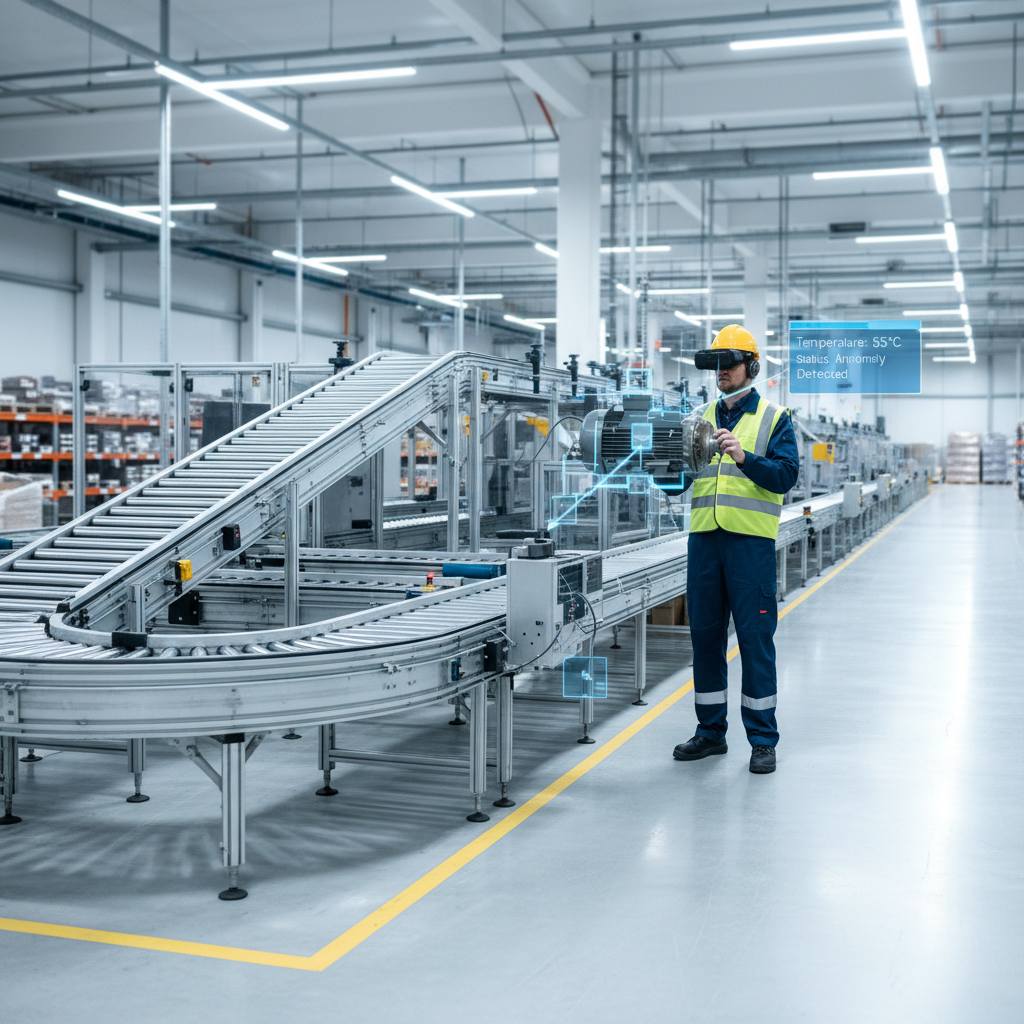
A well-defined preventive maintenance schedule is not just about preventing downtime; it's an energy efficiency tool. Regularly checking belt tension, tracking, and bearing lubrication can prevent the gradual increase in friction that plagues many older systems. A system suffering from high friction can easily consume 15-25% more energy to move the same load as a well-maintained equivalent.
Calculating the ROI for a Benelux Warehouse
Let's model a scenario for a medium-sized distribution center in the Netherlands or Belgium.
Assumptions:
- System: 150 meters of conveyor.
- Operation: 16 hours/day, 250 days/year.
- Energy Price: €0.25 per kWh (a conservative estimate for the Benelux region).
- Old System: Traditional AC motors, running continuously, total consumption of 8 kW.
- New System: MDR with ZPA logic, average consumption of 3 kW.
Calculation
- Annual Energy Cost (Old): 8 kW * 16 hours/day * 250 days/year * €0.25/kWh = €8,000
- Annual Energy Cost (New): 3 kW * 16 hours/day * 250 days/year * €0.25/kWh = €3,000
- Annual Savings: €8,000 - €3,000 = €5,000 per 150m line section. (Note: The TLDR and key numbers refer to a 100m line, this calculation is for a 150m line as an example). Many facilities have several such lines.
- Retrofit Investment: 150 meters * ~€400/meter = €60,000
- Simple ROI: €60,000 / €5,000/year = 12 years. This seems long, but does not factor in maintenance savings, reduced downtime, and potential government subsidies which can drastically shorten this period.
The Bigger Picture: Sustainability and Corporate Responsibility
Beyond the direct financial benefits, improving energy efficiency is critical for meeting corporate sustainability goals (ESG) and complying with tightening EU regulations. In the Benelux, where environmental standards are particularly high, demonstrating a commitment to reducing your carbon footprint can be a powerful brand differentiator, attracting both customers and talent. As many companies find, their operational processes often lag behind their growth ambitions, and sustainability is a key area where strategic investment is needed. You can read more about how operational processes need to scale with business growth in this analysis.
Easy Systems: Your Partner for Energy-Efficient Conveyor Solutions
At Easy Systems, we specialize in designing and implementing modular, energy-efficient conveyor systems for the European market. Our deep expertise in 24V DC technology, including MDR and smart controls, allows us to build solutions that are not only high-performing but also remarkably economical to operate. We understand the specific operational and financial challenges faced by businesses in the Benelux and work with you to design a system that delivers a rapid return on investment. From initial energy audit to final commissioning, we provide a partnership approach, ensuring your material handling system becomes a source of competitive advantage, not just a cost center. Trust us to engineer a sustainable and efficient future for your warehouse.
Frequently asked questions
How much can I realistically save by upgrading my conveyor system to be more energy-efficient?+
For a typical 100-meter conveyor line in a Benelux warehouse, upgrading from a traditional AC motor to a modern MDR system with ZPA controls can save between €15,000 and €30,000 annually, based on current energy prices (€0.25-€0.30/kWh) and 2-shift operations.
What is the primary difference between AC motor and MDR conveyor systems for energy use?+
An AC motor system typically runs continuously, consuming power (e.g., 1.5-2.5 kW) regardless of product flow. An MDR (Motorized Drive Roller) system is zonal, powering small sections only when a product is present. This run-on-demand approach can cut energy consumption by 30-50%.
Is it better to retrofit my existing conveyor or buy a new one?+
The decision depends on the age and condition of your current system. If the frame and rollers are in good shape, a retrofit with MDR technology and new controls can be cost-effective, with a typical ROI of 2-4 years. For older, worn-out systems, a full replacement is often a better long-term investment.
Do government subsidies for energy efficiency exist in the Benelux?+
Yes, countries in the Benelux offer various incentives for industrial energy-saving projects. For example, the Netherlands has the Energie-investeringsaftrek (EIA). These programs can often cover a significant portion of the investment, reducing the payback period for a conveyor upgrade to under 2 years.
How does Zero-Pressure Accumulation (ZPA) save energy?+
ZPA divides the conveyor into zones that can stop and start independently. When a carton stops, the zones behind it also stop, turning off their motors. This prevents unnecessary running of large conveyor sections, saving significant energy—often reducing consumption by over 40% during non-peak times.

The Easy Systems editorial desk reviews and fact-checks every Conveyor-Design article against Benelux project experience. Editors translate engineering decisions — throughput, peak factors, layout, integration — into plain-language guides for operations managers, project leads and decision-makers.
- Warehouse layout & slotting
- Order-profile analysis
- Vendor-neutral comparison
- Benelux logistics market