Energy Efficiency of Conveyor Systems: Strategies for Benelux
Looking to cut operational costs in your Benelux warehouse? This guide provides actionable strategies to significantly improve the energy efficiency of your conveyor systems, potentially reducing energy consumption by up to 75% through modern technologies like Motorized Drive Rollers (MDR).
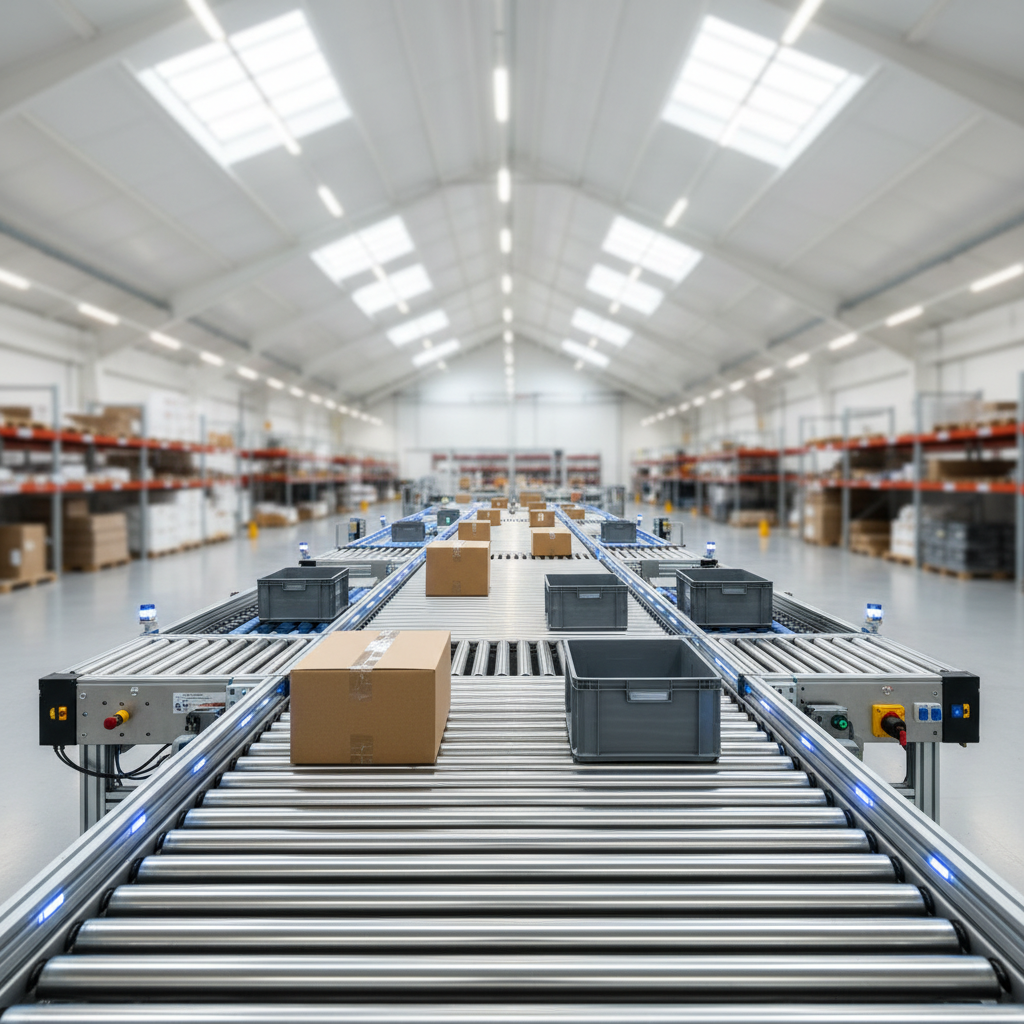
In the high-stakes, narrow-margin world of logistics and warehousing in the Benelux, operational costs are under constant scrutiny. Energy, in particular, has become a significant expenditure. Conveyor systems, the arteries of any modern distribution center, are often major energy consumers. This article provides practical, actionable strategies for warehouse managers in Belgium, the Netherlands, and Luxembourg to enhance the energy efficiency of their conveyor systems, reduce costs, and improve their carbon footprint.
Definition
The energy efficiency of a conveyor system refers to the ratio of useful work performed (transporting goods) to the total energy consumed. It is measured not just in motor efficiency but in the overall system design, including controls, components, and maintenance practices that collectively minimize energy waste (kWh) per unit of material moved (kg or CPH).
Key Numbers
| Metric | Typical range (EU 2026) | Notes |
|---|---|---|
| Energy Savings with MDR | 50% - 75% | Compared to traditional AC motor-driven lines. |
| Investment Cost (MDR) | €250 - €450 per meter | Higher initial cost than conventional systems, but faster ROI. |
| ROI for Efficiency Upgrades | 1.5 - 3 years | Based on Benelux energy prices (€0.15-€0.25/kWh) and double-shift operation. |
| Efficiency Gain (IE4 vs IE3 Motor) | 4% - 8% | IE5 motors offer even higher gains but are less common. |
| Energy Use (Belt Conveyor) | 0.5 - 2.5 kWh | Per hour for a 10m continuously running AC motor system. |
| Energy Use (MDR System) | 0.1 - 0.6 kWh | Per hour for a 10m system with zone-based operation. |
| Maintenance Impact | 10% - 15% efficiency gain | From proper belt tensioning, lubrication, and component cleaning. |
Strategy 1: Embrace Motorized Drive Roller (MDR) Technology
The single most impactful change a facility can make is to move from traditional, continuously running AC motors to 24V DC Motorized Drive Roller (MDR) technology. Unlike conventional systems where a single large motor powers a long section of conveyor, MDR systems use a series of rollers, each with its own integrated motor. This creates independent zones that only activate when a product is present.
The Power of Zoning
MDR technology is intrinsically linked to zero-pressure accumulation (ZPA) logic. In a ZPA system, products are buffered along the conveyor without touching, as each zone stops independently once the product has moved to the next. This has two major energy benefits:
- Run-on-Demand: Motors only run when a box is present and needs to move. In a typical warehouse with fluctuating throughput, this means motors are idle for a significant portion of the day, saving immense amounts of energy compared to a system that runs non-stop.
- Reduced Inrush Current: Large AC motors cause a significant power spike upon starting. A distributed MDR system has a much smoother power draw, as individual, low-power motors start and stop sequentially.
For a medium-sized distribution center in the Rotterdam port area, switching a 100-meter line from a conventional AC motor to an MDR system could result in annual energy savings of over €10,000, assuming double-shift operations.
Strategy 2: Optimize Your Drivetrain and Motors
Even if a full MDR retrofit isn't immediately feasible, significant gains can be made by focusing on the core drivetrain components.
High-Efficiency Motors
The EU has regulations for motor efficiency (IE classes). Many older systems still use IE1 or IE2 motors. Upgrading to IE3 (Premium Efficiency) or IE4 (Super Premium Efficiency) motors is a straightforward way to reduce energy consumption. An IE4 motor is typically 4-8% more efficient than an IE3 equivalent. While the initial cost is higher, the payback period, given current Benelux energy prices, is often less than three years.
Variable Frequency Drives (VFDs)
For AC motor-driven systems, installing Variable Frequency Drives (VFDs) is crucial. A VFD allows you to control the motor's speed to match the required throughput. Instead of running at 100% speed all the time, you can slow it down during non-peak hours, directly reducing energy consumption. A VFD can reduce a motor’s energy use by 20-50% in applications with variable loads.
Strategy 3: Implement Smart Control Logic
An efficient system is a smart system. Modern Warehouse Control Systems (WCS) or Warehouse Execution Systems (WES) offer sophisticated logic to minimize unnecessary conveyor operation.
Sleep Modes and Smart Routing
A well-programmed WCS can put entire conveyor sections into "sleep mode" when no product has been detected for a configurable period (e.g., 5 minutes). The system automatically wakes up when product is inducted upstream. This is particularly effective during breaks, shift changes, or slow periods. Furthermore, smart routing algorithms can consolidate product flow onto fewer lines during low-throughput periods, allowing other lines to be completely shut down.
Case Study: E-commerce Fulfillment Center
An e-commerce fulfillment center near Brussels found that their packing and shipping conveyors were running continuously, even when order volumes dropped overnight. By implementing a WCS with programmable sleep functions, they achieved a 30% reduction in energy consumption for those lines with zero impact on their OTIF (On-Time In-Full) metrics.
Comparative Analysis: Conveyor Technologies
Choosing the right technology from the start is paramount for energy efficiency. Here’s a comparison of common conveyor types used in Benelux warehouses.
| Conveyor Technology | Typical Energy Use | Best For | Pros | Cons |
|---|---|---|---|---|
| AC Motor-Driven Belt Conveyor | High (Continuous) | Long-distance transport, inclines | High speed, robust | Inefficient at low volumes, noisy |
| Lineshaft Conveyor | Medium-High | Light-duty transport, curves | One motor drives many rollers | High friction loss, maintenance-intensive |
| MDR Roller Conveyor | Very Low (On-Demand) | Zone routing, accumulation, sorting | Extremely energy-efficient, quiet, safe (24V) | Higher initial cost, complex controls |
| Chain Conveyor | High | Pallet or heavy-duty transport | Durable, high load capacity | High energy use, requires lubrication |
Strategy 4: The Unsung Hero: Maintenance
Maintenance is not just about preventing breakdowns; it’s a critical component of energy efficiency.
Key Maintenance Tasks for Energy Savings
- Belt Tensioning: An over-tensioned belt on a roller conveyor system forces the motor to work harder, increasing energy draw by up to 15%. A slack belt can slip, wasting energy and causing wear.
- Lubrication: Properly lubricated bearings and chains reduce friction, the primary enemy of energy efficiency. A scheduled lubrication plan is essential.
- Component Cleaning: Dust and debris in rollers and motors can increase friction and cause overheating, leading to wasted energy.
For many businesses, a lack of internal resources or expertise can make it difficult to keep up with these essential maintenance tasks. As stated in a recent analysis, many companies find their processes don't scale with their growth, leading to inefficiencies in areas like maintenance.
Positioning Easy Systems as Your Trusted Partner
In the competitive Benelux market, optimizing every aspect of your operation is key to profitability. At Easy Systems, we don't just sell conveyors; we engineer energy-efficient solutions tailored to your specific throughput, layout, and budget. Our deep expertise in 24V MDR technology and intelligent WCS integration allows us to design systems that provide not only top-tier performance but also the lowest possible total cost of ownership (TCO). Whether you are looking to retrofit an existing line in an Antwerp warehouse or build a new greenfield facility in the Netherlands, our team provides pragmatic, data-driven advice. We partner with you to analyze your current energy consumption, model potential savings, and implement a future-proof system that reduces both your electricity bill and your carbon footprint, ensuring your logistics operation is lean, green, and ready for the future.
Frequently asked questions
How much can I save by switching to MDR conveyors in the Benelux?+
By replacing traditional AC-powered conveyors with 24V Motorized Drive Roller (MDR) systems, a typical warehouse in the Benelux can expect to reduce conveyor energy consumption by 50-75%. For a medium-sized facility, this can translate into annual savings of over €10,000.
What is the typical ROI for an energy efficiency upgrade on a conveyor system?+
The return on investment (ROI) for upgrades like installing high-efficiency motors (IE4) or retrofitting with MDR technology is typically between 1.5 and 3 years in the Benelux. This is based on current energy prices (€0.15-€0.25/kWh) and standard double-shift warehouse operations.
Can VFDs (Variable Frequency Drives) really save energy on conveyors?+
Yes. A VFD allows you to adjust the speed of an AC-powered conveyor motor to match the actual workload. In periods of low throughput, slowing the motor down can reduce its energy consumption by 20-50%, offering significant savings without requiring a complete system overhaul.
How does zero-pressure accumulation (ZPA) help save energy?+
Zero-Pressure Accumulation (ZPA) systems use sensors to create zones that only operate when a product is present. This 'run-on-demand' approach means motors are idle for large parts of the day, saving up to 50% in energy compared to a continuously running conveyor, especially during off-peak hours.
Is regular maintenance important for conveyor energy efficiency?+
Absolutely. Proper maintenance, including correct belt tensioning, lubricating bearings, and keeping components clean, can reduce mechanical friction. This directly lowers the workload on motors, improving overall energy efficiency by a surprising 10-15% and extending the lifespan of your equipment.

The Easy Systems editorial desk reviews and fact-checks every Conveyor-Design article against Benelux project experience. Editors translate engineering decisions — throughput, peak factors, layout, integration — into plain-language guides for operations managers, project leads and decision-makers.
- Warehouse layout & slotting
- Order-profile analysis
- Vendor-neutral comparison
- Benelux logistics market