Circularity in Logistics: The Role of Modular Conveyor Systems
Modular and reusable conveyor systems are essential for achieving circular economy goals in Benelux logistics. They offer unparalleled flexibility to adapt, scale, and reconfigure, which significantly cuts down on material waste, reduces long-term costs, and boosts operational efficiency in a fast-changing market.
Key numbers
| Metric | Typical range (EU 2026) | Notes |
|---|---|---|
| Component Lifespan | 15-20 years | Compared to 7-10 years for traditional welded systems. |
| Total Cost of Ownership (TCO) | 15-25% lower | Driven by reduced reconfiguration, maintenance, and replacement costs. |
| Reconfiguration Downtime | 24-72 hours | For a standard 100-meter line; traditional systems may require weeks. |
| Material Waste Reduction | 70-90% | Achieved by reusing components instead of scrapping entire systems. |
| Typical Resale Value (5 years) | 30-50% of initial cost | Promotes a secondary market for used components, enhancing circularity. |
| Energy Consumption (MDR) | 30-50% lower | Using 24V Motor-Driven Rollers vs. traditional AC motor-powered lines. |
In the dense, highly competitive logistics landscape of the Benelux, sustainability is no longer a buzzword but a critical business driver. Driven by European Union directives and growing consumer demand for eco-friendly practices, companies are urgently seeking ways to transition from a linear "take-make-dispose" model to a circular one. Modular and reusable conveyor systems are emerging as a cornerstone of this transformation, offering a practical solution to reduce waste, enhance flexibility, and future-proof warehouse operations.
Definition
Modular and reusable conveyor systems are material handling solutions built from standardized, interchangeable components. Unlike traditional, custom-fabricated systems, they can be easily assembled, disassembled, reconfigured, and expanded to meet changing logistical demands, promoting a circular economic model by design.
The Circular Economy in a Benelux Context
The Benelux region, with its major ports like Rotterdam and Antwerp and extensive network of distribution centers, is at the heart of European logistics. This strategic position comes with immense pressure to operate efficiently and sustainably. The EU Green Deal and related policies are pushing for stricter regulations on waste and resource use, making circularity an economic and regulatory necessity.
Why Here, Why Now?
For logistics operators in Belgium, the Netherlands, and Luxembourg, the motivation is threefold:
- Regulatory Compliance: Adhering to evolving EU and national environmental standards to avoid penalties and maintain a license to operate.
- Economic Advantage: Reducing long-term costs associated with waste, equipment replacement, and operational downtime.
- Market Competitiveness: Meeting the sustainability requirements of major clients and appealing to environmentally-conscious end consumers.
A static, monolithic infrastructure is a liability in this dynamic environment. Modular systems offer an adaptive alternative that aligns perfectly with the principles of the circular economy: design out waste, keep products and materials in use, and regenerate natural systems.
What Are Modular & Reusable Conveyor Systems?
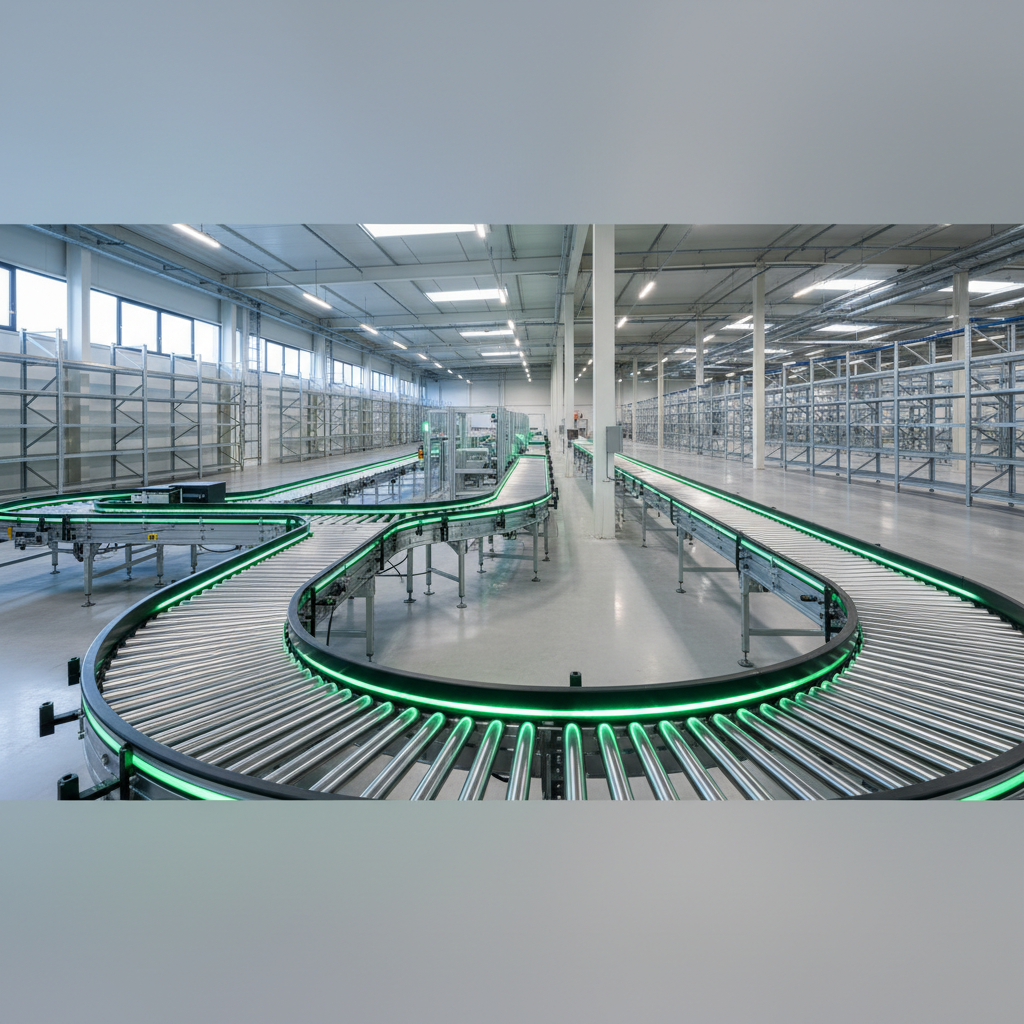
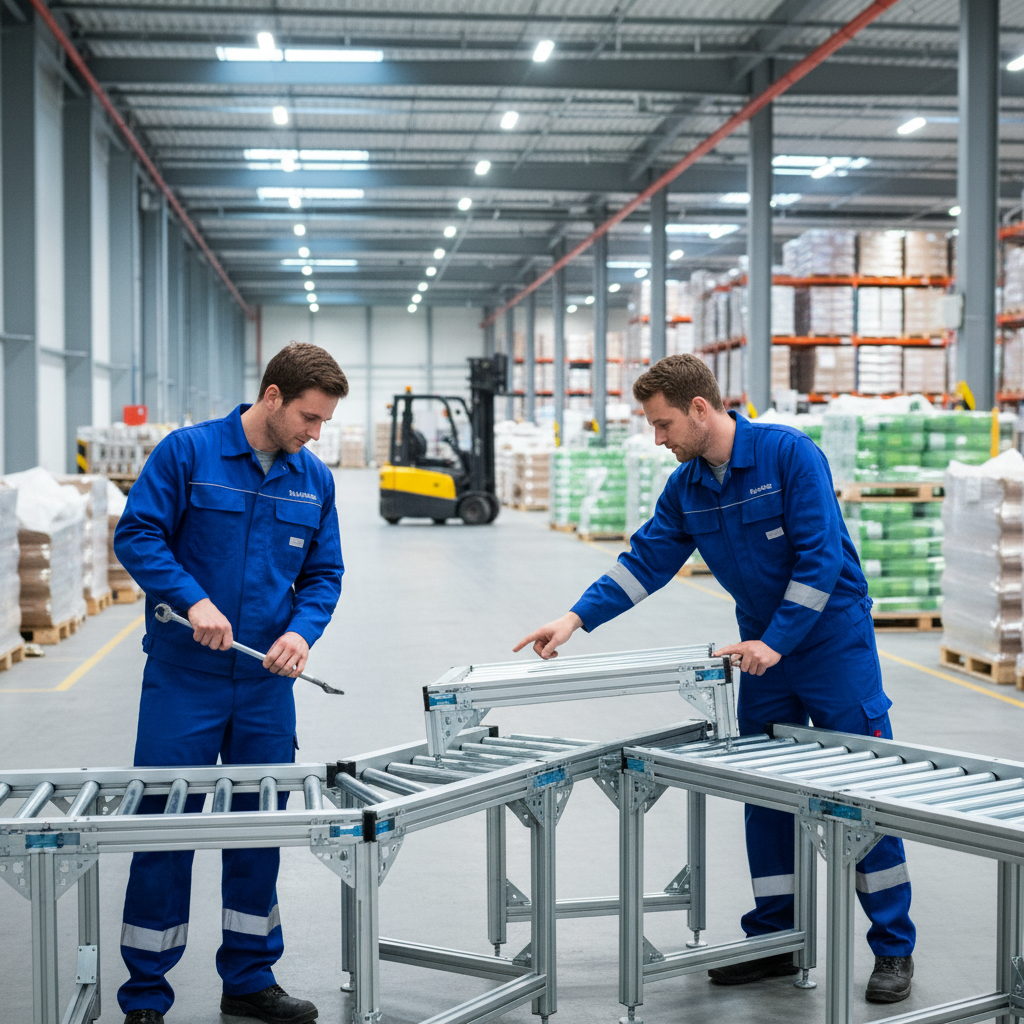
Think of modular conveyors as industrial-grade LEGO®. They consist of pre-engineered, standardized blocks—such as straight sections, curves, mergers, and diverts—that can be combined in countless configurations. Core components like a roller conveyor or a belt conveyor are built using these universal building blocks.
The Core Principles
The key departure from traditional systems is the philosophy of "configure, don't customize." Traditional conveyors are often welded and custom-built for a specific task and layout. When needs change, the entire system is often scrapped. Modular systems, however, are designed for disassembly and reuse. A system used for inbound logistics this year can be reconfigured for an outbound sorting line next year.
Key Benefits of Modular Conveyors for Circular Logistics
The adoption of modularity brings tangible financial and environmental benefits, directly addressing the challenges faced by growing companies.
1. Extended Lifespan and Reusability
Instead of a 7-10 year lifespan ending in a scrap heap, a modular system’s components can be used for 15 years or more. A damaged section with a motor-driven roller (MDR) can be swapped out in under an hour for a cost of €200-€400, while the rest of the line continues to operate. In a traditional system, such a failure could require cutting, welding, and hours or even days of downtime.
2. Reduced Waste and Material Consumption
When a warehouse layout changes, traditional systems generate tons of steel and plastic waste. A modular system is simply reconfigured. This drastically reduces the consumption of raw materials and the carbon footprint associated with manufacturing new equipment. The ability to use smart controls for zero-pressure accumulation also reduces energy consumption by only running motors when a product is present.
3. Enhanced Flexibility and Scalability
Many businesses find that their processes cannot keep up with their growth. As eloquently described in the observation that companies grow, but their processes don't always grow with them, static infrastructure is a major bottleneck. Modular systems solve this. An e-commerce company in the Netherlands can add 50 meters of conveyor line to handle the Black Friday rush and then redeploy those modules to a new packing station in January. This adaptability is impossible with welded structures.
Modular vs. Traditional Conveyor Systems: A Comparison
Let's break down the practical differences over a 10-year operational period for a hypothetical 100-meter conveyor line in a warehouse near Brussels.
| Metric | Traditional Welded Conveyor System | Modular Conveyor System | Advantage |
|---|---|---|---|
| Initial Investment | €80,000 - €100,000 | €95,000 - €120,000 | Traditional (Slightly lower initial Capex) |
| Installation Time | 2-3 weeks | 3-5 days | Modular |
| Cost of 1 Major Reconfiguration | €60,000 (Requires significant new material and scrapping of old) | €15,000 (Primarily labor; 90% of components reused) | Modular |
| Downtime for Section Repair | 8-16 hours (cutting, welding, cooling) | 1-2 hours (unbolt, replace module, re-bolt) | Modular |
| Lifecycle Waste (10 years, 1 reconfig) | ~5,000 kg steel/aluminum | ~200 kg (only worn-out individual components) | Modular |
| Estimated 10-Year TCO | ~€150,000 | ~€125,000 | Modular |
Practical Applications in Benelux Warehouses
The theoretical benefits translate into real-world success across various sectors.
E-commerce Fulfillment Centers
An apparel e-tailer near Schiphol Airport faces massive order spikes during sale periods. They use modular conveyors to create temporary, high-speed sorting lines that feed directly into packing stations. After the peak, these lines are shortened or re-routed to support returns processing. This is a core component of many modern sortation systems, where flexibility is paramount.
Third-Party Logistics (3PL) in Antwerp
A 3PL provider in the Port of Antwerp serves multiple clients from the same facility. One month they may be handling palletized goods, the next, small e-commerce parcels. Modular roller and belt conveyors allow them to quickly set up and tear down dedicated lines for each client, ensuring process isolation and efficiency without needing a new building for every new contract.
Implementation Strategy: Moving to a Modular System
Transitioning to a circular, modular approach is a strategic process:
- Audit & Analysis: Evaluate your current material flow. Identify bottlenecks, high-maintenance areas, and processes that are likely to change. Quantify the waste and downtime of your current system.
- Define Future Needs: Don't just plan for today. Map out growth projections, potential new product lines, and expected changes in order profiles for the next 3-5 years.
- Phased Implementation: You don't need to replace everything at once. Start with a non-critical or new process, like a value-added service line or a returns processing area. Use this pilot project to gain experience and demonstrate ROI.
- Choose a Partner, Not a Supplier: Work with an integrator who understands circularity and modular design. They should provide not only the hardware but also the expertise to design for future reconfigurations.
Easy Systems: Your Partner in Circular Conveyor Solutions
At Easy Systems, we live and breathe modularity. As part of the BOA Concept group, our philosophy is rooted in creating conveyor systems that are not just effective on day one, but adaptable for the entire lifecycle of your operation. Our pre-engineered, standardized modules are designed in Europe for rapid deployment and endless reconfiguration. We help businesses across the Benelux move away from the wasteful "rip and replace" cycle and embrace a flexible, cost-effective, and truly circular approach to warehouse automation. Let us help you design a logistics backbone that grows with you, not against you.
Frequently asked questions
What is the typical ROI for switching to a modular conveyor system?+
The Return on Investment (ROI) for modular systems typically manifests within 2-3 years. While the initial capital expenditure can be 10-15% higher than traditional systems, the savings on reconfiguration, reduced downtime, and lower maintenance costs lead to a 15-20% lower Total Cost of Ownership (TCO) over the system's lifespan.
Are modular conveyors as robust as traditional welded systems?+
Absolutely. Modular systems are built from high-grade steel or aluminum and use robust, standardized connection methods. They are engineered to handle the same load capacities and throughput as traditional systems, with individual roller capacities often ranging from 50 kg to over 1,500 kg for pallet systems.
How does modularity help with scaling operations for seasonal peaks?+
Modular systems excel during seasonal peaks. Extra conveyor sections can be rented and installed in under 48 hours to handle increased volume, and then removed. This avoids capital being tied up in idle equipment, offering an OPEX model for hardware that is only needed 3-4 months a year.
Can modular conveyors be integrated with existing Warehouse Management Systems (WMS)?+
Yes, integration is straightforward. Modern modular systems use decentralized control with standard protocols like PROFINET or EtherNet/IP, allowing plug-and-play communication with most WMS/WCS platforms. A typical integration for a 200-meter system can be completed by a systems integrator in just 5-10 working days.
What is the impact on energy consumption?+
The impact is significant. Most modular systems use 24V DC Motor-Driven Rollers (MDR) that consume up to 50% less energy than traditional AC-powered lines. They run on demand, activating only when product is present. This can reduce annual electricity costs by €2,000-€4,000 for a medium-sized, 150-meter system.

The Easy Systems engineering team designs, integrates and commissions conveyor systems and warehouse automation across Belgium, the Netherlands and Luxembourg. Combined experience covers roller and belt conveyors, sorters, AGV/AMR fleets, AutoStore, shuttle AS/RS and WMS/WCS integration for distribution centers and e-commerce fulfillment operations.
- Conveyor design (roller, belt, modular plastic)
- Sortation & merge logic
- AGV / AMR fleet integration
- AutoStore & shuttle AS/RS
- WMS / WCS integration