Circularity in Logistics: Modular Conveyors in the Benelux
Modular and reusable conveyor systems are pivotal for circular logistics in the Benelux. They reduce waste, lower total cost of ownership (TCO), and increase operational flexibility, paving the way for sustainable warehouse automation.
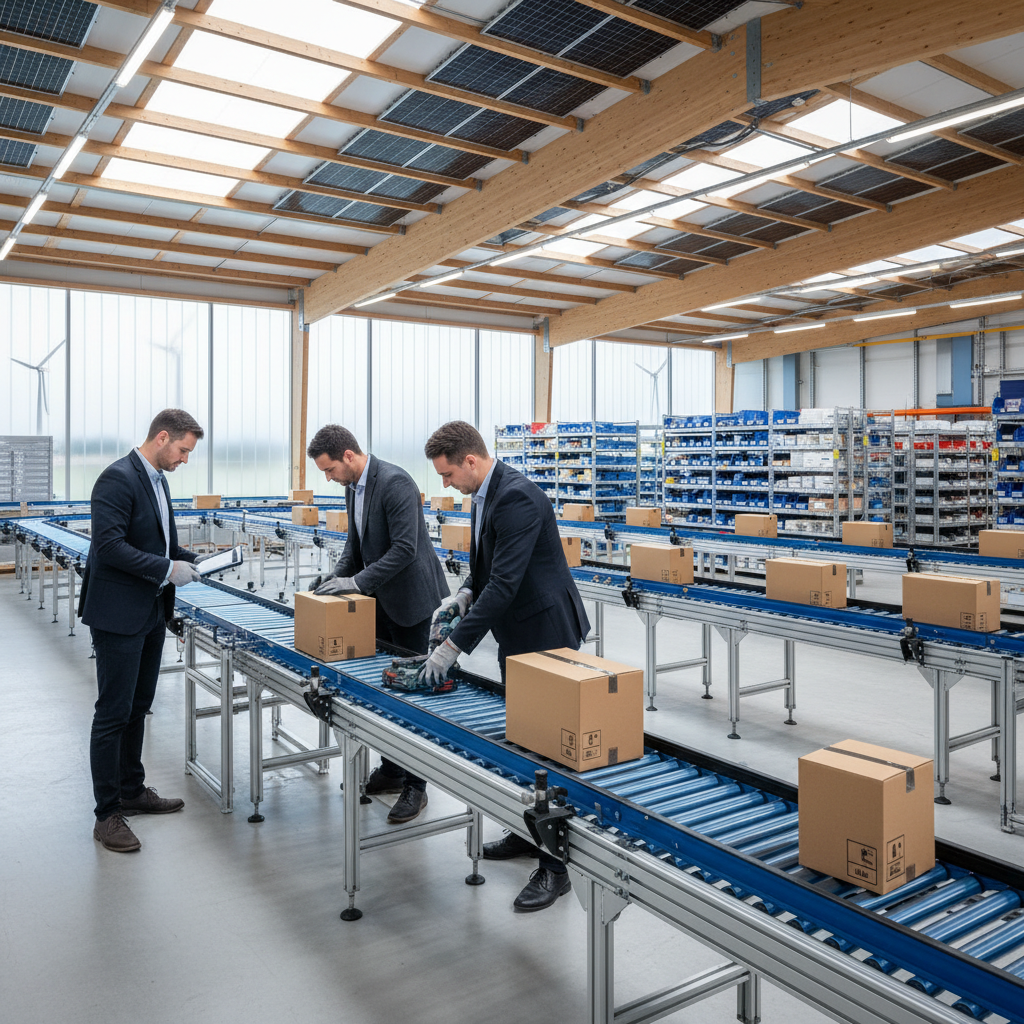
The shift towards a circular economy is reshaping industries across Europe, and the logistics sector is no exception. In the high-density distribution landscape of the Benelux (Belgium, Netherlands, Luxembourg), companies are under pressure to be more sustainable and efficient. This article explores the critical role of modular and reusable conveyor systems in achieving circularity, reducing environmental impact, and creating long-term value.
Definition
Circular logistics infrastructure refers to material handling systems, like conveyors, designed with modularity and reusability at their core. Instead of a "linear" buy, use, and dispose model, circular systems are built to be disassembled, reconfigured, and redeployed multiple times throughout their extended lifecycle, minimizing waste and maximizing resource utilization.
The End of Linear Logistics in Europe
For decades, warehouse infrastructure was built with a linear mindset. A conveyor system was designed for a specific purpose, in a specific layout, for a specific product flow. When business needs changed—a common occurrence in today's volatile market—the entire system was often ripped out and scrapped. This generated immense material waste and significant financial loss. The European Green Deal and stricter national regulations on waste and carbon emissions are making this linear model untenable.
From Fixed to Flexible
The core problem with traditional systems is their inflexibility. Welded frames and custom-cut lengths make adaptation impossible. A distribution center designed for retail store replenishment cannot easily pivot to handle the granular, high-volume orders of e-commerce. In the Benelux, where logistics real estate is expensive (prime rents exceeding €70/m²/year in some Dutch hotspots), maximizing the utility of every square meter is crucial. Fixed infrastructure that cannot adapt represents a stranded asset and a barrier to growth. Many companies find that as they expand, their internal processes fail to keep pace, a challenge that flexible infrastructure directly addresses. Read more on how Easy Systems helps companies scale their processes.
Core Principles of Modular Design for Circularity
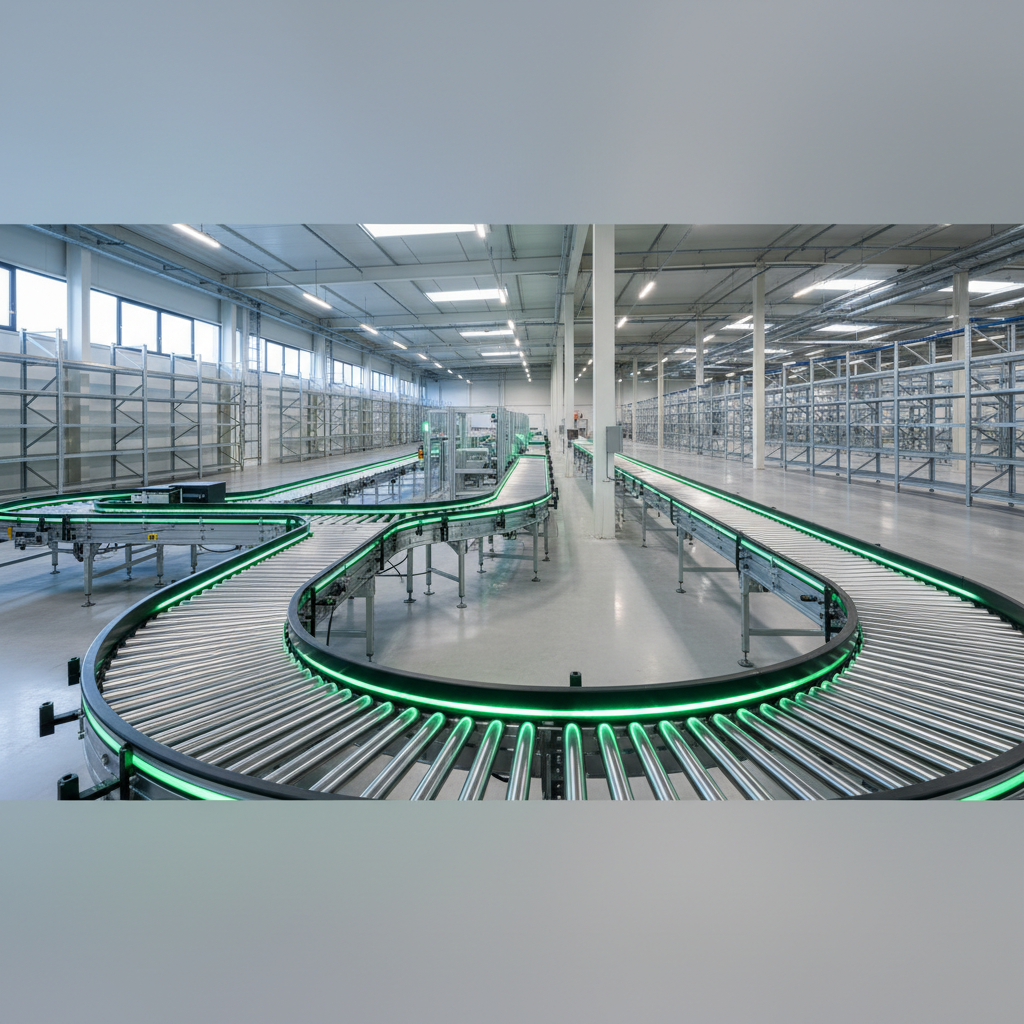
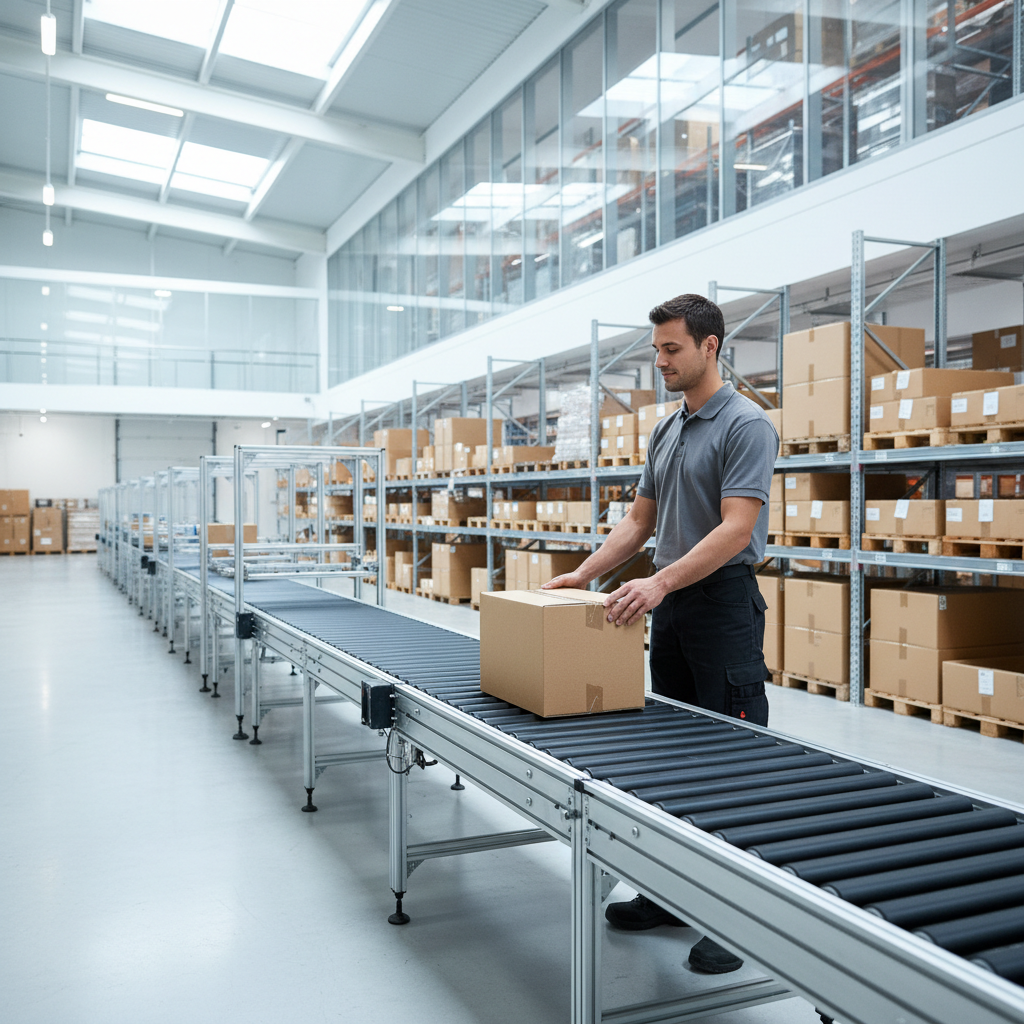
Modular conveyor systems are the enablers of a circular approach. They are built from standardized, interoperable components that can be assembled like building blocks. This design philosophy is what allows for disassembly, reuse, and reconfiguration without loss of integrity.
Key Design Features
- Standardized Components: Modules typically come in standard lengths (e.g., 500 mm, 1000 mm, 2000 mm) and widths (e.g., 400 mm, 600 mm, 800 mm), with pre-drilled holes and universal connectors.
- Bolt-Together Construction: Frames and supports are bolted, not welded, allowing for easy disassembly with standard tools.
- Plug-and-Play Electronics: Motors, sensors, and control modules often use quick-disconnect cables, simplifying electronic reconfiguration. A Warehouse Control System (WCS) designed for modularity can easily adapt its logic to new layouts.
- Durable, Reusable Belting: Components like a modular plastic belt can be repaired link by link, rather than requiring a full replacement, extending its usable life significantly.
Financial & Environmental Benefits in a Benelux Context
The business case for circularity is not just environmental; it's economic. For companies operating in the competitive Benelux market, modularity offers a significant advantage by lowering the Total Cost of Ownership (TCO) and increasing operational agility.
Comparing Linear vs. Circular Conveyor Lifecycles
The table below provides a clear comparison of the two approaches over a 10-year period for a hypothetical 100-meter conveyor line.
| Metric | Traditional (Linear) Conveyor | Modular (Circular) Conveyor |
|---|---|---|
| Initial Investment (Capex) | ~ €90,000 | ~ €110,000 (Slightly higher for modular engineering) |
| Installation Time / Cost | 3-4 weeks, significant on-site welding/fabrication | 1-2 weeks, assembly of pre-fabricated modules |
| Flexibility / Reconfiguration Cost | Extremely high; often requires full replacement | Low; ~70-80% of original components are reusable. Cost is primarily labor. |
| End-of-Life Value (Year 5 change) | Scrap value only (~ €2,000) | Asset value; components can be redeployed or sold (~ €60,000 - €70,000 value retained) |
| 10-Year TCO (incl. one major layout change) | ~ €190,000 (Initial + near-full replacement) | ~ €140,000 (Initial + labor for reconfiguration) |
| Carbon Footprint (Manufacturing) | High (2x manufacturing cycles) | Low (1x manufacturing cycle + minor additions) |
Reusability in Practice: A System's Second Life
The true power of circular design is realized when a conveyor system is given a second, third, or even fourth life. This is becoming a common practice for third-party logistics (3PL) providers and e-commerce companies in the Netherlands and Belgium, whose operational needs can change contract by contract.
A Practical Scenario
- Initial Deployment (Years 1-4): A 3PL installs a 150-meter modular roller conveyor system for an e-commerce fashion client. The system includes curves, merges, and a packing area.
- Client Change (Year 5): The fashion client leaves. A new client, distributing electronics, comes on board. Their products are smaller and require more complex sorting.
- Reconfiguration: The 3PL disassembles the existing system. They reuse 80% of the straight sections and supports. They sell the large-radius curves back to the manufacturer (or on a secondary market) and purchase new, smaller modules and a small sortation system to create a more intricate layout. The reconfiguration takes two weeks, compared to the 2-3 months needed to procure and install a new traditional system.
This agility is a massive competitive advantage, enabling logistics providers to respond to market demands with unprecedented speed.
Challenges to Implementation
Despite the benefits, the transition to circular infrastructure is not without hurdles. The primary challenge is mindset. It requires a shift in procurement, from focusing solely on the lowest initial Capex to evaluating the entire lifecycle cost (TCO). Furthermore, a secondary market for used components must mature to provide liquidity and transparent pricing, though specialized suppliers are beginning to fill this niche.
Overcoming Integration Hurdles
Integrating reused modules into existing systems requires robust planning and a strong partnership with a knowledgeable supplier. Ensuring that control systems, motor voltages (e.g., 24V vs. 400V), and safety standards are compatible is critical for a successful redeployment. This is where a partner with deep engineering expertise becomes invaluable.
The Future: Circularity Integrated with Automation
The next frontier is the full integration of modular hardware with adaptable software. Imagine a warehouse where the physical layout can be changed over a weekend, and the Warehouse Execution System (WES) automatically recognizes the new arrangement and optimizes flow. This vision extends to sortation, where modular sorters can be expanded as CPH (Cartons Per Hour) requirements grow. For more on this, our guide on Sortation Systems offers a deep dive. The combination of modular hardware and intelligent software creates a truly future-proof logistics operation.
Easy Systems: Your Partner for Circular & Modular Conveyor Solutions
At Easy Systems, we have championed the principles of modularity and reusability for years. Our conveyor systems are engineered from the ground up to support a circular economy. We design with standardized, high-quality components that are meant to be reconfigured and redeployed, protecting your investment and future-proofing your operations.
From our Benelux headquarters, we partner with clients to design systems that are not only efficient on day one but are also adaptable for the challenges of tomorrow. We offer buy-back programs and a stock of pre-owned modules, facilitating a truly circular lifecycle for your material handling assets. By choosing Easy Systems, you choose a lower TCO, greater operational flexibility, and a tangible commitment to sustainability. We help you build a warehouse that can evolve with your business.
Frequently asked questions
What is the main advantage of modular conveyors for circularity?+
The main advantage is reusability. Modular conveyors can be disassembled and reconfigured for new layouts or different facilities, drastically reducing material waste and the need to manufacture new systems. This extends the asset's life and lowers its total cost of ownership.
How much can I save with a modular conveyor system?+
While the initial investment (Capex) can be 10-20% higher than traditional welded conveyors, the Total Cost of Ownership (TCO) is significantly lower. Factoring in one major layout change, savings can reach 25-30% over a 10-year period due to the ability to reuse most components.
Are used modular conveyor components reliable?+
Yes, when sourced from a reputable partner like Easy Systems. We thoroughly inspect, refurbish, and warranty used components like motors, rollers, and frames to ensure they meet original performance specifications. This makes reuse a reliable and cost-effective option.

The Easy Systems engineering team designs, integrates and commissions conveyor systems and warehouse automation across Belgium, the Netherlands and Luxembourg. Combined experience covers roller and belt conveyors, sorters, AGV/AMR fleets, AutoStore, shuttle AS/RS and WMS/WCS integration for distribution centers and e-commerce fulfillment operations.
- Conveyor design (roller, belt, modular plastic)
- Sortation & merge logic
- AGV / AMR fleet integration
- AutoStore & shuttle AS/RS
- WMS / WCS integration