Circularity in Logistics: Modular Conveyors in the Benelux
Modular conveyor systems are pivotal for achieving circularity in Benelux logistics. Their reusability and adaptability minimize waste, lower lifetime costs, and enable warehouses to quickly respond to changing market demands, unlike traditional welded systems.
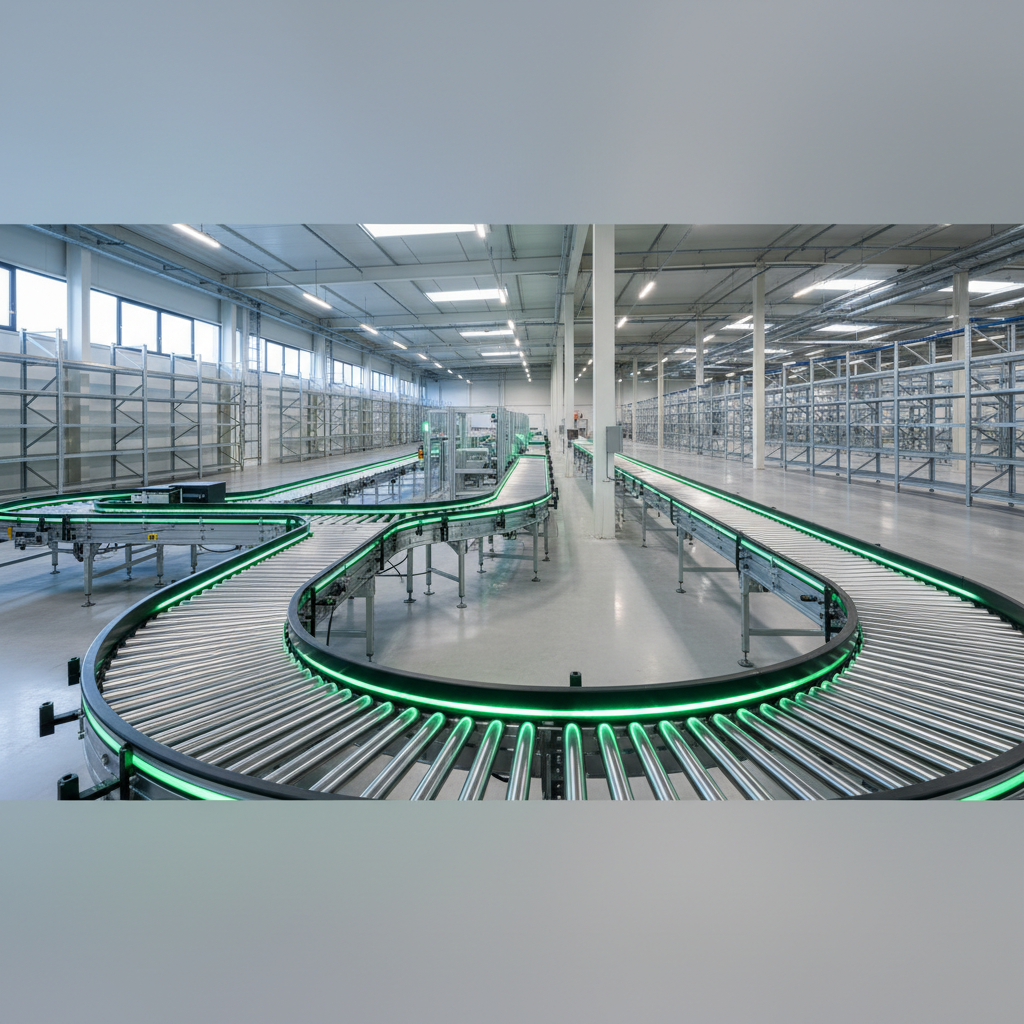
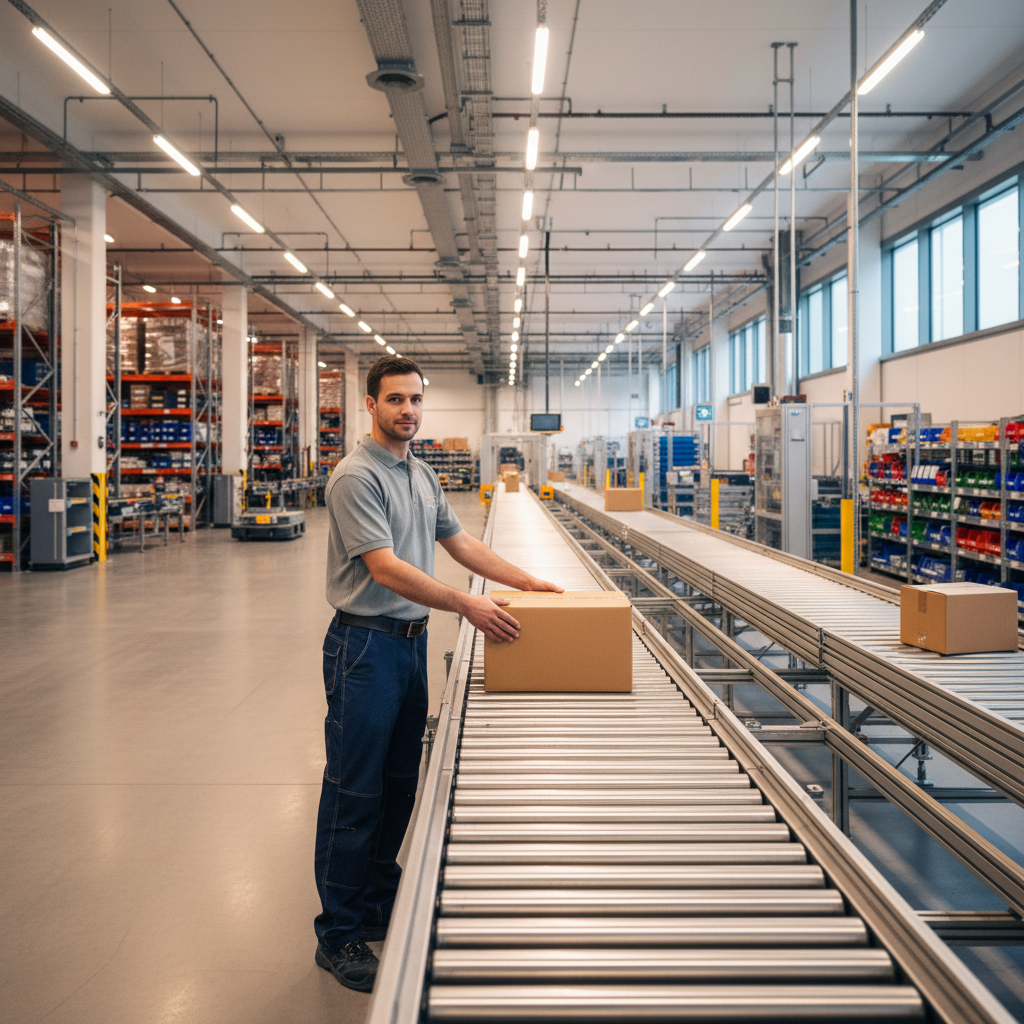
In the dense and highly competitive logistics landscape of the Benelux, the push towards a circular economy is reshaping warehouse operations. Forward-thinking companies are moving away from the traditional linear model of "buy, use, dispose" and embracing systems designed for longevity and adaptability. Modular conveyor systems are at the forefront of this transformation, offering a practical solution to reduce waste, enhance flexibility, and lower the total cost of ownership.
Definition
Circularity in logistics, applied to material handling, is an approach that prioritizes the longevity, reusability, and adaptability of equipment. Instead of scrapping entire conveyor lines during a layout change, a circular model uses modular systems whose components can be easily reconfigured, repurposed, or recycled, thus minimizing waste and preserving capital investment.
The Pressure for Circularity in European Logistics
The transition to circular business models is no longer just a trend; it's a strategic necessity, heavily influenced by European policy. The EU Green Deal and its associated Circular Economy Action Plan set ambitious targets for waste reduction and sustainable production. For logistics hubs in the Netherlands, Belgium, and Luxembourg, this translates into direct pressure to decarbonize operations and minimize industrial waste. Companies that fail to adapt face not only regulatory risks but also risk losing their competitive edge as clients and consumers increasingly favor sustainable partners. This shift is pushing warehouse and fulfillment managers to re-evaluate their core infrastructure, particularly fixed assets like conveyor systems which have historically been a major source of waste during facility updates.
Traditional vs. Modular Conveyors: A Sustainability Showdown
The choice of conveyor system has profound implications for a company's ability to operate sustainably. Traditional systems, often custom-fabricated and welded, represent the linear model. Modular systems, by contrast, are designed for a circular life from the outset. Their inherent flexibility provides a clear path to reducing a warehouse's environmental footprint while simultaneously boosting operational agility. Below is a direct comparison of how these two approaches stack up.
| Attribute | Traditional Welded Conveyors | Modular Conveyor Systems |
|---|---|---|
| Design Philosophy | Linear; custom-built for a single, fixed purpose. | Circular; designed for disassembly, reconfiguration, and reuse. |
| Material & Construction | Painted mild steel, welded joints. Difficult to modify. | Anodized aluminum or stainless steel profiles, bolted connections. |
| Reconfigurability | Extremely low. Requires cutting, welding, and repainting. Often cheaper to scrap. | Extremely high. Can be disassembled and reassembled with basic tools. |
| Implementation Time | 8-14 weeks for design, fabrication, and installation. | 2-5 weeks. Standard components are often in stock. |
| End-of-Life Value | Low. Typically sold as scrap metal for a fraction of its original cost. | High. Over 95% of components are reusable in new layouts, preserving their value. |
| Total Cost of Ownership (TCO) | High. Initial cost plus high replacement costs for any layout change. | Lower. Initial investment is preserved through multiple reconfigurations. |
Key Principles of Modular Design for Circularity
The effectiveness of modular conveyors in a circular economy stems from a few core design principles that radically differentiate them from their welded counterparts.
Standardization of Components
Modular systems are built around standardized aluminum profiles (e.g., 40x40mm or 80x40mm) and components. This means a support leg from a belt conveyor section can be repurposed for a roller conveyor curve. This interchangeability is the cornerstone of reusability, allowing engineers to treat their conveyor infrastructure as a set of building blocks, not a monolithic structure.
Ease of Assembly and Disassembly
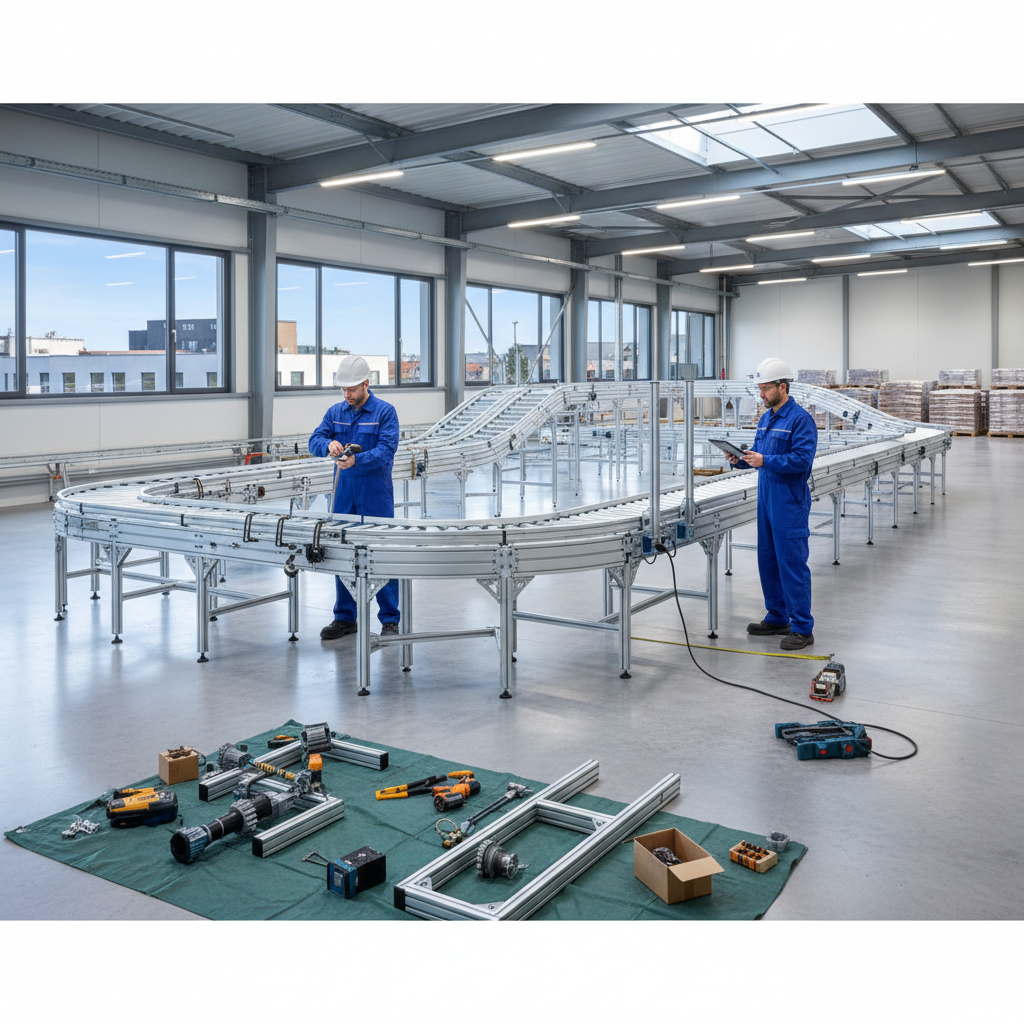
Where traditional systems require welders and fabricators, modular systems are assembled with bolts and T-slot nuts. A small team of technicians can reconfigure a 50-meter line in a matter of days, not weeks. For example, changing the angle of a sorting divert or adding a new accumulation zone can be completed over a weekend, minimizing operational downtime. This agility is crucial for sectors like e-commerce and 3PL, where client needs and order profiles can change rapidly.
Material Choice and Recyclability
Modular systems predominantly use anodized aluminum. This material is not only strong and lightweight but also highly resistant to corrosion and 100% recyclable. Unlike painted steel, which can rust and requires chemical stripping before recycling, aluminum retains its intrinsic value. At the true end-of-life, decades down the line, the material itself can be efficiently repurposed.
Tangible Benefits in Benelux Warehouses
Adopting modularity delivers measurable advantages for distribution centers in locations like Antwerp, Rotterdam, or Luxembourg.
- Reduced Capital Expenditure: When a process changes, a modular system can be reconfigured for an estimated 10-20% of the cost of a new system. A traditional system would require a 100% new investment.
- Waste Reduction: Reusing components drastically cuts down on scrap metal waste. A warehouse that reconfigures its layout every three years could avoid scrapping several tons of steel over a decade.
- Increased Agility: E-commerce fulfillment centers can adapt their picking and packing lines between peak and off-peak seasons. A system designed for apparel can be reconfigured to handle electronics, extending its useful life indefinitely. As your business grows, your processes need to scale efficiently; modularity ensures your material handling infrastructure can keep pace. Read more about how growing companies can scale their processes.
Modular Integration with Warehouse Control Systems
The physical flexibility of modular conveyors is mirrored by modern software. A Warehouse Control System (WCS) acts as the brain of the operation, managing the flow of goods. When a conveyor line is reconfigured, the WCS can be updated to reflect the new paths, diverts, and zones. This synergy between adaptable hardware and software is critical for running a truly dynamic operation. For businesses looking to optimize their workflow from inbound to outbound, a comprehensive guide on integrating WMS, WCS, and WES can provide deeper insights into creating a seamless data and material flow.
Easy Systems: Your Partner in Circular Logistics Automation
In the Benelux, achieving true circularity requires more than just the right hardware; it demands a partner with deep expertise in both process optimization and modular engineering. At Easy Systems, we have championed the modular approach for years. Our systems are designed from the ground up based on the principles of circularity: standardization, reusability, and adaptability. We don't just sell conveyors; we provide scalable and sustainable material handling solutions that grow with your business. By using a standardized platform of aluminum profiles and high-quality components, we empower our clients to reduce waste, lower their long-term costs, and build logistics operations that are fit for the future.
Frequently asked questions
What is the typical ROI for a modular conveyor system compared to a traditional one?+
While initial investment costs can be similar, the ROI for modular systems is significantly better over the system's lifespan. Savings are realized by avoiding new purchases during layout changes. A system can often be reconfigured for just 10-20% of the original cost, whereas a traditional system would require a 100% new investment, leading to a much faster and higher ROI for the modular choice.
Are modular systems as robust as traditional welded conveyors?+
Absolutely. Modern modular systems, particularly those built from high-strength anodized aluminum profiles (e.g., 80x40mm), are engineered for demanding industrial environments. They can handle significant loads, often up to 150 kg per meter, making them comparable in strength and durability to their welded steel counterparts while offering far greater flexibility.
How does modularity affect warehouse maintenance?+
Maintenance is simplified. If a component—like a motor or a roller—fails, it can be quickly and easily replaced without specialized labor like welding. Spare part management is also more efficient, as standardization reduces the number of unique components you need to keep in stock.

The Easy Systems editorial desk reviews and fact-checks every Conveyor-Design article against Benelux project experience. Editors translate engineering decisions — throughput, peak factors, layout, integration — into plain-language guides for operations managers, project leads and decision-makers.
- Warehouse layout & slotting
- Order-profile analysis
- Vendor-neutral comparison
- Benelux logistics market