AR in Conveyor Maintenance: Benelux Impact & ROI
Explore how Augmented Reality (AR) is revolutionizing conveyor system maintenance and installation in the Benelux, reducing downtime by up to 30% and improving first-time fix rates significantly. This guide covers AR applications, ROI, and implementation strategies.
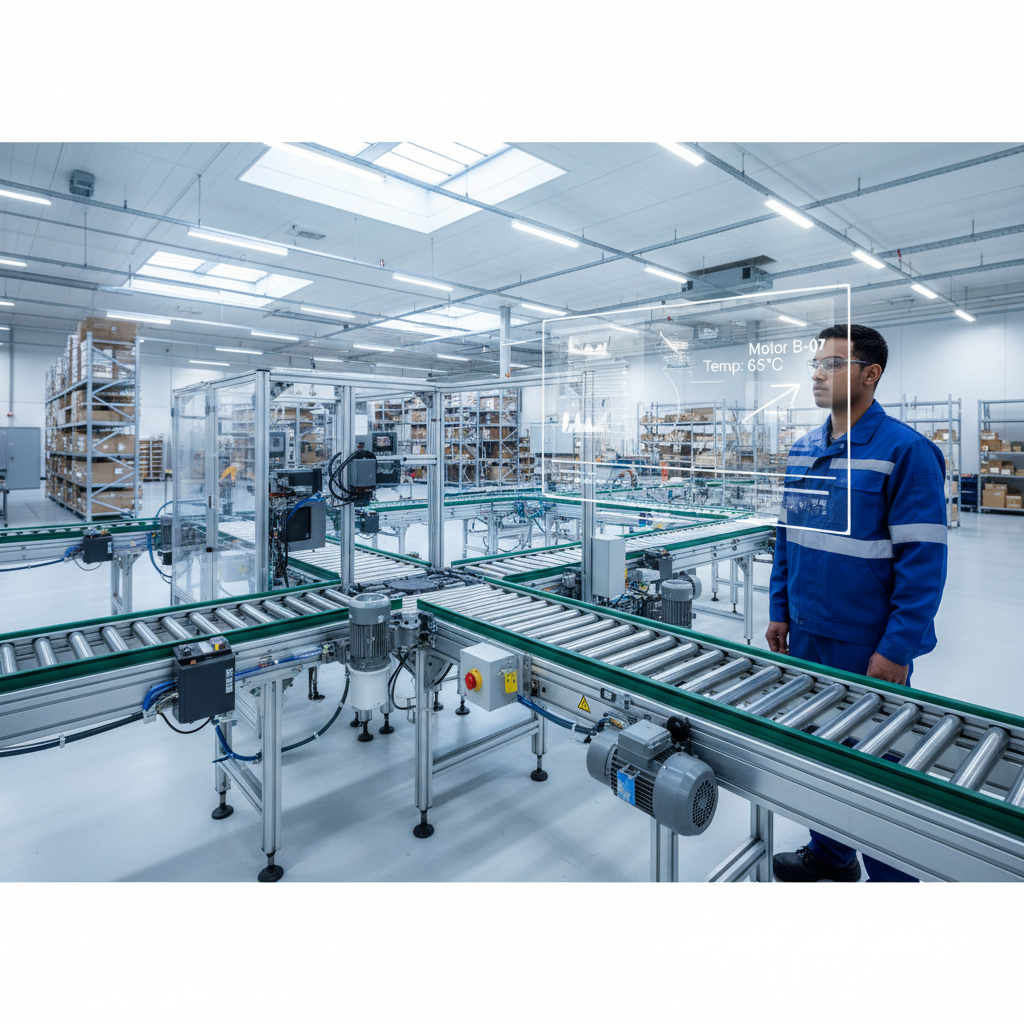
In the high-stakes logistics landscape of the Benelux, where every minute of downtime costs money, warehouse and operations managers are turning to Industry 4.0 technologies to gain a competitive edge. Augmented Reality (AR) is emerging as a transformative tool, not for picking processes, but for the critical, often overlooked, backbone of the facility: the maintenance and installation of conveyor systems. By overlaying digital information onto a technician's real-world view, AR streamlines complex tasks, reduces human error, and dramatically shortens repair times.
Definition
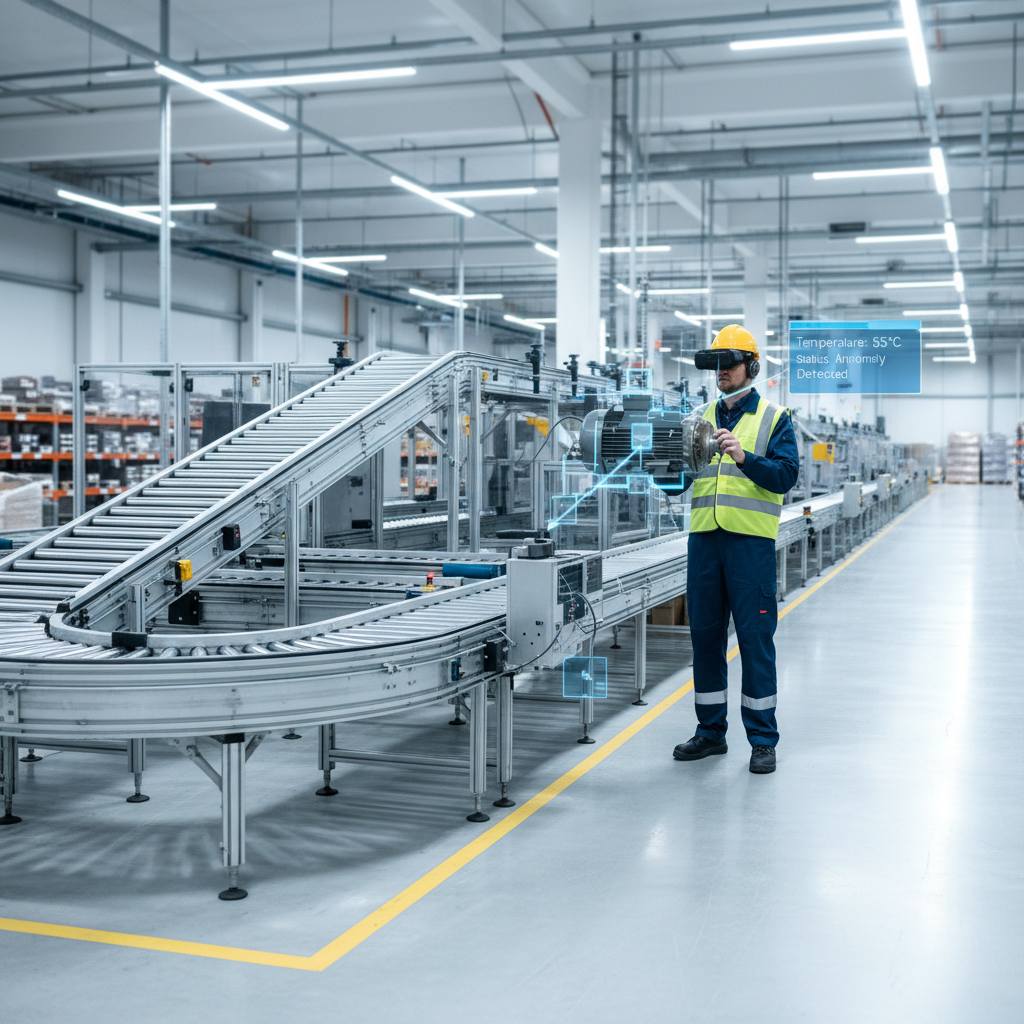
Augmented Reality (AR) in the context of industrial maintenance is a technology that superimposes computer-generated images, instructions, and data onto a user's view of the real world, typically through smart glasses or a mobile device. For conveyor systems, this provides technicians with interactive, step-by-step visual guidance for installation, troubleshooting, and repair tasks directly on the equipment they are servicing.
Key Numbers
| Metric | Typical range (EU 2026) | Notes |
|---|---|---|
| Mean-Time-To-Repair (MTTR) Reduction | 20-40% | AR provides immediate access to manuals, schematics, and expert guidance. |
| First-Time Fix Rate Improvement | 30-65% | Reduces guesswork and eliminates the need for a second visit. |
| Initial AR System Investment | €15,000 - €50,000 | Includes software licenses, pilot hardware (e.g., 2-4 smart glasses), and integration. |
| Technician Training Time Reduction | 30-50% | On-the-job training becomes more intuitive and less reliant on senior staff. |
| Operational Cost Reduction (Maintenance) | 15-25% | Achieved through reduced downtime, fewer errors, and optimized technician time. |
| Return on Investment (ROI) | 1.5 - 3 years | Dependent on warehouse scale and existing downtime costs. |
AR Applications in Conveyor System Lifecycle
Augmented Reality is not a single-use tool; its applications span the entire lifecycle of a conveyor system, from the initial installation to ongoing maintenance and eventual upgrades. This versatility is key to its growing adoption in the logistics hubs of Belgium, the Netherlands, and Luxembourg.
Installation and Commissioning
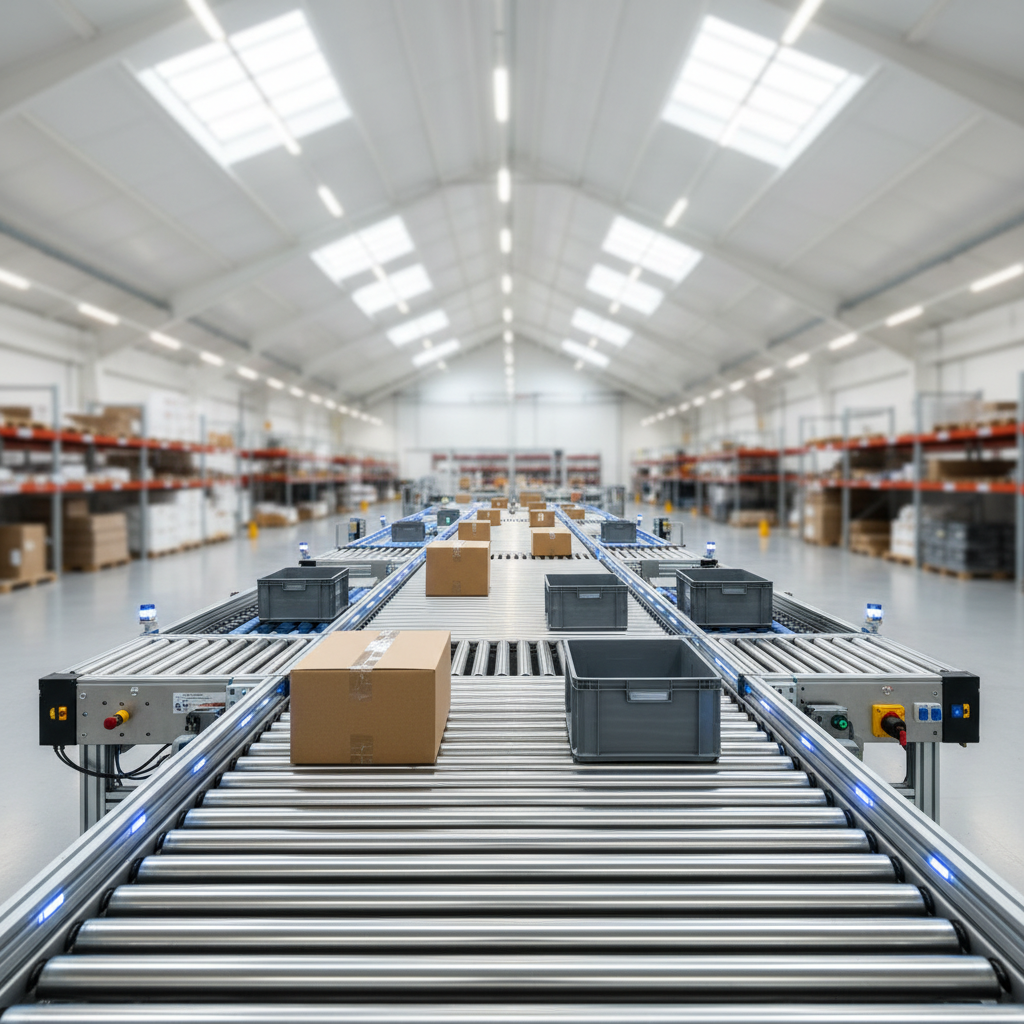
The initial setup of a complex conveyor system, such as a roller conveyor network with multiple sorting zones, is a precision task. Errors during this phase can lead to persistent operational issues. AR can guide technicians through the assembly process step-by-step, overlaying digital blueprints and instructions onto the physical framework. This ensures correct placement of modules, proper alignment of belts, and accurate connection of electrical components and sensors, reducing installation time by up to 20%.
Troubleshooting and Diagnostics
When a conveyor section halts, the clock starts ticking. Traditionally, a technician might need to consult a laptop, a paper manual, or call a senior expert. With AR smart glasses, they can view error codes from the PLC (Programmable Logic Controller) directly on the machine part that is failing. The system can highlight the specific sensor, motor, or belt that needs attention and provide real-time data feeds, turning a complex diagnostic process into a guided, visual workflow.
Remote Assistance and Expert Guidance
A junior technician in a warehouse in Venlo can connect with a senior engineer in Antwerp instantly. The engineer sees exactly what the on-site technician sees through the AR device. They can then annotate the technician's field of view, drawing circles around specific bolts, displaying arrows to indicate movement, and sharing technical documents in their line of sight. This "see-what-I-see" capability drastically reduces travel time and costs, and multiplies the effectiveness of senior experts.
Comparing AR-Assisted vs. Traditional Maintenance
The operational advantages of integrating AR into maintenance workflows become clear when compared to traditional methods. The key differentiator is the seamless fusion of digital information with the physical workspace, which minimizes cognitive load and context switching for the technician.
| Activity | Traditional Maintenance Method | AR-Assisted Maintenance Method |
|---|---|---|
| Fault Diagnosis | Technician consults PLC on a separate laptop, reads manuals, interprets error codes. Average time: 25-45 minutes. | Technician sees highlighted fault location and relevant data overlaid on the conveyor. Average time: 5-15 minutes. |
| Accessing Information | Walks to a terminal, searches for digital manuals, or finds paper schematics. High potential for using outdated versions. | Looks at a QR code on the machine to instantly pull up the latest, correct schematics and work orders in their vision. |
| Repair Execution | Relies on memory, experience, and printed instructions. High cognitive load. | Follows step-by-step 3D animations and instructions overlaid on the equipment. Incorrect steps can trigger warnings. |
| Expert Consultation | Phone call or video call on a phone, requiring the technician to hold a device and explain the situation verbally. | Hands-free "see-what-I-see" remote call where an expert can digitally annotate the technician's real-world view. |
| Reporting | Manually fills out a work order report after the job is completed. Risk of inaccurate data entry. | AR system can automatically log task duration, parts used (via barcode scan), and generate a report with photo/video evidence. |
Calculating the ROI for Benelux Warehouses
For a typical e-commerce fulfillment center in the Benelux, conveyor downtime can cost anywhere from €5,000 to over €20,000 per hour. The business case for AR rests on mitigating these costs.
A Concrete Example
Consider a distribution center near the Port of Antwerp with 2 kilometers of conveyor belts. They experience an average of 10 hours of unscheduled downtime per month, with a Mean-Time-To-Repair (MTTR) of 2 hours per incident.
- Downtime Cost: 10 hours/month * €10,000/hour = €100,000 per month.
- AR Implementation: Let's assume a 30% reduction in MTTR.
- New MTTR: 2 hours * (1 - 0.30) = 1.4 hours.
- Time Saved: 0.6 hours per incident * 5 incidents/month = 3 hours/month.
- Monthly Savings: 3 hours/month * €10,000/hour = €30,000.
- Annual Savings: €360,000.
With an initial investment of €40,000, the ROI is achieved in less than two months. This calculation doesn't even include softer benefits like improved safety, higher employee satisfaction, and knowledge retention.
Integration with WMS and Predictive Maintenance
The true power of AR is unlocked when it’s integrated with the central nervous system of the warehouse, such as a Warehouse Management System (WMS) or Warehouse Control System (WCS). When a conveyor section monitored by the WCS shows declining performance (e.g., slower speeds, increased motor current), it can automatically trigger a maintenance work order. The AR system can then prioritize this and guide a technician to perform proactive maintenance *before* a failure occurs. This shifts the paradigm from reactive repairs to data-driven predictive maintenance, a cornerstone of a resilient logistics operation. This is especially critical in automated systems like those outlined in our guide to WMS/WCS integration.
In a dynamic environment, processes need to scale along with business growth. As companies expand, their operational processes must evolve to maintain efficiency. AR is a key enabler of this evolution, ensuring that maintenance capabilities keep pace with increasing complexity.
Choosing the Right AR Partner and Solution
When selecting an AR solution, Benelux companies should prioritize vendors with proven experience in industrial environments. Key considerations include:
- Hardware Agnosticism: The software should work across different types of smart glasses (e.g., RealWear, Vuzix, HoloLens) and mobile devices.
- Integration Capabilities: The platform must be able to connect with existing systems like SAP PM, IBM Maximo, and your WMS/WCS via APIs.
- Offline Functionality: Warehouse environments can have spotty Wi-Fi. The solution must allow technicians to download work instructions and function without a constant connection.
- Authoring Tools: Look for intuitive "no-code" or "low-code" tools that allow your own senior engineers to create AR workflows without needing to be programmers.
Your Trusted Partner for Future-Proof Conveyor Systems
At Easy Systems, we understand that a conveyor system is a long-term investment. Its peak performance depends not just on the quality of the initial build, but on the quality of its maintenance throughout its lifecycle. We design modular, robust conveyor solutions that are built for easy serviceability. While we focus on delivering exceptional hardware, we recognize the increasing importance of software and technologies like Augmented Reality in maximizing the value of that hardware. We design our systems with modern maintenance in mind, ensuring clear access to components, logical placement of control units, and the availability of digital twins and detailed CAD models that are essential for creating effective AR experiences. Partner with us to build a material handling backbone that is not only efficient today but also ready for the maintenance technologies of tomorrow.
Frequently asked questions
What is the average cost of implementing AR for conveyor maintenance in a Benelux warehouse?+
An initial pilot project for AR maintenance in a medium-sized Benelux warehouse typically costs between €15,000 and €50,000. This includes software licenses for a few users, several sets of industrial smart glasses, and basic integration with your existing work order management system.
How much can AR reduce conveyor downtime?+
On average, facilities in the EU using AR for maintenance report a 20-40% reduction in Mean-Time-To-Repair (MTTR). For a conveyor system, this can translate to saving several hours of costly downtime each month, with an ROI often seen within 18 months.
Can AR be used with older conveyor systems?+
Yes, AR can be retrofitted for older systems. The process involves creating digital models (if not available) and placing QR codes on machine components. This allows technicians to access digital manuals, schematics, and work instructions for equipment that may be decades old.
What skills do my technicians need to use AR glasses?+
Minimal training is required. Modern industrial AR devices are designed for hands-free, voice-controlled operation. Technicians typically need a 1-2 hour introductory session to become comfortable with the hardware and software interface. The primary goal of AR is to simplify tasks, not add complexity.
Is AR for maintenance a proven technology in logistics?+
Yes, while still evolving, AR is a proven technology used by major logistics and manufacturing players. In the Benelux, its adoption is accelerating as companies seek to combat labor shortages and increase operational resilience. It is moving from a "nice-to-have" innovation to a practical tool for efficiency.
Does AR improve safety during conveyor maintenance?+
Absolutely. AR enhances safety by allowing for hands-free operation, so technicians can maintain three points of contact when working at height. It can also overlay critical safety warnings, digital lockout/tagout (LOTO) procedures, and highlight high-voltage areas directly in the user's field of view.

The Easy Systems editorial desk reviews and fact-checks every Conveyor-Design article against Benelux project experience. Editors translate engineering decisions — throughput, peak factors, layout, integration — into plain-language guides for operations managers, project leads and decision-makers.
- Warehouse layout & slotting
- Order-profile analysis
- Vendor-neutral comparison
- Benelux logistics market