AI's Role in Optimizing Conveyor Routing and Sorting in Benelux Warehouses
Artificial Intelligence is transforming warehouse logistics in the Benelux by enabling dynamic conveyor routing and predictive sorting. This enhances efficiency, reduces operational costs, and future-proofs distribution centers against evolving market demands.
Key numbers
| Metric | Typical range (EU 2026) | Notes |
|---|---|---|
| Throughput increase (AI vs. PLC) | 15% – 30% | Achieved by dynamically routing parcels to avoid congestion and balance sorting lines. |
| Sorting accuracy | >99.95% | Reduces costly errors and manual correction work via advanced image recognition and real-time decision-making. |
| Typical ROI period | 1.5 – 3 years | Payback through increased throughput, reduced labor for manual correction, and higher system uptime. |
| Operational cost reduction | 10% – 25% | Includes savings from energy efficiency (fewer stops/starts) and predictive maintenance alerts. |
| AI decision-making speed | <100 milliseconds | Allows real-time adjustments to parcel routing on high-speed lines (e.g., 2.5 m/s). |
| Reduction in maintenance costs | 10% - 20% | Stems from less wear-and-tear due to smoother operation and predictive analytics on component health. |
The logistics landscape of the Benelux, a critical hub for European trade, is defined by its high density, demanding delivery expectations, and rising operational costs. In this competitive environment, warehouse operators are increasingly turning to Artificial Intelligence (AI) to move beyond traditional automation and create truly intelligent, self-optimizing material handling systems. AI is no longer a futuristic concept but a practical tool for optimizing conveyor routing and sorting processes, delivering measurable improvements in speed, accuracy, and overall efficiency.
Definition
In the context of warehouse logistics, AI-powered conveyor optimization refers to the use of machine learning algorithms and advanced analytics to dynamically control the flow of goods. Unlike static, pre-programmed logic, AI analyzes live data from sensors, cameras, and warehouse management systems to make intelligent, real-time decisions about the most efficient path and sorting destination for each individual parcel.
The Current State of Warehousing in the Benelux
Warehouses in the Netherlands, Belgium, and Luxembourg face immense pressure. E-commerce growth continues to surge, while labor shortages and rising land prices squeeze margins. A typical distribution center in the region might process anywhere from 50,000 to over 500,000 parcels per day. Traditional conveyor systems, often governed by rigid PLC (Programmable Logic Controller) logic, struggle to adapt to fluctuating volumes, diverse product mixes, and the need for ever-shorter delivery windows. This can lead to bottlenecks, inefficient use of sorting capacity, and costly mis-sorts.
How AI Transforms Conveyor Routing
Traditional conveyor routing is often based on a fixed set of rules. For example, if a certain divert is full, items are sent to a recirculation loop. This is a reactive approach. AI introduces a proactive, predictive layer of intelligence.
Dynamic Pathfinding
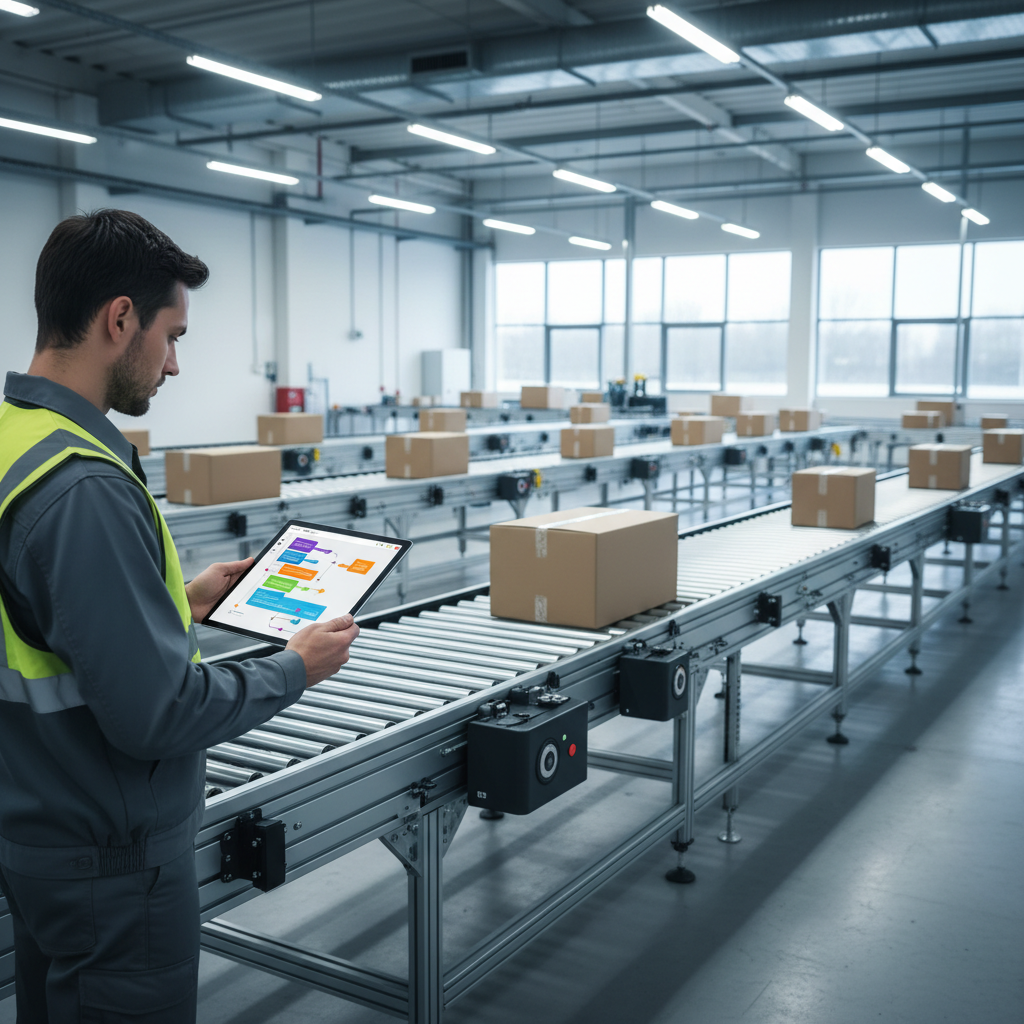
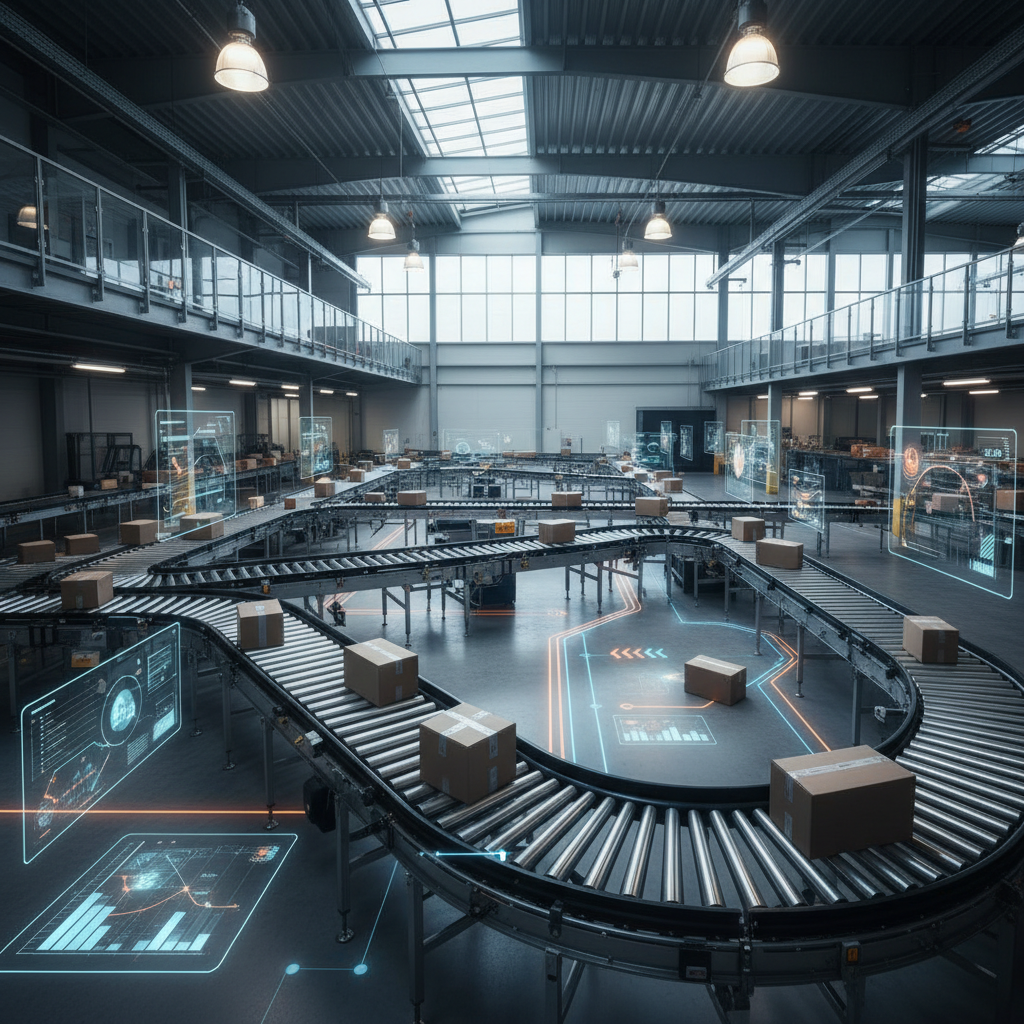
An AI-powered Warehouse Execution System (WES) continuously analyzes the entire conveyor network. It monitors the status of every motor, sensor, and divert. Using this data, it can predict potential congestion points before they occur. If it anticipates a bottleneck on the primary route to a specific packing station or outbound dock, it can dynamically reroute parcels via an alternative path, even if that path is slightly longer. The goal is to maximize continuous flow and minimize stop-and-go actions, which are detrimental to throughput and equipment lifespan. This is particularly effective for managing complex networks of belt conveyor and roller conveyor systems.
Load Balancing
AI algorithms can also balance the workload across different zones of the warehouse. Instead of sending all parcels for a specific postal code to a single sorting chute until it's full, the AI can distribute them intelligently across multiple available chutes. It considers the current fill rate, the required packing time, and the scheduled departure time of the outbound truck, ensuring that no single area becomes overwhelmed while others remain underutilized.
AI-Powered Sorting: Precision and Speed
Sorting is arguably where AI delivers the most dramatic impact. High-speed sortation systems like cross-belt or tilt-tray sorters can handle thousands of items per hour. However, their efficiency is entirely dependent on the quality of the data they receive.
Enhanced Recognition
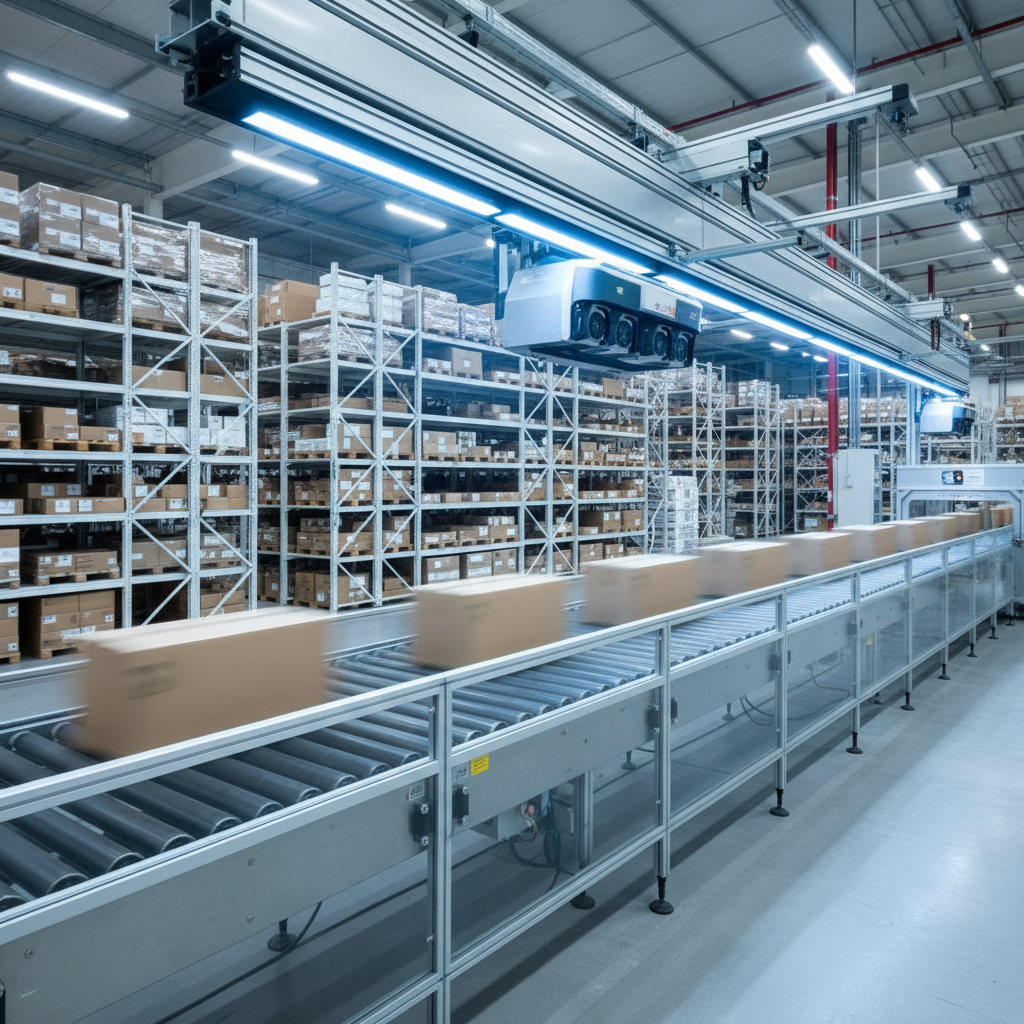
AI-powered computer vision systems can read barcodes, QR codes, and even human-readable text with far greater accuracy than traditional scanners, especially on damaged or poorly printed labels. These systems can identify a package’s dimensions, shape, and orientation on the conveyor, allowing for more precise handling and optimal placement on the sorting mechanism. This reduces the incidence of "no-reads" and subsequent manual handling, a significant cost center in many facilities.
Predictive Sorting Logic
By analyzing historical data and current order patterns from the WMS, AI can anticipate sorting demand. For instance, if it recognizes a surge in orders for a popular promotional item, it can proactively allocate more sorting destinations to that product. This predictive capability is crucial for handling flash sales and seasonal peaks, ensuring that the system is primed for the demand before the wave of products even hits the conveyor. This move towards data-driven operations is essential, because as companies grow, their processes must evolve with them.
Comparative Analysis: Traditional vs. AI-Driven Systems
The transition from conventional PLC-based logic to AI optimization represents a fundamental shift in warehouse management. The table below highlights the key differences:
| Feature | Traditional PLC-Based System | AI-Optimized System |
|---|---|---|
| Routing Logic | Static, rule-based (If-Then-Else) | Dynamic, predictive, self-optimizing |
| Adaptability | Low; requires manual reprogramming for changes | High; adapts to real-time conditions automatically |
| Efficiency | Prone to bottlenecks and suboptimal pathing | Maximizes continuous flow, proactive load balancing |
| Throughput | Baseline; typically 10-30% lower than AI systems | Up to 30% higher due to reduced stops and reroutes |
| Sorting Accuracy | ~99.5% | >99.9% with AI-powered vision systems |
| Upfront Cost | Lower initial investment | Higher initial investment in software and sensors |
| Operational Cost | Higher due to inefficiencies and manual intervention | Lower due to optimized resource use and fewer errors |
Integration with the Warehouse Ecosystem
An AI-driven conveyor system does not operate in a vacuum. Its true power is unlocked through deep integration with other warehouse systems. For a comprehensive overview of how these systems interact, our Pillar Guide on WMS/WCS Integration provides in-depth information.
- Warehouse Management System (WMS): The WMS holds the master data: what orders need to be fulfilled, their priority, and their final destination. The AI uses this information to prioritize routing and sorting decisions.
- Warehouse Control System (WCS): The WCS acts as the traffic cop, executing the AI's decisions by giving direct commands to the conveyor motors and diverters. The AI provides the strategy; the WCS handles the tactical execution.
- Sensors and Vision Systems: An array of photo-eyes, volume scanners, and AI-powered cameras provide the real-time data that fuels the AI's decision-making engine. This data creates a "digital twin" of the physical conveyor network, allowing the AI to simulate and test decisions before implementing them.
Real-World Impact: Figures and Use Cases from the Benelux
In a large e-commerce fulfillment center near Venlo, the implementation of an AI layer on top of their existing sortation system led to a 25% increase in peak capacity, allowing them to handle an extra 4,000 parcels per hour without adding new hardware. At a postal hub in Belgium, AI-powered vision systems reduced sorting errors by 80%, drastically cutting the costs associated with mis-sorted mail. The investment in these systems, while significant (often ranging from €200,000 for a software overlay to over €2 million for a full system with new hardware), typically yields a return on investment (ROI) within 24 to 36 months through labor savings, increased throughput, and improved accuracy.
Implementation Challenges and Considerations
Transitioning to an AI-driven system requires careful planning.
- Data Quality: AI is only as good as the data it receives. This means investing in high-quality sensors and ensuring clean data integration between the WMS and WCS.
- System Integration: Ensuring seamless communication between the new AI software and legacy hardware (PLCs, scanners) can be a significant technical challenge.
- Change Management: Warehouse staff must be trained to work alongside and trust the decisions made by the AI. This involves a shift from manual intervention to a role focused on system monitoring and handling exceptions.
Easy Systems: Your Partner for Intelligent Automation
Successfully implementing AI in a warehouse environment is not just about installing software; it's about designing a cohesive, integrated system where hardware and intelligence work in harmony. At Easy Systems, we specialize in designing and building modular conveyor systems that are "AI-ready." Our solutions, from simple belt conveyors to complex sorting systems, are engineered with the high-quality components and open communication standards necessary to support advanced automation. We work closely with leading WES and AI software partners, acting as the crucial link to ensure that the physical flow of goods can keep pace with the speed of intelligent decision-making. We help Benelux warehouses build the robust, scalable, and intelligent conveyor infrastructure needed to thrive in the future of logistics.
Frequently asked questions
What is the primary benefit of using AI for conveyor sorting?+
The primary benefit is a significant increase in sorting accuracy and speed. AI algorithms can identify optimal routes and make decisions in milliseconds, reducing errors to less than 0.1% and boosting throughput by up to 30%, which is crucial for handling e-commerce volumes in the Benelux.
Is it difficult to integrate AI with existing conveyor systems?+
Integration complexity varies. For modern conveyors with a capable Warehouse Control System (WCS), an AI software layer can be added in 3-6 months. Older, purely PLC-driven systems may need a 9-12 month project for a full upgrade, including new sensors and data-processing capabilities for the AI to function.
How does AI reduce conveyor system wear and tear?+
By creating a smoother, more continuous flow of parcels, AI minimizes the frequent stop-and-start actions that cause mechanical stress. This 'load-smoothing' reduces motor strain and belt friction. Warehouses report a 10-15% decrease in annual maintenance costs and can extend component lifespan by up to 2 years for key parts.
What data is required for an AI routing system?+
The AI needs real-time data from multiple sources. This includes parcel data (destination, size, weight from scanners), and system status data from sensors across the conveyor network (motor load, queue lengths, divert positions). A typical Benelux DC might feed the AI over 50,000 data points per minute to ensure optimal routing decisions.
Can AI help with energy efficiency in a warehouse?+
Yes. By optimizing parcel routes and minimizing recirculation, AI reduces overall conveyor run-time by 15-25%. It can also enable 'sleep modes' for unused conveyor sections. This intelligent control lowers operational costs and helps meet sustainability targets by significantly cutting electricity consumption for the material handling system.

The Easy Systems engineering team designs, integrates and commissions conveyor systems and warehouse automation across Belgium, the Netherlands and Luxembourg. Combined experience covers roller and belt conveyors, sorters, AGV/AMR fleets, AutoStore, shuttle AS/RS and WMS/WCS integration for distribution centers and e-commerce fulfillment operations.
- Conveyor design (roller, belt, modular plastic)
- Sortation & merge logic
- AGV / AMR fleet integration
- AutoStore & shuttle AS/RS
- WMS / WCS integration