AI in Conveyor Optimization: Predictive Maintenance in Benelux
Artificial Intelligence is transforming conveyor systems in the Benelux. This article explores how AI-driven predictive maintenance and dynamic route planning are boosting efficiency, reducing downtime, and lowering operational costs for warehouses.
Key numbers
| Metric | Typical range (EU 2026) | Notes |
|---|---|---|
| Predictive Maintenance Downtime Reduction | 20-30% | Compared to reactive or scheduled maintenance schedules. |
| Throughput Increase (with Dynamic Routing) | 10-15% | Achieved by avoiding bottlenecks and optimizing product flow in real-time. |
| Hourly Cost of Conveyor Downtime | €15,000 - €25,000 | For a medium-to-large sized distribution center in the Benelux. |
| Annual Maintenance Cost Reduction | 15-25% | By shifting from preventative to predictive parts replacement. |
| AI Decision & Rerouting Speed | < 500 ms | Time from bottleneck detection to issuing new routing commands to the WCS. |
| Return on Investment (ROI) Period | 18-24 months | Includes sensor hardware, software licensing, and integration costs. |
| Energy Efficiency Improvement | 5-10% | From smoother operation and healthier components drawing less power. |
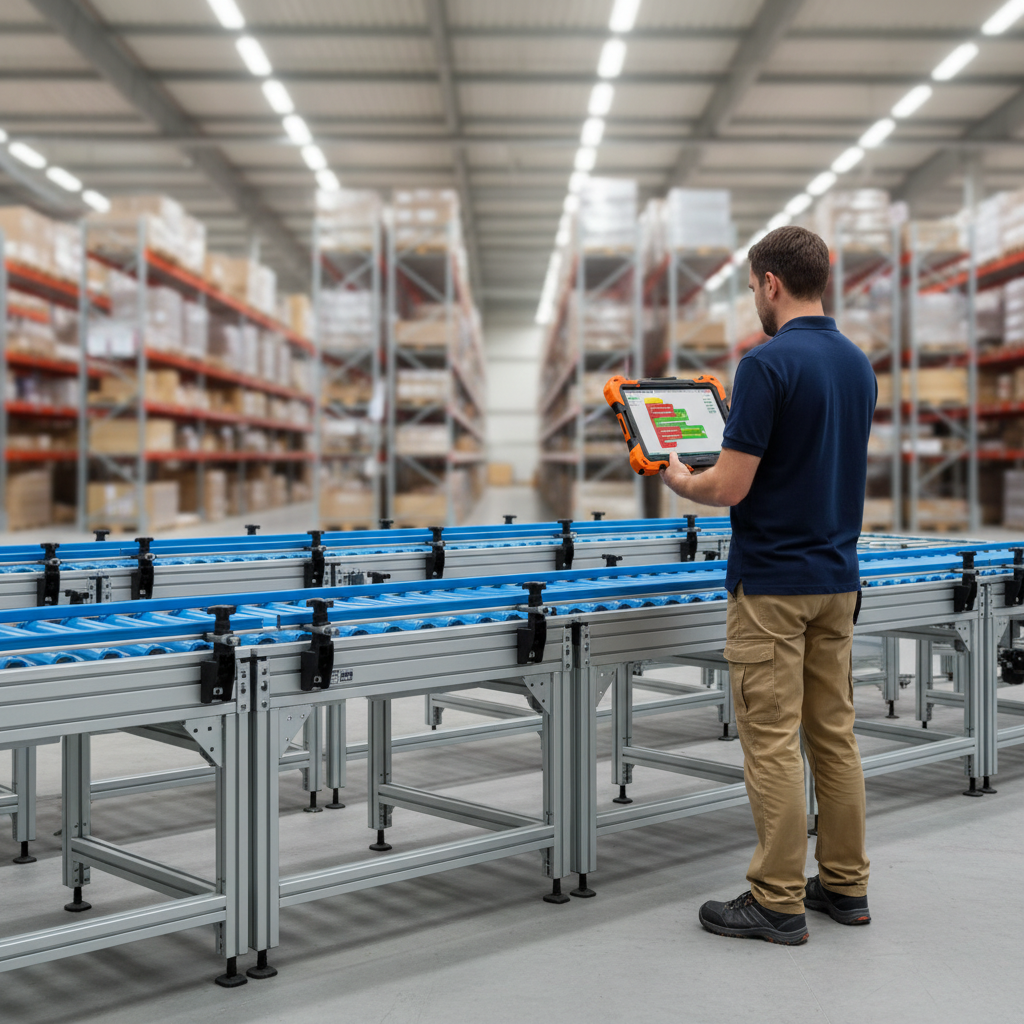
In the high-stakes world of logistics, especially within the dense and competitive Benelux market, every second and every centimeter counts. Traditional conveyor systems, the arteries of any modern warehouse, are no longer enough. The introduction of Artificial Intelligence (AI) is creating a new paradigm, shifting operations from reactive to predictive and transforming rigid pathways into intelligent, self-optimizing networks.
Definition
AI in conveyor system optimization refers to the use of machine learning algorithms and advanced analytics to enhance the performance, reliability, and efficiency of conveyor networks. It primarily focuses on two key areas: predictive maintenance to preemptively address mechanical failures, and intelligent route planning to dynamically manage the flow of goods.
How AI Powers Predictive Maintenance
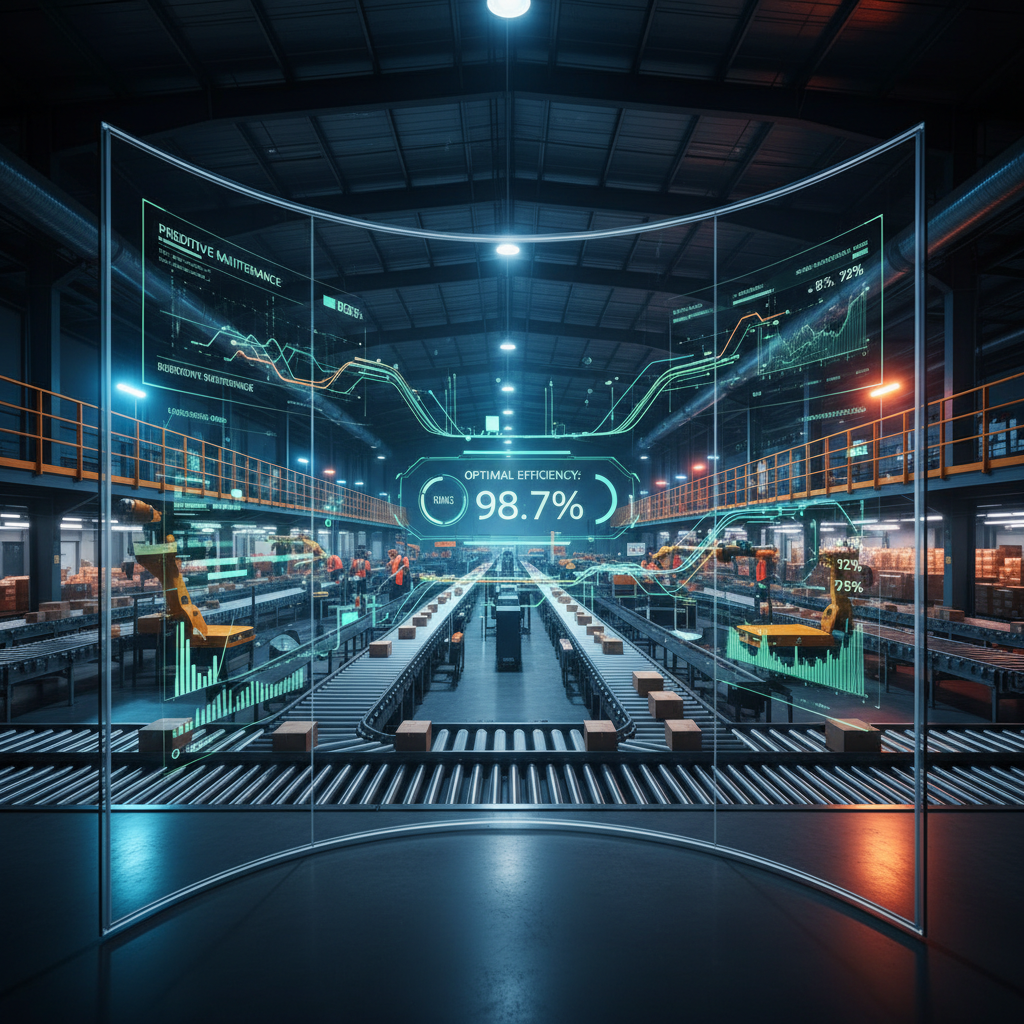
The most immediate impact of AI on conveyor systems is the shift from calendar-based or reactive maintenance to a predictive model. Instead of replacing parts on a fixed schedule or waiting for a breakdown, AI anticipates failures before they happen. This capability is critical in a European context where downtime can cost a medium-sized distribution center upwards of €10,000 - €20,000 per hour.
H3: The Role of Sensor Data
Modern conveyor systems are equipped with a multitude of sensors. AI platforms tap into this data stream, collecting information from:
- Vibration Sensors: Attached to motors and bearings, these detect minute changes in vibration patterns that signal impending wear and tear.
- Thermal Sensors: Monitor the temperature of drive motors. An unusual increase in temperature often precedes a motor failure.
- Acoustic Sensors: Listen for changes in the operational sounds of rollers and belts, identifying potential issues like misalignment or failing bearings.
- Power Consumption Meters: Track the energy usage of different conveyor segments. A spike in consumption can indicate increased friction or a struggling component.
H3: Machine Learning Models at Work
The raw sensor data is fed into machine learning models. These algorithms are trained on historical data of both normal operation and past failures. Over time, the AI learns to recognize the subtle signatures of a developing fault. When the system detects a pattern that correlates with a high probability of failure, it automatically generates an alert, specifying the component at risk and the recommended action. This allows maintenance teams to schedule repairs during planned downtime, avoiding costly operational interruptions.
Intelligent Route Planning Explained
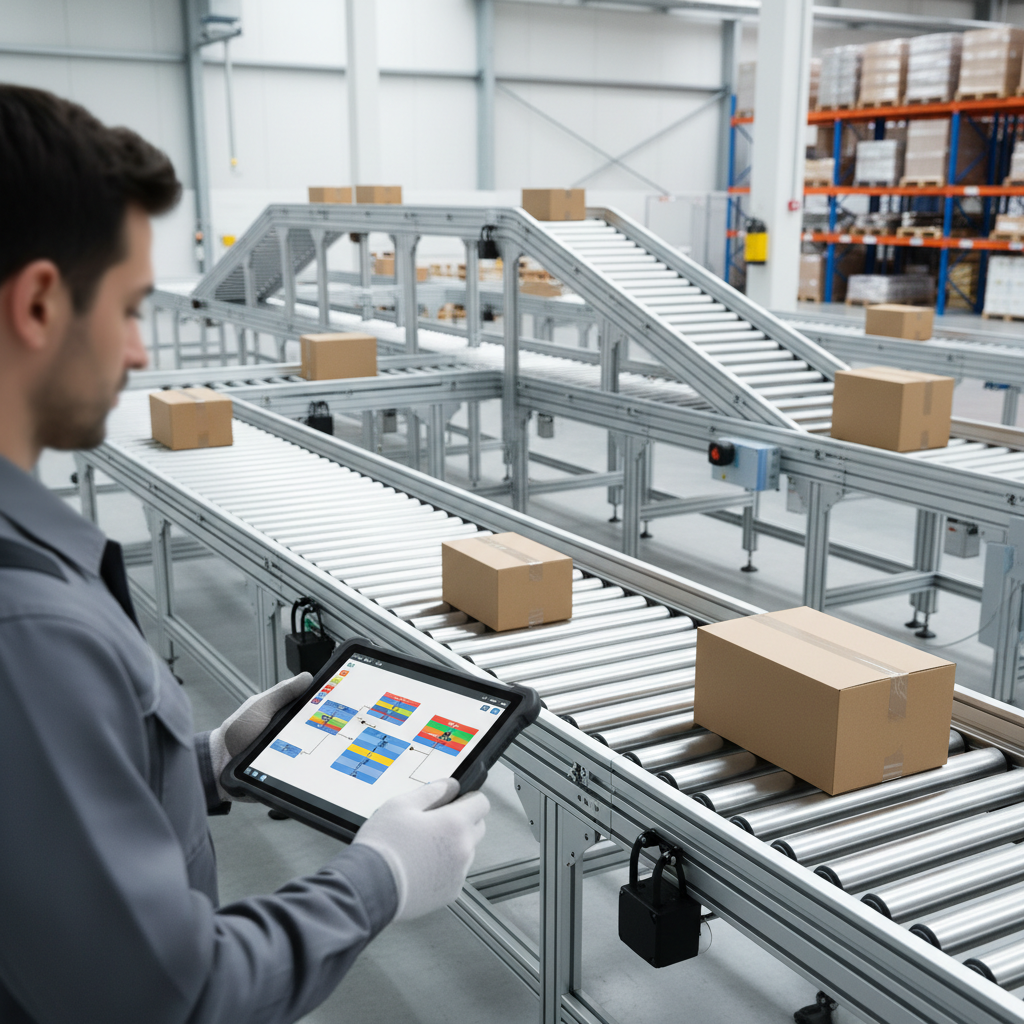
Beyond preventing breakdowns, AI brings a new level of intelligence to how goods move through a facility. Where traditional systems rely on fixed paths defined by a WCS, AI-powered systems can make decisions on the fly.
H3: Dynamic Routing & Bottleneck Detection
Imagine a scenario: a surge of orders floods a specific packing station. In a traditional system, totes would continue to be routed there, creating a traffic jam and causing accumulation upstream. An AI-driven system, however, detects this bottleneck in real-time. It analyzes the workload of all available stations and dynamically reroutes goods to less congested areas. This is far more advanced than simple zone routing; it's a holistic, real-time traffic management system for your warehouse, capable of increasing overall system throughput by 15-25% during peak times. This dynamic rerouting capability is crucial for managing the complex demands of e-commerce fulfillment and improving metrics like the On-Time In-Full delivery rate.
For a deeper dive into how these control systems operate, our WMS, WCS, and WES Integration Guide offers a comprehensive overview.
AI vs. Traditional Conveyor Logic: A Comparison
The difference between a conveyor system running on traditional PLC logic and one enhanced by AI is stark. The latter is a living system that learns and adapts, while the former is a rigid tool that can only follow pre-programmed commands.
| Parameter | Traditional PLC Logic | AI-Driven Optimization |
|---|---|---|
| Downtime | Reactive (fails then fixed); ~5-8% of operational time | Predictive (fixed before failure); Reduced by up to 30-50% |
| Throughput | Fixed, based on max design capacity; Vulnerable to bottlenecks | Dynamic, optimized in real-time; 15-25% increase during peaks |
| Efficiency (OEE) | Typically 60-75% | Can exceed 85-90% |
| Maintenance Costs | Higher due to emergency repairs and unnecessary scheduled replacements | Lowered by 10-20% through targeted, condition-based interventions |
| Energy Consumption | Constant speed and operation, regardless of load | Adaptive; can slow or stop zones with no traffic, reducing energy costs by 5-15% |
The Benelux Context: A Hub for AI-Driven Logistics
The Benelux region, with its major ports in Antwerp and Rotterdam and its central European location near logistics hotspots like Venlo, is uniquely positioned to benefit from AI. High labor costs (€35-€45 per hour on average for a warehouse operator) and a high density of distribution centers create immense pressure to automate and optimize. Companies that fail to invest in smarter, more efficient processes risk being outpaced. As many businesses in the region are discovering, company growth does not always mean process maturity, and AI is a key tool to bridge that gap.
Implementation Challenges and Considerations
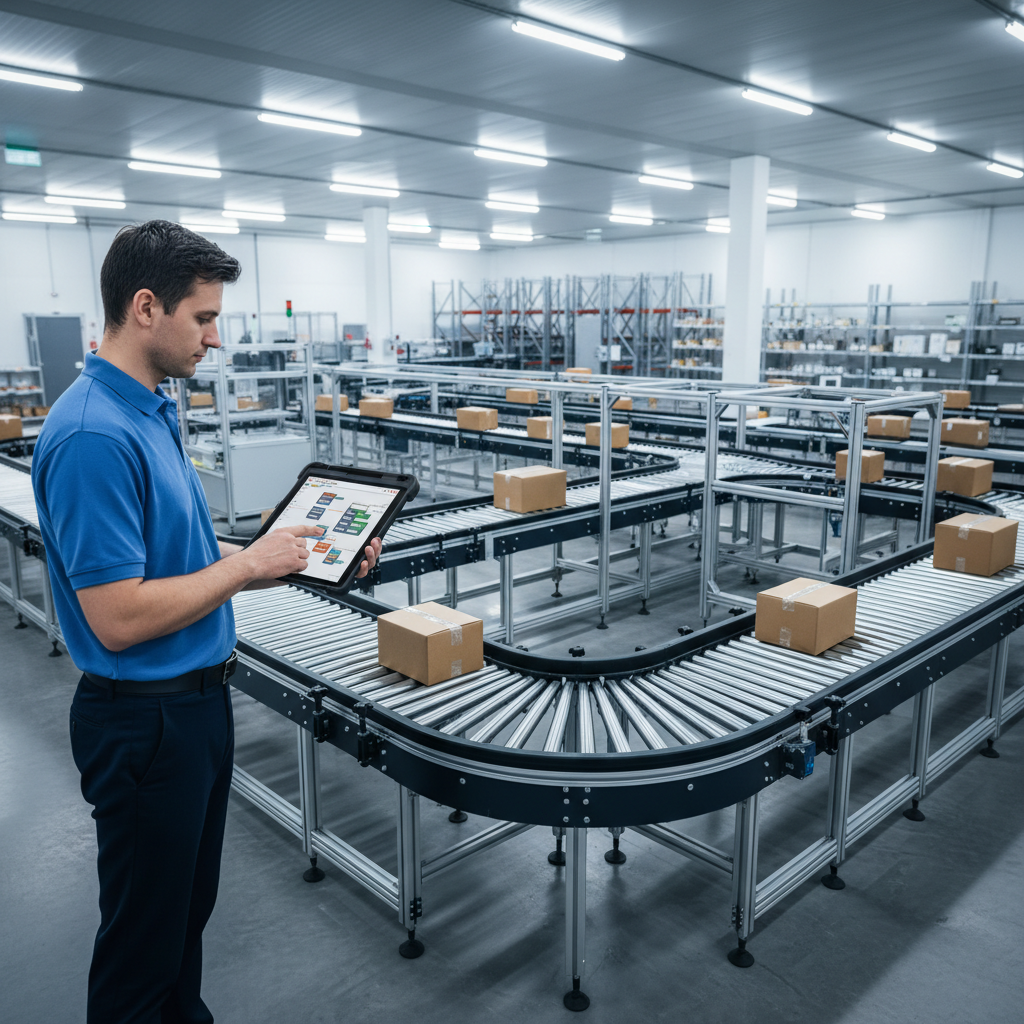
Adopting an AI layer for your conveyor system is not a simple plug-and-play affair. Success requires careful planning and addressing several key challenges:
H3: Data Quality and Integration
The adage "garbage in, garbage out" is especially true for AI. The system's effectiveness depends entirely on clean, high-quality data from sensors and your WMS/WCS. A significant part of any AI project involves auditing your existing data infrastructure and potentially upgrading sensors or improving data collection protocols.
H3: Initial Investment and ROI
The initial investment for AI software, potential sensor upgrades, and integration can be substantial, often ranging from €50,000 to over €250,000 depending on the scale of the operation. However, the ROI is compelling. With reduced downtime, increased throughput, and lower maintenance and energy costs, most Benelux companies can expect a payback period of 18-24 months.
The Future of AI in Material Handling
The application of AI in logistics is still in its early stages. The next wave of innovation will likely involve even deeper integration and more sophisticated capabilities. We are moving towards creating "digital twins"—virtual replicas of the entire warehouse—where AI can simulate millions of scenarios to find the absolute optimal strategy before applying it in the real world. Furthermore, the coordination between fixed conveyor systems and mobile assets like Autonomous Mobile Robots (AMRs) will become seamless, with a central AI orchestrating the entire flow of goods from dock to dispatch.
Why Partner with Easy Systems for Your AI Integration
Navigating the complexities of AI integration requires a partner with deep expertise in both conveyor hardware and control software. At Easy Systems, we bridge the gap between robust mechanical engineering and intelligent automation. We understand the specific challenges of the Benelux market and design modular, scalable conveyor solutions that are ready for the intelligence of tomorrow. Our approach focuses on building a solid foundation and providing a clear, phased strategy for integrating AI, ensuring you achieve a tangible return on investment and a future-proof logistics operation. We don't just sell conveyors; we engineer the intelligent flow of your business.
Frequently asked questions
What is the typical ROI for AI conveyor optimization in the Benelux?+
Most Benelux operations see a return on investment within 18 to 24 months. This is driven by direct savings from reduced downtime (often costing €15,000+ per hour), higher throughput, and a 15-25% reduction in annual maintenance-related costs.
Can AI be integrated into existing conveyor systems?+
Yes, AI platforms are designed to be retrofitted. This involves adding non-intrusive sensors to monitor motors and bearings and integrating a software layer with your existing WCS/WMS. A typical integration on a 500-meter conveyor line can take 2-4 weeks with minimal operational disruption.
What's the difference between AI routing and standard zone routing?+
Standard zone routing uses fixed, pre-programmed paths. AI-powered routing is dynamic, analyzing real-time data to reroute items around bottlenecks in under 500 milliseconds. It continuously calculates the most efficient path, adapting instantly to changes and boosting throughput by 10-15% over static systems.
How does AI actually predict a component failure?+
AI uses machine learning models to analyze multiple data streams from sensors. For example, it might detect a 5°C rise in motor temperature, a new vibration frequency above 0.5 mm/s, and a 3% increase in power draw simultaneously. This combined pattern, learned from historical data, allows it to predict a failure 7-10 days in advance.
Is our operational data secure on an AI platform?+
Yes. Reputable AI providers use end-to-end encryption and comply with GDPR. Your data is anonymized and isolated in secure cloud environments, often with ISO 27001 certification. Access requires multi-factor authentication, ensuring your sensitive operational data remains confidential and protected from unauthorized access.

The Easy Systems engineering team designs, integrates and commissions conveyor systems and warehouse automation across Belgium, the Netherlands and Luxembourg. Combined experience covers roller and belt conveyors, sorters, AGV/AMR fleets, AutoStore, shuttle AS/RS and WMS/WCS integration for distribution centers and e-commerce fulfillment operations.
- Conveyor design (roller, belt, modular plastic)
- Sortation & merge logic
- AGV / AMR fleet integration
- AutoStore & shuttle AS/RS
- WMS / WCS integration