AGV vs. AMR: Which Fits Your Benelux Warehouse Best?
Choosing between AGVs and AMRs for your Benelux warehouse? This guide breaks down the core differences in navigation, flexibility, and cost (from €20,000 for AGVs to €40,000+ for AMRs), helping you select the right automation for your logistics needs.
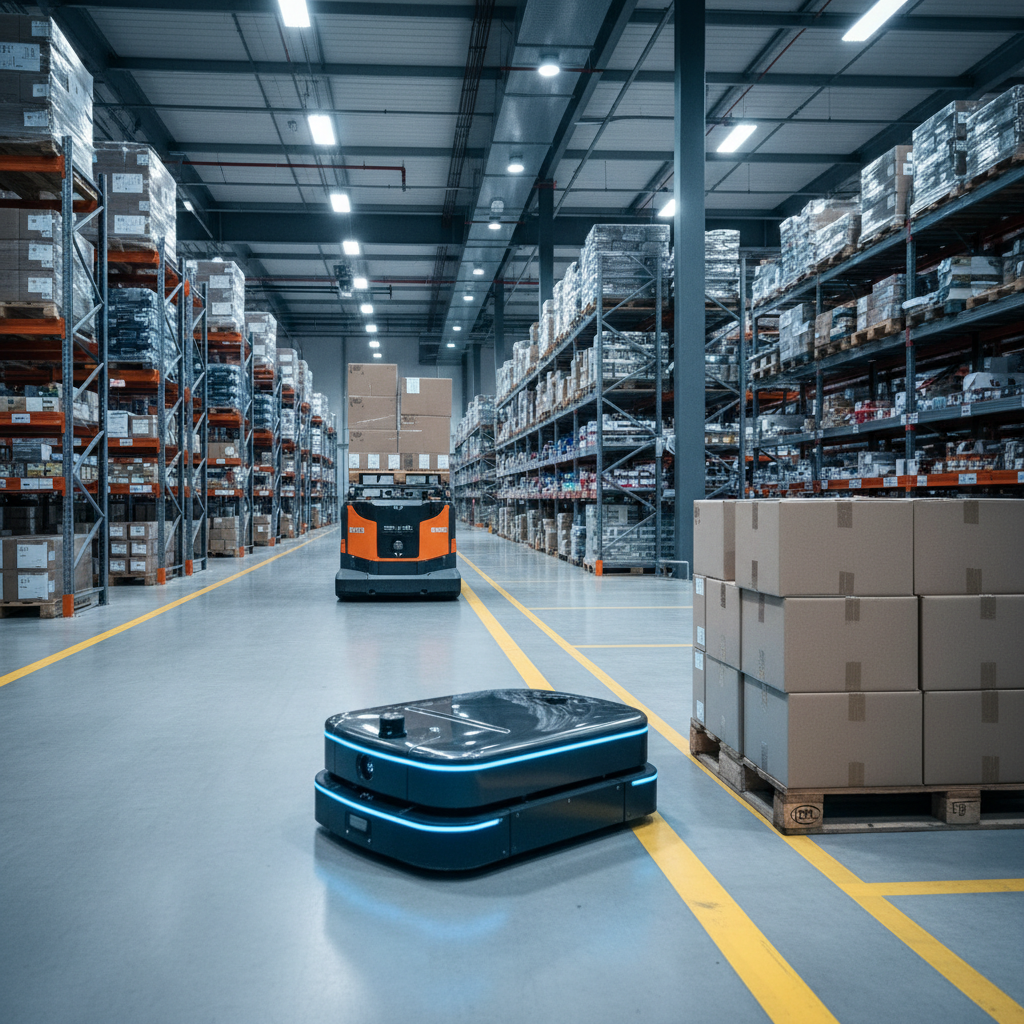
As warehouse managers in the Benelux region face mounting pressure from labour shortages and rising customer expectations, automation is no longer a luxury but a necessity. Two of the most prominent solutions for automating internal transport are Automated Guided Vehicles (AGVs) and Autonomous Mobile Robots (AMRs). While they both move goods from point A to B, their underlying technologies and operational philosophies are fundamentally different, leading to significant impacts on flexibility, cost, and scalability. This article provides a detailed comparison to help you make an informed decision for your specific logistical needs.
Definition
Automated Guided Vehicles (AGVs) are industrial vehicles that follow predefined paths, typically guided by magnetic stripes, wires, or optical markers on the warehouse floor. Autonomous Mobile Robots (AMRs) are more advanced vehicles that use sensors and sophisticated software, like SLAM (Simultaneous Localization and Mapping), to navigate dynamically, creating their own routes and safely avoiding obstacles without fixed infrastructure.
Key Numbers
| Metric | Typical range (EU 2026) | Notes |
|---|---|---|
| Initial Investment | AGV: €20,000 - €80,000; AMR: €40,000 - €120,000+ | Per vehicle, depending on payload, sensors, and software. |
| Implementation Time | AGV: 3-6 months; AMR: 2-8 weeks | AGV implementation includes installing physical guidance infrastructure. |
| Navigation Technology | Magnetic tape, optical lines, laser triangulation | AMR uses LiDAR, cameras, and SLAM algorithms. |
| Typical Speed | 0.5 - 1.5 m/s | Speed is often limited by safety standards and cornering on fixed paths. |
| ROI Period | AGV: 2-4 years; AMR: 1.5-3 years | AMR ROI can be faster in dynamic environments due to higher flexibility. |
| Payload Capacity | 50 kg - 5,000 kg+ | Heavy-duty AGVs often handle pallets; AMRs focus on bins, totes, and smaller carts. |
| Scalability Cost | High (disruptive); Low (incremental) | Adding AGVs may require line shutdowns; AMRs can be added one by one. |
Core Technology: Fixed Paths vs. Dynamic Navigation
The most significant differentiator between an AGV and an AMR is how it understands and moves through your facility. This technological difference dictates almost every other aspect, from flexibility to implementation cost.
AGV: The Reliable Workhorse on Rails
Think of an AGV as a train without tracks. It requires a physical or digital guide to follow a predetermined route. The most common guidance methods include:
- Magnetic Tape: A durable magnetic stripe is laid on the floor, which a sensor on the AGV detects and follows. It's reliable but requires the floor to be clean and intact.
- Wire Guidance: A wire is embedded in the floor, emitting a radio frequency that the AGV follows. This is extremely robust but very invasive and costly to install or change.
- Laser Guidance: The AGV uses a rotating laser to detect reflective targets mounted on walls and pillars. By triangulating its position relative to these targets, it can follow a programmed path. This offers more flexibility than floor-based methods but still relies on fixed external infrastructure.
Because of this reliance on fixed paths, an AGV will stop when it encounters an obstacle and wait until it is cleared. It cannot navigate around it. This makes them perfect for highly predictable, repetitive material transport, such as moving finished goods from a production line to a storage area.
AMR: The Intelligent Explorer
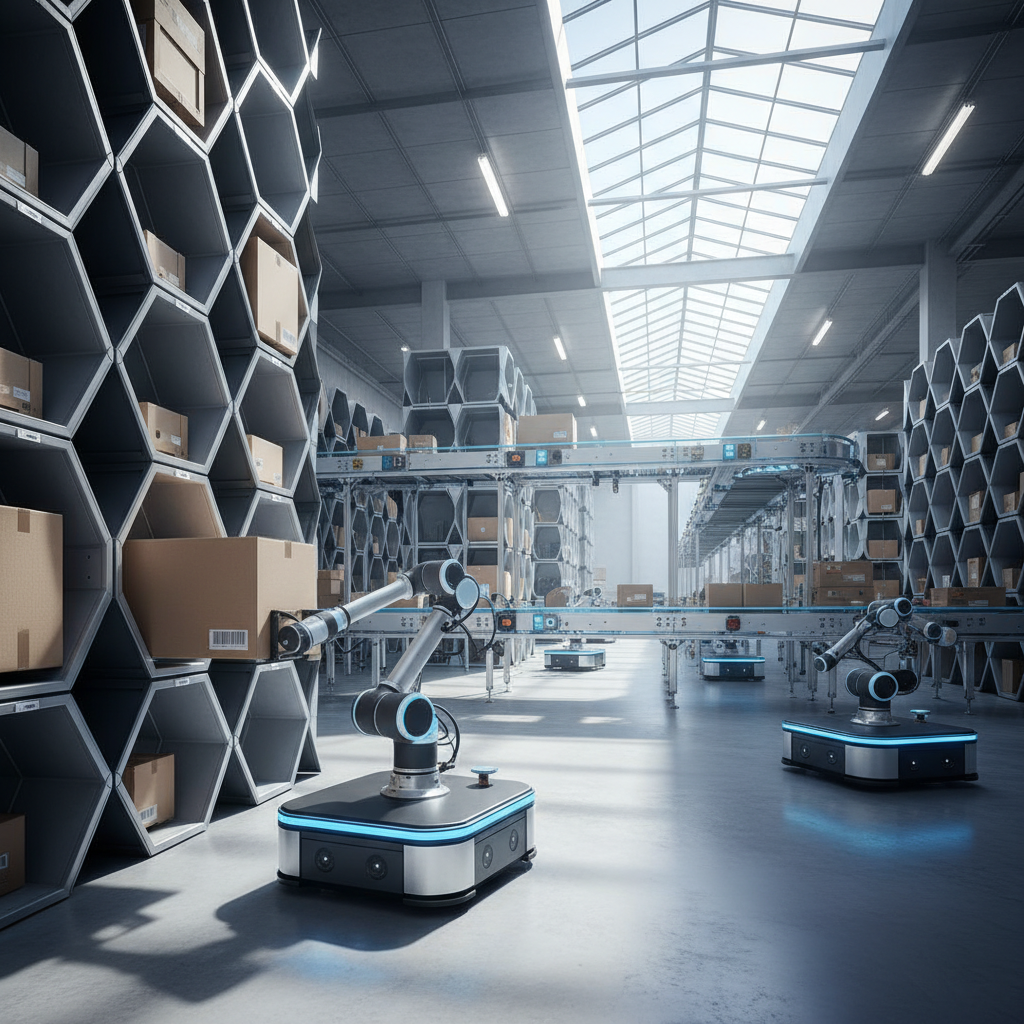
An AMR is more like a self-driving car for your warehouse. Upon initial deployment, it creates a detailed map of the facility using its built-in sensors (primarily LiDAR). It then uses this internal map, combined with real-time data from its sensors, to navigate. This technology is known as SLAM. If an AMR encounters an obstacle—a stray pallet, a person, or another vehicle—its software instantly calculates the best alternative route to its destination. This dynamic rerouting capability is the AMR's superpower, making it exceptionally well-suited for busy, unpredictable environments where pathways are not always clear.
Flexibility and Scalability: Adapting to Business Growth
In the fast-paced logistics landscape of the Benelux, adaptability is crucial. A solution that works today must also support your growth tomorrow.
AGV Scalability Challenges
Scaling an AGV system or changing its routes is a significant undertaking. It often involves shutting down parts of the operation to lay new magnetic tape or reprogram laser targets. This disruption can be costly, both in terms of direct cost and lost productivity. Therefore, AGVs are best suited for processes that are expected to remain stable for several years.
AMR's Plug-and-Play Scalability
AMRs, in contrast, are built for flexibility. Adding a new AMR to the fleet is often as simple as unboxing it, connecting it to the fleet management software, and letting it map the area. New destinations or zones can be added via the software interface without any physical changes to the facility. This "incremental scalability" is a massive advantage for companies experiencing rapid growth or frequent process changes, such as e-commerce fulfillment centers dealing with seasonal peaks. This adaptability is a key reason many businesses are exploring AMRs as a cornerstone of their automation strategy, as discussed in our in-depth guide on AGVs vs AMRs.
Investment and ROI: A Comparative Breakdown
While AMRs boast more advanced technology, the total cost of ownership (TCO) requires a nuanced look beyond the initial vehicle price.
| Cost Factor | Automated Guided Vehicle (AGV) | Autonomous Mobile Robot (AMR) |
|---|---|---|
| Vehicle Cost | Lower per unit (€20k - €80k). Simpler hardware and sensors. | Higher per unit (€40k - €120k+). Includes advanced LiDAR, cameras, and processing units. |
| Infrastructure Cost | High. Includes cost of magnetic tape, wires, reflectors, and installation labor. Can reach €100-€200 per meter. | Virtually zero. Relies on existing facility structure. Requires robust Wi-Fi coverage. |
| Software Cost | Typically lower. Basic fleet management and path programming. | Higher. Advanced Fleet Management System with AI-based traffic control and task allocation. |
| Modification Cost | High. Involves physical changes to the floor/walls and operational downtime. | Low. Changes are made in software, often with no downtime required. |
| Return on Investment (ROI) | Slower (2-4 years). Best for stable, 24/7 operations where predictability is key. | Faster (1.5-3 years). Quick deployment and high flexibility yield returns sooner, especially in dynamic environments. |
When to Choose an AGV for Your Benelux Facility
An AGV system is the right choice when your processes are mature, standardized, and unlikely to change significantly. Consider an AGV if:
- You have simple, repetitive point-to-point transport tasks (e.g., production line to palletizer).
- The operational environment is controlled, with clearly defined and consistently clear pathways.
- Your budget prioritizes lower initial vehicle cost, and you can accommodate the infrastructure installation.
- The workflow is predictable and runs 24/7, maximizing the utilization of the fixed paths.
When an AMR is the Superior Option
An AMR system excels in dynamic and complex environments. It is the better choice for your warehouse if:
- Your operations involve complex routes with multiple pickup and drop-off points (e.g., goods-to-person picking).
- The warehouse layout changes, or you expect rapid growth and need to scale your automation fleet easily.
- Pathways are often shared with people and other equipment, requiring intelligent obstacle avoidance.
- You need a fast deployment and want to avoid disruptive and costly infrastructure modifications. As businesses grow, their processes often struggle to keep pace; AMRs offer a way to inject flexibility directly into this challenge. For a deeper look at this common issue, read our analysis on scaling business processes.
Integration with Warehouse Ecosystem (WMS/WES)
Both AGVs and AMRs must integrate with a Warehouse Management System (WMS) or Warehouse Execution System (WES) to receive transport orders. AMRs, with their more sophisticated software, often offer more seamless and deeper integration capabilities. Their fleet managers can make intelligent decisions, distributing tasks among robots based on location, battery status, and current traffic, which reduces the computational load on the WES/WMS and optimizes overall material flow.
Conclusion: Easy Systems as Your Automation Partner
Choosing between AGVs and AMRs is a strategic decision that hinges on the specific DNA of your Benelux warehouse operation. AGVs offer cost-effective, reliable automation for predictable, high-volume tasks. AMRs provide unmatched flexibility and scalability for dynamic, complex environments where agility is paramount. The right answer isn't about which technology is "better," but which is the optimal fit for your operational needs, growth ambitions, and budget.
At Easy Systems, we specialize in designing and implementing integrated material handling solutions. We understand that robots are just one piece of the puzzle. Our expertise lies in creating holistic systems where AGVs, AMRs, conveyor belts, and sorting systems work in perfect harmony, orchestrated by intelligent software. We analyze your unique product flow, facility layout, and business goals to recommend and build a future-proof automation solution that delivers a clear and rapid return on investment. Partner with us to navigate the complexities of warehouse automation and build a resilient logistics operation for the future.
Frequently asked questions
What is the main difference between an AGV and an AMR?+
The primary difference is navigation. An AGV follows fixed physical paths like magnetic tape, while an AMR uses sensors and software (SLAM) to navigate dynamically. This means an AMR can create its own routes and avoid obstacles, whereas an AGV will stop and wait for an obstacle to be cleared.
How much does an AGV cost compared to an AMR in Europe?+
In Europe, a basic AGV can cost between €20,000 and €80,000. An AMR is typically more expensive, with prices ranging from €40,000 to over €120,000 per unit, due to its advanced sensors, LiDAR, and onboard computing power.
Which is better for an e-commerce warehouse, AGV or AMR?+
For a typical e-commerce warehouse with fluctuating demand and dynamic workflows, an AMR is almost always the better choice. Its flexibility to adapt to changing layouts and scale quickly during peak seasons provides a significant advantage over the rigid infrastructure required by AGVs, resulting in a faster ROI of around 1.5 to 3 years.
Can AGVs and AMRs work together in the same warehouse?+
Yes, a hybrid approach is possible and often very effective. AGVs can handle the predictable, long-distance 'highway' transport of pallets, while a fleet of AMRs can manage the more complex 'last mile' tasks, like delivering totes to individual picking stations. This leverages the strengths of both technologies.
How difficult is it to change the route of an AGV?+
Changing an AGV's route is a manual, often disruptive process. For magnetic tape systems, it means pulling up old tape and laying down new tape, which can take hours or days and requires operational downtime. For laser-guided systems, it involves reprogramming paths and potentially repositioning reflectors, which is less physical but still a significant task.
What is the typical payload for AGVs and AMRs?+
AGVs are often used for heavier loads, with payload capacities ranging from 500 kg to over 5,000 kg for pallet transport. AMRs typically handle lighter loads like totes, bins, and small carts, with payloads commonly ranging from 50 kg to 500 kg, though heavy-duty AMRs are becoming more common.

The Easy Systems editorial desk reviews and fact-checks every Conveyor-Design article against Benelux project experience. Editors translate engineering decisions — throughput, peak factors, layout, integration — into plain-language guides for operations managers, project leads and decision-makers.
- Warehouse layout & slotting
- Order-profile analysis
- Vendor-neutral comparison
- Benelux logistics market