Quick Response Manufacturing (QRM) in de Benelux: De Rol van Flexibele Conveyorsystemen
Quick Response Manufacturing (QRM) is een strategie gericht op het drastisch verkorten van doorlooptijden. In de competitieve Benelux-markt zijn flexibele, modulaire conveyorsystemen de sleutel tot het implementeren van QRM, waardoor bedrijven sneller kunnen reageren op de vraag van de klant.
In the dense, fast-paced logistics landscape of the Benelux, speed is not just an advantage; it's a necessity. As customer expectations for rapid delivery and product customization grow, manufacturers and logistics providers are shifting from traditional mass production models to more agile strategies. Quick Response Manufacturing (QRM) has emerged as a powerful methodology to meet these demands, and at its core lies the need for adaptable, intelligent material handling solutions. This article explores the principles of QRM within the European, and specifically the Benelux context, and details the pivotal role that flexible conveyor systems play in achieving it.
Definition
Quick Response Manufacturing (QRM) is an enterprise-wide strategy aimed at reducing lead times throughout the entire supply chain, from order placement to product delivery. Unlike 'Lean' which primarily focuses on eliminating waste, QRM's primary measure of success is the reduction of POLT (Percentage of Orders Late a.k.a. On-Time Delivery) by focusing on system dynamics and capacity management.
Why QRM is Crucial for the Benelux
The Benelux region, with major European ports like Rotterdam and Antwerp and central distribution hubs around Venlo and Liège, is defined by high-volume transit and a demanding market. However, high labour costs (€35-€45 per hour on average) and limited physical space mean that efficiency cannot come from scale alone. It must come from agility. QRM is perfectly suited for this environment for several reasons:
- High-Mix, Low-Volume Demand: The rise of e-commerce and B2B customization means companies handle a wider variety of SKUs in smaller quantities. QRM thrives in such environments where traditional economies of scale break down.
- Competitive Pressure: Proximity to major markets means customers expect short delivery windows. Reducing internal lead times is the only way to meet these expectations without holding massive, costly-to-store inventory.
- Supply Chain Resilience: By shortening the time it takes to produce and ship an order, companies become less vulnerable to supply chain disruptions, a lesson learned painfully by many in recent years.
Traditional Manufacturing vs. QRM: A Comparison
To understand the impact of QRM, it's useful to compare it with traditional, cost-focused manufacturing approaches based on economies of scale.
| Metric | Traditional Approach (Economies of Scale) | QRM Approach (Economies of Time) |
|---|---|---|
| Primary Goal | Minimize unit cost | Minimize lead time |
| Production Strategy | Large batches, long production runs | Small batches, dynamic scheduling |
| Inventory Level | High (Work-In-Progress and Finished Goods) | Low and strategically placed |
| System Flexibility | Low; system is optimized for one product type | High; system is designed for changeovers |
| Performance Metric | Machine utilization, cost per unit | On-Time-In-Full (OTIF), total lead time |
The Role of Flexible Conveyors in QRM
QRM is impossible to implement with rigid, single-purpose automation. The physical flow of materials must be as agile as the strategy itself. This is where flexible conveyor systems become indispensable. They are not just about moving items from A to B; they are enablers of a responsive production flow.
Modularity and Scalability
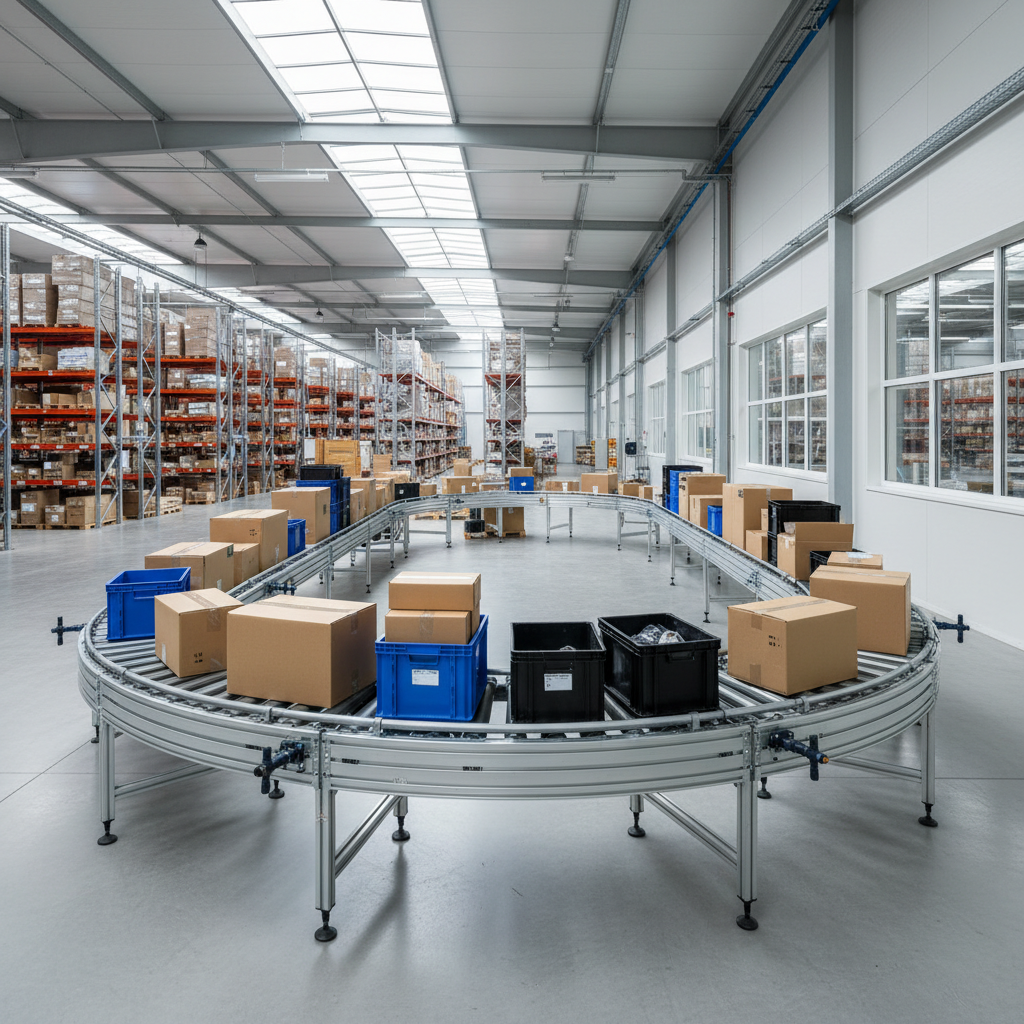
Modern conveyor systems are built like LEGO blocks. A modular roller conveyor or belt system can be reconfigured, extended, or shortened with minimal downtime. For a Benelux warehouse that needs to adapt its layout for a new product line or a seasonal peak (like holiday e-commerce), this is a game-changer. An assembly line can be repurposed in hours, not weeks, often with an investment ranging from €50,000 for a small setup to over €500,000 for a complex sorting solution.
Handling Diverse Products
QRM implies handling a wide mix of products. A flexible belt conveyor can handle everything from a small 100g polybag to a 30 kg cardboard box. Systems using modular plastic belts can be configured with specific surfaces (e.g., high-grip for inclines) or flights to separate items. Widths can easily range from 400mm for small items to 1200mm for larger goods, with typical speeds of 0.3-0.7 m/s, adjustable on the fly.
Variable Speed and Zone-Based Control
Rigid systems run at a single speed, creating bottlenecks or empty spaces. QRM-enabling conveyors use advanced control logic based on PLCs or WCS software. They feature capabilities like zero-pressure accumulation (ZPA), where products can buffer on the line without touching, preventing damage and creating a smooth, continuous flow to workstations. Each zone can be independently controlled, speeding up or slowing down based on real-time conditions, ensuring that no station is starved or overwhelmed.
System Integration is Key to Unlocking QRM
Flexible hardware is only half the story. The true power of QRM is released when these conveyor systems are seamlessly integrated with higher-level software. The coordination between a Warehouse Management System (WMS), a Warehouse Control System (WCS), and a Warehouse Execution System (WES) forms the digital brain of the operation. This integration is covered in-depth in our guide on WMS/WCS/WES integration. As many companies discover, their processes don’t always scale at the same pace as their growth. As discussed in the article "Bedrijven groeien, maar hun processen groeien niet altijd mee", a scalable system architecture is paramount. When an order comes in, the WMS can instantly communicate the priority to the WES, which then directs the WCS to adjust conveyor speeds, route parcels, and allocate resources to get that specific order out of the door with minimal delay.
Easy Systems: Your Partner for QRM-Ready Conveyor Solutions
At Easy Systems, we understand the unique pressures of the Benelux and greater European market. For over two decades, we have been designing and implementing modular, flexible conveyor systems that form the backbone of agile logistics and manufacturing operations. We don't just sell conveyors; we engineer material flow solutions that directly contribute to reducing your lead times. Our systems are designed for change, allowing your business to adapt quickly to new products, processes, and customer demands. By combining robust, modular hardware with intelligent, scalable controls, we provide you with the physical tools needed to implement a successful Quick Response Manufacturing strategy and build a resilient, future-proof operation.
This article is part of the Conveyor-Design knowledge hub, edited by Easy Systems engineers who design conveyor and warehouse automation systems across the Benelux every week.
Frequently asked questions
What is the main difference between QRM and Lean Manufacturing?+
The primary focus of Lean is the elimination of waste (muda) to improve efficiency and reduce cost. QRM's primary focus is the reduction of lead time across the entire enterprise. While they share some tools, QRM prioritizes time above all other metrics, even if it means having some planned spare capacity.
Is QRM only for manufacturing companies?+
No. While its roots are in manufacturing, the principles of QRM are highly applicable to logistics, distribution, e-commerce fulfillment, and even administrative processes. Any operation where reducing the time to deliver a product or service is critical can benefit from QRM.
What is a realistic ROI for implementing flexible conveyors for QRM?+
The ROI depends heavily on the specific application, but it is typically driven by reduced labour costs, increased throughput, and lower inventory holding costs. Many Benelux companies see a payback period of 18-36 months. More importantly, it improves customer satisfaction through faster, more reliable deliveries, which has a long-term strategic value.