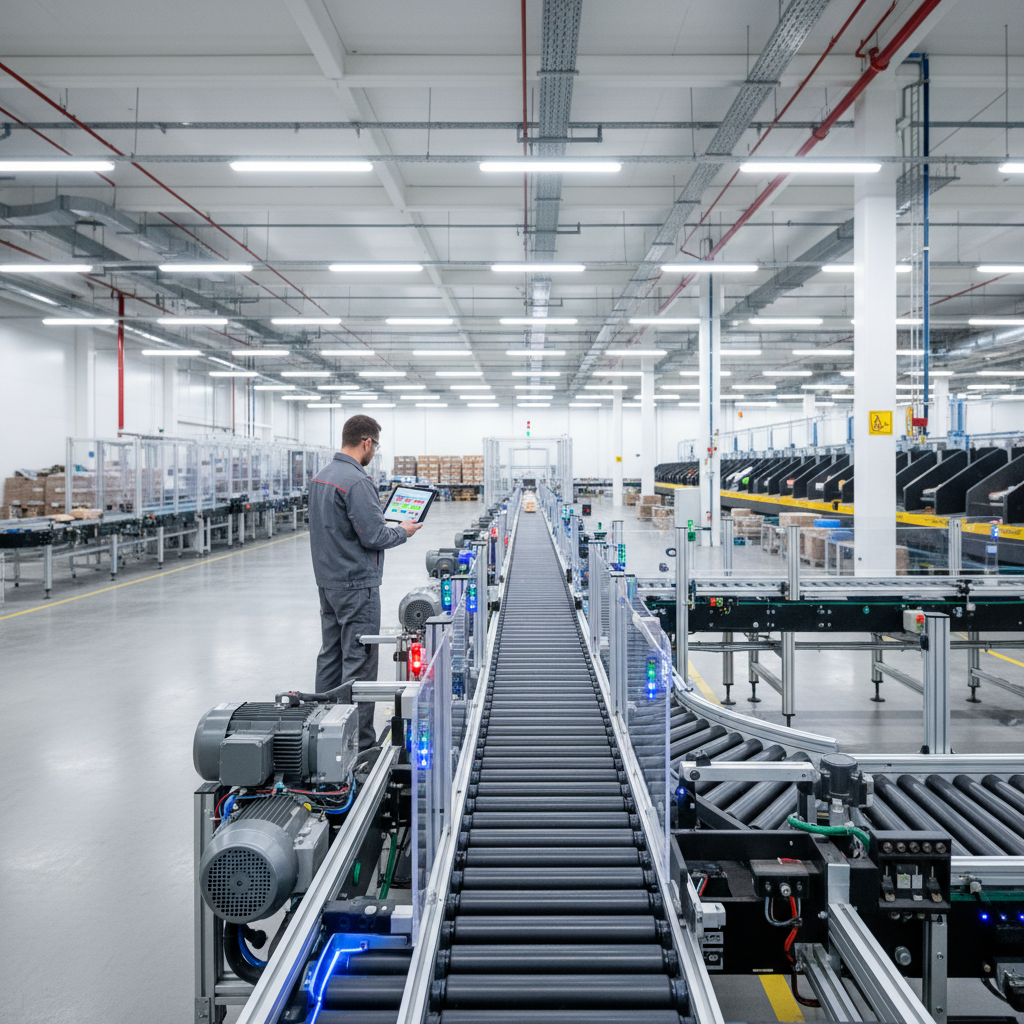
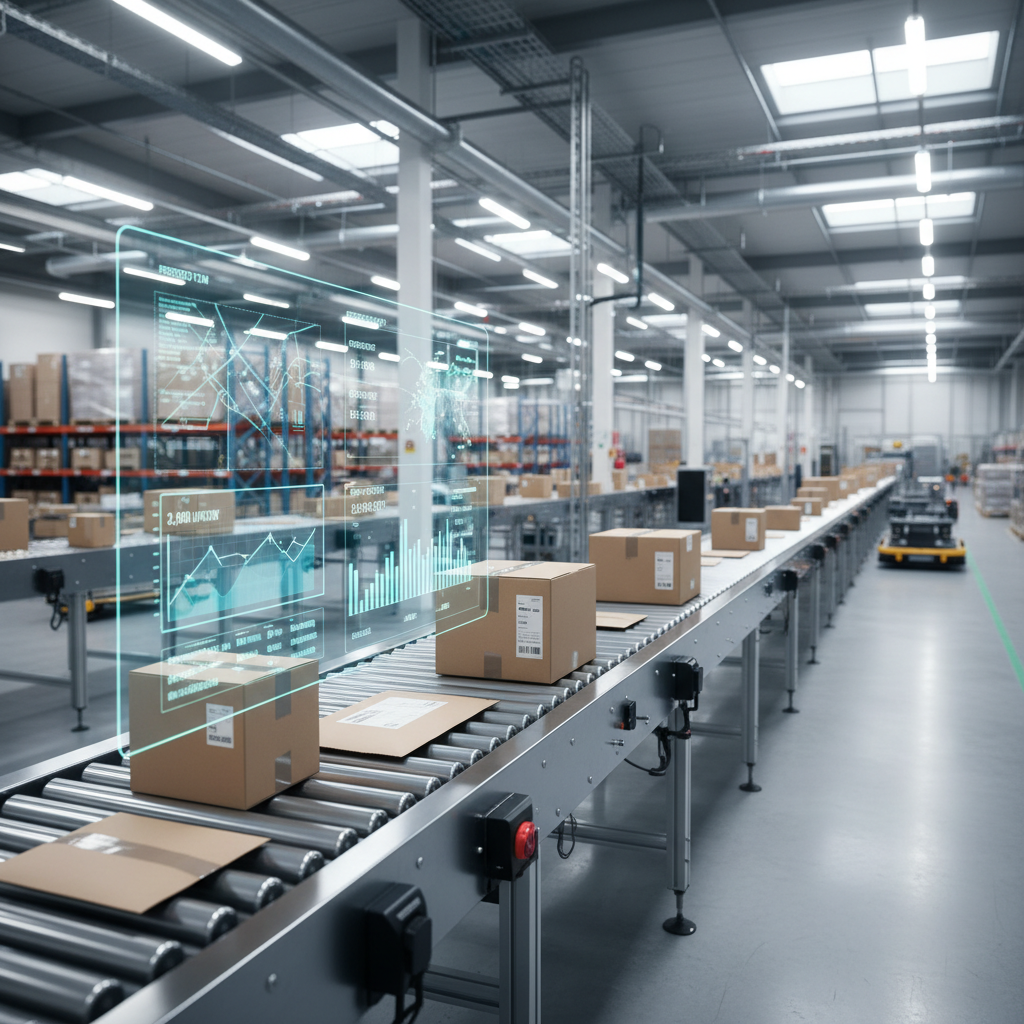
Predictive Analytics for Conveyor Downtime: Benelux Focus
Using sensor data and ML, predictive analytics forecasts conveyor failures before they happen. This approach is critical in Benelux logistics hubs, cutting downtime by up to 30% and reducing maintenance costs significantly.
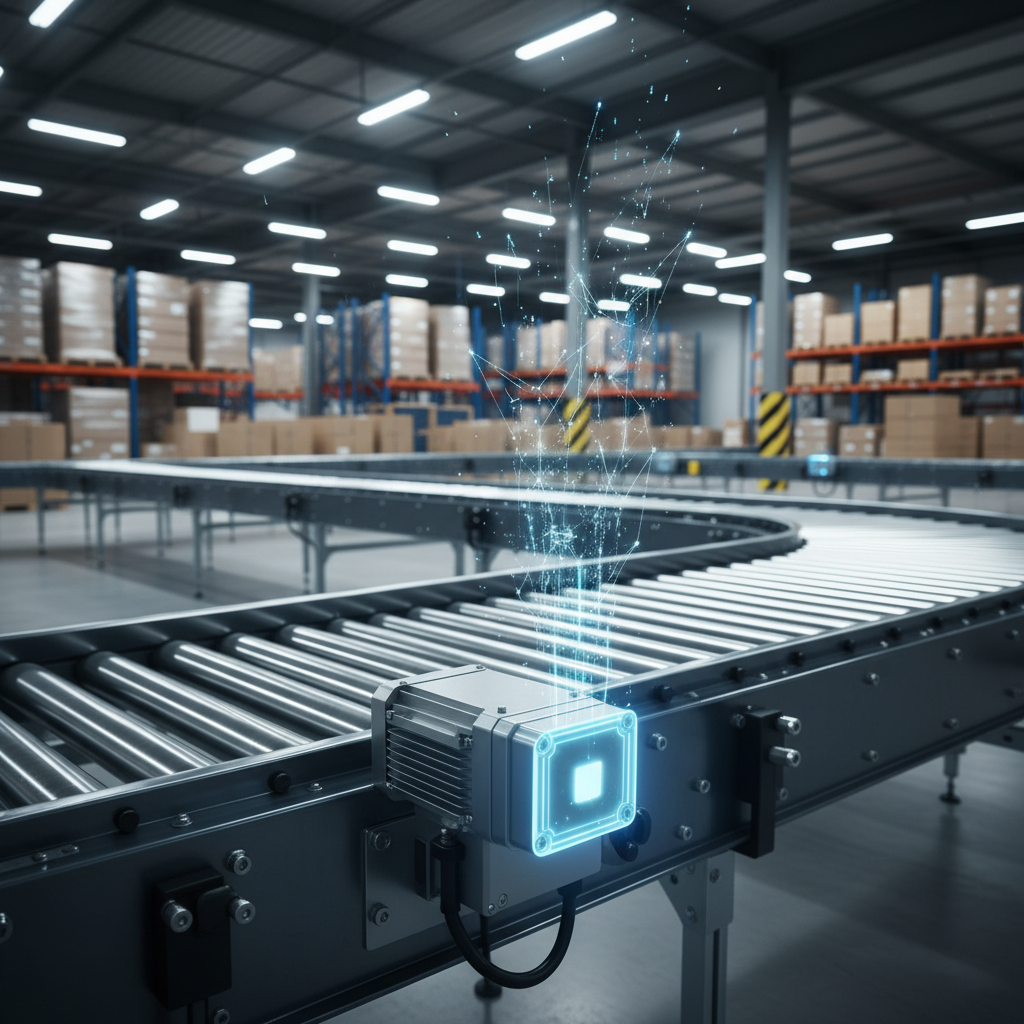
In the high-stakes world of European logistics, centered around the powerhouse ports of Antwerp and Rotterdam, unplanned downtime is not just an inconvenience—it's a critical financial drain. For warehouses and distribution centers across the Benelux, conveyor systems are the arteries of the operation. When they stop, the entire facility suffocates. This article explores how predictive analytics provides a powerful antidote, transforming maintenance from a costly reaction into a data-driven, proactive strategy, supported by a real-world Benelux case study.
Definition
Predictive Analytics for Conveyor Downtime is the practice of using data from Industrial Internet of Things (IIoT) sensors, historical performance logs, and machine learning algorithms to anticipate component failure on a conveyor system before it leads to a stoppage. It enables maintenance to be scheduled precisely when needed, minimizing disruption and maximizing asset lifespan.
The High Cost of Unplanned Downtime in Benelux Logistics
The strategic location of Belgium, the Netherlands, and Luxembourg makes the region one of the most concentrated logistics hubs on the planet. This density creates immense pressure to perform. A single hour of downtime on a critical sorting line during peak season can incur direct and indirect costs ranging from €8,000 to over €25,000. These costs are not just about lost productivity; they include:
- Missed Service Level Agreements (SLAs): Failure to meet delivery windows results in financial penalties and loss of customer trust.
- Labor Inefficiency: Dozens of employees can be left idle, yet their wages continue to accumulate. A warehouse with 50 operators at an average hourly cost of €25 each represents €1,250 in wasted labor costs per hour of downtime.
- Backlog Creation: A stoppage of just two hours can create a backlog that takes an entire shift or longer to clear, impacting every subsequent process from picking to shipping.
- Reputational Damage: In an era of next-day delivery expectations, delays are quickly broadcast and can permanently tarnish a brand's reputation.
Predictive vs. Preventive vs. Reactive Maintenance: A Comparison
Understanding where predictive analytics fits requires comparing it to traditional maintenance models. While many large operations have adopted preventive strategies, a surprising number of small to medium-sized enterprises (SMEs) in Europe still operate on a reactive "if it breaks, fix it" basis.
| Maintenance Model | Approach | Typical Cost Profile | Downtime Impact | Best For |
|---|---|---|---|---|
| Reactive | Repair components only after they have failed. | Low initial cost, but extremely high long-term costs due to unplanned downtime and secondary damage. | Very High & Unpredictable | Non-critical systems where failure has minimal impact. |
| Preventive | Schedule maintenance at regular intervals (e.g., every 500 operational hours) based on expected lifespan. | Predictable, but often inefficient. Parts may be replaced prematurely, incurring unnecessary expense. | Low & Scheduled | Systems with predictable wear patterns and moderate criticality. |
| Predictive | Use continuous data monitoring to predict the exact point of failure and perform maintenance "just-in-time". | Higher initial investment (sensors, software), but lowest total cost of ownership (TCO) by eliminating unnecessary maintenance and downtime. | Minimal & Scheduled | Critical, complex systems like mainline sorters or spiral conveyors where uptime is paramount. |
How Predictive Analytics Works: The Technology Stack
Implementing a predictive maintenance strategy involves integrating several layers of technology, from the factory floor to the cloud.
Data Collection: Sensors and IIoT
The foundation of any predictive system is high-quality data. This is gathered by placing sensors on critical conveyor components such as motors, gearboxes, bearings, and belts. Common sensors include:
- Vibration Analysis Sensors: Costing between €80 and €400 per unit, these detect subtle changes in vibration patterns that indicate bearing wear, misalignment, or imbalance.
- Thermal Sensors/Cameras: These monitor component temperature. An overheating motor is a classic sign of impending failure due to electrical or mechanical stress.
- Acoustic Sensors: Listen for changes in operational noise that are imperceptible to the human ear but signify potential issues.
- Power Consumption Monitors: An increase in the energy drawn by a motor on a belt conveyor can indicate increased friction from a worn belt or failing rollers.
This data is typically fed into the local PLC (Programmable Logic Controller) or directly to an edge computing gateway.
Data Transmission & Processing
Once collected, the data must be transmitted and analyzed. Standards like OPC UA are crucial for ensuring interoperability between devices from different manufacturers. The analysis can happen at the "edge" (on-premise) for real-time alerts or in the cloud for deep, historical analysis and model training. Cloud platforms from providers like AWS or Azure offer scalable machine learning services that are essential for handling the vast datasets.
Benelux Case Study: Food & Beverage DC in Breda, NL
A large food & beverage distributor operating a 30,000 m² distribution center near Breda faced significant challenges. Their primary cross-belt sorter, handling up to 12,000 items per hour, was experiencing an average of 10 hours of unplanned downtime per month. At a calculated cost of €18,000/hour, this translated to a staggering €1.8M+ annual loss in potential revenue and operational costs.
The Solution: A phased predictive maintenance project was initiated. In Phase 1, 150 critical motor and bearing assemblies on the sorter were fitted with vibration and thermal sensors. The data was aggregated via an edge gateway and sent to a cloud analytics platform. The system was trained on 60 days of operational data to establish a baseline.
The Results: Within four months, the system flagged an anomalous vibration signature in a primary drive motor. Maintenance was scheduled for a planned weekend stop. Inspection revealed advanced bearing wear that would have caused a catastrophic failure within an estimated 40-50 operational hours—right in the middle of a weekday peak. Over the first year, the system helped prevent four major failures, reducing unplanned downtime by over 80%. Maintenance costs were reduced by 25% by eliminating unnecessary preventive checks. The project’s initial investment of €75,000 was recouped in just 8 months. As companies grow, it is crucial that their operational processes scale with them, a challenge this implementation directly addressed by ensuring system reliability. You can explore this concept further in our guide to Sortation Systems.
Calculating the Financial ROI
For many businesses, the barrier to entry is the perceived cost. However, a simple ROI calculation often reveals a compelling business case. When companies grow, their processes don't always keep pace. Investing in scalable technology like predictive maintenance is not just about fixing current problems but preparing for future growth, a topic we explore more deeply in our article on scaling business processes.
Investment Costs:
- Sensors & Hardware: €15,000 - €40,000
- Software & Platform License (SaaS): €1,000 - €5,000 per month
- Integration & Training: €10,000 - €25,000
Annual Returns:
- Downtime Cost Reduction: (Hours saved) x (Cost per hour) = (e.g., 80 hours) x (€18,000) = €1,440,000
- Maintenance Labor Savings: (Hours saved on unnecessary inspections) x (Labor rate) = (e.g., 200 hours) x (€65/hr) = €13,000
- Reduced Spare Parts Inventory: Lower carrying costs by holding fewer "just-in-case" spares.
Even with conservative estimates, the payback period is typically under 18 months for most critical conveyor applications.
Easy Systems: Your Partner for Proactive, Data-Ready Conveyor Solutions
At Easy Systems, we don't just build conveyors; we design intelligent, future-proof material handling solutions. Our modular conveyor systems are engineered from the ground up for the Industry 4.0 era. They are designed for easy integration of sensors and data-gathering hardware, providing the clean, reliable data stream that predictive analytics platforms need to thrive. Our deep expertise in the Benelux market means we understand the unique pressures and opportunities our clients face. We partner with you to design systems that not only meet your immediate throughput needs but also provide the foundation for a proactive, data-driven maintenance strategy, ensuring your operations remain resilient and competitive for years to come. By integrating with a modern WCS (Warehouse Control System), our solutions provide a holistic view of your entire material flow, making the leap to predictive intelligence seamless.

This article is part of the Conveyor-Design knowledge hub, edited by Easy Systems engineers who design conveyor and warehouse automation systems across the Benelux every week.
Frequently asked questions
What is the main difference between predictive and preventive maintenance?+
Preventive maintenance is time-based, meaning tasks are performed at regular intervals regardless of the actual condition of the equipment. Predictive maintenance is condition-based; it uses real-time data to predict failures and schedules maintenance only when it is actually needed.
How much does it cost to implement predictive analytics for conveyors?+
A pilot project for a critical conveyor line can start from €25,000 - €50,000. The cost depends on the number of sensors, software complexity, and integration needs. However, the ROI is often realized in under 18 months due to significant savings from downtime reduction.
Do I need data scientists to run a predictive maintenance system?+
Not necessarily. Modern predictive maintenance platforms are increasingly user-friendly, with intuitive dashboards and automated alerts. While data scientists are involved in building the underlying algorithms, the end-user is typically a maintenance manager or facility engineer who can act on clear, data-driven recommendations.