Optimizing Conveyor Networks: A Benelux Multi-Site Guide
Learn how to synchronize conveyor systems across multiple Benelux locations. This guide covers key strategies from centralized control to WES integration for improved throughput and reduced operational costs in a complex European logistics network.
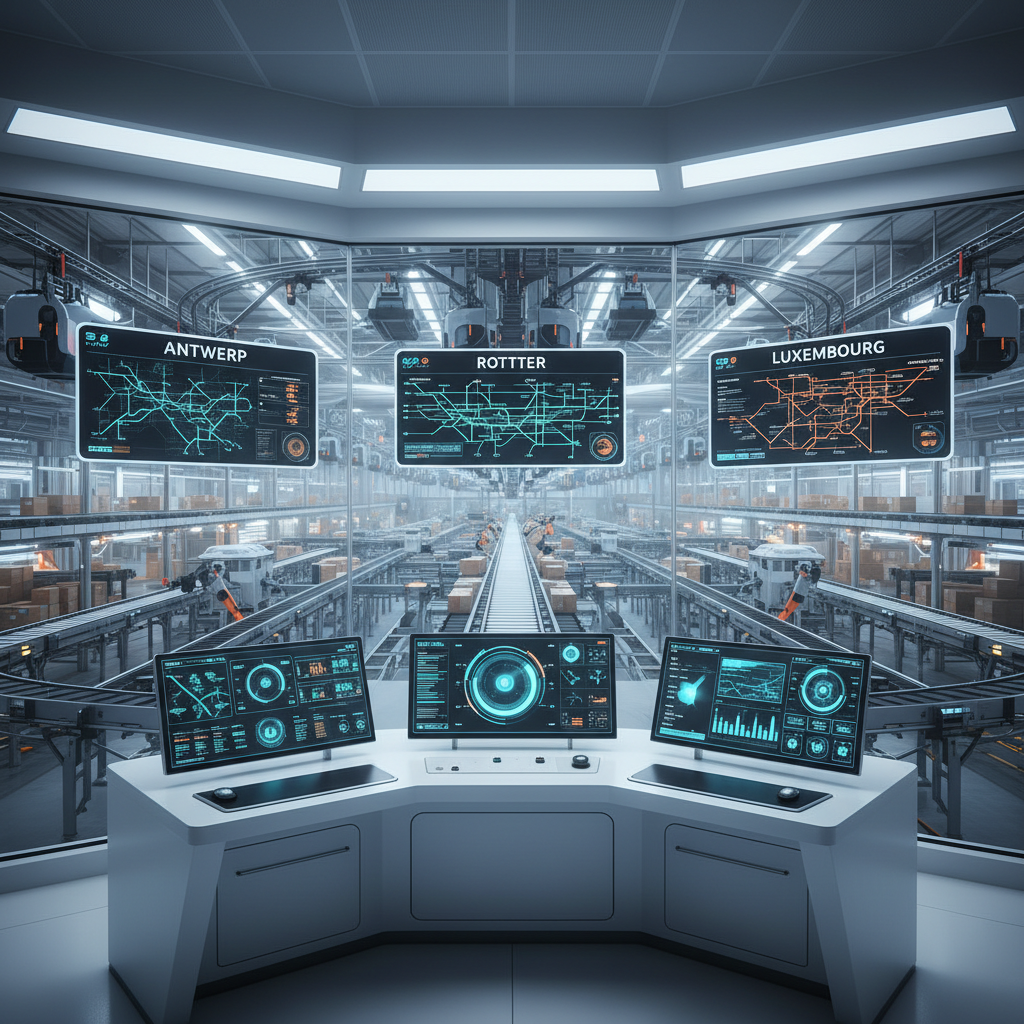
For businesses operating across Belgium, the Netherlands, and Luxembourg, a multi-site warehouse strategy is key to market penetration and rapid delivery. However, disparate, unsynchronized conveyor systems can create bottlenecks that cripple the entire supply chain. True logistical dominance in this dense European corridor requires a holistic approach: optimizing the entire conveyor network to function as a single, intelligent organism. This guide outlines the strategies and technologies to achieve this, turning logistical fragmentation into a competitive advantage.
Definition
Multi-site conveyor network optimization is the strategic process of integrating and synchronizing material handling systems across geographically separate distribution centers to manage inventory flow, balance workloads, and optimize overall throughput as if they were a single, unified operation. This typically involves a centralized software layer controlling decentralized hardware.
The Benelux Challenge: Density, Diversity, and Demand
The Benelux region presents a unique paradox. It's a compact, highly interconnected economic zone with world-class ports like Antwerp and Rotterdam, yet it is fraught with operational complexity. A distribution center in Wallonia, Belgium, operates under different labor laws than one in Eindhoven, Netherlands, just 80 km away. Add linguistic diversity and varying transport regulations, and the challenge becomes clear. An optimized network must be agile enough to navigate these subtleties. A 2% delay at a sorting hub in Liège due to local issues can cascade, causing a 10% drop in overall OTIF rates for same-day deliveries in the Randstad area if the network cannot dynamically re-route and compensate.
Key Regional Factors
- High Population Density: Demands faster, more localized fulfillment, putting pressure on last-mile delivery hubs.
- Infrastructure Nexus: Proximity to major European sea and airports makes it a critical hub, but also a point of congestion.
- Regulatory Fragmentation: Different labor, safety, and transport regulations per country (and sometimes, per region) require flexible system configurations.
Core Strategies for Network Synchronization
Synchronizing disparate sites requires more than just installing the same brand of conveyor. It demands a strategic framework for control and data exchange.
Centralized vs. Decentralized Control
A purely centralized model, where one master system dictates all actions, offers total visibility but creates a single point of failure. A decentralized model, where each site runs independently, is resilient but inefficient. The optimal Benelux strategy is often a hybrid approach: a central brain for strategic decisions (e.g., inventory placement, load balancing) with localized intelligence for real-time execution. This is where a powerful WES (Warehouse Execution System) becomes invaluable.
Standardizing Hardware and Software
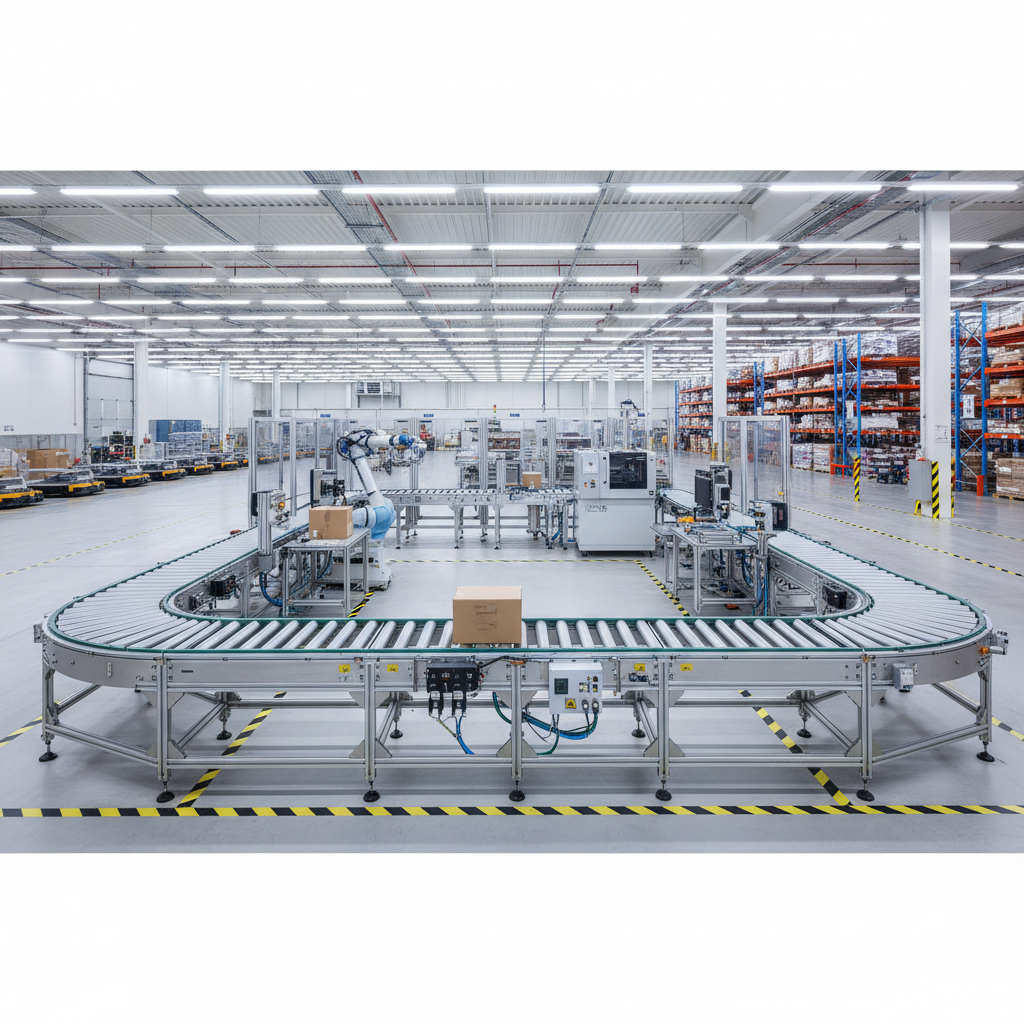
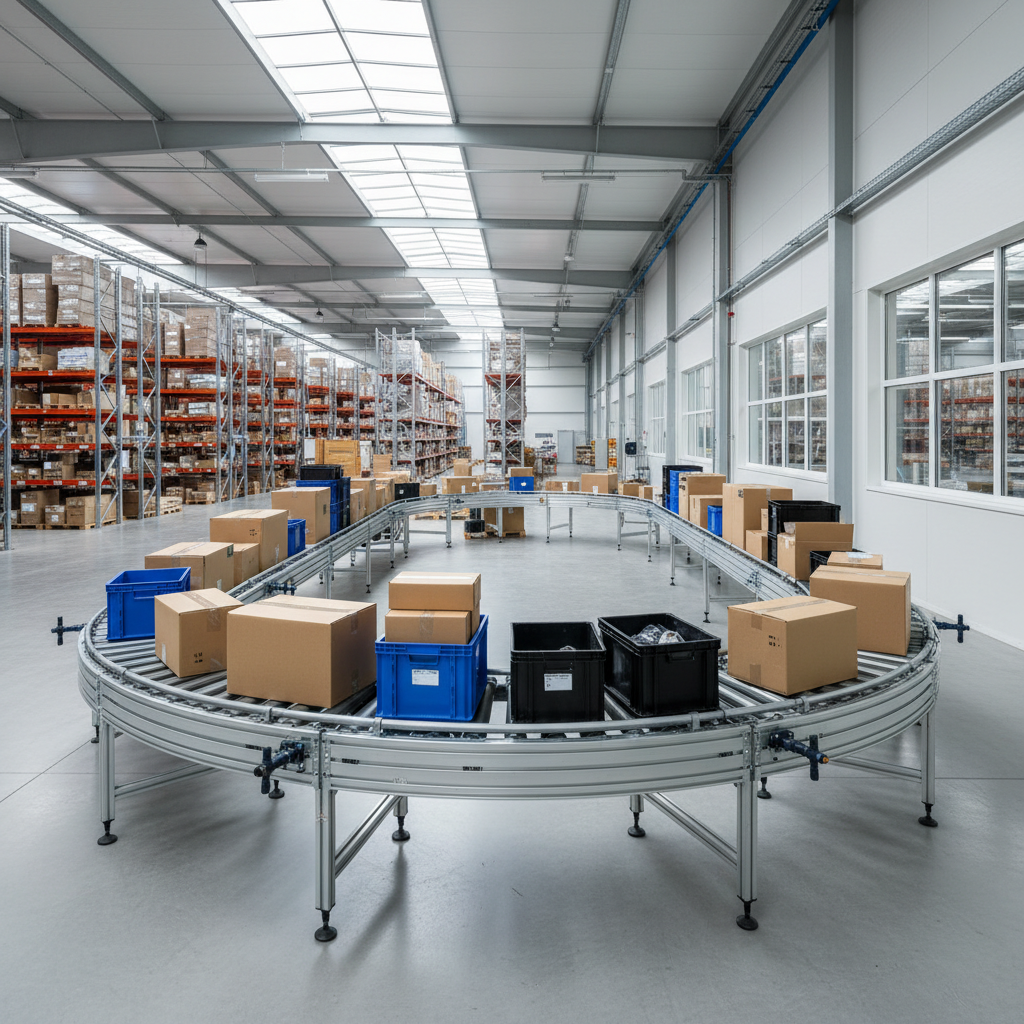
Standardization is the bedrock of a multi-site network. This doesn’t mean identical layouts, but rather using modular components and a common software language. Utilizing MDR (Motorized Drive Roller) conveyors, for example, allows for standardized, flexible segments that can be configured for different tasks—from accumulation to transport—across all sites. This simplifies maintenance, reduces the need for specialized spare parts at each location, and lowers the total cost of ownership (TCO) by an estimated 10-15% over a 5-year period.
Data-Driven Load Balancing
An optimized network can dynamically balance workloads. Imagine the central DC in Antwerp is overwhelmed with inbound containers. The network WES can automatically divert non-priority stock to a secondary warehouse near Utrecht with available capacity, pre-empting a bottleneck before it occurs. This requires real-time data on conveyor capacity, labor availability, and processing speeds from every node in the network.
Key Technologies for Seamless Integration
Software and specific hardware technologies are the enablers of a truly integrated network. Without them, strategic goals remain on the whiteboard.
The Central Role of a Warehouse Execution System (WES)
A WMS tells you where inventory is; a WES tells the equipment how to move it. In a multi-site context, the WES acts as the network's air traffic controller. It pulls orders from the WMS and orchestrates the most efficient path for goods across the entire network, not just within one building. It communicates directly with the Programmable Logic Controllers (PLC) of the conveyors at each site to manage flow in real time. For a deeper dive into how these systems interact, our guide on WMS/WCS/WES integration offers a comprehensive overview.
IoT Sensors and Predictive Maintenance
To ensure network reliability, you must prevent downtime. IoT-enabled sensors on conveyor motors, bearings, and belts continuously monitor performance metrics like temperature, vibration, and energy consumption. This data, fed into a central dashboard, allows a maintenance team in Luxembourg to predict a bearing failure on a critical sorter in Brussels, scheduling pre-emptive repairs during a low-volume period and saving an estimated 4-6 hours of unplanned downtime, which could cost upwards of €50,000 per hour in lost throughput.
Comparing Network Control Models
Choosing the right control architecture is fundamental to success. The decision impacts cost, resilience, and your ability to adapt to the volatile Benelux market.
| Feature | Centralized Control | Decentralized Control | Hybrid Model (WES-led) |
|---|---|---|---|
| Decision Making | Single-point (HQ/Central DC) | Localized (at each site) | Central strategy, local execution |
| Data Visibility | High (Complete network overview) | Low (Siloed per site) | High (Aggregated & localized) |
| Resilience | Low (Single point of failure) | High (Site failure doesn't halt network) | Moderate-High (Redundancy built-in) |
| Implementation Cost | High initial investment (€€€) | Lower initial cost per site (€€) | Varies; moderate to high (€€-€€€) |
| Scalability | Complex to scale | Easier to add new sites | Highly scalable with standard protocols |
| Ideal for... | Stable, predictable volumes | Independent, diverse operations | Dynamic, high-growth Benelux networks |
Positioning for the Future: Scalability and ROI
An optimized multi-site conveyor network is not just about current efficiency; it's about future-proofing your logistics. As e-commerce continues to drive demand for speed and personalization, the ability to scale and adapt becomes a primary competitive differentiator. A modular, WES-controlled network allows for rapid expansion. A new fulfillment center can be integrated into the network in weeks, not months, inheriting the collective intelligence and immediately contributing to the overall operation. The return on investment (ROI) is measured in higher throughput (up to 3,000-5,000 cases per hour across the network), improved order accuracy to 99.9%, reduced transportation costs through intelligent routing, and—most importantly—the ability to consistently meet demanding Service Level Agreements (SLAs) across the entire Benelux market.
Implementing such a system requires a partner with deep expertise in both conveyor hardware and the complex software integration needed to bind multiple sites together. As a leading Benelux expert in conveyor technology and warehouse automation, Easy Systems specializes in designing and deploying these cohesive, intelligent networks. To learn more about our specific solutions and how we can tailor a multi-site strategy for your operations, visit our European homepage at Easy Systems Benelux.
Easy Systems: Your Partner in Benelux Logistics Integration
Navigating the complexities of multi-site automation in the Benelux requires more than just high-quality hardware; it demands a partner with intimate knowledge of the regional landscape. Easy Systems (a BOA Concept company) is that partner. Based in the heart of the Benelux, we have decades of experience designing, manufacturing, and integrating modular conveyor systems for businesses with complex, multi-site footprints. We don't just sell conveyors; we deliver unified, resilient, and scalable logistics networks. Our expertise in integrating WES software with robust, flexible hardware ensures that your operations in Belgium, the Netherlands, and Luxembourg function as one seamless, efficient, and future-proof entity.
This article is part of the Conveyor-Design knowledge hub, edited by Easy Systems engineers who design conveyor and warehouse automation systems across the Benelux every week.
Frequently asked questions
What is the biggest challenge for multi-site logistics in the Benelux?+
The primary challenge is managing high operational diversity across a geographically dense but fragmented area. This includes varying labor regulations, languages, and infrastructure between Belgium, the Netherlands, and Luxembourg, requiring highly adaptable and synchronized automation systems.
Can a single WMS manage a multi-site conveyor network?+
While a WMS manages inventory and orders across sites, it's not designed for real-time equipment control. A <a href=\
What are the first steps to standardizing conveyor systems across multiple warehouses?+
Start with a thorough audit of existing equipment and software. The next step is to define a common operational goal and select a standardized control platform (like a unifying WES) and modular hardware that allows for phased implementation and future scalability.