Guided Conveyor Systems: Navigating Benelux Manufacturing
Guided conveyor systems use fixed paths with integrated logic to automatically route items through complex manufacturing and logistics environments, crucial for Benelux's high-tech production landscape.
In the dense, high-tech industrial landscape of the Benelux, where factory and warehouse floor space is a premium commodity, optimizing every square meter is paramount. Complex manufacturing processes demand more than simple point-to-point transport; they require intelligent, automated routing of parts, sub-assemblies, and finished goods. This is the domain of guided conveyor systems, the workhorses of structured intralogistics.
Definition
A guided conveyor system is a material handling solution that transports items along a predetermined physical path featuring integrated control logic to navigate junctions, merges, or diverters. Unlike simple transport conveyors, these systems make automated decisions to route products based on predefined rules, sensor inputs, or directives from a higher-level control system.
The Core Principle: Fixed Paths, Smart Decisions
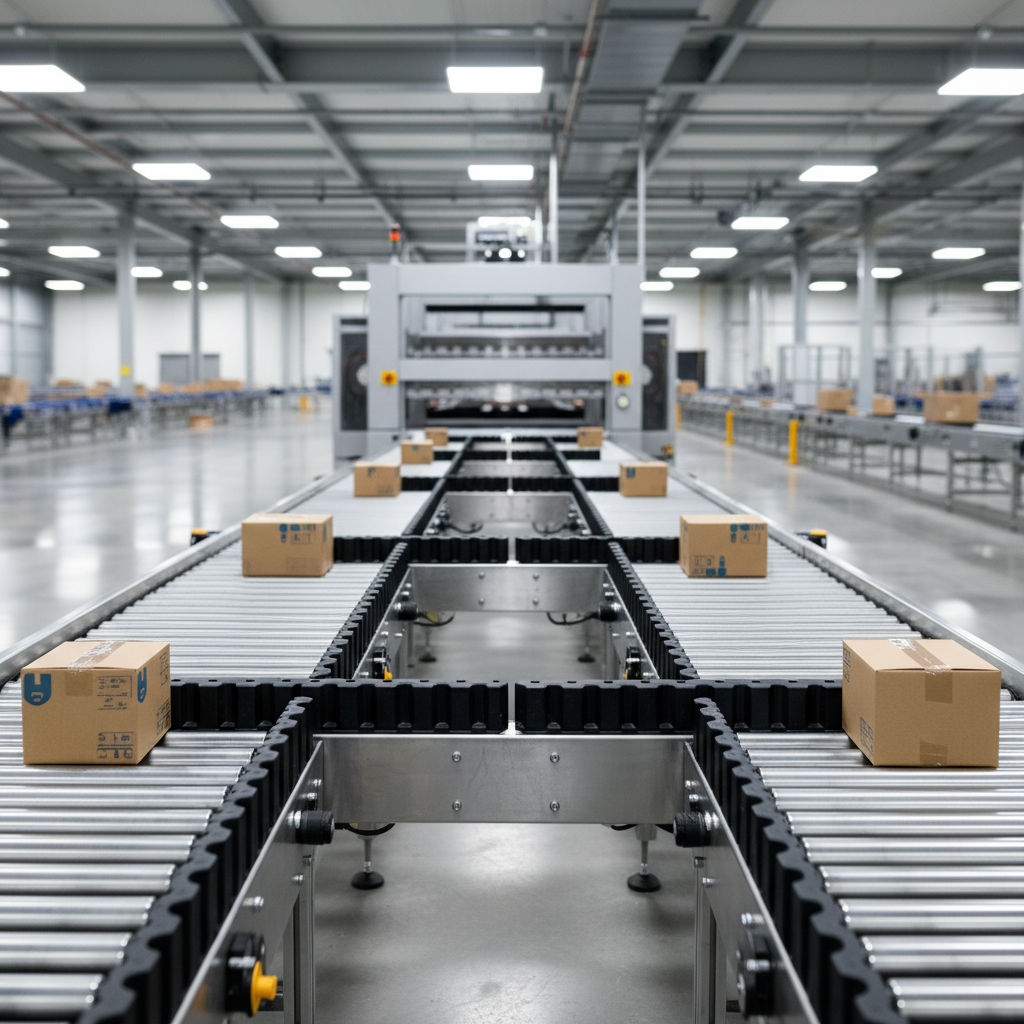
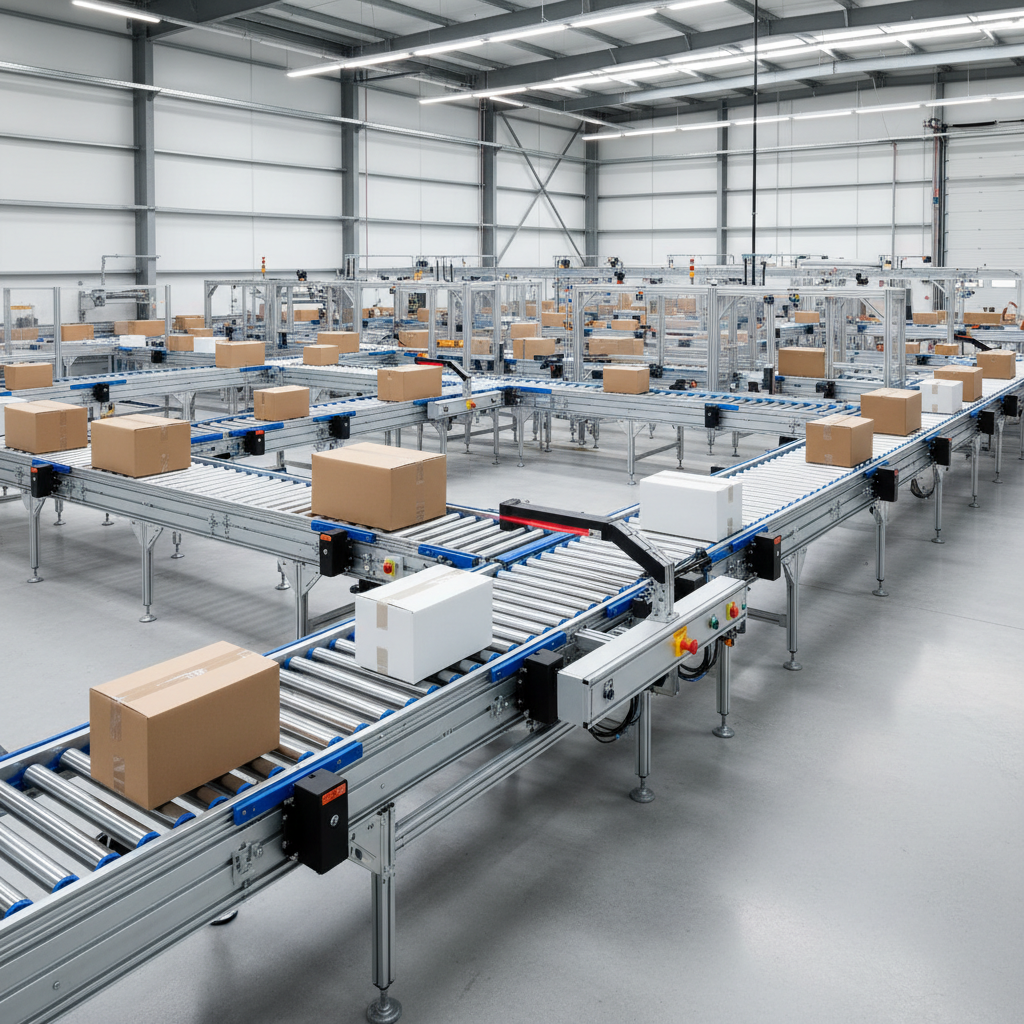
The strength of a guided conveyor system lies in its predictability and reliability. The path is fixed, but the journey of each item can be unique. This is achieved by embedding logic directly into the conveyor line. Photo-electric sensors detect the presence of a product, barcode scanners read its identity and destination, and pneumatic or electric diverters act as switches on the track.
This "guidance" allows a single, interconnected conveyor network to:
- Divert products to specific workstations for assembly or processing.
- Merge items from multiple production lines into a single stream for packing.
- Route finished goods to different palletizing stations based on SKU or order destination.
- Direct quality control rejects to an inspection area without manual intervention.
The Control Hierarchy: From Sensor to WES
The "brain" of a guided conveyor system can operate at several levels of sophistication, directly impacting its capability and cost. Understanding this hierarchy is key to specifying a system that is fit for purpose.
At the most basic level, the system uses standalone logic. A sensor detects a box and triggers a 90-degree transfer. This is simple, robust, and effective for unchanging tasks. The next level up involves a PLC (Programmable Logic Controller). The PLC acts as a local traffic cop, coordinating multiple decision points, tracking products through zones, and executing more complex sequences. A single PLC can manage a significant portion of a production line, making decisions based on a programmed set of rules.
For facility-wide coordination, a WCS (Warehouse Control System) is used. The WCS sits above the PLCs and orchestrates the entire material flow, connecting the conveyor system to other automated equipment. It translates high-level commands from a WMS or ERP into specific instructions for the PLCs. This enables real-time, dynamic routing based on live production data.
Comparative Analysis of Control Architectures
Choosing the right control system is a trade-off between cost, complexity, and flexibility. For facilities in Belgium, the Netherlands, and Luxembourg, the choice often depends on the scale of automation and the need for future adaptability.
| Control Method | Typical Complexity | Relative Cost (€) | Flexibility | Best-Fit Application |
|---|---|---|---|---|
| Standalone Sensor Logic | Low | € | Low | Simple A-to-B diversion, single decision point. |
| PLC-Based Control | Medium | €€ | Medium | Assembly lines, multi-point sortation within a department. |
| WCS Integration | High | €€€ | High | Large distribution centers, facilities with integrated automation. |
| WES (Warehouse Execution System) | Very High | €€€€ | Very High | E-commerce fulfillment, dynamic goods-to-person workflows. |
Key Applications in the Benelux Industrial Landscape
The benefits of guided conveyor systems are particularly pronounced in key Benelux sectors:
- Automotive Suppliers (e.g., Limburg, Antwerp regions): Used for "just-in-sequence" delivery of components to assembly robots. A guided chain or roller conveyor can ensure parts arrive in the correct orientation and order, minimizing line-side storage.
- Food & Beverage (e.g., North Brabant, Flanders): In environments requiring high hygiene standards, stainless steel guided conveyors route raw materials to processing, and packaged goods from filling stations to case packers and palletizers, often handling rates of 60-120 items per minute.
- Pharmaceuticals & Life Sciences (e.g., Leiden, Walloon Brabant): Precision and traceability are paramount. Guided systems manage the flow of totes containing sensitive materials between cleanrooms, ensuring a full audit trail and minimizing human handling errors.
Integrating Guided Conveyors with Other Automation
A guided conveyor system rarely works in isolation. Its true power is unleashed when it acts as the connective tissue for other automated technologies. In modern warehouses, it's common to see a guided conveyor network feeding products to and from robotic palletizers, automatic case sealers, and sortation systems. A frequent integration challenge is the handover between fixed and mobile automation. You can learn more about the differences in our AGV vs. AMR guide.
For example, a conveyor might transport a completed order tote to a pickup station where an AGV (Automated Guided Vehicle) takes over for transport to the shipping docks. The WCS is responsible for this digital handshake, ensuring the AGV is dispatched at the right moment and the conveyor releases the tote only when the AGV confirms it is in position. This seamless integration is the hallmark of a successfully automated facility.
Calculating ROI for a Guided Conveyor System in Europe
Investing in automation requires a clear financial justification. For a medium-complexity guided roller conveyor system in a European manufacturing plant—spanning, for instance, 100 meters with five diverts and PLC control—the initial investment can range from €80,000 to €250,000. This cost includes hardware, controls, and installation.
The return on investment (ROI) is calculated based on several factors:
- Labor Savings: Redeploying 2-3 full-time employees from manual transport tasks can save €80,000 - €120,000 annually in the Benelux.
- Increased Throughput: A 15-20% increase in output due to consistent material flow can translate to significant revenue gains.
- Error Reduction: Eliminating mis-routes and handling damage can save 1-2% of the value of goods handled.
- Enhanced Safety: Reducing forklift and pedestrian traffic in production zones lowers the risk of costly accidents.
Typically, Benelux companies see a full ROI on such systems within 18 to 36 months, making it a strategically sound investment for long-term competitiveness.
Easy Systems: Your Partner for Complex Flow Automation
Designing a guided conveyor system that perfectly matches the intricate flows of a modern production facility requires deep expertise. The choice of conveyor type, the control architecture, and the integration with other systems must all be considered. This is where a trusted partner becomes invaluable. Easy Systems, part of the BOA Concept group, specializes in designing and implementing modular, intelligent conveyor solutions for the European market. By focusing on creating efficient, scalable, and reliable systems, we help Benelux manufacturers navigate the complexities of automation. For more information on how our modular systems can be adapted to your specific needs, visit our corporate site at https://easy-systems.eu/nl/.
This article is part of the Conveyor-Design knowledge hub, edited by Easy Systems engineers who design conveyor and warehouse automation systems across the Benelux every week.
Frequently asked questions
What's the main difference between a guided conveyor and an AMR?+
A guided conveyor follows a fixed, physical path for high-throughput, repeatable tasks. An AMR (Autonomous Mobile Robot) navigates freely and is more flexible for variable routes but typically has lower throughput for point-to-point transfers.
Are guided conveyor systems suitable for small businesses?+
Yes, modular conveyor systems can be scaled to fit specific needs. A smaller installation for a key process, like moving goods from production to a packing station, can start from €25,000 - €40,000 and offer a rapid return on investment.
How much maintenance do these systems require?+
With modern technologies like 24V DC motors and robust design, maintenance is minimal. A typical preventive maintenance schedule involves quarterly checks of motors, belts, and sensors, totaling around 16-24 technician-hours per year for a standard 100-meter system.
Can a guided conveyor system handle products of different sizes?+
Yes. The system is designed based on the range of product dimensions (L x W x H) and weights it needs to handle. Using wider conveyors (e.g., 800 mm) and intelligent, adjustable side guides allows a single system to transport a variety of item sizes effectively.