Future-Proofing Conveyor Investments in Benelux Warehouses
Investing in a conveyor system is a major commitment. This guide explores how Benelux warehouse managers can ensure their investment is future-proof through scalable design, modular components, and adaptable technology, preparing for market shifts and growth.
In the high-stakes, fast-paced logistics landscape of the Benelux, a conveyor system is not merely equipment; it’s the arterial network of your entire operation. With its strategic location in Europe, the region demands peak efficiency. Yet, rising labour costs, space constraints in densely populated areas like the Randstad or the Antwerp-Brussels axis, and the volatile demands of e-commerce create a perfect storm. Making a significant capital investment in a conveyor system that might be obsolete in five years is a risk no warehouse manager can afford. This guide focuses on how to make that investment a lasting asset through scalability and adaptability.
Definition
A future-proof conveyor system is an automated material handling solution designed with modularity, scalability, and adaptability at its core. This allows it to evolve with business growth, market changes, and technological advancements without requiring a complete, and costly, overhaul.
The Benelux Challenge: Space, Speed, and Seasonality
Operating a warehouse in the Netherlands, Belgium, or Luxembourg presents a unique set of challenges. While offering unparalleled access to European markets, it also means navigating a highly competitive and costly operational environment. A conveyor system must be more than just functional; it must be a strategic solution to these specific regional pressures.
High Operational Costs and Labour Scarcity
Labour costs in the Benelux are among the highest in Europe. A warehouse relying heavily on manual transport of goods is exceptionally vulnerable to wage inflation and labour shortages. Automation is not just an efficiency gain; it's a critical cost-control measure. A well-designed conveyor system can automate repetitive transport tasks, reducing the need for manual handling by up to 80% and allowing staff to be reallocated to value-added tasks like packing and quality control.
E-commerce Volatility and SKU Proliferation
The Benelux is a mature e-commerce market, which means high customer expectations for speed and accuracy. This translates to intense peak seasons (like Sinterklaas, Christmas, and Black Friday) that can see order volumes increase by 300-500%. A fixed, traditional conveyor system designed for average volume will buckle under this pressure, leading to bottlenecks, delays, and a negative impact on your OTIF (On-Time, In-Full) metrics. A future-proof system must be able to handle these peaks without requiring a proportional increase in labour or physical space.
Core Principles of a Future-Proof Conveyor System
To guard against obsolescence, your investment strategy must be built on three pillars: scalability, adaptability, and modularity. These are not just buzzwords; they are concrete design philosophies with tangible financial benefits.
Scalability: Growing With Your Business
Scalability is the ability to increase the system’s capacity to handle higher volumes. Instead of over-provisioning from day one—a costly and inefficient approach—a scalable system allows you to add capacity incrementally. For many businesses, their internal processes struggle to keep pace with their growth. As one of our recent analyses highlighted, companies may grow, but their processes often don't. A scalable conveyor system directly addresses this by matching automation capacity to business reality, ensuring that your logistics capabilities are an enabler of growth, not a bottleneck.
Adaptability: Pivoting With the Market
Adaptability is the system’s ability to handle different tasks, products, or workflows. What if you need to re-route flow to a new packing area? What if your best-selling product changes from small boxes to larger polybags? In a traditional system, this would require significant downtime and engineering costs. An adaptable system, often controlled by sophisticated software, can change its logic and even its physical configuration with minimal disruption.
Modularity: The Building Blocks of Flexibility
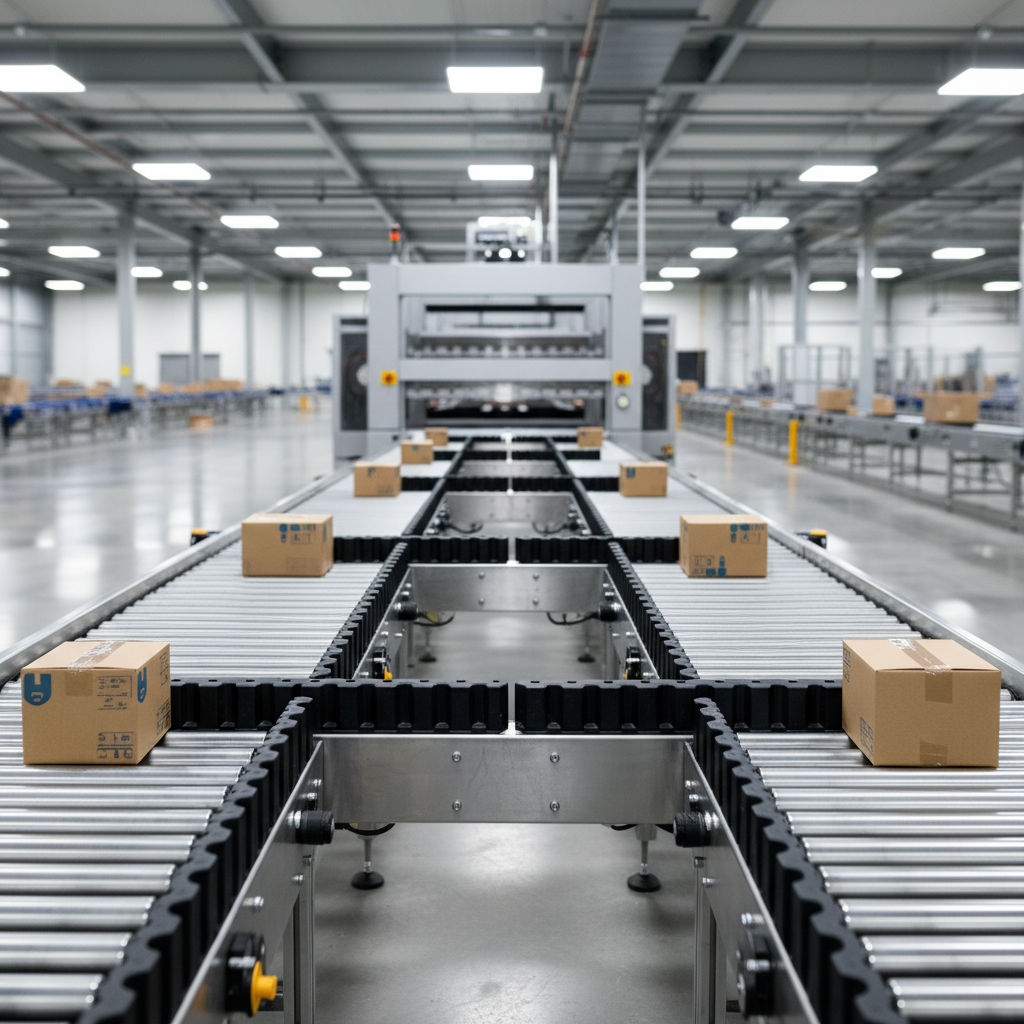
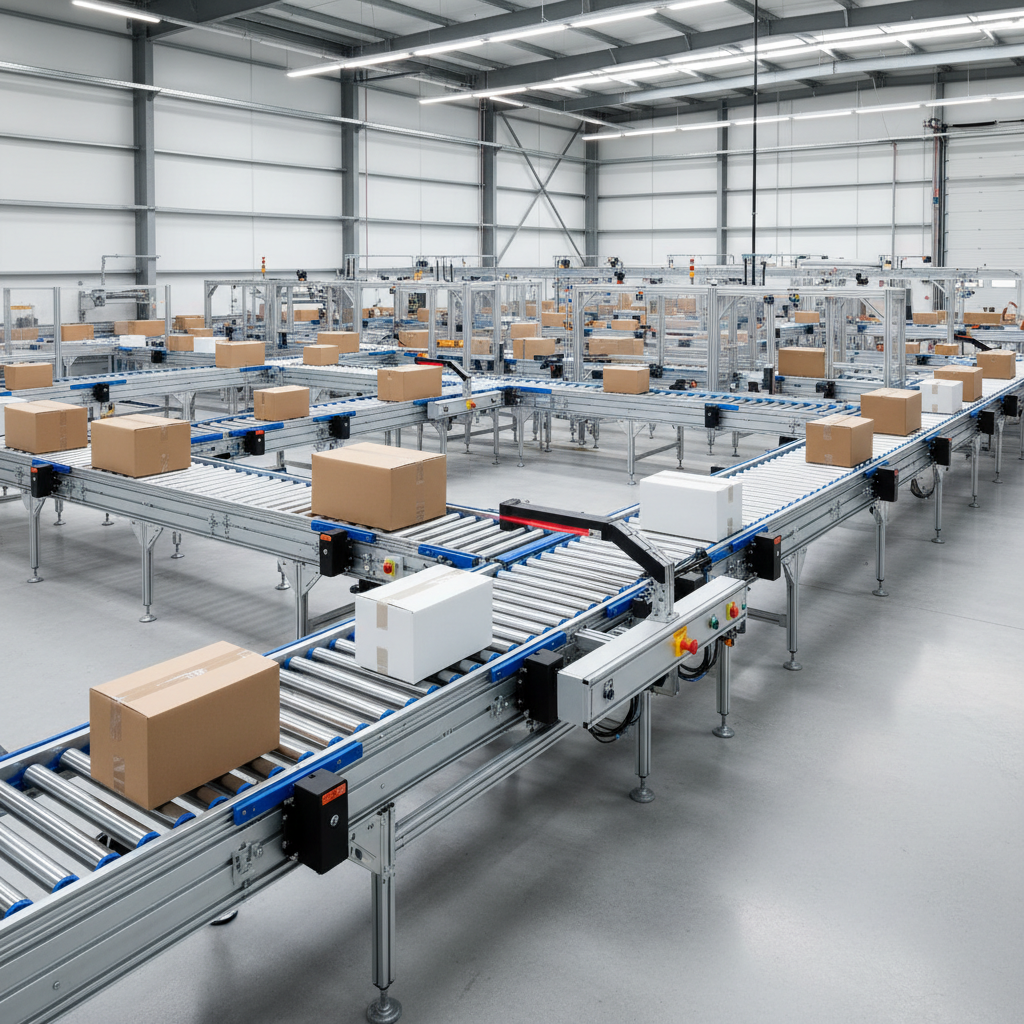
Modularity is the key enabling technology for both scalability and adaptability. A modular system is built from standardized, pre-engineered components that fit together like building blocks. Think straight sections, curves, junctions, and inclines. This design ethos applies to every type of system, from a simple roller conveyor to a complex sortation setup. This plug-and-play approach means you can expand, reconfigure, or repair the system quickly and cost-effectively.
Key Technologies for Scalable Conveyors
Achieving true future-proofing relies on specific, modern technologies that have matured significantly in recent years. These technologies are no longer theoretical; they are proven and deployed in warehouses across the Benelux.
Motorized Drive Roller (MDR) Technology
Perhaps the single most important innovation for modular conveyors is the Motorized Drive Roller (MDR). Instead of long conveyor sections being driven by a single, large AC motor and a complex system of belts and chains, MDR systems use rollers with integrated 24V DC motors. This creates independent "zones" that are only active when a box is present. The benefits are immense: up to 50% energy savings, dramatically reduced noise levels, and inherent zero-pressure accumulation, which prevents product damage.
Smart Software: WCS and WES
Hardware is only half the story. The "brain" of a modern conveyor system is its software. A Warehouse Control System (WCS) manages the real-time logic of the conveyor, telling it when to start, stop, and divert products. This WCS must be able to seamlessly integrate with your higher-level Warehouse Management System (WMS), which holds all the information about orders and inventory. This tight integration, often managed by a Warehouse Execution System (WES), is what allows for true adaptability, enabling you to change priorities on the fly. For a deeper dive into how these software layers interact, consult our guide on WMS/WCS integration.
Comparing Scalable vs. Traditional Conveyor Investments
The choice between a traditional, fixed system and a modern, scalable one has significant long-term financial implications. The table below illustrates the total cost of ownership profile for a typical warehouse in the Brussels-Antwerp logistics corridor.
| Factor | Traditional Conveyor System | Scalable, Modular System |
|---|---|---|
| Initial Investment (300m system) | €250,000 - €350,000 | €300,000 - €400,000 (Slightly higher due to smarter components) |
| Cost to Add 50m Capacity | €80,000+ (Requires significant re-engineering and a new drive) | €40,000 (Cost of new modules, plug-and-play integration) |
| Downtime for Upgrade | 1-2 weeks of planned shutdown. | 8-16 hours (Can be done over a weekend). |
| Energy Costs (per year) | ~€15,000 (AC motor runs continuously) | ~€7,500 (MDR zones run on-demand) |
| Long-Term ROI | Positive, but diminishes rapidly if business needs change. | Consistently higher due to lower expansion costs and operational savings. |
A Checklist for Your Next Conveyor Project
When evaluating a new conveyor system, ask potential suppliers the following questions to gauge how future-proof their solution really is:
- Growth Projections: Have you assessed our 5-year growth projections (order volume, SKU count, product dimensions)? How does your design account for them?
- Modularity: Are the conveyor sections truly modular and interchangeable? What is the standard module length (e.g., 1.5m, 3m)?
- Expansion Process: What is the exact process for adding a new 10-meter section and a 90-degree curve? Please specify the required time, cost, and personnel.
- Control System: Is the system based on decentralized control like MDR? Is the controller for each zone self-contained?
- Software Integration: How does your WCS communicate with our WMS? What protocol do you use (e.g., API, OPC UA)? Can we change routing logic ourselves through the software interface?
Easy Systems: Your Partner for Future-Proof Conveyor Solutions
Investing in a conveyor system for your Benelux facility is a decision that will impact your profitability for a decade or more. At Easy Systems, a BOA Concept company, we don’t just sell conveyors; we design and implement the logistical backbone for your company's future. Our strength lies in creating modular, scalable systems built on proven technologies like MDR and intelligent software. We understand the specific economic and logistical pressures of the Benelux market. We work with you as a partner to design a system that meets your needs today and can be easily and affordably expanded to meet the demands of tomorrow. By focusing on smart, modular design, we help you turn a capital expenditure into a lasting competitive advantage.
This article is part of the Conveyor-Design knowledge hub, edited by Easy Systems engineers who design conveyor and warehouse automation systems across the Benelux every week.
Frequently asked questions
What is the typical ROI for a scalable conveyor system in the Benelux?+
While it varies, many Benelux warehouses see a return on investment within 2-4 years, driven by reduced labour costs, increased throughput, and fewer errors. A modular system's ability to defer expansion costs improves this further.
How long does it take to scale up a modular conveyor system?+
Adding a new module (e.g., a 3-meter section or a curve) can take as little as a few hours with minimal disruption, compared to weeks for traditional systems. A major expansion could be planned and executed in phases over weekends.
Can existing, older conveyor systems be made more adaptable?+
Sometimes. It's often possible to retrofit sections with MDR technology or upgrade the control software (WCS). However, the core frame of a legacy system may limit true modularity. A full audit is necessary to determine feasibility.