Custom Conveyor Solutions: Addressing Unique Challenges in Benelux Manufacturing
Standard conveyors often fail to meet the specific demands of Benelux manufacturing. Custom solutions provide the necessary flexibility for complex product handling, space limitations, and stringent regulations, delivering a significant return on investment.
The Benelux region, a hub of high-value manufacturing and logistics, presents a unique set of material handling challenges. While standard, off-the-shelf conveyor systems work for many applications, they often fall short when faced with the specific constraints and requirements of industries in Belgium, the Netherlands, and Luxembourg. From the historic, space-constrained layouts of urban factories to the stringent hygienic demands of the food and pharmaceutical sectors, a one-size-fits-all approach is rarely the optimal one. This is where custom conveyor solutions become not just a luxury, but a competitive necessity.
Definition
A custom conveyor solution is a material handling system that is uniquely designed and engineered to meet a specific set of operational requirements that cannot be fulfilled by standard, mass-produced conveyor models. This involves tailoring aspects like dimensions, materials, load capacity, speed, and control systems to a particular application, environment, or product type.
Why Standard Conveyors Fall Short in Benelux Manufacturing
Standard conveyor systems are built for common denominator applications. They are efficient and cost-effective for straightforward transport of uniform items like standard cartons or pallets. However, the advanced manufacturing landscape of the Benelux exposes their limitations:
- Space Constraints: Many facilities, particularly in older urban areas like Amsterdam, Brussels, or Luxembourg City, operate within buildings not originally designed for modern automation. Standard conveyors with fixed lengths and large footprints often simply do not fit.
- Product Specificity: The region excels in producing high-value goods. This includes delicate electronics, irregularly shaped automotive parts, or premium food products that can be damaged by generic handling systems.
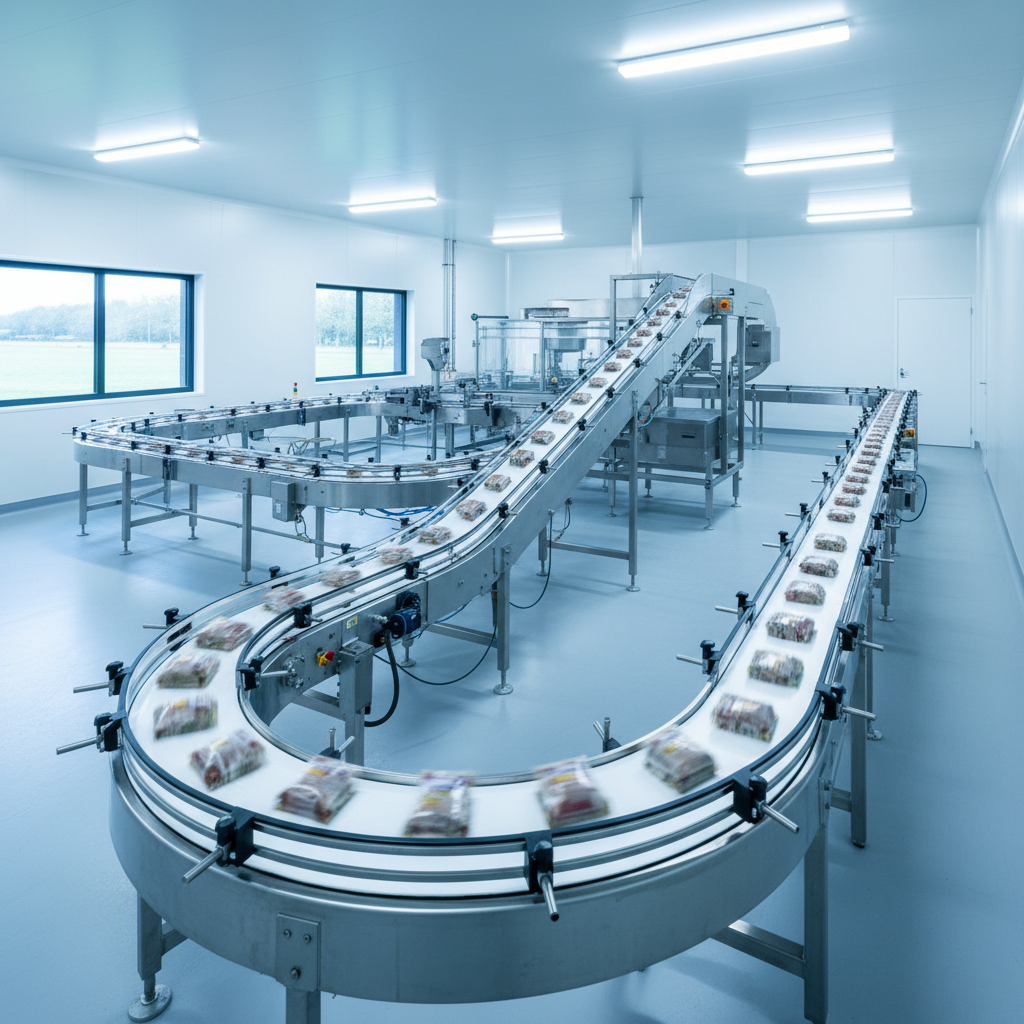
- Stringent Regulations: The Benelux food processing and pharmaceutical industries are governed by strict EU and local regulations (e.g., HACCP, GMP). Standard conveyors may not meet the required standards for washdown capability, material composition (e.g., food-grade stainless steel), or prevention of cross-contamination.
- Integration Complexity: Modern warehouses require seamless integration between different automated systems. A standard conveyor might lack the sophisticated controls needed to communicate effectively with a WMS, robotic arms, or sorting equipment.
Common Customization Triggers in Benelux Operations
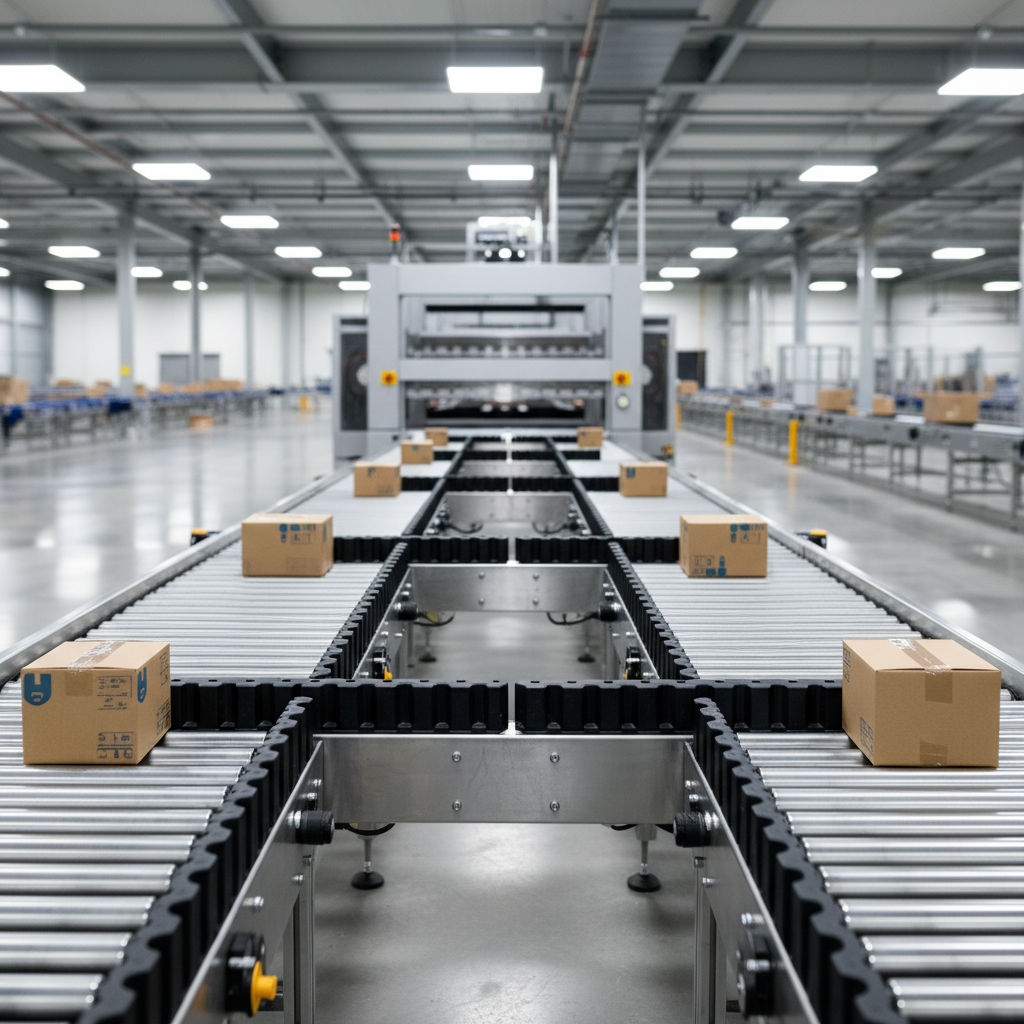
Several specific scenarios typically prompt a move towards a custom-designed system. A key trigger is the need to navigate unconventional spaces. This could involve designing a spiral conveyor with a non-standard incline to fit a tight mezzanine, or a curved roller conveyor that navigates around existing building columns. Another major driver is product handling. For instance, a bakery producing artisanal bread may need a conveyor with a wider, food-grade belt and gentle transfer points to avoid damaging the delicate crust, a feature absent in standard models.
Ergonomics and Worker Safety
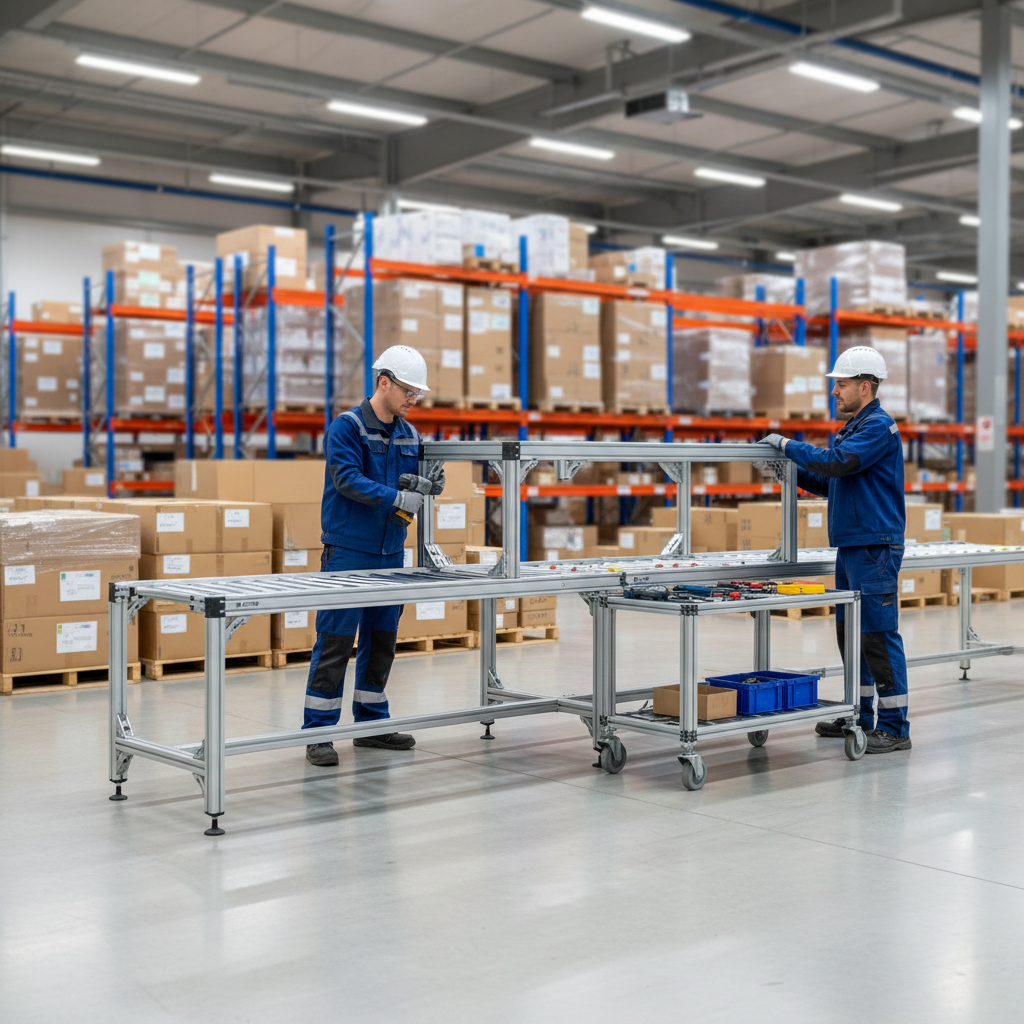
Optimizing for worker interaction is a critical consideration. A standard conveyor might have a fixed height of 850 mm, but if the associated task is best performed at 750 mm to reduce strain, a custom-built frame is required. Customization allows for integrating ergonomic features like adjustable-height sections, tilted surfaces for better access, and integrated workstations. This not only improves worker well-being but also boosts productivity and reduces the risk of workplace injuries, a significant concern for logistics managers across the EU.
Key Customization Areas for Conveyor Systems
Customization is not just about changing the colour. It involves deep engineering modifications across the system’s mechanical, electrical, and software layers. This is how a generic material handling tool is transformed into a highly specific business solution.
Mechanical & Structural Customization
This is the most visible form of customization. It includes adjusting the physical characteristics of the conveyor to match the product and the environment. Common modifications include:
- Dimensions: Adjusting the length, width (e.g., 622 mm instead of a standard 600 mm), and height to fit perfectly within an existing layout or to match the dimensions of a specific product.
- Materials: Using 304 or 316L stainless steel for food or pharmaceutical applications, or heavier-duty steel profiles for handling loads over 1,500 kg.
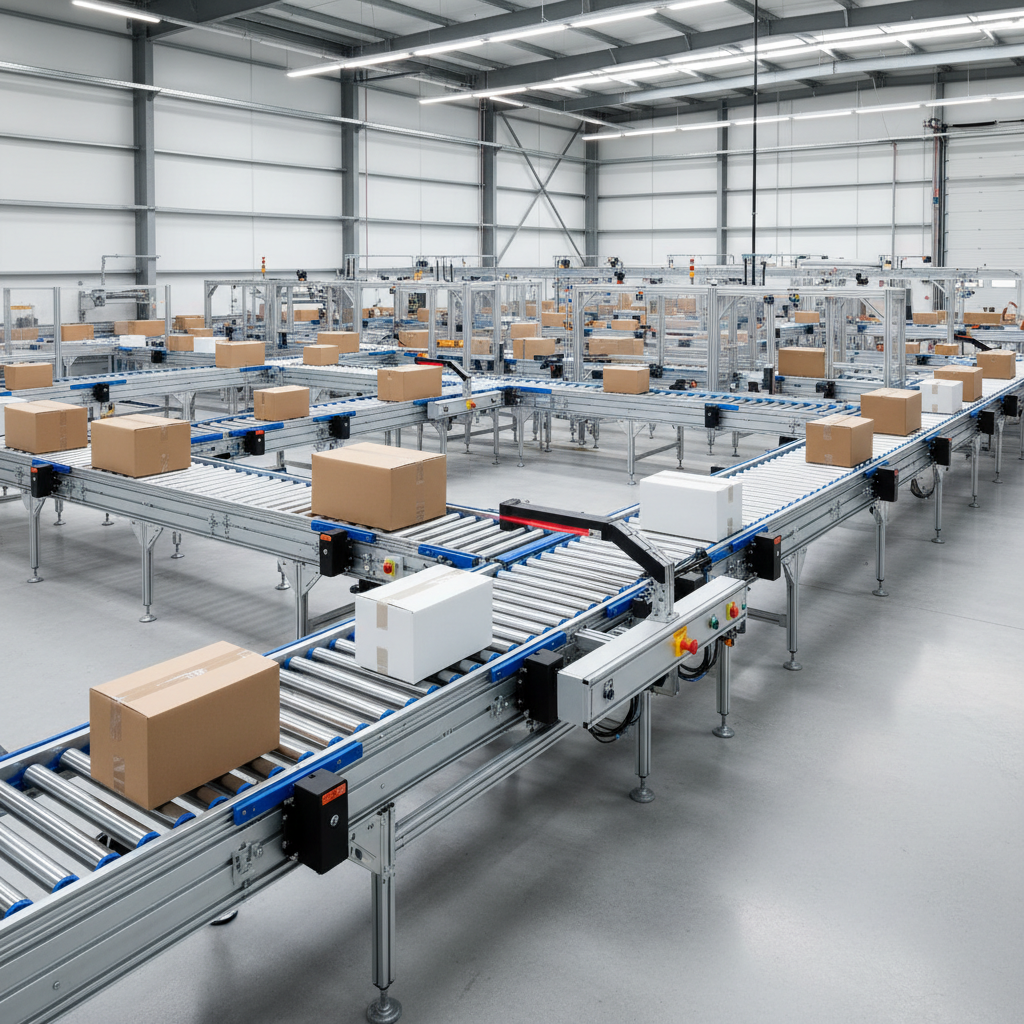
- Layout Configuration: Designing complex layouts with unique curves, inclines, declines, and merges that a standard system cannot accommodate.
- Belt/Roller Type: Selecting a specific modular plastic belt for drainage in a washdown area or using tapered rollers for effective curve transport.
Controls and Software Integration
The intelligence of the system lies in its controls. Customization here ensures the conveyor operates exactly as needed within a larger automated ecosystem. This often involves custom programming of a Warehouse Control System (WCS) or PLC (Programmable Logic Controller). For example, a system can be programmed for zero-pressure accumulation logic that is specifically timed for a downstream robotic palletizer. This level of control logic can dictate how, when, and where products move, halt, or divert, enabling sophisticated processes that are impossible with basic on/off controls. These integrations are crucial as more companies realize that isolated automation "islands" are inefficient. As detailed in a recent Easy Systems analysis, processes must scale along with business growth, and integrated control systems are fundamental to that scalability.
Comparing Custom Conveyor Solutions
The choice of conveyor type depends heavily on the application. A custom solution further refines this choice by adapting the base technology to specific needs. For those looking to dive deeper into a specific type, our guide on roller conveyors provides comprehensive information.
| Feature | Custom Belt Conveyor | Custom Roller Conveyor | Custom Chain Conveyor |
|---|---|---|---|
| Typical Application | Handling small, irregular items; washdown environments; gentle inclines. | Carton/tote handling; accumulation lines; sorting & divert applications. | Pallet handling; transport of heavy, uniform loads; harsh industrial environments. |
| Common Customization | Special belt material (e.g., food-grade PU), custom cleats, sidewalls, non-standard widths. | Specific roller diameters/pitch (e.g., 25 mm pitch for small items), motorized rollers (MDR), pop-up transfers. | Custom chain width (e.g., for custom pallets), multi-strand configurations, heavy-duty frame for loads >2,000 kg. |
| Speed Range | 0.1 m/s - 2.0 m/s | 0.2 m/s - 1.5 m/s | 0.1 m/s - 0.5 m/s |
| Est. Cost Impact | +15-40% over standard | +20-60% over standard | +25-75% over standard |
Cost vs. ROI of Custom Solutions
There is no denying that a custom conveyor solution carries a higher initial price tag—often 20% to 70% more than a comparable standard system. This investment can range from an extra €5,000 for simple modifications to over €150,000 for a fully bespoke system with complex controls. However, viewing this purely as a cost is shortsighted. The true measure is the Return on Investment (ROI).
Consider a food processing plant in the Netherlands that replaced a standard conveyor with a custom stainless-steel system designed for rapid washdowns. The initial cost was €80,000, compared to €50,000 for a standard system. However, the custom design reduced daily cleaning time from 2 hours to just 30 minutes. This 1.5-hour daily saving, over a 250-day work year, reclaimed 375 hours of productive uptime. At an operational value of €300/hour, this translates to an annual saving of €112,500, delivering a full ROI in less than nine months while ensuring superior hygiene compliance.
Easy Systems: Your Partner for Custom Conveyor Design in the Benelux
Navigating the complexities of conveyor customization requires more than a catalogue; it requires an engineering partner. At Easy Systems, we specialize in transforming unique manufacturing and logistics challenges in the Benelux into efficient, reliable, and purpose-built conveyor solutions. Our process begins with a deep dive into your specific operational context, from product dimensions and throughput goals to facility constraints and software architecture. We don’t just sell conveyors; we design, fabricate, and integrate material flow solutions that provide a measurable competitive advantage. Whether you need a simple height-adjusted line or a fully integrated, custom-controlled system for a complex production environment, our Benelux-based team has the expertise to deliver a solution that is truly yours.
This article is part of the Conveyor-Design knowledge hub, edited by Easy Systems engineers who design conveyor and warehouse automation systems across the Benelux every week.
Frequently asked questions
What is the typical lead time for a custom conveyor solution?+
Lead times vary based on complexity. Simple mechanical modifications might take 6-8 weeks, while a fully bespoke system with custom PLC programming and integration can take 14-20 weeks from design approval to commissioning.
Can you customize a conveyor for a cleanroom environment?+
Yes. Cleanroom conveyors are a common type of custom solution. They typically involve using 316L stainless steel, sealed bearings, non-gassing materials, and specialized belt types to meet stringent ISO class requirements.
How does customization affect maintenance requirements?+
A well-designed custom conveyor should not require more maintenance than a standard one. We use standard, high-quality components wherever possible (e.g., motors, rollers) to ensure spare parts are readily available. Custom design often improves access for cleaning and maintenance, which can actually reduce long-term service costs.
Is it possible to modify an existing conveyor system?+
Yes, retrofitting or modifying existing systems is often a cost-effective solution. This can include changing a belt type, adding diverter arms, upgrading the control system, or integrating a new section to extend the line. An on-site assessment is the first step to determine feasibility.