Automated Guided Vehicles (AGVs) on Conveyor Lines: Enhancing Throughput in Benelux Warehouses
Integrating Automated Guided Vehicles (AGVs) with conveyor lines offers a powerful solution for Benelux warehouses to increase throughput. This article explores the synergies, compares AGV types for conveyor tasks, and outlines a strategy for successful implementation.
In the bustling logistics heart of Europe—the Benelux—warehouse and distribution center managers are in a constant race for efficiency. Squeezed by high labor costs, limited space, and soaring customer expectations for speed and accuracy, the pressure to optimize every square meter and every second is immense. While conveyors are the arteries of any automated facility, their fixed nature can create inflexibility. This is where the strategic integration of Automated Guided Vehicles (AGV) transforms the entire operation, bridging gaps and creating a fluid, intelligent material handling ecosystem.
Definition
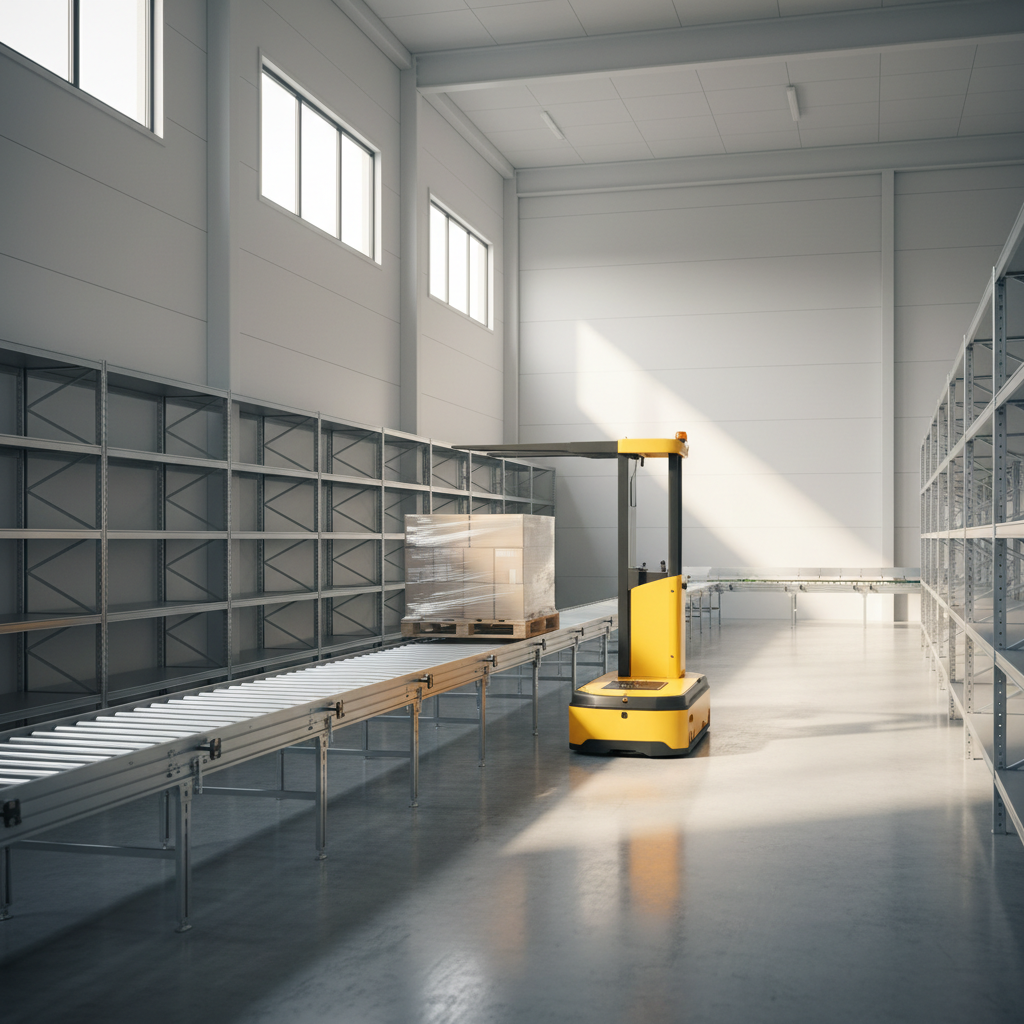
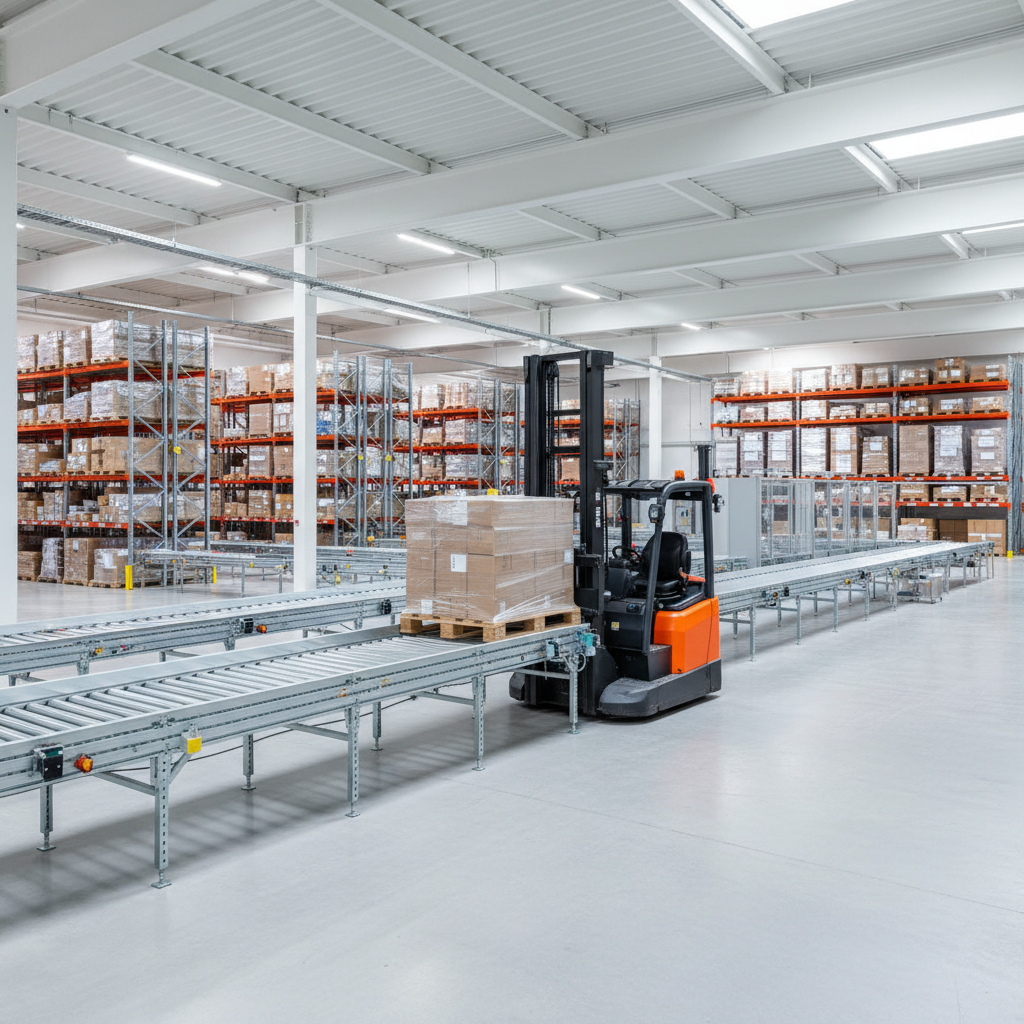
AGV-Conveyor Integration is a material handling strategy where AGVs work in conjunction with fixed conveyor systems to transport goods. The AGVs typically handle the variable parts of the journey—such as moving pallets from an end-of-line conveyor to a wrapping station or various storage aisles—while conveyors manage the high-speed, point-to-point transfers.
Why Combine AGVs and Conveyors in the Benelux?
The Benelux region, with its major ports like Antwerp and Rotterdam, serves as a critical gateway to Europe. This strategic position creates unique pressures that make hybrid automation particularly compelling.
Economic and Geographic Drivers
- High Labor Costs: Automation is a direct answer to the high cost and scarcity of manual labor in Belgium, the Netherlands, and Luxembourg. AGVs reduce the need for manual pallet jack or forklift operators, cutting operational expenses significantly.
- 24/7 Operations: To maximize the return on expensive real estate, warehouses need to run around the clock. An integrated AGV-conveyor system can operate 24/7 with minimal supervision, drastically increasing asset utilization.
- Density and Scalability: AGVs offer a more scalable solution than extending complex conveyor networks. You can add more vehicles as throughput demand grows without a major overhaul of the facility's infrastructure.
Types of AGVs for Conveyor Line Integration
Not all AGVs are created equal. The choice of vehicle depends entirely on the application, the type of load, and the nature of the interaction with the conveyor line. The most common types are forklift AGVs, which can pick pallets directly from conveyors, and under-ride or tugger AGVs, which move carts or trollies that are loaded/unloaded separately.
AGV Type Comparison for Conveyor Tasks
| AGV Type | Typical Payload (kg) | Avg. Speed (m/s) | Conveyor Interaction | Estimated Cost per Unit (€) |
|---|---|---|---|---|
| Forklift AGV | 1,000 - 2,500 kg | 1.2 - 2.0 m/s | Directly picks/places pallets from/to roller or chain conveyors. | €70,000 - €150,000 |
| Under-ride AGV | 500 - 3,000 kg | 1.0 - 1.8 m/s | Docks underneath a cart/trolley placed at the conveyor end. Requires a transfer mechanism. | €35,000 - €60,000 |
| Tugger AGV | 2,000 - 8,000 kg (towing) | 1.0 - 1.5 m/s | Pulls a train of carts that are loaded/unloaded at the conveyor line. Best for multiple loads. | €25,000 - €50,000 |
Key Benefits of an Integrated System
Increased Throughput and Efficiency
A hybrid system eliminates bottlenecks. A roller conveyor system can move hundreds of pallets per hour over a long distance, but the "last 50 meters" problem—getting that pallet from the conveyor to its next destination—often relies on manual intervention. An AGV automates this step, ensuring the end of the line never gets blocked. This seamless handover, managed by a WCS, ensures continuous flow, boosting overall throughput by as much as 30-40% compared to a purely manual or partially automated process.
Enhanced Flexibility and Scalability
Warehouse needs change. A new product line, seasonal peaks, or a change in storage strategy can render a fixed conveyor layout inefficient. AGVs introduce unparalleled flexibility. Their paths can be reprogrammed in hours, not weeks. If you need to increase capacity, you simply deploy more AGVs. This modular approach is far more cost-effective and less disruptive than installing new conveyor hardware. For a deeper dive into the nuances of mobile robots, our AGV vs. AMR guide provides a comprehensive comparison.
Improved Safety and Reduced Errors
Automating the interface point between conveyors and storage is a major safety win. AGVs are equipped with advanced laser scanners and sensors, eliminating the risk of collisions common with human-operated forklifts in busy areas. Furthermore, automation removes the risk of human error in product handling. The WCS ensures the right pallet is picked from the right conveyor and delivered to the correct destination every time, improving inventory accuracy and reducing costs associated with mis-shipments.
Implementation Strategy: A Benelux Focus
Successfully integrating AGVs and conveyors requires careful planning. Companies in the Benelux should adopt a structured approach:
- Process Analysis: Identify the key transfer points. Where are the bottlenecks? Common candidates are end-of-line palletizing, transfers between production and warehouse, and feeding sorting systems.
- System Design and Simulation: Model the workflow. Determine the number of AGVs needed based on travel distances, required CPH (cases per hour), and conveyor speeds (e.g., 0.5 m/s). Simulation helps validate the design and predict ROI.
- Infrastructure Assessment: Ensure the facility is ready. This includes Wi-Fi coverage for AGV communication and ensuring floor quality. The interface with the conveyor itself is critical—requiring precise sensors and potentially a short section of zero-pressure accumulation conveyor for staging.
- Software Integration: The Warehouse Control System (WCS) or Warehouse Execution System (WES) is the brain. It must seamlessly communicate with both the conveyor's PLC and the AGV fleet manager. As discussed in our analysis, many businesses find their processes haven't scaled with their growth, and this software layer is key to bridging that gap.
- Safety and Compliance: Ensure the system complies with all European safety standards (e.g., ISO 3691-4). This involves creating designated AGV zones, using warning lights, and establishing clear safety protocols for human interaction.
The Future: VDA 5050 and Deeper Integration
The logistics industry is moving towards greater interoperability. Standards like VDA 5050 are emerging to allow AGVs from different manufacturers to operate under a single fleet manager. This will give warehouses even more flexibility to choose the best vehicle for a specific task without being locked into a single vendor. The future will see even tighter integration, with AGVs and conveyors sharing data in real-time to proactively manage flow and adapt to changes on the fly.
Easy Systems: Your Trusted Partner for Integrated Automation
In the competitive Benelux market, choosing the right partner is as critical as choosing the right technology. At Easy Systems, we are not just a conveyor manufacturer; we are architects of integrated material handling solutions. With deep roots in the European market, we understand the unique challenges of warehouses in Belgium, the Netherlands, and Luxembourg.
Our expertise lies in designing and building robust, modular conveyor systems—from roller and chain conveyors to complex sorting solutions—that are engineered for seamless integration with third-party automation like AGVs. We work closely with your team and your chosen AGV provider to ensure that the physical and digital handshake between our systems is flawless. From initial concept and simulation to installation and long-term support, we deliver solutions that are efficient, scalable, and built to last.
This article is part of the Conveyor-Design knowledge hub, edited by Easy Systems engineers who design conveyor and warehouse automation systems across the Benelux every week.
Frequently asked questions
What is the primary benefit of combining AGVs with conveyors?+
The primary benefit is gaining the flexibility of AGVs for variable routes without sacrificing the high-speed, high-volume capacity of conveyors for fixed routes. It creates a cost-effective, hybrid automation solution.
How much does an AGV for conveyor integration cost?+
The cost varies widely. A simple tugger or under-ride AGV might start around €25,000 - €40,000, while a sophisticated forklift AGV can range from €70,000 to over €150,000, excluding software and integration costs.
What is the role of a WCS in this system?+
A Warehouse Control System (<a href="/glossary#wcs">WCS</a>) is crucial. It acts as the traffic controller, dispatching tasks to AGVs, managing their routes, and synchronizing their actions with the conveyor system to ensure smooth, efficient transfers without collisions or bottlenecks.