Cold Chain Conveyors: Benelux Temperature-Controlled Logistics
Cold chain conveyors are essential for maintaining temperature integrity in Benelux's food and pharmaceutical logistics. This article explores specialized solutions, from stainless steel construction to modular designs, ensuring product safety and operational efficiency in demanding, temperature-controlled environments.
In the high-stakes world of temperature-controlled logistics, maintaining product integrity is not just a goal; it's a mandate. For the Benelux region—a critical hub for European food and pharmaceutical distribution—the cold chain is a lifeline. Specialized conveyor systems form the backbone of this chain, ensuring that sensitive goods move seamlessly from receiving to storage and shipping without compromising safety or quality. This article explores the critical features, types, and operational considerations of cold chain conveyors designed for the unique challenges of the Belgian, Dutch, and Luxembourg markets.
Definition
A cold chain conveyor is a specialized material handling system designed to transport goods reliably and hygienically within temperature-controlled environments, such as refrigerated (2-4°C) or frozen areas (down to -30°C). These systems are constructed from materials and components specifically chosen to withstand low temperatures, prevent contamination, and ensure consistent performance without compromising the thermal integrity of the products they handle.
The Stakes: Why Cold Chain Logistics in the Benelux Demands Perfection
The Benelux, with major ports like Antwerp-Bruges and Rotterdam, is a gateway to Europe for temperature-sensitive goods. From fresh produce and frozen foods to life-saving vaccines, billions of euros worth of products pass through its distribution centers. Failure at any point in the cold chain can lead to catastrophic losses, including product spoilage, costly recalls, and damage to brand reputation. Regulatory bodies, guided by frameworks like the EU's General Food Law and Good Distribution Practice (GDP) for pharmaceuticals, enforce strict traceability and temperature-control requirements. This non-negotiable need for precision is where automated conveyor systems become indispensable, minimizing manual handling and ensuring a consistent, auditable flow of goods.
Core Features of a High-Performance Cold Chain Conveyor
A standard conveyor system will quickly fail in a cold storage environment. Ice, condensation, and material embrittlement create a hostile setting that demands specialized engineering. Key features include:
- Stainless Steel Construction: Frames and supports are typically made from AISI 304 or, for higher corrosion resistance, AISI 316 stainless steel. This material withstands cold temperatures without becoming brittle and offers a non-porous, easy-to-clean surface.
- Cold-Resistant Belting/Rollers: Standard plastics and rubbers become brittle and can crack at low temperatures. Cold chain systems use specialized materials like specific grades of polyethylene for modular plastic belts or stainless steel for roller conveyors.
- IP-Rated Components: Motors, sensors, and control cabinets must be sealed to a high Ingress Protection (IP) rating, typically IP65 or higher. This prevents damage from moisture ingress during operation and high-pressure washdowns.
- Appropriate Lubrication: Standard lubricants thicken and lose effectiveness in the cold. Food-grade, low-temperature greases and oils are essential for bearings, chains, and gearboxes to prevent seizure and premature wear.
- Motor and Drive Selection: Motors must be specified for low-temperature operation. Drum motors, which are fully sealed, are an excellent choice as they protect all components from the external environment.
Comparing Conveyor Solutions for Temperature-Controlled Environments
Choosing the right conveyor depends on the product, required throughput, and specific temperature zone. While many types can be adapted, a few are particularly well-suited for cold chain applications. For a deeper understanding of roller-based solutions, our comprehensive guide on roller conveyors offers valuable insights.
| Conveyor Type | Typical Temperature Range | Load Capacity (per meter) | Hygiene Level | Common Application |
|---|---|---|---|---|
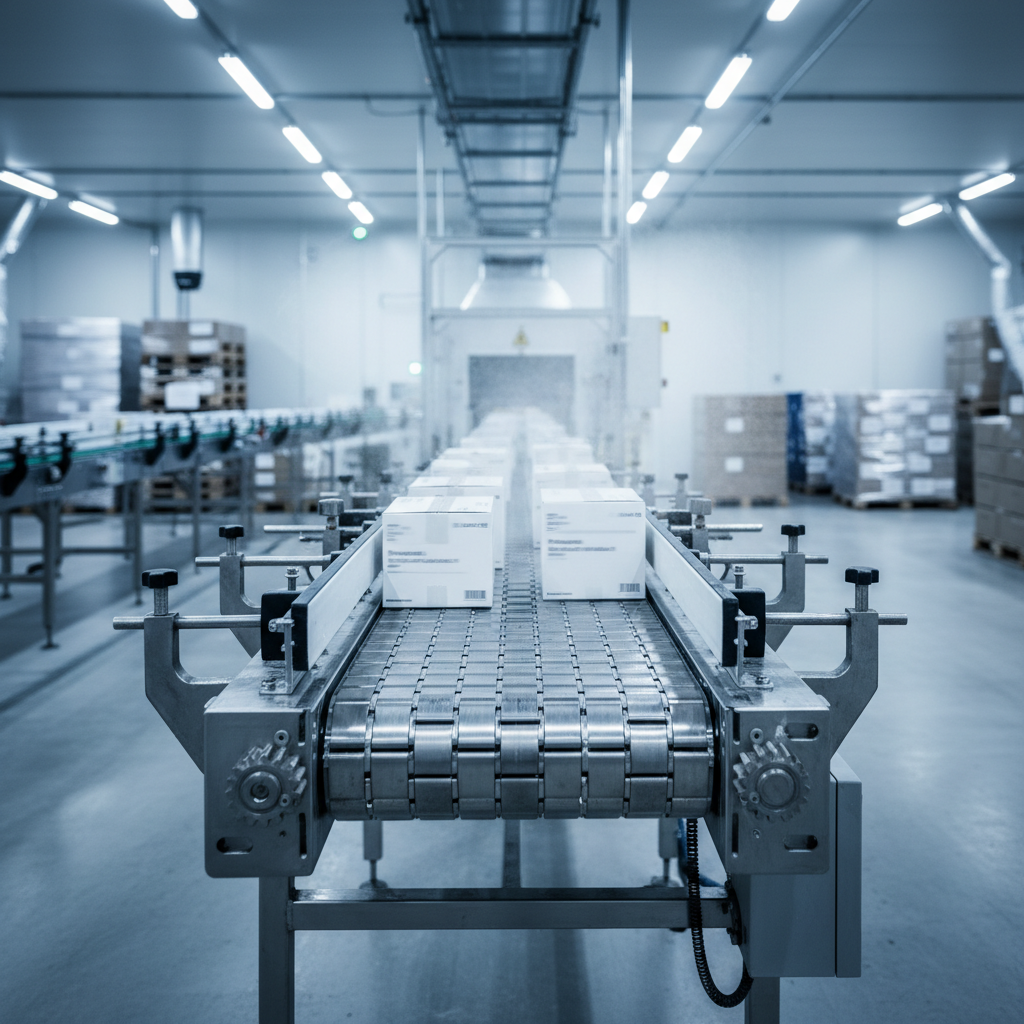
| Modular Plastic Belt Conveyor | -30°C to +40°C | 50 - 1,500 kg | Very High (Easy to clean, direct food contact possible) | Primary food processing, packed goods, accumulation zones |
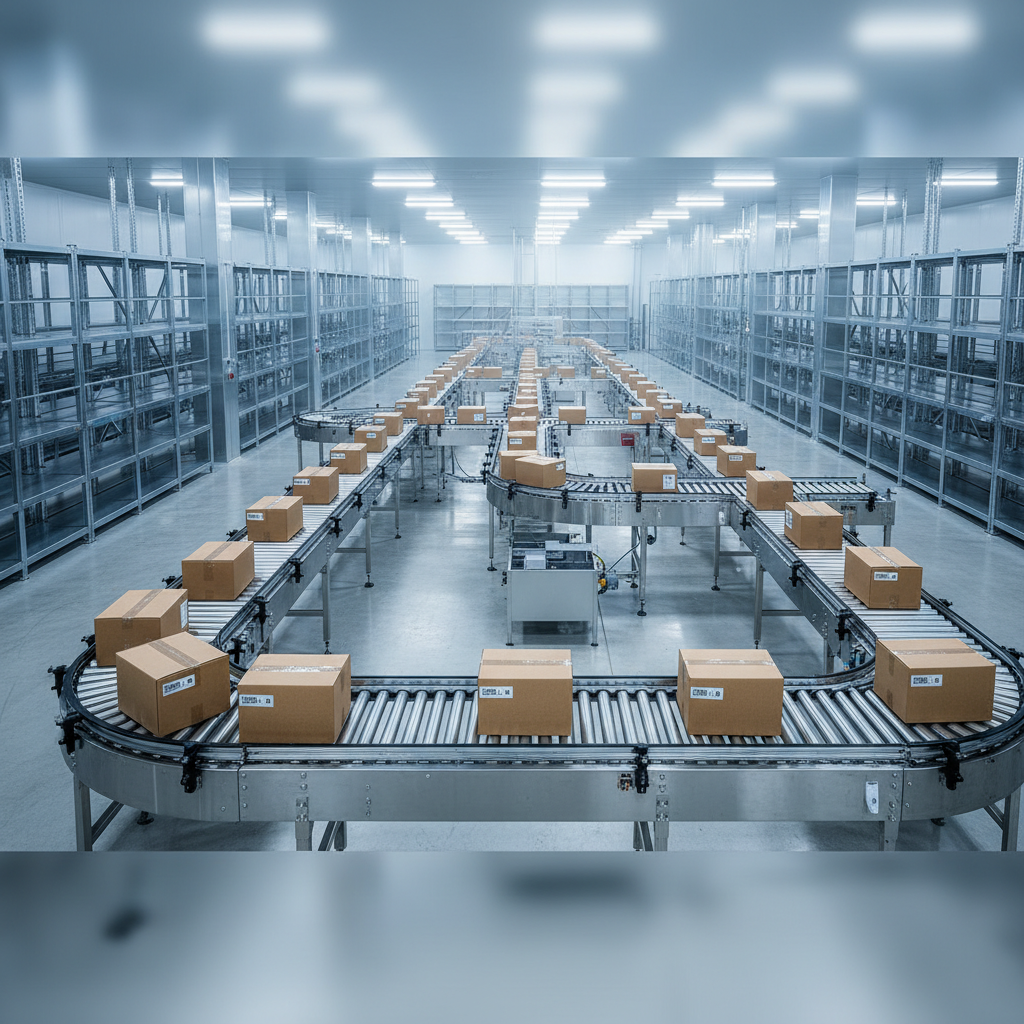
| Stainless Steel Roller Conveyor | -30°C to +40°C | 30 - 2,000 kg (varies by roller diameter) | High (Good for washdowns, best for packed goods) | Case, tote, and pallet handling; accumulation lines |
| Spiral Conveyor | -25°C to +40°C | Up to 50 kg/m | High (Stainless steel options available) | Vertical transport between floors, buffering in a small footprint |
Key Selection Considerations
The choice between a belt conveyor and a roller system often comes down to the product form. Unpackaged or irregularly shaped items are better suited for a continuous belt surface, while standardized cases, totes, or pallets move efficiently on rollers. Modular belts offer a robust, cleanable surface that is more durable than traditional flat belts in cold conditions.
Hygienic Design: A Non-Negotiable for Food and Pharma
Preventing bacterial growth and cross-contamination is paramount. A well-designed cold chain conveyor facilitates easy and effective cleaning. Principles of hygienic design include:
- Open and Accessible Framework: Avoiding hollow tubes (unless hermetically sealed) and ensuring easy access to all parts for visual inspection and cleaning.
- Sloped Surfaces: Designing frames and surfaces to drain water effectively, preventing pooling after washdowns.
- Clean-in-Place (CIP) Features: Incorporating belt lifters or removable sections that allow staff to easily clean the belt and the frame underneath.
- Minimal Fasteners and Crevices: Using continuous welds instead of bolts where possible and eliminating small gaps where microbes could colonize.
Control and Integration: Maintaining the Digital Cold Chain
A modern cold chain conveyor is more than just hardware; it's a data-generating hub. Full integration with a Warehouse Management System (WMS), typically via a Warehouse Control System (WCS), is critical for traceability. This integration allows for real-time tracking of every item as it moves through the facility. Temperature sensors can be integrated into the control system, flagging any deviations from set parameters and automatically diverting at-risk products for inspection. This closed-loop control system ensures that if your business grows, your processes can scale with it, maintaining quality and efficiency. When a company's processes fail to keep pace with its growth, it often leads to bottlenecks and quality control issues, a topic we explored in-depth in a recent article on how business processes must evolve with growth. This digital oversight is no longer a luxury but a core requirement for regulatory compliance and operational excellence.
Common Operational Challenges and How to Overcome Them
Operating conveyors in sub-zero environments presents unique hurdles. Condensation and ice formation are primary enemies. When moving goods between different temperature zones (e.g., from a -25°C freezer to a +4°C chill dock), condensation can form on conveyors, which then turns to ice when the system re-enters the freezer. This can jam rollers, cause belts to mistrack, and blind sensors. Effective strategies include designing short transitions, using airlocks, and specifying components designed to operate through light icing. Energy efficiency is another concern, as conveyor motors generate heat that refrigeration systems must then work to remove. Using high-efficiency motors and zone-based "run-on-demand" logic can yield significant energy savings, often in the range of 30-50% compared to continuously running systems.
Easy Systems: Your Partner for Flawless Cold Chain Conveying
Designing and implementing a conveyor system for temperature-controlled logistics requires specialized expertise that goes beyond standard material handling. In the demanding Benelux market, you need a partner who understands the nuances of cold chain regulations, hygienic design, and robust engineering. At Easy Systems, we have a proven track record of delivering modular, scalable, and reliable conveyor solutions for the food, pharmaceutical, and cold storage industries across Europe. Our stainless steel platforms and expertise in integrating components for harsh environments ensure that your system will deliver maximum uptime and total product integrity. We don't just sell conveyors; we engineer confidence into your cold chain. From initial design and simulation to installation and long-term support, we partner with you to build a system that is efficient, compliant, and ready for the future.
This article is part of the Conveyor-Design knowledge hub, edited by Easy Systems engineers who design conveyor and warehouse automation systems across the Benelux every week.
Frequently asked questions
What are the main challenges of using conveyors in a freezer environment?+
The main challenges include material brittleness at low temperatures (down to -30°C), condensation and ice formation on components which can cause blockages, reduced performance of electronic components like sensors, and ensuring lubricants remain effective.
Why is stainless steel preferred for cold chain conveyors?+
Stainless steel (typically AISI 304 or 316) is preferred for its excellent corrosion resistance, durability in low temperatures without becoming brittle, and its non-porous surface, which is easy to clean and sanitize, crucial for meeting HACCP and other food/pharmaceutical safety standards in the EU.
How do cold chain conveyors integrate with a Warehouse Management System (WMS)?+
Integration is typically managed by a Warehouse Control System (<a href="/glossary#wcs">WCS</a>). The WCS acts as a bridge, translating high-level commands from the WMS (e.g., "move pallet X to freezer zone B") into specific instructions for the conveyor's PLCs. It also feeds back sensor data, including temperature readings, to the WMS for real-time tracking and full product traceability.