AGV & Conveyor Integration for Benelux Warehouses
Seamlessly integrating Automated Guided Vehicles (AGVs) with traditional conveyor systems creates a powerful, hybrid material handling solution perfect for the dynamic logistics landscape of the Benelux. This guide explores the benefits, from cost reduction to increased throughput.
In the fast-paced logistics hubs of the Netherlands, Belgium, and Luxembourg, every square meter and every second counts. Warehouse managers face a constant challenge: how to move goods faster and more efficiently in the face of rising labor costs and fluctuating demand. The solution often lies not in choosing one technology over another, but in blending their strengths. The integration of Automated Guided Vehicles and conveyor systems represents a powerful, hybrid approach to warehouse automation, offering the best of both worlds: the fixed-path efficiency of conveyors and the flexible agility of AGVs.
Definition
AGV-Conveyor integration is the process of physically and digitally connecting autonomous mobile robots with fixed conveyor lines. This creates automated handover points where goods—such as pallets, totes, or cartons—are transferred between the systems without manual intervention, orchestrated by a central software like a WES (Warehouse Execution System).
The Core Functions: AGVs vs. Conveyors
To understand the power of their integration, it’s essential to appreciate their individual strengths in a material handling context.
Conveyor Systems: The High-Throughput Backbone
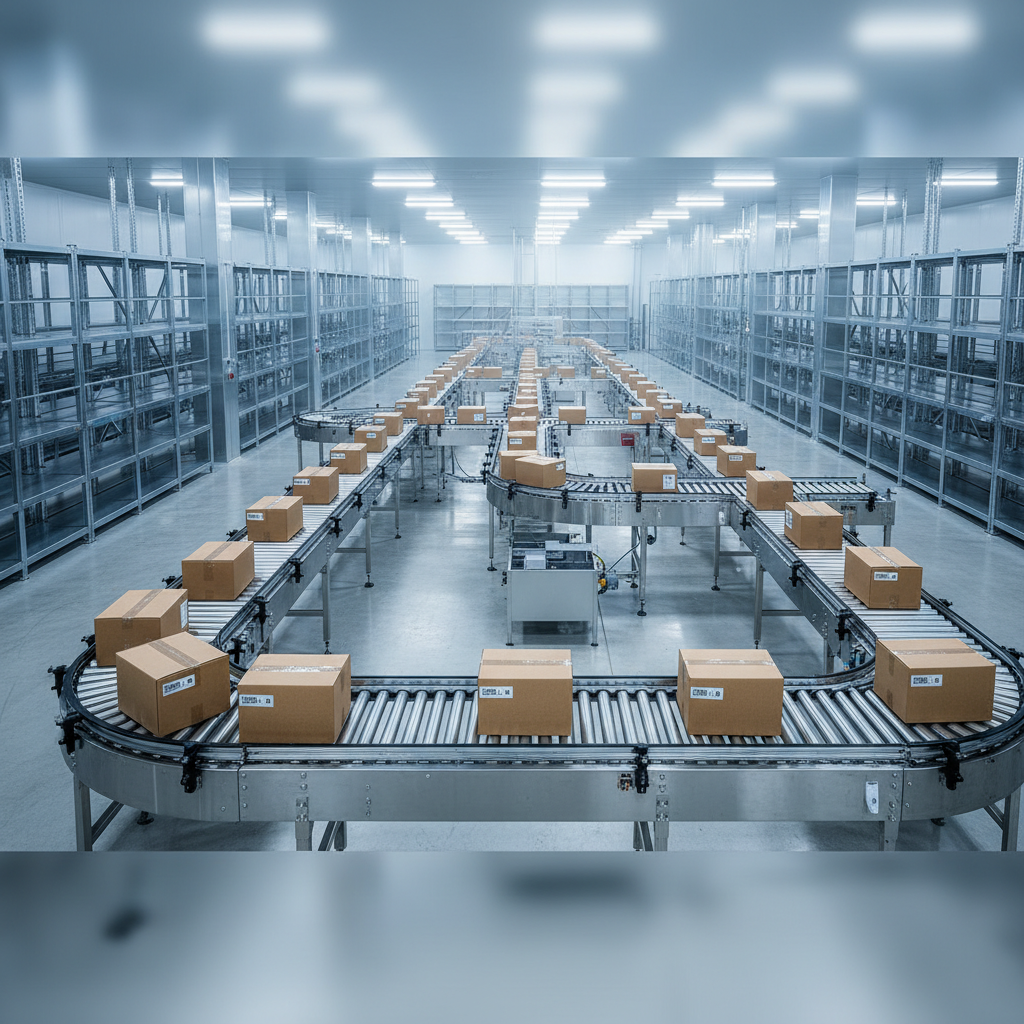
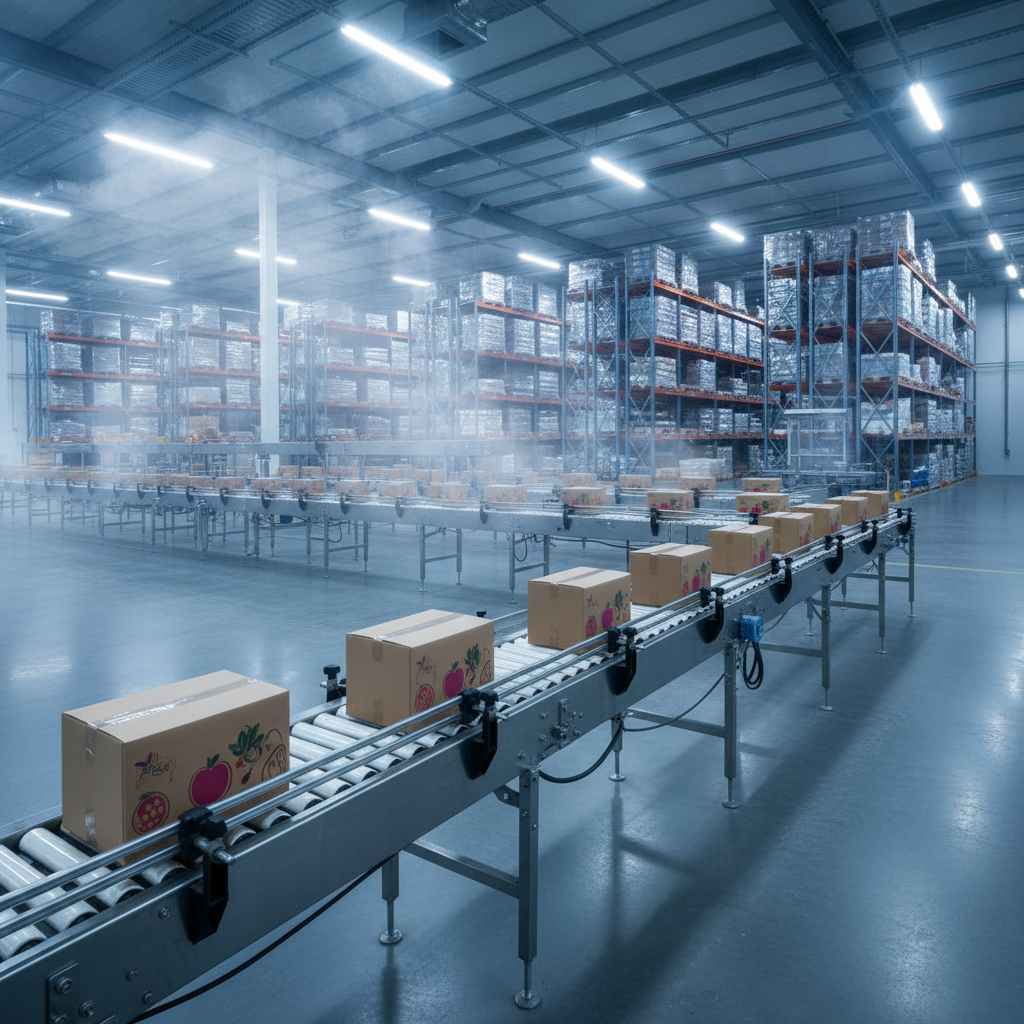
Conveyors are the arteries of the warehouse. They excel at moving a high volume of goods along a fixed, predetermined path. Think of them as the highways for your products. A roller conveyor system, for example, can move thousands of boxes per hour from receiving to a sorting area with unparalleled reliability and speed (up to 1.5 m/s). Their strength lies in continuous, high-density flow, making them ideal for:
- Connecting distant points with constant product flow (e.g., production line to dispatch).
- Sorting and accumulation zones.
- Feeding automated storage and retrieval systems (AS/RS).
However, their fixed nature means they can create physical barriers on the warehouse floor and are expensive to modify once installed.
Automated Guided Vehicles (AGVs): Flexible and Intelligent Movers
If conveyors are the highways, AGVs are the intelligent, driverless trucks that navigate the local roads. An AGV is a mobile robot that follows markers, wires, or uses vision-based navigation to move materials around a facility. They provide the flexibility that conveyors lack. Need to connect a new production cell or create a temporary path for a seasonal peak? An AGV’s route can be reprogrammed in hours, not weeks. They are perfect for tasks requiring variable routes and point-to-point transfers over longer distances. For a deeper dive into their capabilities compared to their more advanced cousins, see our complete guide on AGVs vs. AMRs.
Why Integration is Crucial in the Benelux Market
The Benelux region, with its world-class ports in Antwerp and Rotterdam, is one of Europe’s most critical logistics centers. This status comes with unique challenges: high real estate costs, a competitive labor market, and immense pressure for high-speed fulfillment. AGV-conveyor integration directly addresses these issues:
- Space Optimization: By using conveyors for vertical transport (e.g., spiral conveyors) and high-density lines, and AGVs for open-floor transfers, warehouses can minimize the footprint of fixed infrastructure, leaving more room for storage and value-added activities.
- Cost Reduction: Labor is a significant operational expense. Automating the repetitive task of moving pallets from an end-of-line conveyor to a wrapping station or stretch wrapper can reduce associated labor costs by over 70% and eliminate forklift-related product damage.
- Scalable Throughput: A hybrid system allows for scalable performance. During peak season, more AGVs can be added to the fleet to handle increased volume, feeding the high-capacity conveyor backbone without needing to re-engineer the entire facility.
Comparing AGVs and Conveyors for Material Transport
Choosing the right technology for each task is fundamental to designing an efficient system. The table below compares the two systems across key operational metrics.
| Feature | Automated Guided Vehicles (AGVs) | Conveyor Systems |
|---|---|---|
| Flexibility | High: paths are easily reprogrammed via software. | Low: fixed infrastructure, requires physical modification. |
| Throughput | Moderate to High (e.g., 20-40 pallet moves/hour/vehicle). | Very High (e.g., >3,000 cartons/hour on a belt conveyor). |
| Scalability | High: add more vehicles to the fleet as needed. | Moderate: requires installation of new sections. |
| Initial Cost | Moderate (€40,000 - €80,000 per vehicle). | High (€300 - €1,500+ per meter, depending on type). |
| Floor Obstruction | Low: moves around obstacles or waits, keeps floor clear. | High: physically divides floor space. |
| Best For | Variable routes, long-distance transfers, connecting separate zones. | High-volume, predictable A-to-B transport, sorting, accumulation. |
Key Integration Touchpoints
Seamless handovers are where the magic happens. Common integration points include:
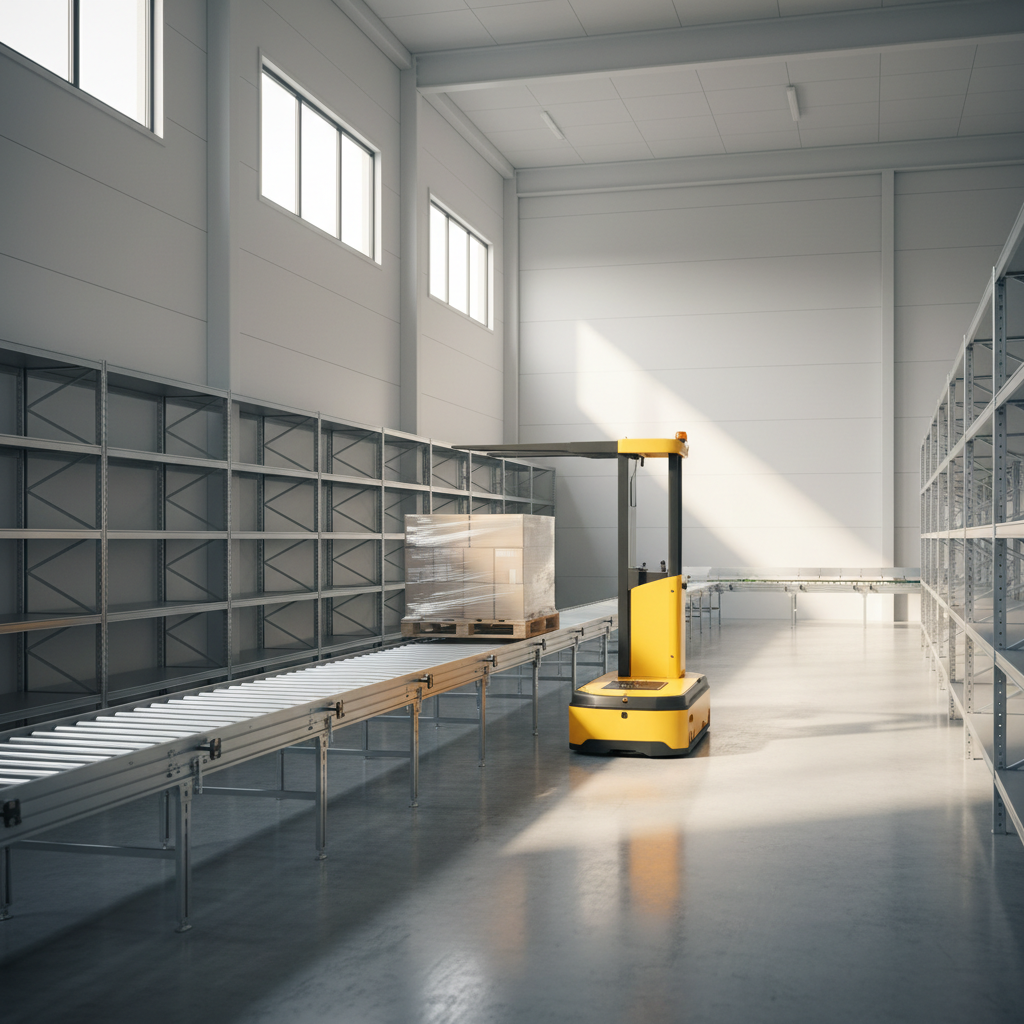
- End-of-Line Transfer: A pallet conveyor accumulates finished goods onto a single pallet. Once full, it signals an AGV, which then automatically picks up the 1200mm x 1000mm pallet (a common size in Europe) and transports it to a stretch wrapper or the outbound staging area.
- Receiving and Put-Away: At the inbound docks, pallets are unloaded onto a short conveyor section for inspection. An AGV then picks the pallet and transports it to the induction point of an AS/RS, bridging the gap between the dock and deep storage.
- Connecting "Islands of Automation": A production facility might have multiple automated cells separated by walkways. AGVs can act as a "virtual conveyor," picking up work-in-progress from one conveyor-fed cell and delivering it to the next, maintaining an automated workflow without physical connections.
The Technology Behind Seamless Integration
True integration is more than just a physical handover; it's about communication. The entire operation is managed by a hierarchy of software. A Warehouse Management System (WMS) manages inventory and orders, while a Warehouse Execution System (WES) acts as the traffic controller, directing assets in real-time. The WES assigns tasks to the best-suited resource, whether it's telling a conveyor to start moving or dispatching an AGV to pick up a pallet. This communication relies on standardized protocols to ensure different machines can "talk" to each other.
As companies grow, their processes need to evolve to maintain efficiency. Integrating new automation like AGVs with existing systems is a prime example of this evolution. You can read more about how processes must adapt to company growth to prevent stagnation on our main company blog.
Easy Systems: Your Partner in Integrated Automation
Designing a hybrid automation system requires deep expertise in both conveyor technology and mobile robotics. At Easy Systems, we specialize in creating cohesive material handling solutions tailored to the specific needs of the Benelux market. We don't just sell conveyors or AGVs; we analyze your unique product flow, facility layout, and business goals to design and implement a fully integrated system. Our approach ensures that your conveyors and autonomous vehicles work in perfect harmony, orchestrated by intelligent software to maximize your ROI and prepare your operation for the future of logistics. We turn complex automation challenges into streamlined, reliable, and scalable solutions.
This article is part of the Conveyor-Design knowledge hub, edited by Easy Systems engineers who design conveyor and warehouse automation systems across the Benelux every week.
Frequently asked questions
What is the main difference between an AGV and an AMR?+
The primary difference is navigation. AGVs (Automated Guided Vehicles) follow fixed, predefined paths using guidance systems like magnetic tape or wires. AMRs (Autonomous Mobile Robots) use advanced AI and sensors (like SLAM) to navigate dynamically, allowing them to create their own routes and avoid obstacles, offering more flexibility.
What does an AGV-conveyor integration typically cost in Europe?+
A simple integration project can start around €100,000 to €150,000. This would typically include one or two AGVs, a short conveyor section with a handover mechanism, and the necessary software (WCS/WES) for integration. Complex, facility-wide systems can run into the millions of euros.
How long does it take to implement an AGV-conveyor system?+
A pilot or proof-of-concept project can take 3-6 months from design to commissioning. A full-scale implementation in a large DC can take anywhere from 9 to 18 months, depending on the complexity of the hardware and the software integration required.
What is the role of a WES in this integration?+
A Warehouse Execution System (WES) acts as the brain or traffic controller. It receives orders from the WMS and translates them into real-time tasks for the equipment. It tells the conveyor when to run and stop, and it dispatches the AGV to the correct location for pickup or drop-off, ensuring the two systems work together seamlessly.