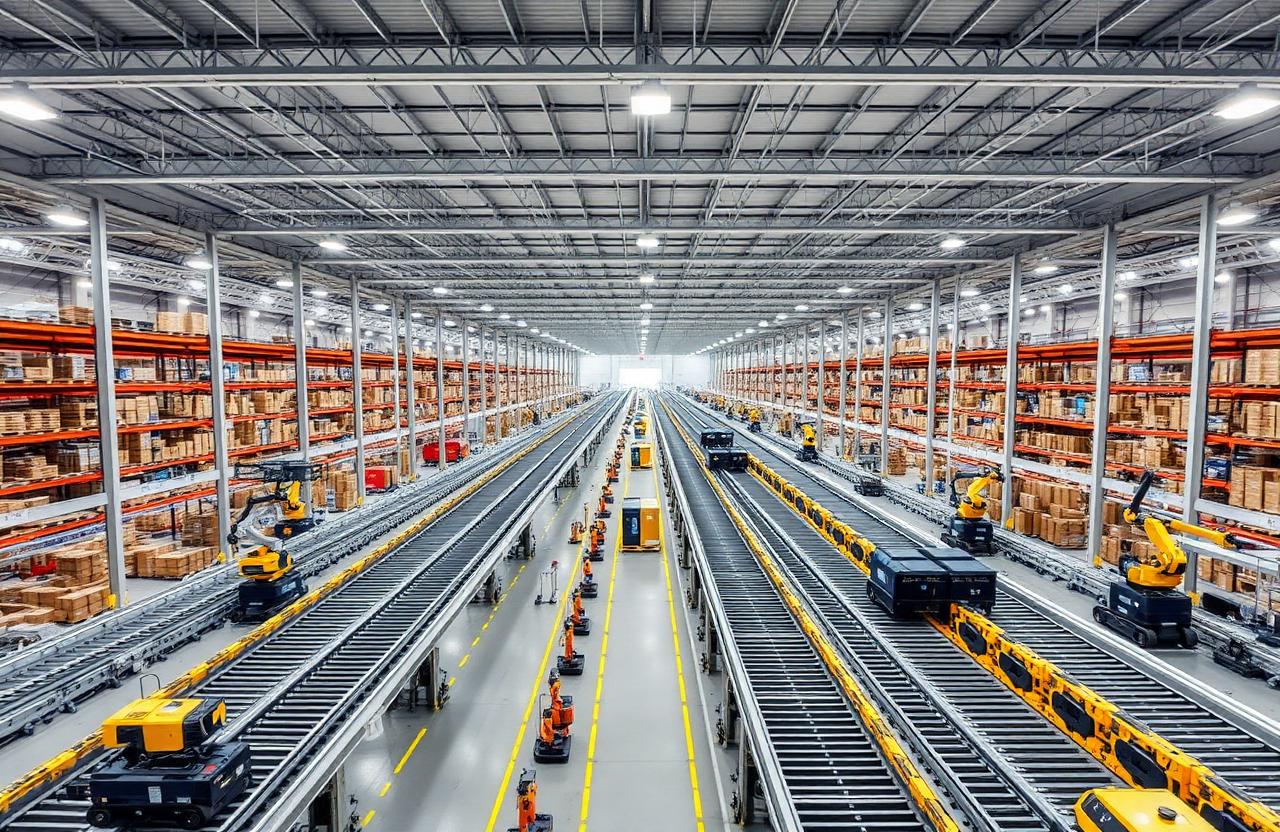
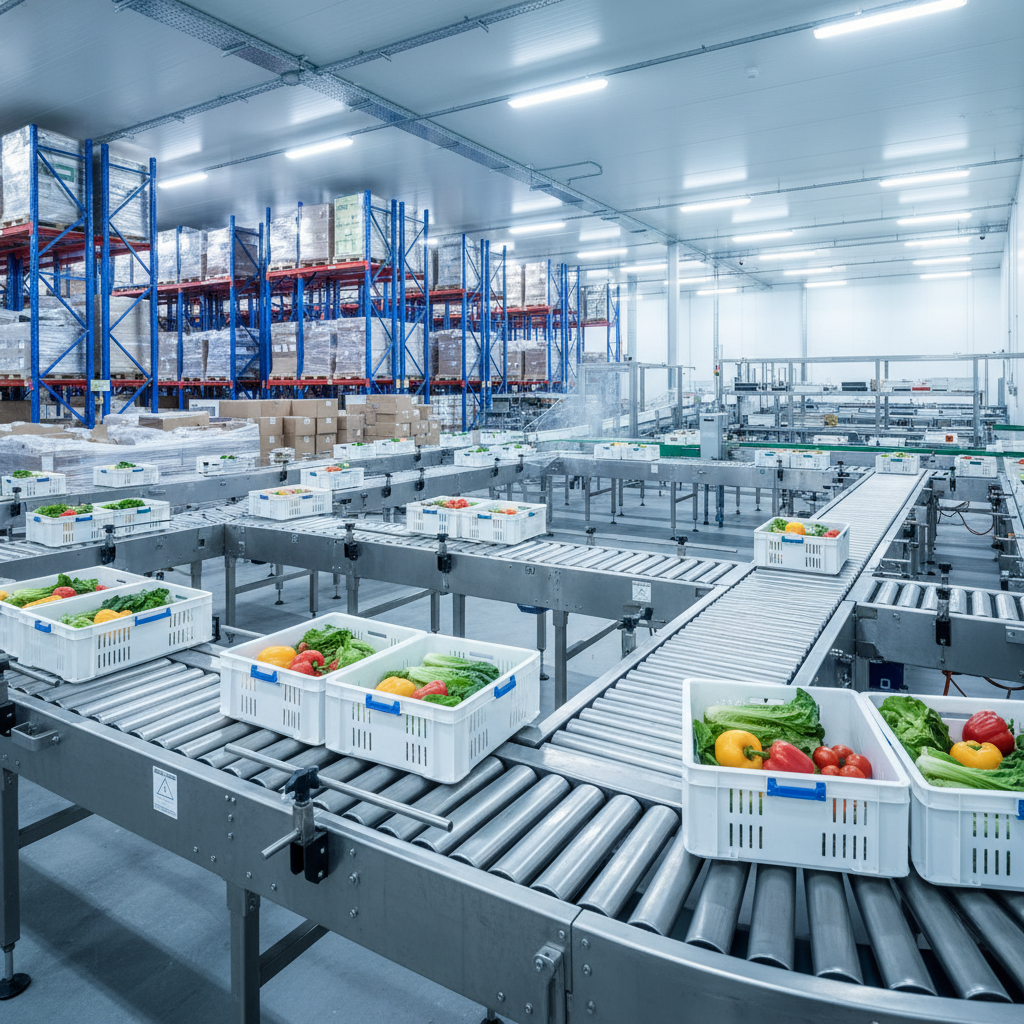
Automated Guided Carts: Seamless Conveyor Integration
Learn how integrating Automated Guided Carts (AGCs) with existing conveyor systems can boost flexibility and efficiency in your warehouse. This guide covers practical integration strategies, costs, and benefits for European logistics.
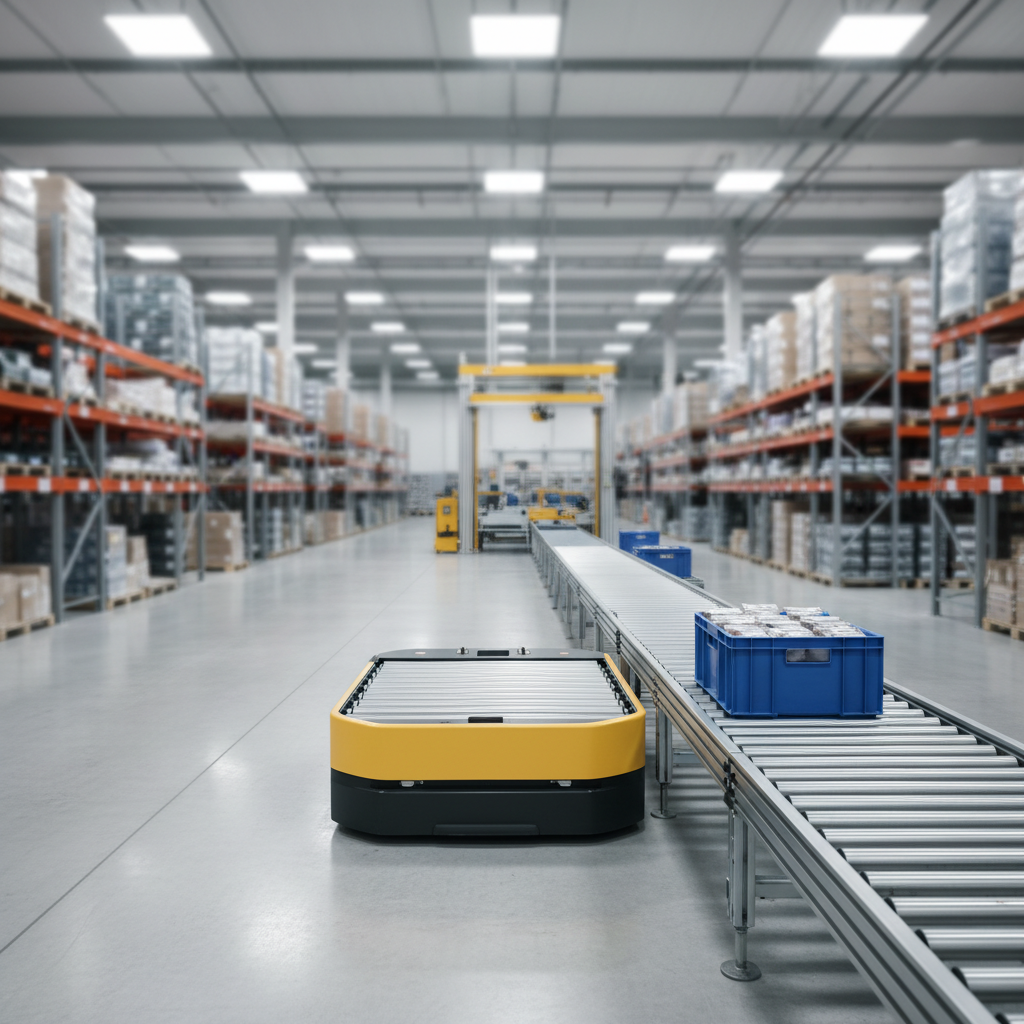
In the evolving landscape of European logistics, the demand for agility is paramount. While conveyor systems offer high-speed, reliable transport, their fixed nature can be a limitation. This is where Automated Guided Carts (AGCs) enter the picture, offering a powerful solution to connect, extend, and add flexibility to existing conveyor infrastructure. By integrating AGCs, warehouses can create a hybrid automation system that reaps the benefits of both worlds.
Definition
An Automated Guided Cart (AGC) is a type of mobile robot that follows predefined paths, typically using magnetic tape or painted lines, to transport goods. In the context of conveyor integration, AGCs act as mobile, intelligent links, automatically receiving items from one conveyor and transporting them to another, or to other destinations like packing stations or storage areas.
Why Integrate AGCs with Conveyors? The Business Case
The synergy between fixed conveyors and flexible AGCs addresses several key challenges in modern distribution centers. While a high-speed sorting system can process thousands of items per hour, the "first and last mile" of that journey—getting products to and from the conveyor—often remains a manual bottleneck. Integration automates these connection points.
Key Benefits
- Increased Flexibility: Easily change transport routes by simply re-laying magnetic tape, a task that takes hours, not weeks. This is a stark contrast to the effort required to reconfigure fixed conveyor hardware.
- Scalability on Demand: Scale your transport capacity by simply adding more carts to the fleet. A growing business can start with 5 carts and easily scale to 20 as throughput requirements increase.
- Reduced Manual Labour: Automating the transfer of totes or cartons between conveyor lines eliminates repetitive, low-value walking and lifting tasks, freeing up staff for more complex activities like quality control or packing.
- Improved Safety: AGCs are equipped with safety scanners that prevent collisions with personnel and infrastructure, reducing workplace accidents common in busy logistics environments.
Comparing AGC Types for Conveyor Integration
Not all AGCs are created equal. The right choice depends on the load, the nature of the transfer, and the facility environment. The most common types for interfacing with conveyors are Cart or "Top-Carrier" AGCs, which can be fitted with a powered conveyor deck.
| AGC Type | Typical Payload | Max Speed | Integration Method | Estimated Cost per Unit (EUR) |
|---|---|---|---|---|
| Tugger AGC | 1,000 - 8,000 kg (towing) | 1.0 m/s | Not direct; tows trains of non-powered carts. | €15,000 - €35,000 |
| Under-Ride AGC | 500 - 1,500 kg | 1.2 m/s | Lifts and moves entire racks or mobile carts. Indirectly interfaces with conveyors. | €20,000 - €45,000 |
| Cart/Top-Carrier AGC | 50 - 500 kg | 1.5 m/s | Direct transfer via onboard roller/belt conveyor. | €25,000 - €50,000 |
Core Integration Technologies
A seamless handshake between the fixed conveyor and the mobile AGC is a prerequisite for a successful system. This connection is not just physical but digital, orchestrated by a hierarchy of control systems. The goal is to ensure a carton or tote arriving at the end of a conveyor line can signal its presence, request a pickup, and have an AGC assigned and dispatched to collect it without human intervention.
The Control Hierarchy
At the base level, the conveyor line is controlled by a Programmable Logic Controller (PLC). The AGC fleet has its own Fleet Management System (FMS). To make them work together, a higher-level system is needed. This is typically a Warehouse Execution System (WES). The WES acts as the traffic controller, taking orders from the overarching Warehouse Management System (WMS) and translating them into specific tasks for both the conveyor system and the AGC fleet manager. When a package needs to move from conveyor A to workstation B, the WES orchestrates the entire sequence.
Physical Transfer Mechanisms
The physical transfer is the moment of truth. An AGC designed for conveyor integration will typically have a powered roller or belt on its top surface. It positions itself at a predefined conveyor transfer point. Using sensors (photocells, vision systems) to confirm alignment, the AGC and the conveyor communicate to activate their respective conveyor surfaces in unison, smoothly moving the tote or carton from the fixed line to the mobile cart, or vice-versa.
AGCs vs. AMRs: Which to Choose for Conveyor Integration?
A common point of confusion is the difference between an AGC and an Autonomous Mobile Robot (AMR). While both move things, they navigate differently. AGCs follow fixed paths (tape, wires), making them highly reliable and predictable for A-to-B transfers between conveyors. AMRs use technologies like SLAM to navigate dynamically, allowing them to bypass obstacles. For connecting fixed conveyor points, the simplicity and lower cost of AGCs are often advantageous. For more complex environments with dynamic destinations, AMRs might be a better fit. For a deeper dive, explore our complete guide on AGVs vs. AMRs.
Real-World Example: A European 3PL
A mid-sized logistics provider in the Netherlands faced a common growth challenge. Their new e-commerce client required a dedicated packing area, but it was located 80 meters away from their main sorting conveyor, with a busy forklift thoroughfare in between. Building a bridge conveyor was quoted at over €250,000 and would have required significant downtime and construction. Instead, they opted for an AGC solution.
They installed a small section of accumulation conveyor at the end of their sorter as a buffer. Four "top-carrier" AGCs, each with a capacity of 60 kg, were programmed to shuttle between the accumulation point and four packing stations. The total investment was approximately €140,000 (around €30,000 per AGC plus integration costs). The system was deployed over a single weekend. The result was a continuous flow of goods, the elimination of 3 full-time employees walking totes across the warehouse, and a payback period of just 14 months. This highlights a crucial lesson many businesses learn the hard way: as companies grow, their processes don't always keep up, and flexible automation is often the key to bridging that gap.
Cost vs. ROI: A Financial Overview
Investing in AGC integration requires a clear financial analysis. While costs can seem high initially, the return on investment is often compelling, particularly in regions with high labour costs like Western Europe.
Key Investment Components:
- Hardware Costs: The AGC units themselves, ranging from €15,000 for simple tuggers to €50,000+ for sophisticated cart-top conveyor models.
- Software & Integration: The WES or custom software needed to bridge the WMS, conveyor PLC, and AGC fleet manager. This can range from €20,000 to €100,000+ depending on complexity.
- Installation & Commissioning: Includes laying magnetic tape paths, setting up transfer points, and testing. Typically 10-15% of the total project cost.
A typical two-cart system connecting two conveyor lines might have a total project cost of €80,000 - €120,000. If this system replaces one full-time employee per shift in a two-shift operation, the annual savings on labour alone (at an average European burdened cost of €45,000/employee) can be €90,000, leading to an ROI in just over a year.
Easy Systems: Your Partner for Integrated Automation
Successfully integrating AGCs with your existing conveyors is more than a hardware purchase—it's a process engineering challenge. At Easy Systems, we specialize in designing and implementing modular, scalable automation solutions. Our deep expertise in both conveyor systems and the control software that binds them together makes us the ideal partner for your hybrid automation projects. We analyze your unique material flow, identify bottlenecks, and design integrated systems that deliver a measurable return on investment. Whether you're looking to bridge a gap, buffer a line, or create a fully flexible assembly process, we provide pragmatic, robust solutions tailored for European warehouses.
This article is part of the Conveyor-Design knowledge hub, edited by Easy Systems engineers who design conveyor and warehouse automation systems across the Benelux every week.
Frequently asked questions
What is the main difference between an AGC and an AGV?+
Automated Guided Carts (AGCs) are generally considered a simpler, more cost-effective subset of Automated Guided Vehicles (AGVs). While both follow guided paths, AGCs are typically used for lighter loads and less complex tasks, often as a direct replacement for manual carts.
Can AGCs work with any type of conveyor?+
Mostly, yes. AGCs can be designed to interface with roller conveyors, belt conveyors, and chain conveyors. The key is designing a compatible transfer mechanism, which might involve a matching conveyor top on the AGC and precise height alignment with the fixed conveyor.
How much downtime is required to integrate AGCs?+
Minimal downtime is a key advantage. Since AGCs follow surface-laid magnetic tape, installation is non-disruptive. The main work involves installing the conveyor transfer points and commissioning the software, which can often be done over a weekend (24-48 hours).
What is the typical payload of an Automated Guided Cart for conveyor transfer?+
For direct tote and carton transfer, AGC payloads typically range from 50 kg to 500 kg. The AGC is matched to the weight and dimensions of the items being handled by the conveyor system.