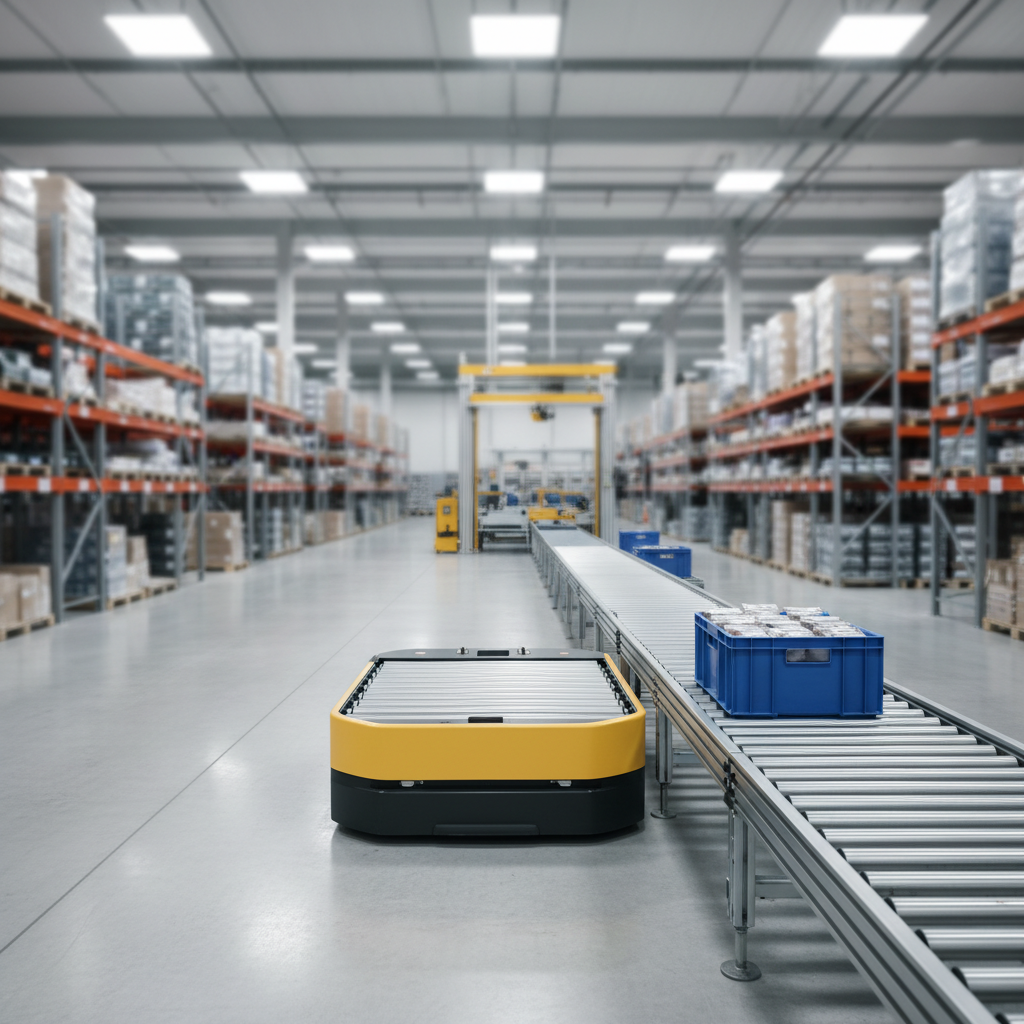
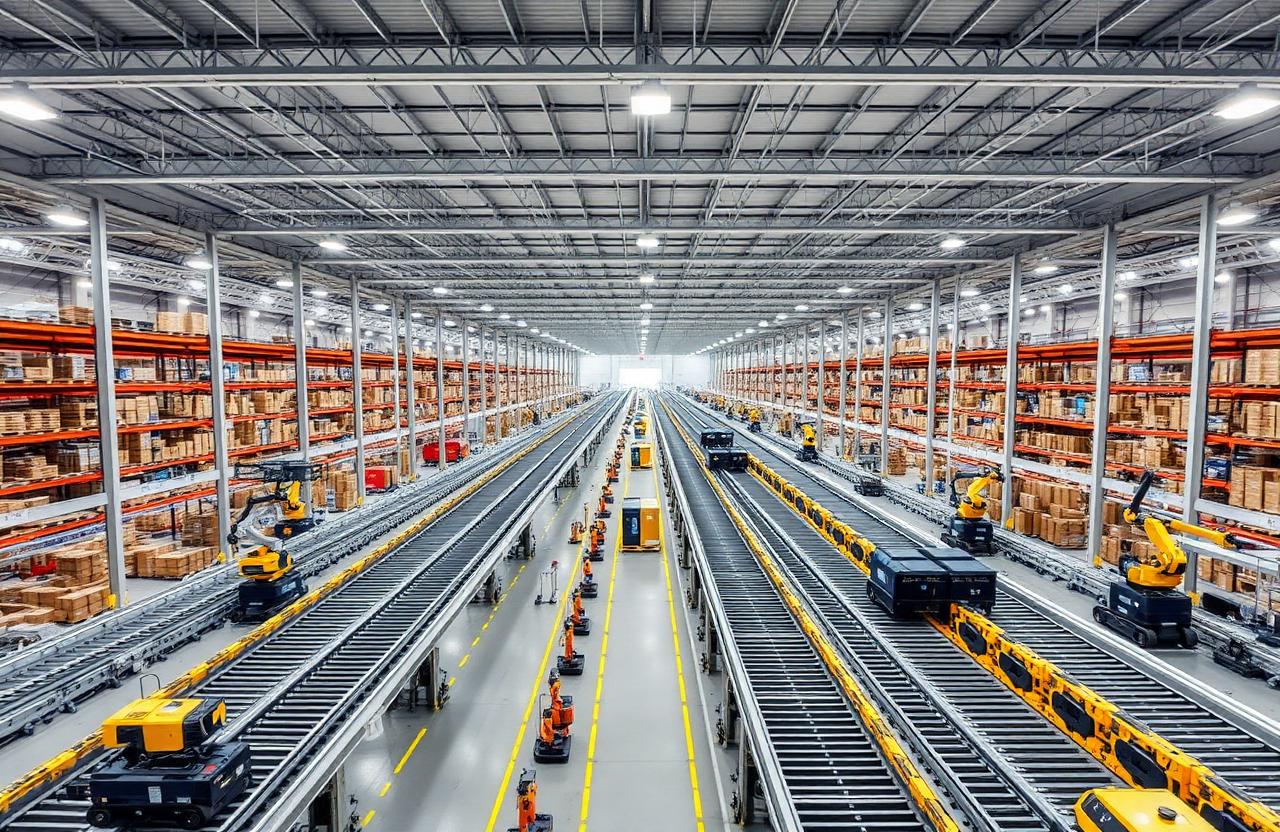
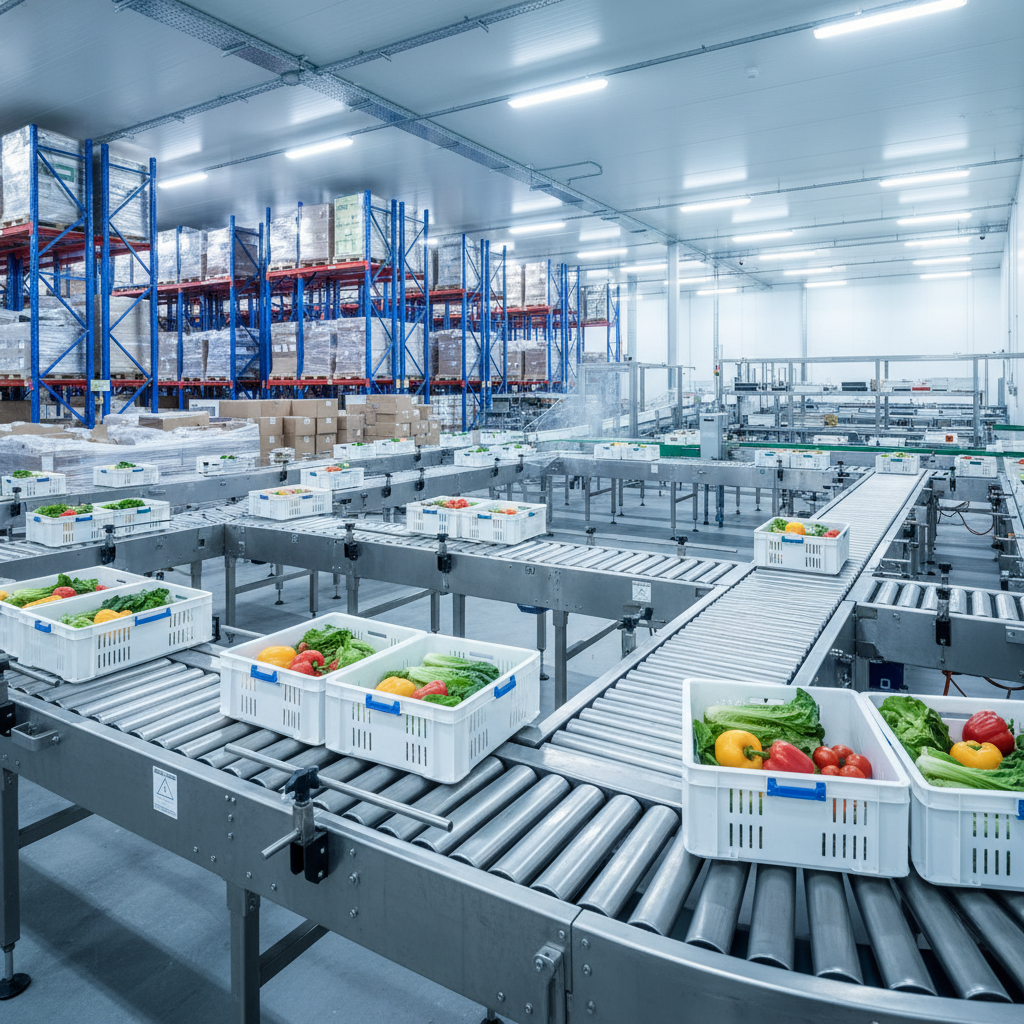
AGCs and Conveyors: Streamlining Benelux Production Lines
Discover how the strategic integration of Automated Guided Carts (AGCs) and conveyor systems transforms manufacturing in the Benelux, boosting efficiency and flexibility. This article explores the synergy between these technologies for streamlined production lines.
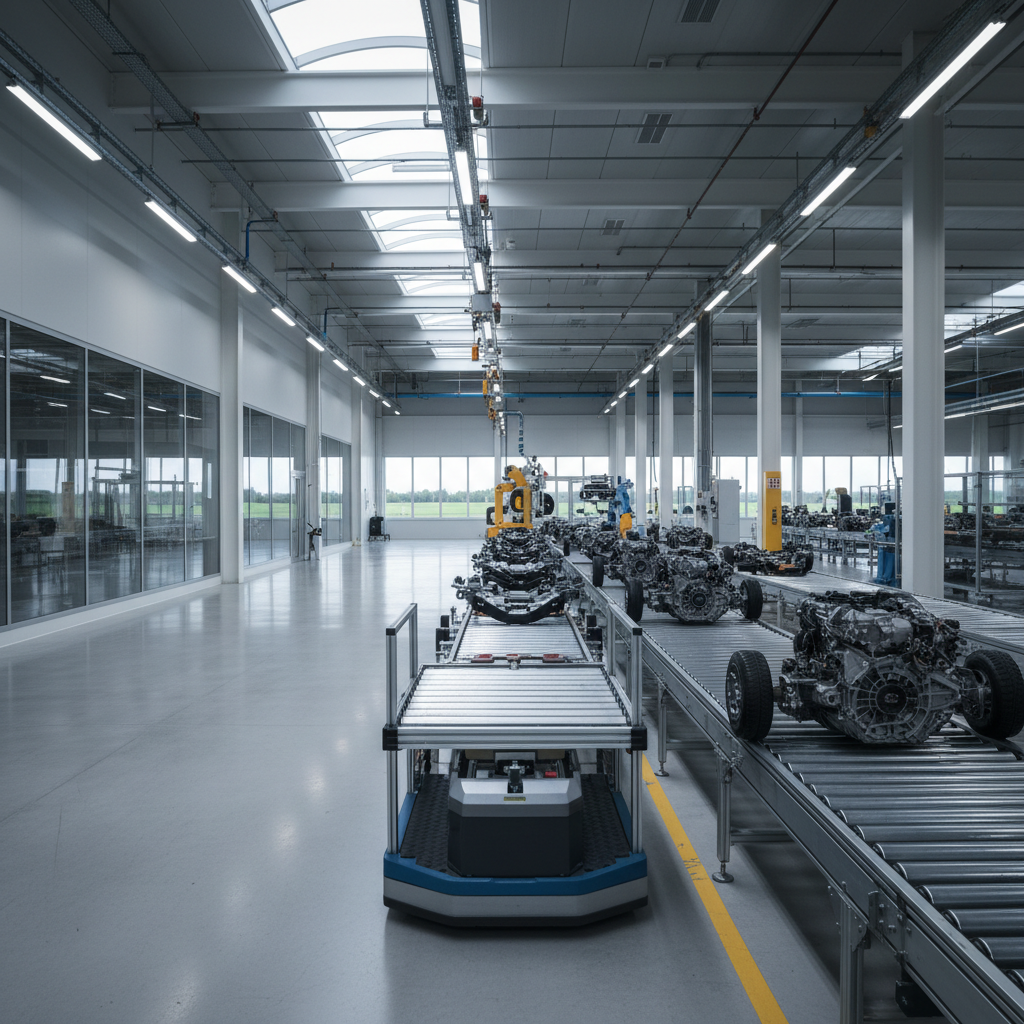
In the competitive landscape of Benelux manufacturing, companies face a triad of pressures: high labor costs, a premium on factory floorspace, and increasing customer demand for product variety. Thriving in this environment requires more than just automation; it demands smart, adaptable systems. The strategic integration of Automated Guided Carts (AGCs) and conveyor systems represents a powerful approach to creating lean, flexible, and efficient production lines that are fit for the future of European industry.
Definition
The integration of Automated Guided Carts (AGCs) and conveyor systems is a material handling strategy that combines fixed-path, high-throughput transport (conveyors) with flexible, on-demand movement of goods (AGCs). This synergy creates a cohesive, automated workflow that optimizes both the speed of continuous processes and the adaptability needed for variable tasks within a production environment.
The Core Conflict: Fixed vs. Flexible Automation
Historically, production lines have been built around one of two philosophies. On one hand, you have fixed automation. Roller conveyor and belt conveyor systems are the champions of this approach. They are the superhighways of the factory, moving high volumes of goods along a predetermined path with unmatched speed and reliability. However, this strength is also their weakness: they are inherently inflexible. Rerouting a conveyor line is a significant undertaking in terms of cost and downtime.
On the other hand, flexible automation, embodied by mobile robots like AGCs and their more advanced cousins, AMRs, acts like the city streets. They can navigate complex environments and perform a wide variety of tasks, from line-side replenishment to finished goods transport. Their primary limitation is throughput; a fleet of carts can struggle to match the sheer volume moved by a continuous conveyor over a long distance. Relying on one or the other often leads to compromises: either your facility is locked into a rigid process, or it suffers from traffic bottlenecks and lower overall capacity.
Why This Synergy Matters in the Benelux
The combination of these two technologies is particularly potent in Belgium, the Netherlands, and Luxembourg. The region's high labor costs, often exceeding €45 per hour, make manual material handling a prime target for automation. Furthermore, industrial space in logistics hotspots like Antwerp, Rotterdam, and Venlo is scarce and expensive, forcing companies to maximize the productivity of every square meter.
A hybrid AGC-conveyor system directly addresses these challenges. It allows factories to automate the "long haul" transport with cost-effective conveyors while using flexible AGCs for more complex, last-meter tasks. This is crucial for the high-mix, lower-volume production that characterizes much of the region's advanced manufacturing sector. As companies find that their processes do not always scale with their growth, this kind of adaptable automation becomes a key competitive advantage, allowing for rapid product changeovers without requiring a complete factory overhaul.
System Breakdown: AGCs vs. Conveyors
To understand the integrated system, it's important to appreciate the distinct roles each component plays. The goal is not to have one replace the other, but to leverage the strengths of both.
Automated Guided Carts (AGCs)
AGCs are unmanned vehicles that transport materials from point A to point B. Unlike more complex AMRs, they typically follow simple, predefined paths using guidance systems like magnetic tape, optical sensors, or wires embedded in the floor. Their strength lies in their predictability and cost-effectiveness for repetitive tasks. In a hybrid system, their role is to bridge gaps between fixed conveyor lines, serve individual workstations, or move work-in-progress (WIP) between different production cells.
Conveyor Systems
Conveyors are the backbone of the production line. For moving totes, boxes, or individual products, roller conveyor systems and belt conveyors are the standards. They act as the main arteries, providing a continuous, high-speed flow of materials through the primary stages of assembly, packaging, and shipping. They are unmatched for moving a high volume of uniform items along a set route, often functioning as a buffer or accumulation zone in the process.
Comparative Analysis: AGCs vs. Conveyor Systems
| Feature | Automated Guided Carts (AGCs) | Conveyor Systems |
|---|---|---|
| Transport Principle | Flexible, point-to-point, on-demand | Continuous, fixed-path |
| Typical Speed | 0.5 - 1.5 m/s | 0.3 - 2.0 m/s |
| Throughput | Lower to medium (intermittent) | High to very high (continuous) |
| Payload Capacity | 100 kg - 1,500 kg per cart | 15 kg - 100 kg per meter (unit load) |
| Initial Cost (indicative) | €15,000 - €40,000 per vehicle | €300 - €1,500 per meter |
| Flexibility | High; paths easily reconfigurable | Low; fixed infrastructure |
| Best Use Case | WIP transport, kitting, connecting automation islands | Main assembly lines, sorting, accumulation |
| Integration | Requires WCS for traffic control | PLC-based control, integrates with WCS |
Designing the Hybrid System: Key Integration Points
The magic happens at the intersection of the two systems. A successful integration is a carefully choreographed dance managed by a central software layer.
Handshake Zones
The physical transfer points, or "handshake zones," are critical. These can be engineered in several ways:
- End-of-Line Transfer: The simplest form, where a conveyor terminates and an AGC docks to pick up the product. This often requires the conveyor to have a sensor that signals the AGC when a product is ready.
- Lift & Carry: The conveyor moves a product to a specific station where a lifting mechanism on the AGC raises it off the conveyor.
- Powered Roller Tops: More advanced AGCs are equipped with their own small section of powered rollers. They can dock directly with a conveyor line, and the rollers on both the cart and the conveyor activate in sync to seamlessly transfer the load.
The Role of the Warehouse Control System (WCS)
The entire operation is orchestrated by a Warehouse Control System (WCS). This software layer acts as the brain, sitting between the high-level Warehouse Management System (WMS) and the machine-level PLCs. The WCS is responsible for:
- Task Management: It receives orders from the WMS (e.g., "move pallet X to production line Y") and breaks them down into specific tasks for the AGCs and conveyors.
- Traffic Control: It manages the movement of all AGCs to prevent collisions and optimize routes.
- System Synchronization: It tells the conveyor to stop and wait for an AGC to arrive, or signals an AGC that its destination conveyor is ready to receive a load.
Financial and Operational Benefits
Investing in a hybrid system delivers tangible returns. The primary benefit is reduced labor dependency, directly lowering operational expenditure. But the advantages go further. Automating repetitive transport tasks improves workplace ergonomics and dramatically reduces the risk of accidents. Throughput becomes more consistent and predictable, leading to better production planning and higher overall equipment effectiveness (OEE). Most importantly, it builds a foundation of flexibility, enabling a manufacturer to adapt to new products and changing workflows with minimal disruption.
Easy Systems: Your Trusted Partner for Integrated Solutions
Successfully implementing a hybrid automation system requires a partner with deep expertise in both conveyor hardware and control systems integration. At Easy Systems, a member of the BOA Concept group, we specialize in designing and delivering modular conveyor solutions that form the reliable backbone of any production line. Our strength lies in our ability to engineer an 'open' system: our conveyors and controls are designed to communicate flawlessly with third-party systems like AGCs, AMRs, and robotic cells.
We understand the specific pressures of the Benelux market. Our approach is not to sell a one-size-fits-all product, but to engineer a pragmatic, scalable, and future-proof solution. We design the conveyor system to be the robust, reliable core of your operation, with perfectly defined handshake points ready for integration with the flexible automation solutions that will complete your workflow. This modular philosophy ensures that your investment today is ready for the challenges of tomorrow.
This article is part of the Conveyor-Design knowledge hub, edited by Easy Systems engineers who design conveyor and warehouse automation systems across the Benelux every week.
Frequently asked questions
What's the main difference between an AGC and an AMR?+
An AGC (Automated Guided Cart) typically follows fixed paths like magnetic tape or wires. An AMR (Autonomous Mobile Robot) navigates freely using maps and sensors (SLAM), allowing it to dynamically avoid obstacles and find new routes. AGCs are simpler and cheaper for repetitive A-to-B tasks.
Can AGCs and conveyors from different manufacturers be integrated?+
Yes, this is common. Integration success hinges on a capable Warehouse Control System (WCS) and standardized communication protocols like OPC UA. The key is in the software and control layer, not just the hardware.
What is the typical ROI for an AGC-conveyor system?+
The Return on Investment (ROI) typically ranges from 18 to 36 months in a Benelux context. This is driven by high labor cost savings (€40-€50/hour per saved FTE), increased throughput, and improved order accuracy, offsetting the initial investment.