AGVs on the Factory Floor: A Benelux Guide to Conveyor Integration
Discover how the strategic integration of Automated Guided Vehicles (AGVs) with conveyor systems creates a powerful, flexible, and efficient material handling solution, tailored for the unique challenges of Benelux manufacturing plants.
In the competitive manufacturing landscape of the Netherlands, Belgium, and Luxembourg, optimizing material flow is not just an advantage—it's a necessity. High labor costs, dense industrial zones, and the demand for production agility are pushing factories to innovate. The integration of Automated Guided Vehicles with traditional conveyor systems represents a powerful step in this evolution, creating a seamless and intelligent internal logistics network.
Definition
AGV-Conveyor Integration is the process of creating a cohesive material handling system where Automated Guided Vehicles (AGVs) and conveyor systems work together, managed by a centralized software layer. AGVs provide flexible transport between fixed points, while conveyors offer high-throughput continuous flow, creating a hybrid solution that is more than the sum of its parts.
The Benelux Automation Imperative
Factories in the Benelux face a unique set of pressures. Real estate in industrial hotspots like the Flemish Diamond or the Randstad is scarce and expensive, making floor space optimization critical. Furthermore, with some of the highest labor costs in Europe, manufacturers are heavily incentivized to automate repetitive manual tasks, such as moving pallets or totes from one production line to another. A 2022 study showed that Belgium and the Netherlands are among the top 10 most automated countries globally based on robot density. This drive for efficiency is precisely where hybrid automation shines.
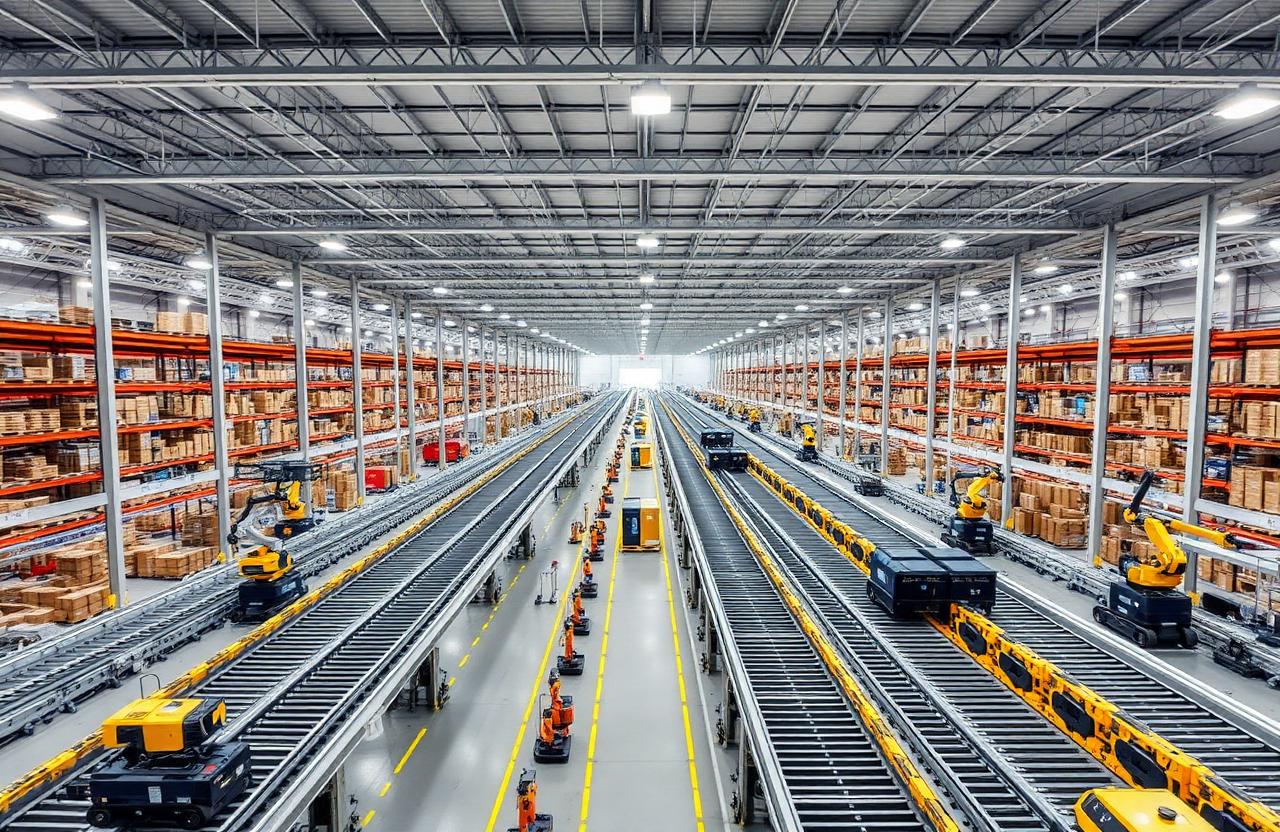
Integrating an AGV fleet with a fixed conveyor network allows businesses to automate entire production workflows, from goods-in to end-of-line palletizing and dispatch. It bridges the gap between high-speed, repetitive tasks and the need for dynamic, on-demand movements across a facility.
Core Benefits of an Integrated System
Combining these two technologies solves problems that neither can efficiently handle alone. The result is a more resilient, scalable, and cost-effective operation.
Bridging Automation Islands
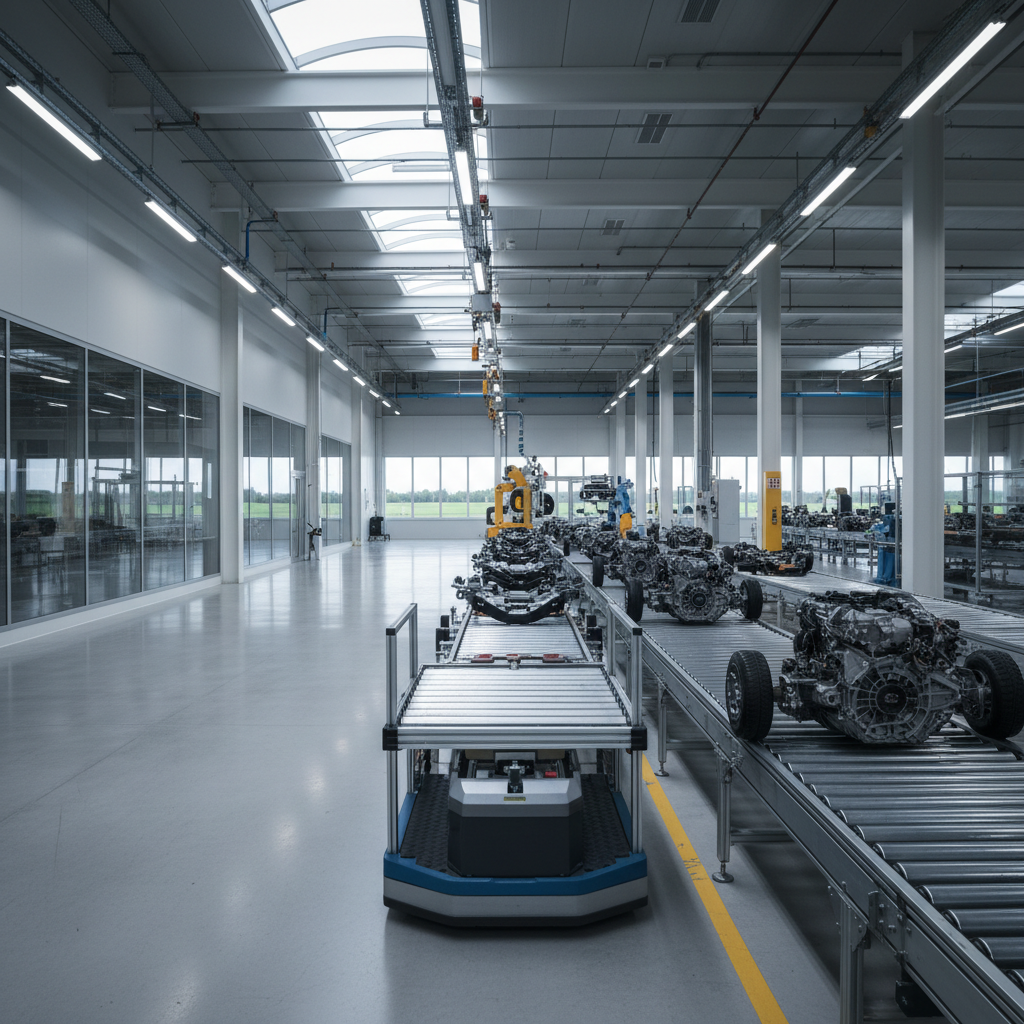
Many factories have "islands of automation"—highly efficient, isolated processes linked by manual labor or forklift traffic. A roller conveyor might efficiently move products along a 50-meter assembly line, but an operator is often still needed to take the finished goods to the packaging station 100 meters away. AGVs elegantly bridge these islands, picking up goods from the end of a conveyor and transporting them to the start of the next process, creating a fully automated, predictable flow.
Flexibility Meets Throughput
Conveyor systems offer unparalleled throughput for A-to-B transport but are inherently inflexible. Rerouting a fixed conveyor system can cost tens of thousands of euros and cause significant downtime. AGVs introduce flexibility. If a production layout changes, the AGVs' digital paths can be reprogrammed in hours, not weeks. This allows manufacturers to adapt to changing product mixes or seasonal demand surges without major hardware overhauls. As many companies discover, business growth often outpaces process scalability, a problem that this flexible automation model directly addresses.
Key Integration Methods & Technologies
The physical and digital handshake between an AGV and a conveyor is critical. The method chosen depends on the load type, required speed, and facility layout.
Direct Transfer at Height
The most common method involves an AGV approaching a fixed conveyor station. The conveyor and the AGV's lifting mechanism are set to the same height. For instance, a pallet conveyor line might end at a height of 500 mm. A fork-style AGV approaches, uses its sensors (like LiDAR or vision systems) to align itself with a precision of ±10 mm, lifts the 1,200mm x 1,000mm pallet, and transports it. This is ideal for end-of-line palletizing or moving goods from production to stretch wrapping.
Conveyor Deck AGVs
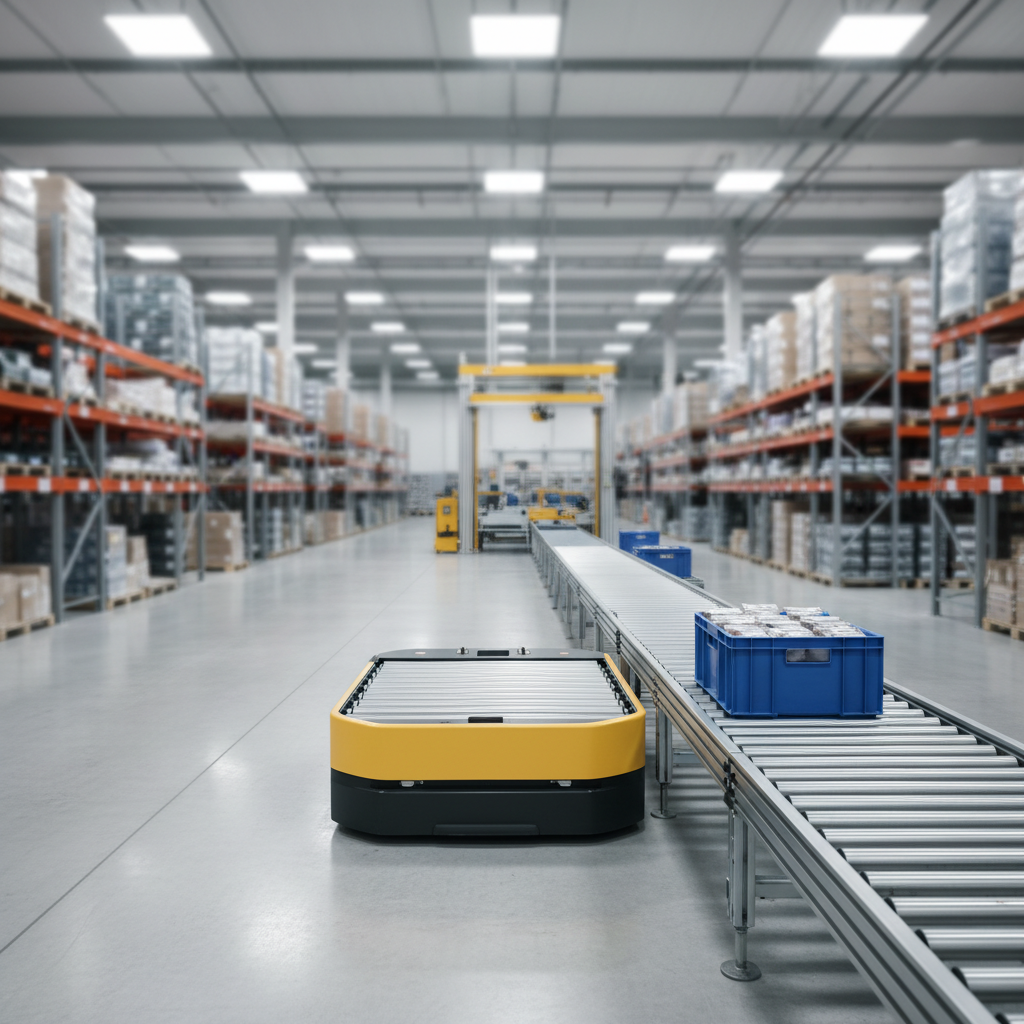
For smaller loads like totes or boxes, AGVs can be equipped with their own powered conveyor module on top (either belt or roller). This AGV docks at a stationary conveyor station. The control system signals both the AGV and the stationary conveyor to activate simultaneously, smoothly transferring the box. This method is exceptionally fast—a 25 kg box can be transferred in under 10 seconds—and is common in goods-to-person picking and sortation applications.
Comparative Analysis of Integration Methods
Choosing the right integration method is a trade-off between speed, cost, and the type of material being handled.
| Integration Method | Typical Load | Transfer Speed | Relative Cost per Unit | Best For |
|---|---|---|---|---|
| Fork AGV (Direct Transfer) | Pallets (500 - 1,500 kg) | Low (30-60s per transfer) | €€€ | End-of-line to warehouse staging |
| Conveyor Deck AGV | Totes, Boxes (10 - 50 kg) | High (<10s per transfer) | €€€€ | Connecting assembly stations or sortation systems |
| Tugger AGV + Carts | Multiple pallets/carts | Variable (depends on train length) | €€ | "Milk run" supply to assembly lines |
| AMR (Top Module) | Totes, Boxes, Carts | High | €€€ | Dynamic environments with frequent layout changes |
The Central Nervous System: WMS, WCS, and Fleet Control
A successful integration relies on intelligent software. The AGV fleet manager, the conveyor's PLC (Programmable Logic Controller), and the overarching WMS (Warehouse Management System) or WES (Warehouse Execution System) must communicate flawlessly. When a pallet reaches the end of a conveyor, the PLC sends a "ready for pickup" signal to the WES. The WES then instructs the AGV Fleet Manager to dispatch the nearest available AGV to that specific location. This orchestration prevents traffic jams, prioritizes tasks, and ensures the entire system operates as a single, cohesive unit.
The Future: AMRs and Interoperability
While AGVs follow fixed paths (magnetic tape, wires, or laser triangulation), their more advanced cousins, Autonomous Mobile Robots (AMRs), are gaining traction. AMRs navigate dynamically using SLAM technology, allowing them to maneuver around obstacles. For many new installations, an AMR offers even greater flexibility than a classic AGV. You can learn more about their differences in our detailed AGV vs. AMR guide. Furthermore, industry standards like VDA 5050 are emerging, which aim to create a universal communication protocol allowing AGVs and AMRs from different manufacturers to operate together under one fleet manager. This is a game-changer for large-scale European logistics hubs seeking to avoid vendor lock-in.
Easy Systems: Your Partner for Integrated Automation
Successfully blending fixed and mobile automation requires deep expertise in both domains. At Easy Systems, we specialize in designing and delivering modular conveyor solutions that are built for integration. We understand the critical hand-off points, the control system logic, and the physical precision required to make AGVs and conveyors communicate seamlessly. Whether you are automating a single production line or designing a fully integrated factory floor for the Benelux market, our engineering team has the experience to build a robust, scalable, and future-proof material handling system.
This article is part of the Conveyor-Design knowledge hub, edited by Easy Systems engineers who design conveyor and warehouse automation systems across the Benelux every week.
Frequently asked questions
What is the main difference between an AGV and an AMR?+
An AGV (Automated Guided Vehicle) follows fixed, pre-defined paths, such as magnetic stripes or laser-guided routes. An AMR (Autonomous Mobile Robot) navigates dynamically, using sensors and maps to create its own routes and move around unexpected obstacles, offering greater flexibility.
What is the typical ROI for an AGV system integrated with conveyors?+
In a typical Benelux two-shift operation, the Return on Investment (ROI) for an integrated AGV and conveyor system is generally between 2 to 4 years. This is driven by labor cost savings, increased throughput, and improved operational safety and predictability.
Can AGVs and conveyors operate in cold storage environments?+
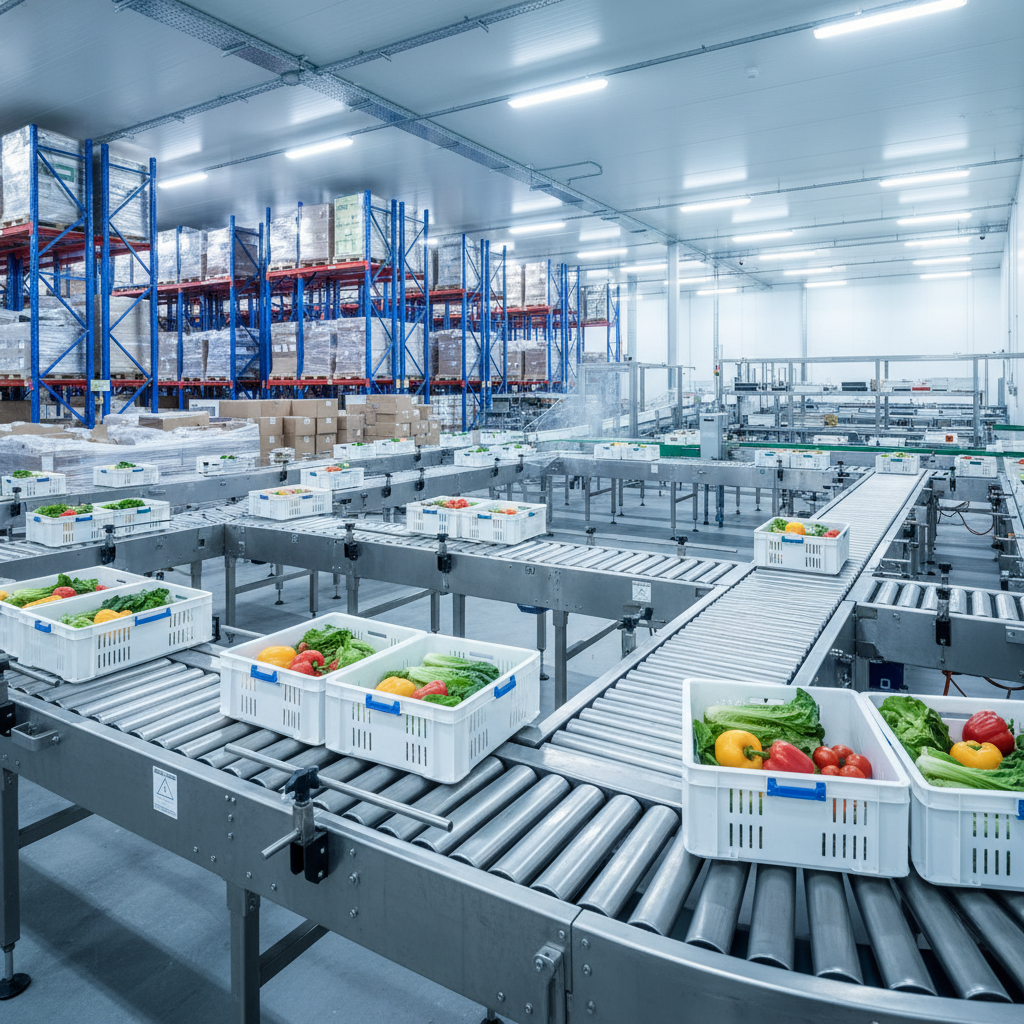
Yes, specialized AGVs and conveyors are designed to operate reliably in cold storage environments, typically down to -25°C. These systems use low-temperature lubricants, sealed electronics, and batteries optimized for cold performance, making them ideal for automating food and pharmaceutical logistics.