Automated Guided Carts (AGCs) and Conveyors: Streamlining Production Lines in Benelux Manufacturing
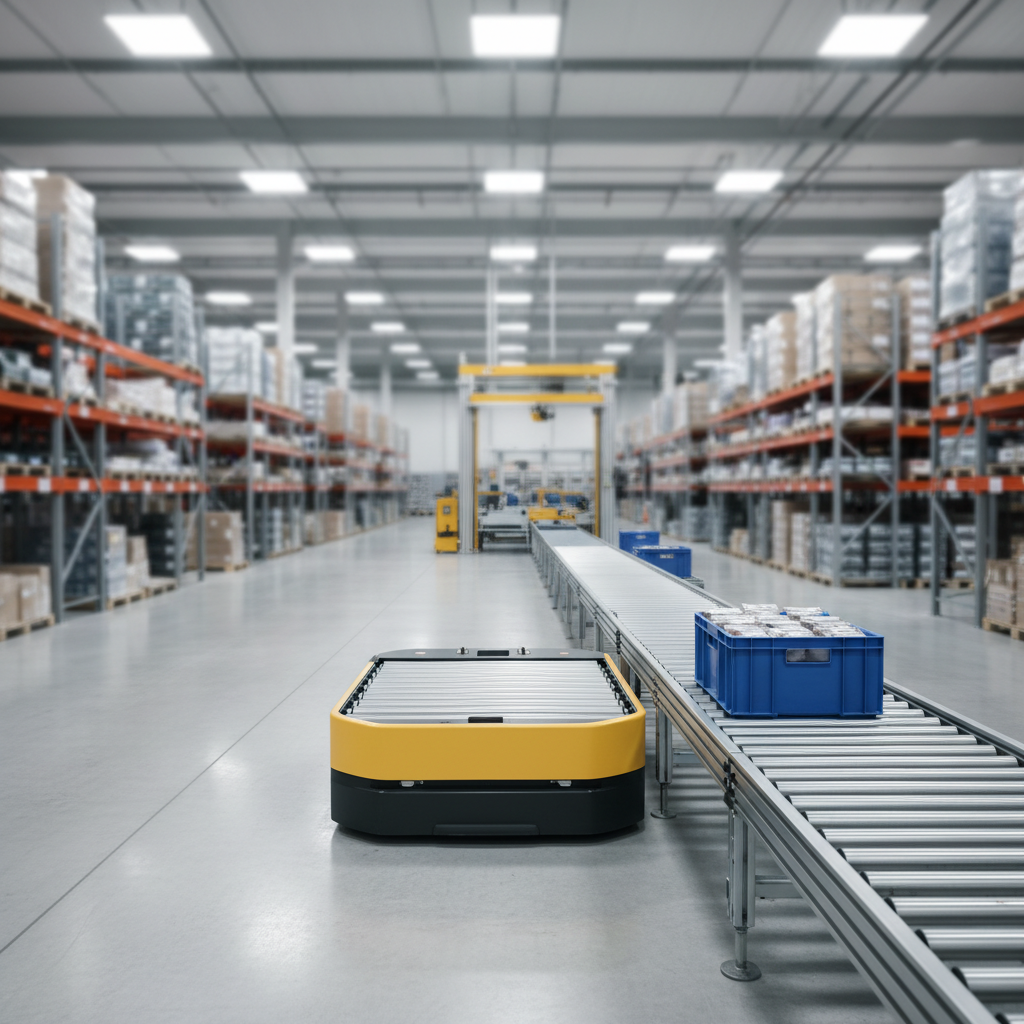
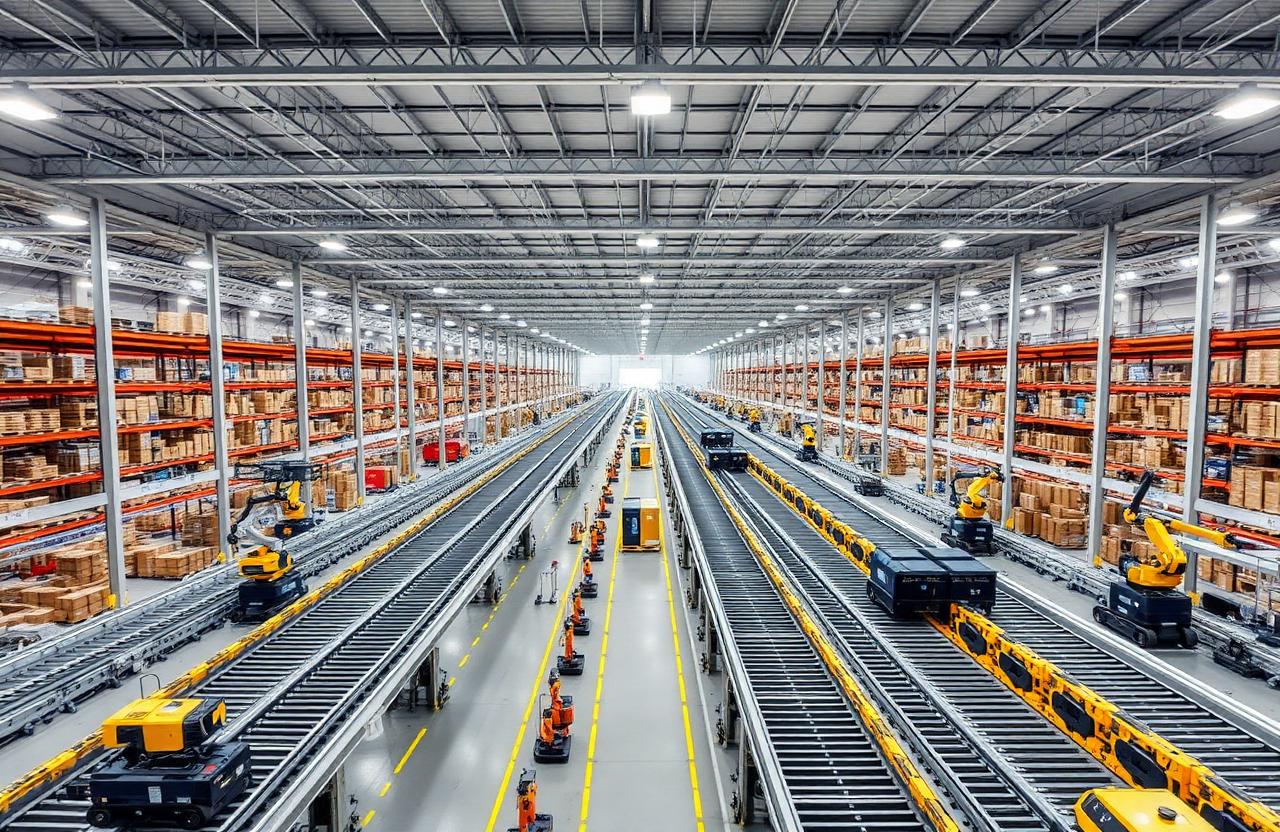
Combining the flexibility of Automated Guided Carts (AGCs) with the high throughput of fixed conveyors creates a powerful hybrid solution for modern production lines. This article explores how Benelux manufacturers can leverage this synergy to reduce costs and increase adaptability.
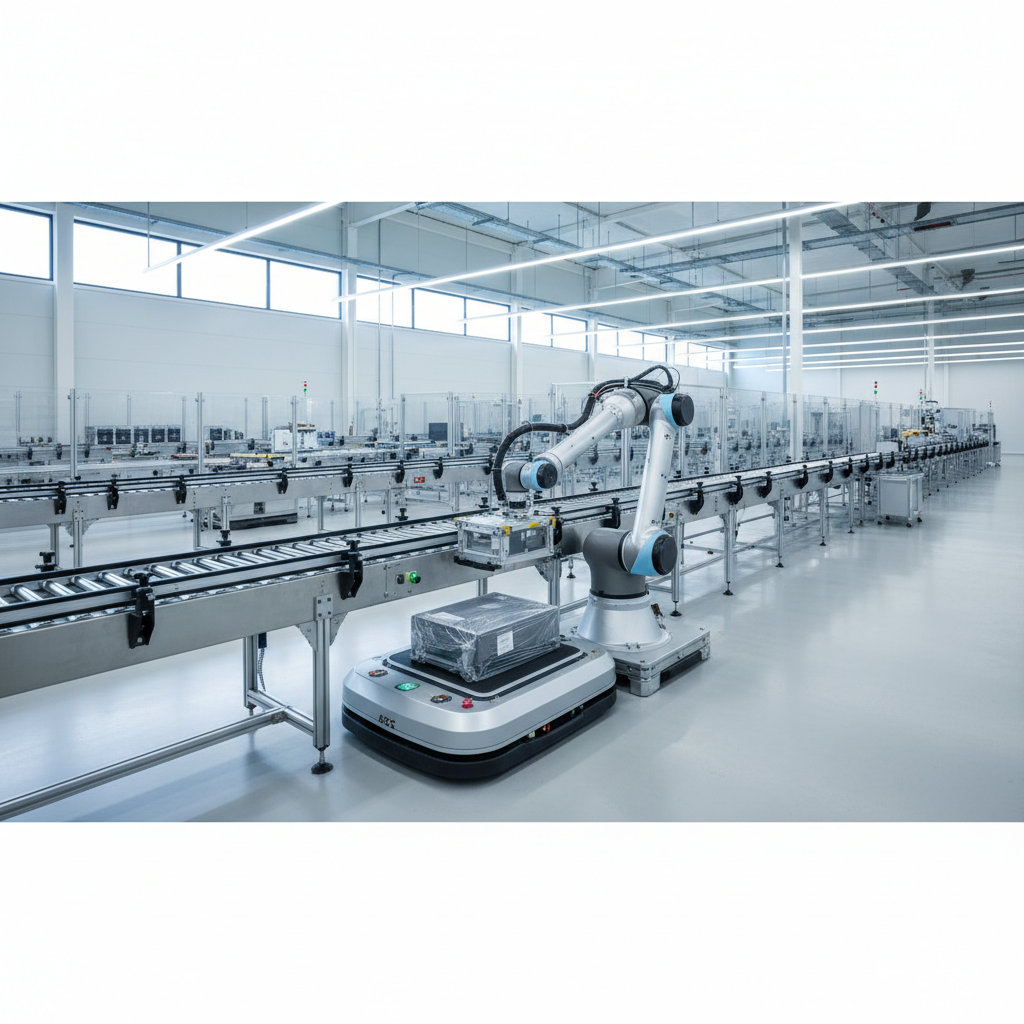
In the competitive manufacturing landscape of the Benelux, where precision, efficiency, and adaptability are paramount, the internal movement of materials is a critical process. While high-speed conveyors have long been the backbone of production lines, the rise of agile manufacturing demands more flexibility. This is where Automated Guided Carts (AGCs) enter the picture, creating a powerful synergy when integrated with conveyor systems.
Definition
An integrated AGC and conveyor system is a hybrid material handling solution where fixed conveyors manage high-volume, linear flows, and AGCs provide flexible transport for variable routes between conveyor lines or workstations. This combination leverages the strengths of both technologies to create a more dynamic, efficient, and scalable production environment.
The Core Conflict: Flexibility vs. Throughput
The choice between AGCs and conveyors has traditionally been a trade-off. Fixed conveyor systems, such as belt or roller conveyor systems, are unparalleled for their speed and capacity over a set path. They can move thousands of units per hour with exceptional reliability and low operational cost per item. Their main drawback, however, is their rigidity. Once installed, changing the path is a significant undertaking in terms of cost and downtime. Automated Guided Carts, a simpler form of AGV, offer the opposite. They follow simple, pre-defined paths, often magnetic tape or painted lines, but these paths can be reconfigured with relative ease. This makes them ideal for environments where production layouts change or where multiple drop-off and pickup points are needed. Their throughput, however, is significantly lower than a continuous conveyor.
Synergistic Integration: How AGCs and Conveyors Work Together
Instead of viewing AGCs and conveyors as an "either/or" decision, savvy manufacturers in the Netherlands, Belgium, and Luxembourg are opting for a "both/and" approach. The integration creates a seamless flow where each system handles the tasks it's best suited for. A typical scenario involves using conveyors for the main production or assembly line where processes are linear and continuous. When a product or sub-assembly needs to be moved to a separate process, like quality control, a customization station, or a temporary buffer zone, an AGC takes over. For example:
- A product moves along a main assembly roller conveyor.
- At a specific point, the product is diverted onto a small conveyor segment that acts as a pickup/drop-off (P&D) station.
- An AGC is electronically summoned to the P&D station.
- The conveyor transfers the item onto the AGC.
- The AGC transports the item to a different production line or a specific workstation.
- The process is reversed to place the item back onto a conveyor system.
AGCs vs. Conveyors: A Comparative Analysis
Choosing the right blend of AGCs and conveyors requires understanding their individual characteristics. The decision often depends on the specific needs of the application, such as the required throughput, the complexity of the path, and the budget.
| Parameter | Automated Guided Carts (AGCs) | Conveyor Systems |
|---|---|---|
| Typical Throughput | Low to Medium (10-60 transfers/hour per cart) | High to Very High (600-3,600+ units/hour) |
| Flexibility & Scalability | High; paths easily rerouted (tape/paint); add/remove carts to scale. | Low; fixed infrastructure, costly to modify. Scalability is complex. |
| Initial Investment (Benelux) | €15,000 - €40,000 per cart. System cost depends on fleet size. | €300 - €1,500+ per meter, depending on type (gravity vs. motorized). |
| Operational Speed | 0.5 - 1.5 m/s. | 0.2 - 2.0+ m/s, but operates continuously. |
| Payload Capacity | Typically 50 kg to 500 kg. Heavy-duty models exist. | From <1 kg per roller to >1,500 kg for pallet systems. |
| Footprint | Requires clear, wide aisles for movement; flexible use of space. | Permanent, dedicated floor or overhead space. Minimal aisle obstruction. |
Key Applications in Benelux Manufacturing
The Benelux region, with its diverse manufacturing base, presents numerous opportunities for hybrid automation.
Work-in-Progress (WIP) Management
In high-tech manufacturing, such as at the High Tech Campus in Eindhoven, products often require movement between cleanrooms or specialized testing stations. AGCs are perfect for this non-linear "WIP" movement. They can pick up a batch of components from an assembly conveyor, transport them to a testing bay, and then return them to the main line or a different line based on the test results.
Line-Side Supply (Kitting)
In the automotive or machine-building sectors, common in Belgium and the Netherlands, AGCs can be used to deliver specific kits of parts to assembly stations along a conveyor line. An operator or a central system (WCS) requests a kit; an AGC retrieves the kit from a central storage area (kitting zone) and delivers it to the exact point of need, just in time. This prevents line-side clutter and reduces walking time for assemblers.
Technical Considerations for Integration
A successful integration hinges on seamless communication between the systems. This is typically managed by a Warehouse Control System (WCS). The WCS acts as the traffic controller, communicating with both the conveyor's PLC (Programmable Logic Controller) and the AGCs' fleet manager. The process involves:
- Sensors: Photo-eyes on the conveyor detect when a product has reached a P&D station.
- WCS Communication: The conveyor PLC informs the WCS that an item is ready for pickup.
- Fleet Management: The WCS instructs the AGC fleet manager to dispatch the nearest available cart.
- Handshake Protocols: The AGC and the conveyor P&D station communicate locally (often via wireless I/O) to confirm alignment and readiness before the transfer occurs. This "digital handshake" is crucial for preventing dropped or damaged products.
Calculating ROI for a Hybrid System in the Benelux
The business case for an integrated system is compelling. Let's consider a medium-sized manufacturing plant in Flanders, Belgium. Scenario: Manually moving sub-assemblies from a main assembly line to a separate quality control station and back. This requires two full-time employees per shift, often using manual carts. Investment:
- 2 AGCs: €25,000 each = €50,000
- 2 automated conveyor P&D stations: €15,000 each = €30,000
- Integration & software (WCS): €40,000
- Total Initial Investment: €120,000
- Labor Savings: 2 FTEs at an average loaded cost of €55,000/year in the Benelux = €110,000
- Productivity Gain: Reduced waiting time and consistent flow can increase throughput by 5-10%. Conservatively, this can be valued at €20,000/year.
- Total Annual Savings: €130,000
Easy Systems: Your Partner for Integrated Material Handling
Successfully blending conveyors and AGCs requires a partner with deep expertise in both domains. It’s not just about supplying the hardware; it’s about designing the flow, managing the control-level integration, and ensuring the entire system works as a cohesive unit. At Easy Systems, we specialize in creating modular, scalable conveyor solutions that are designed from the ground up to integrate with other automation technologies like AGCs and AMRs. Our approach focuses on understanding your unique production environment in the Benelux or elsewhere in Europe to build a robust, cost-effective, and future-proof system. For more information on our custom-fit solutions, please visit us at Easy Systems B.V. and let us help you design the future of your production line.
This article is part of the Conveyor-Design knowledge hub, edited by Easy Systems engineers who design conveyor and warehouse automation systems across the Benelux every week.
Frequently asked questions
What is the main difference between an AGC and an AMR?+
An Automated Guided Cart (AGC) follows simple, fixed paths like magnetic tape or QR codes. An Autonomous Mobile Robot (AMR) uses advanced navigation (like SLAM) to dynamically create its own paths, allowing it to navigate around obstacles freely.
Can AGCs and conveyors from different manufacturers be integrated?+
Yes, integration is possible using a standardized communication layer, typically a Warehouse Control System (WCS). The WCS communicates with both the AGC fleet manager and the conveyor's PLC to coordinate movements and handovers, regardless of the manufacturer.
What are the maintenance requirements for a hybrid AGC-conveyor system?+
Conveyors require regular checks on motors, belts, and rollers (e.g., quarterly inspections). AGCs require battery maintenance, sensor cleaning, and wheel inspections. A combined system requires a holistic maintenance plan covering both mechanical and software components.
How does facility layout impact the choice between AGCs and conveyors?+
Open layouts with wide aisles are well-suited for AGCs, offering high flexibility. Facilities with established, fixed processes or limited floor space often benefit more from the high density and fixed paths of conveyors, including overhead or spiral designs.