The Role of Energy-Efficient Motors in Sustainable Conveyors
Migrating to energy-efficient motors and drives is crucial for sustainable logistics. Technologies like Permanent Magnet motors and Motorized Drive Rollers (MDR) can reduce a conveyor system's energy consumption by up to 70%, offering a typical ROI within 2-3 years.
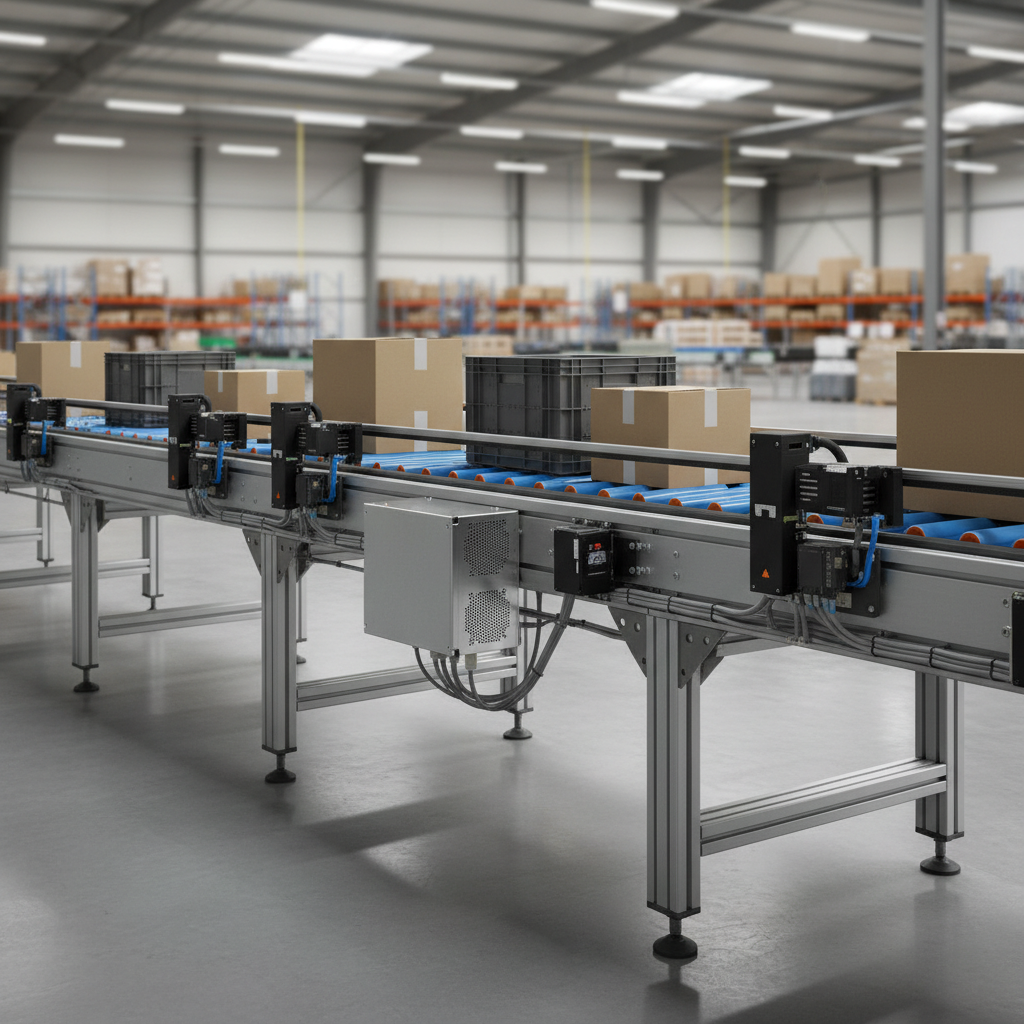
As energy costs escalate and environmental regulations tighten across Europe, warehouse and distribution center operators are scrutinizing every watt of power. Conveyor systems, the arteries of modern logistics, are a prime target for optimization. Shifting from traditional, constantly-running AC motors to intelligent, energy-efficient motors and drives is no longer a marginal gain but a strategic necessity for creating sustainable and cost-effective material handling operations.
Definition
Energy-efficient motors and drives for conveyor systems are electric-powered components—such as Permanent Magnet motors, Motorized Drive Rollers (MDR), and controllers like Variable Frequency Drives (VFDs)—designed to minimize electricity consumption while delivering the necessary torque and speed, often by precisely matching power output to the actual load required at any given moment.
Key Numbers
| Metric | Typical range (EU 2026) | Notes |
|---|---|---|
| Motor Efficiency Class | IE4 / IE5 | IE4 (Super Premium Efficiency) is becoming the standard for new installations. |
| Energy Savings vs. IE1/IE2 | 30-70% | Depends heavily on technology choice (e.g., MDR vs. VFD-controlled AC motor) and application. |
| Investment Cost (Upgrade) | €300 - €800 per motor/drive | Cost varies with motor power, control complexity, and integration work required. |
| Return on Investment (ROI) | 1.5 - 3 years | Based on energy savings, reduced maintenance, and potential government incentives. |
| CO2 Reduction per system | 2 - 5 tons per year | For a medium-sized conveyor line (100m) operating 16 hours/day. |
| Energy Consumption (MDR) | 0.02 - 0.05 kWh per hour | Per zone, operating on demand. A vast improvement over constant-run systems. |
| Lifetime Expectancy | 40,000 - 60,000 operating hours | Modern brushless DC motors often outlast their traditional AC counterparts. |
The Evolution: From AC Induction to Permanent Magnet Motors
For decades, the three-phase AC induction motor was the undisputed workhorse of the conveyor industry. It's robust, relatively inexpensive, and reliable. However, its significant drawback is its energy efficiency, especially when not running at its full nominal load. Historically, many conveyors were oversized "just in case," meaning their motors consistently ran in an inefficient range, wasting electricity as heat and noise.
Enter the Permanent Magnet Synchronous Motor (PMSM), or simply PM motor. Instead of using electricity to induce a magnetic field in the rotor, PM motors use high-strength permanent magnets. This eliminates the rotor energy loss, leading to a significant efficiency boost. This is the same technology that has proven so successful in electric vehicles.
Key Advantages of PM Motors:
- Higher Efficiency: PM motors consistently achieve IE4 (Super Premium) and IE5 (Ultra Premium) efficiency ratings, reducing energy losses by 15-20% over even modern IE3 induction motors.
- Compact Size: They offer higher power density, meaning a smaller, lighter motor can deliver the same torque as a larger AC motor. This is beneficial for integration into compact conveyor frames.
- Cooler Operation: Less energy wasted as heat means motors run cooler, increasing their lifespan and reducing the ambient temperature in a warehouse.
Key Technologies: VFDs, MDR, and Decentralized Drives
The motor itself is only half the story. The "drive" or controller is what unlocks its full efficiency potential.
Variable Frequency Drives (VFDs)
A VFD controls an AC motor's speed by adjusting the frequency of the electrical power supplied to it. Instead of running a conveyor at a constant full speed and using mechanical means to buffer or stop products, a VFD allows the system to speed up or slow down based on product flow. This soft-starting capability also reduces mechanical stress on components, extending the life of belts, chains, and gearboxes. Implementing a VFD on a variable-flow roller conveyor system can reduce energy use by 20-50%.
Motorized Drive Rollers (MDR)
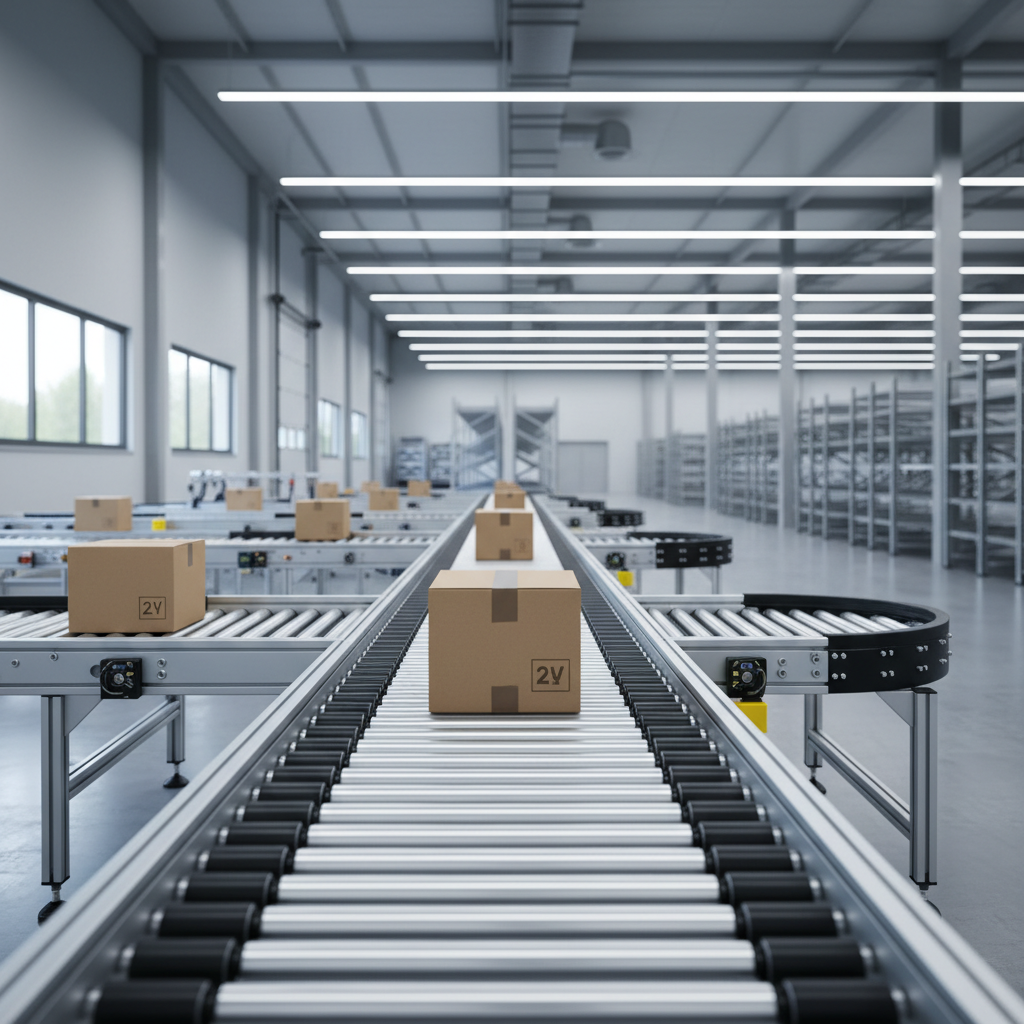
MDR technology represents a paradigm shift. It uses 24V or 48V DC brushless motors embedded directly inside the conveyor rollers. Each roller, or a small group of rollers, forms an independent "zone." Using sensors, the system only activates zones where a product is present. This on-demand operation, fundamental to zero-pressure accumulation, means that for large parts of the day, most of the conveyor is idle and consuming virtually no power. The savings are dramatic, often reaching 70% compared to a traditional belt or line-shaft conveyor that runs continuously.
Decentralized Drive Technology
Decentralized drives move control logic away from a single, large cabinet housing dozens of controllers. Instead, smaller drive controllers are mounted directly on or near the motor on the conveyor frame. This approach simplifies wiring, reduces the risk of electromagnetic interference, and makes commissioning and maintenance far easier. It reduces cabinet cooling needs and cabling costs, contributing further to overall system efficiency.
Comparing Motor & Drive Technologies for Conveyors
Choosing the right technology depends on the application—throughput, product weight, and operational pattern (continuous vs. intermittent).
| Technology | Best For | Energy Efficiency | Upfront Cost | Control Complexity |
|---|---|---|---|---|
| AC Induction Motor (IE3) | Simple, continuous-flow applications (e.g., long transport belts) | Moderate | Low | Low |
| AC Motor + VFD | Variable-flow applications, incline/decline control | High | Medium | Medium |
| Permanent Magnet Motor (IE4/5) + VFD | High-performance, continuous or variable flow | Very High | High | Medium |
| Motorized Drive Roller (MDR) | Zone-based accumulation, sorting, intermittent flow | Excellent | Medium-High | High (Zone-level logic) |
| Decentralized Drives | Modular, complex conveyor layouts; reduced cabling | High (System-level savings) | Medium | Low (Distributed) |
Calculating the ROI of an Energy-Efficient Upgrade
The business case for upgrading is built on total cost of ownership (TCO), not just the initial purchase price. A simple ROI calculation looks like this:
ROI (in years) = (Total Upgrade Cost) / (Annual Energy Savings + Annual Maintenance Savings)
Example Calculation:
Consider a 50-meter-long accumulation conveyor line running 16 hours/day, 250 days/year, with a traditional 5.5 kW AC motor (IE1) running continuously.
- Traditional System Annual Cost: 5.5 kW * 16 h/day * 250 days/year * €0.25/kWh = €5,500
- Now, let's replace it with an MDR system. The total power draw might be 1.5 kW, but it only runs, on average, 30% of the time due to zone accumulation.
- MDR System Annual Cost: 1.5 kW * 16 h/day * 250 days/year * 30% usage * €0.25/kWh = €450
The annual energy saving is €5,050. If the total upgrade cost (including hardware and integration) is €12,000, the ROI is approximately 2.3 years. This doesn't even factor in reduced maintenance costs or potential government subsidies for green investments.
Integration with Control Systems for Optimal Performance
To maximize energy savings, motors and drives must be intelligently controlled. This requires tight integration with the warehouse's control architecture. Modern drives communicate over industrial protocols like PROFINET, EtherNet/IP, or EtherCAT. They can receive commands from a central PLC (Programmable Logic Controller) or a Warehouse Control System (WCS) and, crucially, report back data on their status, load, and energy consumption.
This data is invaluable for predictive maintenance. For example, a gradual increase in a motor's current draw to move the same load might indicate bearing wear or increased belt tension, allowing maintenance to be scheduled before a failure occurs. This turns the drive system from a simple actuator into a smart sensor on the front line of your operation.
Regulatory Landscape in Europe: The Ecodesign Directive
The European Union's Ecodesign Directive (Regulation (EU) 2019/1781) has been a major driver of motor efficiency. It sets mandatory Minimum Efficiency Performance Standards (MEPS) for electric motors sold within the EU. As of July 2023, new motors between 75 kW and 200 kW must meet the IE4 standard. This legislative push has effectively eliminated inefficient IE1 and IE2 motors from the market for new installations, forcing manufacturers and system integrators to adopt more efficient technologies.
Easy Systems: Your Partner for Sustainable Conveyor Solutions
Navigating the complexities of motor technologies, control integration, and regulatory requirements can be daunting. At Easy Systems, we specialize in designing and implementing conveyor systems that are not only high-performing but also inherently energy-efficient. We believe that sustainability and profitability go hand-in-hand. When companies grow, their processes must evolve to become more efficient, not just bigger, a philosophy we've detailed in our analysis here: why scaling processes is key to growth.
Our approach is holistic. We don't just sell motors; we analyze your specific product flow, operational patterns, and business goals. Whether the optimal solution is a powerful PM motor for a high-speed spiral conveyor or a sophisticated MDR system for a sorting and buffering application, we engineer a solution that minimizes your energy footprint and maximizes your ROI. We combine cutting-edge hardware with intelligent software control to build logistics systems that are ready for the challenges of tomorrow. Trust Easy Systems to be your expert partner in building a more sustainable and efficient warehouse.
Frequently asked questions
How much energy can I save by upgrading my conveyor motors?+
Depending on the technology, you can save 30-70%. Upgrading from an old IE1 induction motor to a modern permanent magnet motor with a VFD can save 30-40%. A switch to a zone-based Motorized Drive Roller (MDR) system for accumulation can yield savings up to 70%.
What is the difference between IE3, IE4, and IE5 motor efficiency?+
These are international efficiency classes. IE3 (Premium Efficiency) is the current standard. IE4 (Super Premium) offers about 20% lower energy losses than IE3 and is mandatory in the EU for certain power ranges. IE5 (Ultra Premium) represents the next frontier, often using advanced technologies like permanent magnet rotors.
Is Motorized Drive Roller (MDR) technology expensive?+
The upfront cost per meter for MDR can be higher than for a simple belt conveyor, typically ranging from €500 to €1,200 per meter depending on width and zone complexity. However, the ROI is usually fast, often under 3 years, due to massive energy savings and reduced maintenance.
Can I put a VFD on my existing conveyor motor?+
Yes, in many cases, a Variable Frequency Drive (VFD) can be retrofitted to an existing AC induction motor. However, it's crucial to ensure the motor is 'inverter-duty' rated to handle the variable frequencies, especially older models. The upgrade can save 20-50% in energy costs.
What is the EU Ecodesign Directive for motors?+
It's a set of regulations by the European Union that establishes mandatory minimum efficiency standards for electric motors. Since July 2023, it requires many new motors to meet the IE4 (Super Premium Efficiency) standard, effectively phasing out less efficient models from the market to reduce industrial energy consumption.
Do energy-efficient motors have a shorter lifespan?+
No, quite the opposite. Energy-efficient motors, especially brushless DC types like those in MDR systems, run cooler because less energy is wasted as heat. This reduced thermal stress leads to a longer operational lifespan, often exceeding 40,000 hours, compared to their constantly running AC counterparts.

The Easy Systems editorial desk reviews and fact-checks every Conveyor-Design article against Benelux project experience. Editors translate engineering decisions — throughput, peak factors, layout, integration — into plain-language guides for operations managers, project leads and decision-makers.
- Warehouse layout & slotting
- Order-profile analysis
- Vendor-neutral comparison
- Benelux logistics market