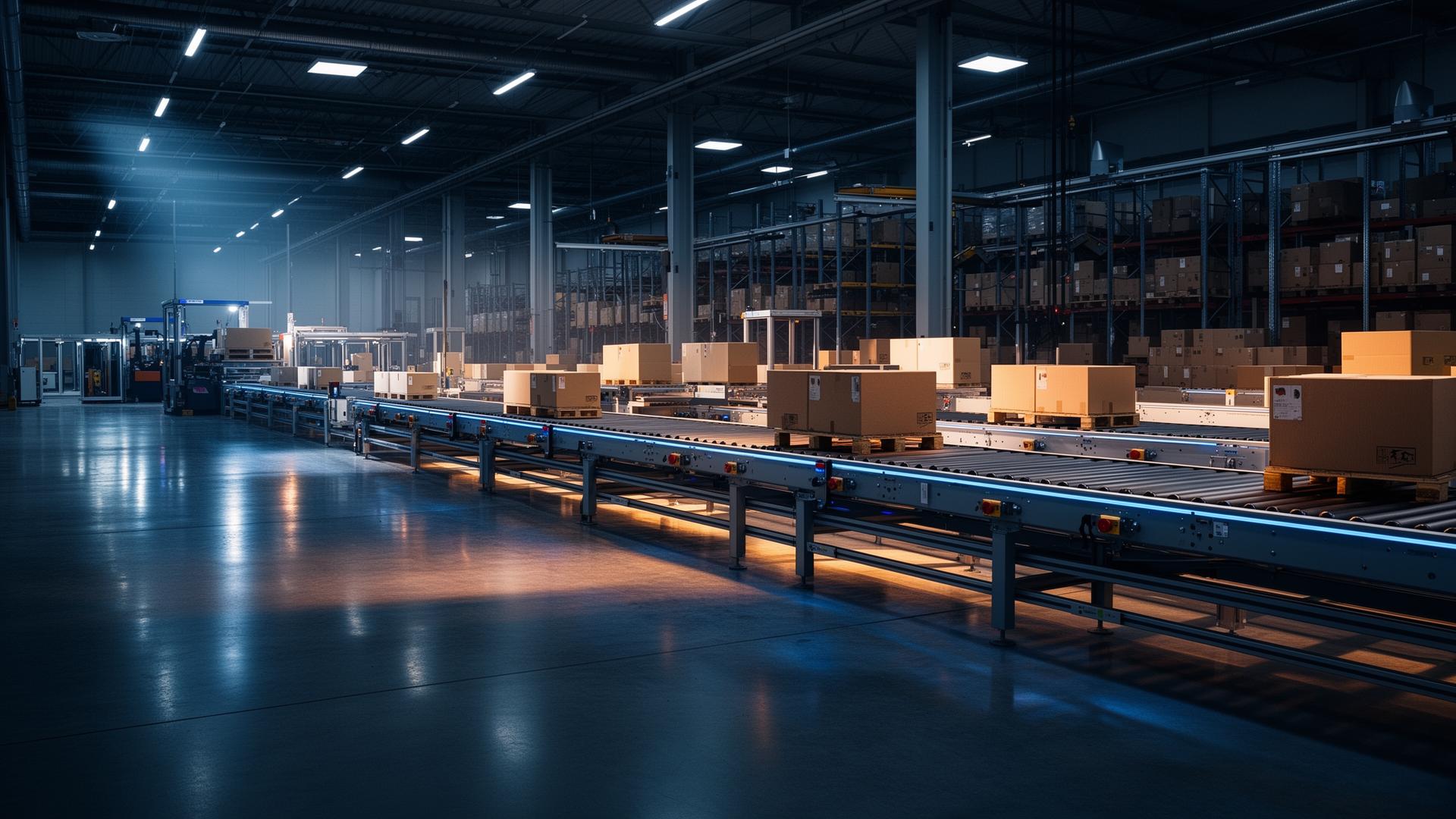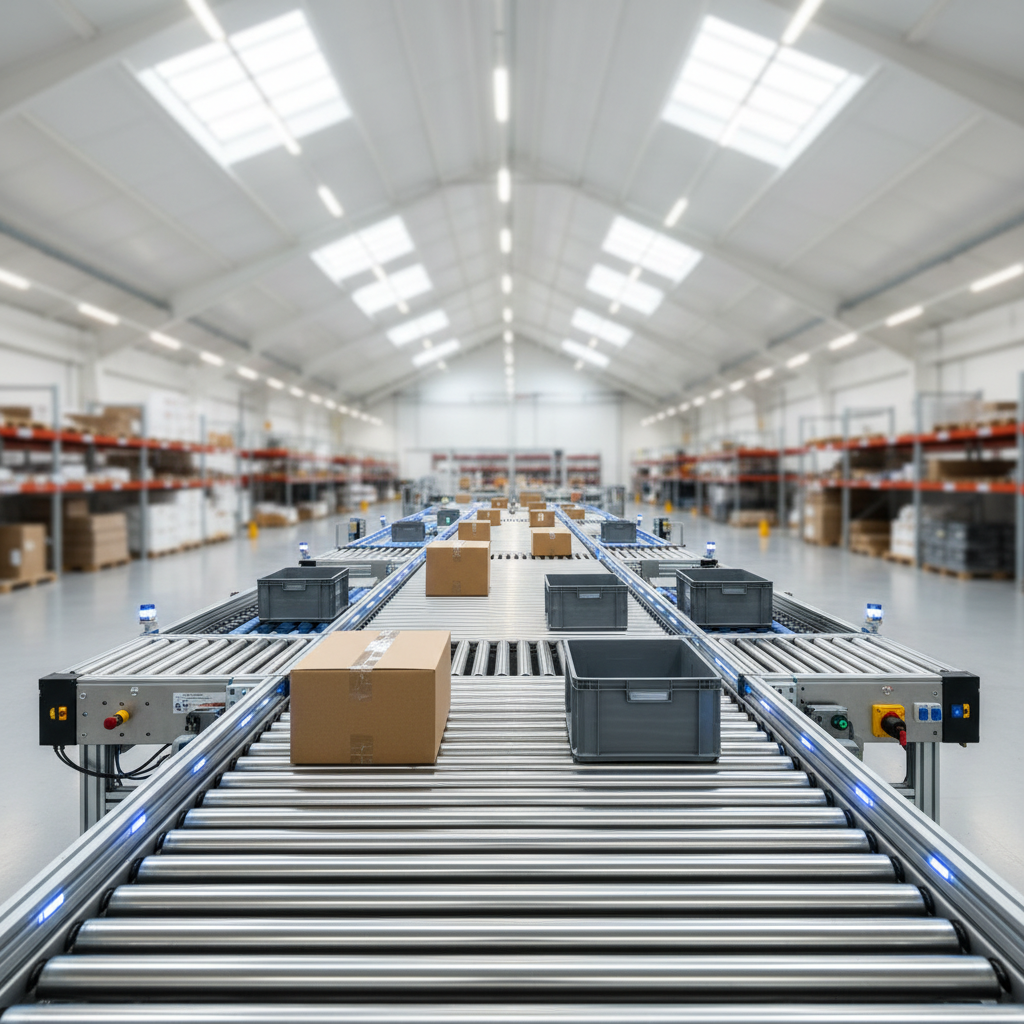
The Role of AI in Predictive Maintenance for Benelux Conveyor Systems
Learn how AI transforms conveyor maintenance from a reactive cost to a proactive, data-driven strategy, significantly reducing downtime and operational expenses for logistics hubs across the Benelux.

Key numbers
| Metric | Typical range (EU 2026) | Notes |
|---|---|---|
| Unplanned Downtime Reduction | 50% – 75% | Compared to reactive maintenance models. |
| Overall Maintenance Cost Savings | 25% – 40% | Includes reduced labour, parts, and overtime. |
| Return on Investment (ROI) | 9 – 18 months | For a pilot on a single critical conveyor line. |
| Alert-to-Failure Lead Time | 50 – 500 operating hours | Warning time provided by the AI before predicted-part failure. |
| Spare Parts Inventory Reduction | 15% – 30% | Achieved by eliminating premature component replacement. |
| Pilot Project Cost (per line) | €8,000 – €25,000 | Covers sensors, software, and initial setup for one conveyor. |
In the high-stakes world of logistics and distribution in the Benelux, where every second counts, unplanned downtime is the ultimate enemy. A single stalled conveyor can bring a multi-million-euro facility to a grinding halt. This article explores how Artificial Intelligence (AI) is revolutionizing conveyor maintenance, shifting it from a reactive, costly exercise to a proactive, data-driven strategy that delivers unprecedented uptime and efficiency.
Definition
AI-driven predictive maintenance (PdM) is an advanced strategy that employs artificial intelligence algorithms to analyze real-time data from conveyor system components, accurately predicting when maintenance should be performed to prevent failures.
From Reactive Firefighting to Predictive Foresight
Historically, maintenance has fallen into two camps: reactive (fixing it when it breaks) and preventive (fixing it on a schedule). Reactive maintenance is disruptive and expensive, leading to significant downtime and collateral damage. Preventive maintenance is better, but often leads to replacing parts that are still perfectly functional, incurring unnecessary costs in parts and labour. AI-powered predictive maintenance offers a superior third way, enabling maintenance "just-in-time" based on the actual condition of the machinery.
The Problem with Traditional Methods
A typical Benelux distribution center, operating 24/7, might schedule motor bearing replacements every 6,000 hours, regardless of their condition. This could mean replacing a bearing with 2,000 hours of life left. Conversely, a faulty batch of bearings might fail at 4,000 hours, causing an unexpected shutdown during peak season. AI-PdM solves this by analyzing real-time data to understand true component health.
Core Components of an AI-Powered PdM System
Implementing an AI-driven maintenance program involves a synergistic system of hardware and software. It's a four-stage process: sensing, transmitting, analyzing, and acting.
Data Acquisition: IIoT Sensors
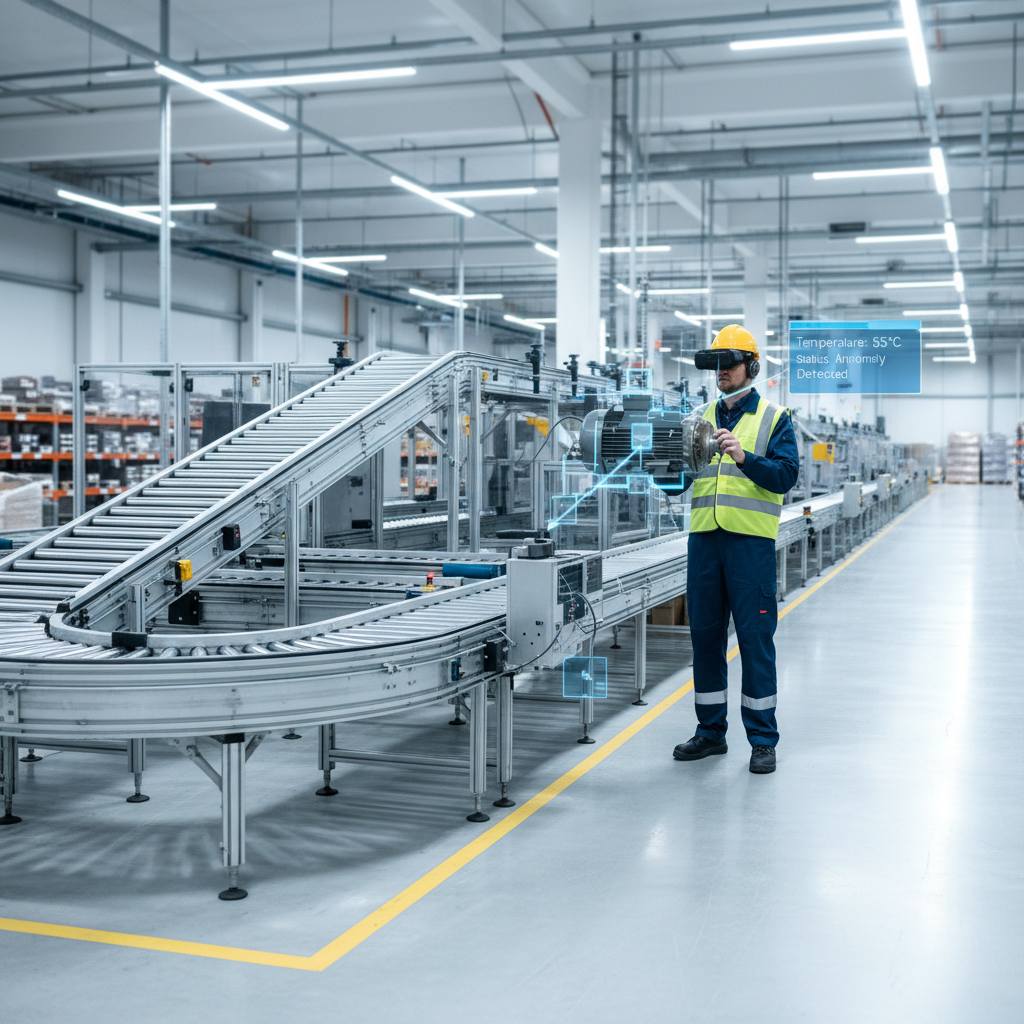
The foundation of PdM is data. Industrial Internet of Things (IIoT) sensors are retrofitted onto critical conveyor components like motors, gearboxes, bearings, and rollers. These are not your standard sensors; they capture subtle operational data:
- Vibration Sensors: Detect imbalances in rollers or early signs of bearing wear. A healthy motor might vibrate at 2 mm/s, while an impending failure could push this to 7-10 mm/s.
- Thermal Imagers: Monitor for overheating components, a classic sign of friction or electrical issues. A motor that normally operates at 60°C but starts trending towards 75°C is a clear red flag.
- Acoustic Sensors: Listen for changes in sound frequencies that indicate stress or wear, often undetectable by the human ear.
- Power Consumption Monitors: Track the energy draw of motors. A gradual increase in amps to achieve the same belt speed indicates rising friction or load.
Data Transmission & Analysis: OPC UA and the Cloud
This raw data is aggregated, often via the local PLC (Programmable Logic Controller), and securely transmitted for analysis. Modern systems favour the OPC UA protocol for its security and interoperability. The data is then streamed to a cloud-based platform where machine learning algorithms get to work, comparing real-time data streams against historical models to identify anomalies that predict failure.
Maintenance Strategies Compared: A Cost-Benefit Analysis
The shift to predictive maintenance has a clear financial and operational benefit, especially in the competitive European market.
| Strategy | Typical Downtime | Cost Impact | Labor Required | Ideal Application |
|---|---|---|---|---|
| Reactive Maintenance | High (4-8 hours per incident) | Very High (€10,000 - €50,000+ per hour) | Emergency, all-hands-on-deck | Not recommended for critical systems |
| Preventive Maintenance | Low (planned, 1-2 hours) | Medium (unnecessary parts/labor) | Scheduled, routine | Basic, non-critical equipment |
| AI-Predictive Maintenance | Minimal (planned, <1 hour) | Low (parts only when needed) | Targeted, data-driven | High-throughput, critical conveyor systems |
Real-World Impact in Benelux Distribution Centers
Consider a large e-commerce fulfillment center in the Antwerp-Bruges port area. Downtime on a main outbound sorter can cost over €30,000 per hour in lost throughput and penalty fees. An AI-PdM system, with an initial pilot cost of €15,000 for the critical line, can pay for itself by preventing a single one-hour outage. The system might detect a subtle vibration increase in a gearbox motor, flagging it for replacement during the next planned quiet period, converting a potential 6-hour emergency repair into a 45-minute scheduled swap.
Data Sovereignty and GDPR
A key consideration in the EU is data management. AI-PdM platforms must be GDPR compliant, ensuring that any operational data is handled securely. Partnering with European providers or those with robust EU data centers is critical for Benelux businesses to ensure compliance while benefiting from the technology.
Getting Started with Predictive Maintenance
Adopting AI-PdM doesn't require a complete overhaul. The journey begins with a focused pilot project.
A Phased Approach
- Identify Criticality: Use a Failure Mode and Effects Analysis (FMEA) to identify the single most critical section of your conveyor system. Often, this is a central belt conveyor or a high-speed sorter.
- Start Small: Launch a pilot program on this single asset. This limits initial investment (typically €5,000 - €25,000) and allows your team to build expertise.
- Measure ROI: Track key metrics like Overall Equipment Effectiveness (OEE) and Mean Time Between Failures (MTBF). A successful pilot will demonstrate a clear return, justifying further rollout.
- Scale Out: Use the learnings from the pilot to expand the PdM program to other critical areas of your facility.
Your Trusted Partner in Advanced Automation
Navigating the transition to AI-driven maintenance requires expertise in both material handling and data science. At Easy Systems, we specialize in designing, building, and maintaining robust conveyor solutions for the Benelux market. We understand the unique pressures of the region's logistics landscape. Our approach is to build systems that are not only efficient from day one but also "smart" and ready for the future of maintenance. We partner with you to identify critical failure points and implement data-driven strategies that turn your maintenance department from a cost center into a strategic advantage, ensuring your operations remain resilient, efficient, and competitive.
Frequently asked questions
What is the main difference between preventive and predictive maintenance?+
Preventive maintenance is time-based (e.g., service every 500 hours), while predictive maintenance is condition-based. AI uses real-time sensor data to predict failures, so maintenance is performed only when necessary. This data-driven approach avoids the unnecessary component replacements and labour costs common with a purely preventive strategy.
Is AI maintenance expensive to implement in the Benelux?+
Initial costs for a pilot project on a critical conveyor line typically range from €8,000 to €25,000 in the Benelux. While this is a notable investment, the ROI is usually seen within 9-18 months. This rapid return is driven by drastically reduced unplanned downtime, lower spare parts inventory, and more efficient use of maintenance technicians.
Can AI be retrofitted onto older conveyor systems?+
Yes, retrofitting is a primary advantage. Non-invasive IIoT sensors for vibration, temperature, and power consumption can be attached externally to existing motors and rollers without a major system overhaul. This allows a facility to upgrade its most critical lines to AI-PdM for a fraction of the cost of a new system, often around €15,000 per line.
What kind of data does the AI analyze?+
The AI primarily analyzes real-time data from IIoT sensors installed on key components. This includes high-frequency vibration data to detect bearing wear, thermal imaging to spot overheating motors (e.g., a jump from 60°C to 75°C), acoustic analysis to 'hear' stress, and power monitoring to track increases in electricity consumption that indicate friction.
How long does it take to get meaningful predictions from the AI?+
After sensor installation, the system requires a 'learning period' of 4 to 8 weeks to establish a baseline of normal operational data. Once this performance fingerprint is created for your specific equipment, the AI can begin to accurately detect anomalies and generate predictive alerts with over 95% accuracy, often giving 50-500 hours of advance warning.

The Easy Systems engineering team designs, integrates and commissions conveyor systems and warehouse automation across Belgium, the Netherlands and Luxembourg. Combined experience covers roller and belt conveyors, sorters, AGV/AMR fleets, AutoStore, shuttle AS/RS and WMS/WCS integration for distribution centers and e-commerce fulfillment operations.
- Conveyor design (roller, belt, modular plastic)
- Sortation & merge logic
- AGV / AMR fleet integration
- AutoStore & shuttle AS/RS
- WMS / WCS integration