Predictive Maintenance for Conveyors: Extend Lifespan & Cut Costs
Implementing a predictive maintenance strategy for your conveyor systems is crucial for modern logistics. By leveraging IoT sensors and AI, Benelux facilities can preemptively address issues, significantly cutting costly unplanned downtime and extending equipment lifespan.

In the high-throughput logistics landscape of the Benelux—a pivotal gateway to Europe—conveyor system uptime is not just an operational metric; it's a cornerstone of profitability. Every minute of unplanned stoppage translates to delayed orders, increased labour costs, and potential damage to brand reputation. This article explores how a shift from traditional preventive maintenance to a data-driven predictive maintenance strategy can dramatically extend the lifespan of your equipment and minimize costly downtime.
Definition
Predictive Maintenance (PdM) is a proactive maintenance strategy that uses data analysis tools and techniques to detect anomalies in operation and possible defects in processes and equipment so that they can be fixed before they result in failure. For a belt conveyor, this means analyzing data from sensors to predict when a component, like a motor or a bearing, is likely to fail.
Key Numbers
| Metric | Typical range (EU 2026) | Notes |
|---|---|---|
| Unplanned Downtime Reduction | 35% - 45% | Compared to a reactive or purely preventive model. |
| Maintenance Cost Reduction | 25% - 30% | Reduced labour for unnecessary checks and fewer emergency repairs. |
| Initial Investment (Sensors & Software) | €5,000 - €50,000+ | Highly dependent on system size and complexity. |
| Estimated ROI Period | 1.5 - 3 years | Faster for high-volume 24/7 operations in hubs like Antwerp or Rotterdam. |
| Lifespan Increase of Assets | 20% - 40% | By addressing issues before they cause cascading failures. |
| Energy Savings | 5% - 10% | Well-maintained, efficient components consume less power. |
The Core Difference: Predictive vs. Preventive Maintenance
For decades, preventive maintenance has been the standard. This time-based approach involves servicing equipment at predetermined intervals, regardless of its actual condition. While superior to a purely reactive "fix-it-when-it-breaks" method, it has significant drawbacks: parts are often replaced prematurely, and unexpected failures can still occur between scheduled services. Predictive maintenance, by contrast, is a condition-based approach. It embraces the principle of "if it isn’t broken, don’t fix it," but adds a crucial layer of foresight: "and here's when it's *going* to break."
| Aspect | Preventive Maintenance | Predictive Maintenance (PdM) |
|---|---|---|
| Trigger | Time or usage-based (e.g., every 6 months) | Real-time asset condition (e.g., abnormal vibration) |
| Methodology | Scheduled inspections, lubrication, and part replacements | Continuous monitoring via sensors, data analysis, and AI forecasting |
| Cost Profile | Predictable but potentially high due to unnecessary work | Higher initial investment, lower long-term operational cost |
| Downtime | Planned downtime for service, but still vulnerable to unplanned failures | Minimized, highly predictable downtime scheduled for optimal moments |
| Resource Efficiency | Lower; components may be discarded with significant life remaining | Higher; components are used to their maximum safe operational life |
Key Technologies Behind Predictive Maintenance
A successful PdM strategy is built on a foundation of modern technology working in concert. The data flows from the hardware on the conveyor line to a central brain that makes sense of it all.
1. IoT Sensors
The eyes and ears of the system. These are relatively low-cost devices installed on critical components to gather real-time data. Common types include:
- Vibration Sensors: Detect subtle changes in motor and bearing vibrations that indicate wear or misalignment.
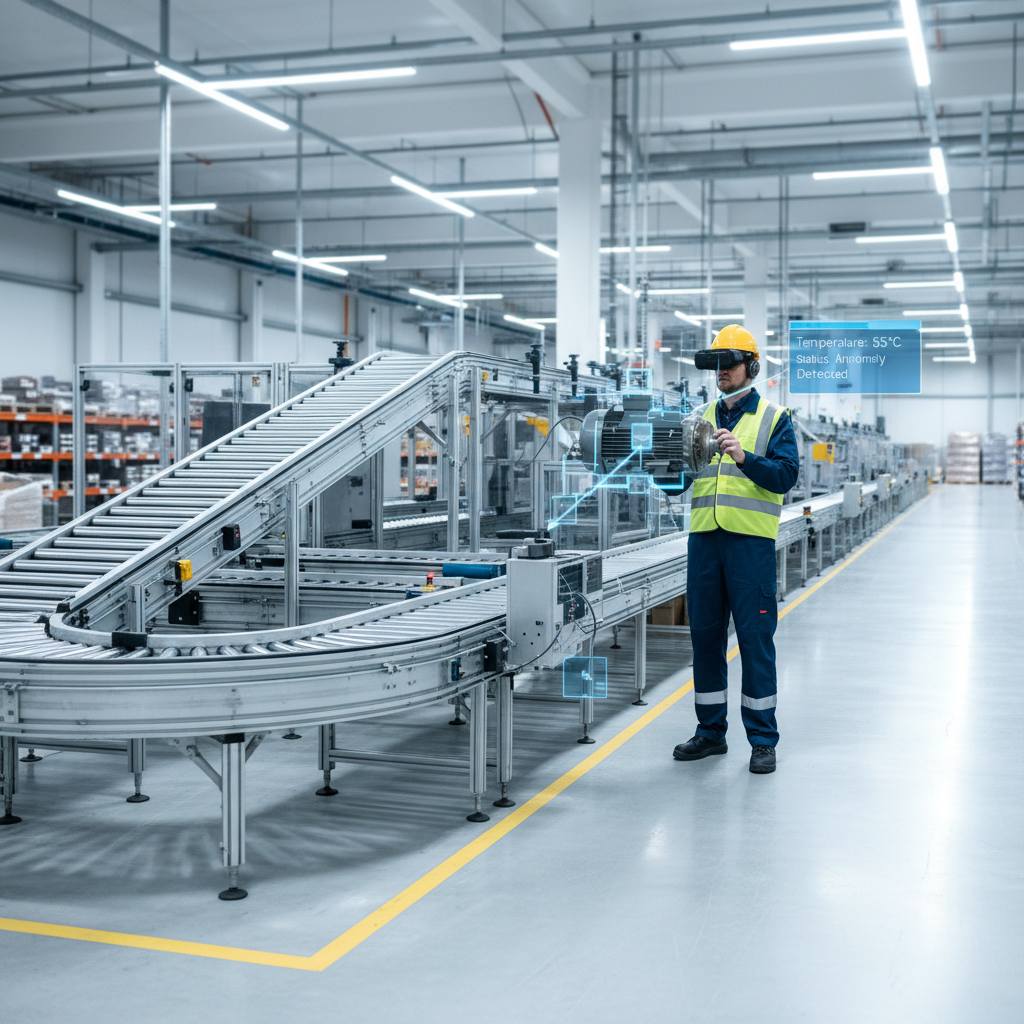
- Thermal Imagers/Sensors: Monitor for overheating in motors, electrical cabinets, and gearboxes, a classic sign of impending failure.
- Acoustic Sensors: Listen for changes in operational noise, such as the grinding of a worn bearing.
- Power Consumption Monitors: Track the energy draw of motors; an increase can signal mechanical resistance or inefficiency.
2. Data Aggregation & AI/ML
Individual data points are of little use. The raw data is fed through a gateway, often integrated with the master PLC, to a central platform. Here, Machine Learning (ML) algorithms analyze the data streams, identify normal operating baselines, and detect deviations that correlate with known failure modes. This is where the "prediction" happens—the algorithm can forecast a potential failure window, moving from "if" to "when."
3. CMMS/WMS Integration
The final piece is turning insight into action. When the PdM platform predicts a failure, it can automatically generate a work order in the Computerized Maintenance Management System (CMMS) or send an alert via the WMS. This order can specify the exact component, the nature of the expected failure, and the required spare parts, allowing maintenance to be scheduled with surgical precision.
Common Failure Points in Benelux Conveyor Systems
In the busy 24/7 distribution centers of Belgium and the Netherlands, certain conveyor components are under constant stress. PdM is particularly effective at monitoring these high-risk points.
- Motors and Gearboxes: These are the prime movers of the system. Vibration and thermal analysis can predict bearing failure, winding issues, or lubrication problems weeks in advance.
- Bearings: A tiny failing bearing can bring a multi-million-euro system to a halt. Acoustic and vibration sensors are exceptionally good at catching the early stages of spalling and wear.
- Roller Conveyors: For a roller conveyor, especially a Motorized Drive Roller (MDR) system, power consumption monitoring can identify failing rollers that create drag and inefficiency.
- Belt/Chain Systems: For belt and chain conveyors, sensors can monitor tension, alignment, and wear. An AI model can correlate this data with motor power draw to detect slippage or stretching before it leads to a catastrophic tear.
Financial Implications: A Cost-Benefit Analysis
The upfront investment in a PdM system—ranging from a few thousand euros for a pilot project on a critical line to over €50,000 for a large, integrated system—can seem daunting. However, the return on investment is compelling for Benelux operations where downtime costs can run into tens of thousands of euros per hour.
Consider a typical e-commerce fulfillment center in Utrecht. An hour of conveyor downtime during a peak sales period could mean thousands of missed order deadlines. A single major motor failure might cost €10,000 in emergency repair and lost productivity. If a €20,000 PdM investment can prevent just two such events in a year, it has already paid for itself. This focus on long-term efficiency and resilience is crucial as companies scale. Many businesses find that as they grow, their operational processes struggle to keep pace, leading to bottlenecks that a proactive maintenance strategy could have prevented. You can read more about this phenomenon in our Dutch-language post: Bedrijven groeien, maar hun processen groeien niet altijd mee.
Conclusion: Easy Systems as Your Partner for Conveyor Longevity
Implementing a predictive maintenance strategy is not just about installing sensors; it's about embracing a new philosophy of asset management focused on data, foresight, and efficiency. At Easy Systems, we design and build robust, modular conveyor systems that are engineered for the demands of the modern European market. Our systems are built with maintenance in mind, providing easy access to critical components and seamless integration with the latest monitoring technologies.
We partner with our clients in the Benelux and across Europe to create material handling solutions that are not only powerful on day one but also reliable and cost-effective for their entire lifecycle. By choosing Easy Systems, you are investing in a foundation that is ready for the future of intelligent, predictive maintenance, ensuring your operations remain resilient, competitive, and profitable for years to come.
Frequently asked questions
What is the main difference between predictive and preventive maintenance for conveyors?+
Preventive maintenance is time-based, meaning service occurs at fixed intervals (e.g., every 500 hours) regardless of condition. Predictive maintenance is condition-based; it uses real-time sensor data to predict failures and schedules maintenance only when needed, reducing costs by 25-30%.
How much does a predictive maintenance system for a conveyor cost in Europe?+
The initial investment varies widely. A pilot program on a single critical conveyor line might cost €5,000-€10,000 for sensors and software. A comprehensive system for a large warehouse (10,000+ m²) could range from €25,000 to over €50,000, depending on complexity.
What is the typical ROI for conveyor predictive maintenance?+
In a high-volume Benelux distribution center, the Return on Investment (ROI) for a predictive maintenance program is typically between 1.5 and 3 years. This is achieved through significant reductions in unplanned downtime, lower repair costs, and extended equipment lifespan.
What are the first steps to implement predictive maintenance?+
Start small. Identify the most critical conveyor line or component that causes the most downtime. Begin by installing vibration and thermal sensors on its motors and gearboxes. This targeted approach allows you to prove the concept and demonstrate ROI with a manageable initial investment of around €5,000.
Can predictive maintenance be retrofitted onto older conveyor systems?+
Yes, absolutely. Most predictive maintenance technologies, especially wireless IoT sensors, are designed to be retrofitted onto existing equipment. They can be installed on motors, bearings, and gearboxes of older systems with minimal operational disruption, offering a clear upgrade path.
Which conveyor parts benefit most from predictive maintenance?+
The highest returns come from monitoring critical rotating components. This includes electric motors, gearboxes, and primary drive-shaft bearings. Monitoring these with vibration and thermal sensors can prevent over 80% of the most costly and disruptive mechanical failures.

The Easy Systems engineering team designs, integrates and commissions conveyor systems and warehouse automation across Belgium, the Netherlands and Luxembourg. Combined experience covers roller and belt conveyors, sorters, AGV/AMR fleets, AutoStore, shuttle AS/RS and WMS/WCS integration for distribution centers and e-commerce fulfillment operations.
- Conveyor design (roller, belt, modular plastic)
- Sortation & merge logic
- AGV / AMR fleet integration
- AutoStore & shuttle AS/RS
- WMS / WCS integration