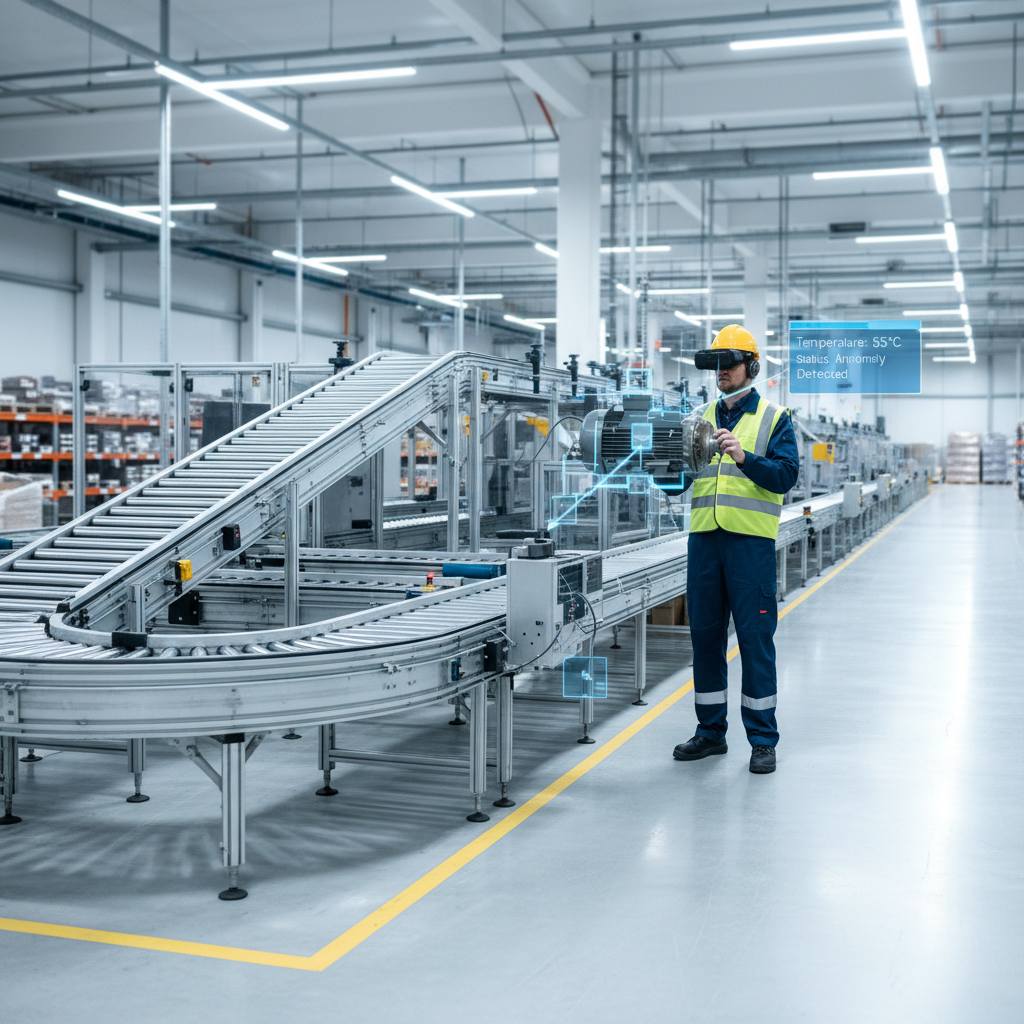
Predictive Maintenance for Conveyors: A Benelux Guide to IoT & Big Data
Leveraging IoT and big data for predictive maintenance allows Benelux warehouses to anticipate conveyor failures, reducing costly downtime by up to 30% and extending equipment life. This data-driven approach transforms reactive repairs into a proactive strategy, ensuring operational continuity.
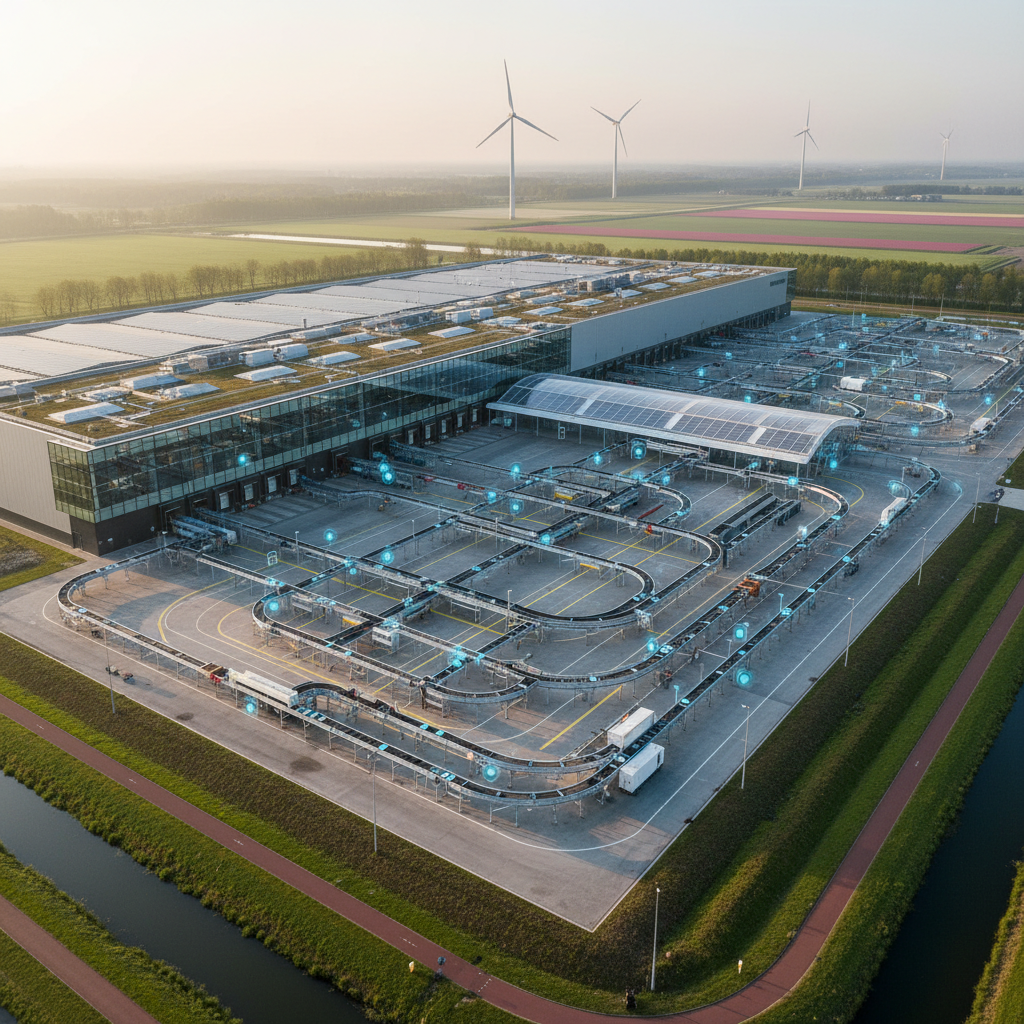
In the high-stakes logistics landscape of the Benelux, where every second counts, unplanned conveyor downtime is more than an inconvenience; it's a critical failure that can halt an entire operation. The traditional approach of reactive or even preventive maintenance is no longer sufficient. This article explores how Predictive Maintenance (PdM), powered by the Internet of Things (IoT) and big data analytics, is becoming the new standard for ensuring conveyor system reliability and efficiency in Europe's logistics heartland.
Definition
Predictive Maintenance (PdM) for conveyor systems is a proactive strategy that uses data analysis tools and techniques to detect anomalies in operation and possible defects in processes and equipment so they can be fixed before they result in failure. By monitoring equipment with sensors, it aims to predict when a component failure might occur and schedule maintenance accordingly, minimizing downtime and reducing costs.
Key Numbers
| Metric | Typical range (EU 2026) | Notes |
|---|---|---|
| Downtime Reduction | 20-30% | Compared to reactive maintenance strategies. |
| Initial Investment (per system) | €25,000 - €75,000 | For a medium-sized (10,000 m²) facility; includes sensors, software, and integration. |
| Return on Investment (ROI) | 2-3 years | Achieved through reduced downtime, lower repair costs, and extended equipment lifespan. |
| Maintenance Cost Reduction | 10-20% | Shift from costly emergency repairs to planned, efficient interventions. |
| Sensor Data Points per Hour | 1,000 - 100,000+ | Depending on the number of sensors and sampling frequency. |
| Energy Savings | 5-10% | By identifying and correcting inefficiencies like motor strain or friction. |
| Data Processing Speed | < 100 ms | For edge computing solutions to provide real-time alerts. |
Why Predictive Maintenance is Crucial in Benelux Logistics
The Benelux region, with its world-class ports of Rotterdam and Antwerp-Bruges and major air cargo hubs like Schiphol and Liège, forms one of the densest logistics networks globally. In this environment, the cost of downtime is exceptionally high. A single hour of standstill on a critical sorting line during peak season can result in thousands of missed parcels and significant financial penalties. For a large e-commerce fulfillment center, this could equate to over €100,000 in lost revenue and recovery costs. Predictive maintenance directly addresses this risk.
Unlike scheduled preventive maintenance, which can lead to unnecessary servicing of healthy components, PdM focuses resources precisely where and when they are needed. This data-driven approach is essential for maintaining the high throughput and reliability demanded in modern warehouses, from FMCG distribution to parcel delivery.
Core Technologies: The IoT & Big Data Stack
A successful PdM strategy is built on a robust technology stack designed to collect, analyse, and act upon equipment data.
1. IoT Sensors for Data Acquisition
The foundation of PdM is the continuous monitoring of conveyor components. Key sensors include:
- Vibration Sensors: Attached to motor housings, gearboxes, and bearings, these detect subtle changes in vibration patterns that can indicate wear, imbalance, or misalignment long before they become critical.
- Thermal Imaging Cameras: These monitor the temperature of motors, electrical panels, and rollers. An overheating component is a classic sign of impending failure due to friction or electrical faults.
- Acoustic Sensors: Listening for changes in the sound profile of a conveyor can reveal issues like worn belts or failing bearings.
- Power Consumption Monitors: A gradual increase in the energy drawn by a motor on a belt conveyor often points to increased friction or strain in the system.
2. Data Transmission and Processing
Sensor data must be transmitted and processed efficiently. Modern systems use a combination of edge and cloud computing. Critical, time-sensitive analysis might happen at the "edge" (close to the conveyor) for instant alerts, while historical data is sent to the cloud for in-depth analysis and model training. Industrial communication protocols like OPC UA are vital for ensuring interoperability between different hardware and software components from various vendors.
3. Analytics and Machine Learning Platforms
This is where raw data becomes actionable intelligence. Machine learning algorithms analyse historical and real-time data streams to identify patterns that precede failures. The system learns the "normal" operating signature of a conveyor and flags any deviation. This allows it to move beyond simple threshold alerts (e.g., "temperature is over 80°C") to predictive alerts (e.g., "based on the current vibration trend, this motor bearing has an 85% probability of failure within the next 72 hours").
Predictive vs. Preventive vs. Reactive Maintenance
Understanding the differences between maintenance strategies is key to appreciating the value of PdM. Reactive maintenance is the "run-to-failure" approach, while preventive is time-based. Predictive is condition-based.
| Strategy | Approach | Pros | Cons |
|---|---|---|---|
| Reactive Maintenance | Fix it when it breaks | No upfront cost | High downtime, high repair cost, unpredictable |
| Preventive Maintenance | Time/usage-based schedule | Reduces failures, more predictable | Can perform unnecessary maintenance, risk of over-servicing |
| Predictive Maintenance (PdM) | Condition-based monitoring | Minimizes downtime, optimizes resource use, lowers costs | Higher initial investment, requires data expertise |
Implementing a Predictive Maintenance Strategy
Transitioning to PdM should be a phased process, not a "big bang" implementation. For insights on where to begin, a thorough understanding of system components, as detailed in our Roller Conveyor Guide, is invaluable.
- Start with Critical Assets: Identify the most critical conveyors in your operation—typically high-speed sortation systems, main transport lines, or spiral conveyors. Focus your initial investment here for the biggest impact.
- Deploy Sensors and Establish a Baseline: Install sensors and let them run for a period (e.g., 30-60 days) to collect baseline data of normal operation. This is crucial for the machine learning models to learn what "good" looks like.
- Integrate with a CMMS/WMS: Connect the PdM software with your Computerized Maintenance Management System (CMMS) or Warehouse Management System. A predictive alert should automatically generate a work order with all relevant data for the maintenance team.
- Train and Adapt: Train your maintenance team to trust the data and act on predictive alerts. Continuously refine the algorithms as more data is collected.
Many businesses find their internal processes haven't evolved to handle such data-driven workflows. As discussed in our analysis, companies grow, but their processes don't always keep pace, a pitfall that a structured PdM implementation helps to avoid.
Use Case: A Distribution Center in Venlo
Consider a 3PL provider in Venlo, Netherlands, operating a 20,000 m² warehouse. A critical cross-belt sorter processes 12,000 items per hour. Unplanned downtime costs them €15,000 per hour. By retrofitting their system with vibration and thermal sensors on the 150 main drive motors (€50,000 investment), they started collecting data. After three months, the system predicted a gearbox failure on a primary incline belt conveyor seven days in advance. The part was ordered and replaced during a planned 2-hour maintenance window overnight, avoiding an estimated 8 hours of catastrophic failure during the morning shift. The single event prevented a loss of approximately €120,000, delivering an immediate return on investment.
Your Trusted Partner for Intelligent Conveyor Systems
In a landscape defined by speed and reliability, predictive maintenance is not just a technological upgrade; it's a fundamental business strategy. However, implementing it requires a deep understanding of both mechanical engineering and data science. At Easy Systems, we design and build robust, modular conveyor systems that are "predictive-ready." We integrate state-of-the-art sensors and control systems from the ground up, providing a solid foundation for your IoT and data strategy. Our expertise ensures that your material handling systems are not just built to last, but built to learn and adapt, transforming your maintenance from a cost center into a competitive advantage. Partner with us to make your Benelux operations smarter, more resilient, and future-proof.
Frequently asked questions
What is the average cost of predictive maintenance for conveyors in the Netherlands?+
For a medium-sized logistics facility in the Netherlands, the initial investment for a predictive maintenance system on critical conveyors typically ranges from €25,000 to €75,000. This includes sensors, software licensing, and integration. The operational cost is often a SaaS fee of €5,000 to €15,000 annually.
How much downtime can predictive maintenance prevent?+
On average, companies in the Benelux logistics sector can reduce unplanned conveyor downtime by 20-30% after implementing a mature predictive maintenance strategy. For critical systems like sorters, this can prevent dozens of hours of costly standstills per year, saving upwards of €100,000.
What are the first steps to implement IoT for conveyor maintenance?+
The first step is a criticality analysis to identify which conveyors have the biggest operational impact. Then, start a pilot project by deploying basic sensors like vibration and temperature monitors on one of these systems. Collect baseline data for at least 30-60 days before setting up automated alerts.
Is predictive maintenance suitable for older conveyor systems?+
Yes, older conveyor systems can often be retrofitted for predictive maintenance. The process involves adding external IoT sensors to critical components like motors, gearboxes, and large bearings. This can extend the life of legacy equipment significantly, with ROI often seen in under 3 years.
How does Big Data help in conveyor maintenance?+
Big Data allows maintenance systems to move beyond simple alerts. By analysing months or years of sensor data (vibration, temperature, power draw), machine learning models can identify complex patterns that precede a failure. This enables the system to predict a fault with 80-90% accuracy weeks in advance, not just minutes.
What is the typical ROI for a predictive maintenance system in Belgium?+
In Belgium, where logistics operations are highly concentrated, the typical ROI for a conveyor PdM system is between 2 and 3 years. This is achieved through a combination of reduced unplanned downtime (the biggest factor), lower costs for emergency repairs, and a 10-15% reduction in unnecessary preventive maintenance tasks.

The Easy Systems engineering team designs, integrates and commissions conveyor systems and warehouse automation across Belgium, the Netherlands and Luxembourg. Combined experience covers roller and belt conveyors, sorters, AGV/AMR fleets, AutoStore, shuttle AS/RS and WMS/WCS integration for distribution centers and e-commerce fulfillment operations.
- Conveyor design (roller, belt, modular plastic)
- Sortation & merge logic
- AGV / AMR fleet integration
- AutoStore & shuttle AS/RS
- WMS / WCS integration