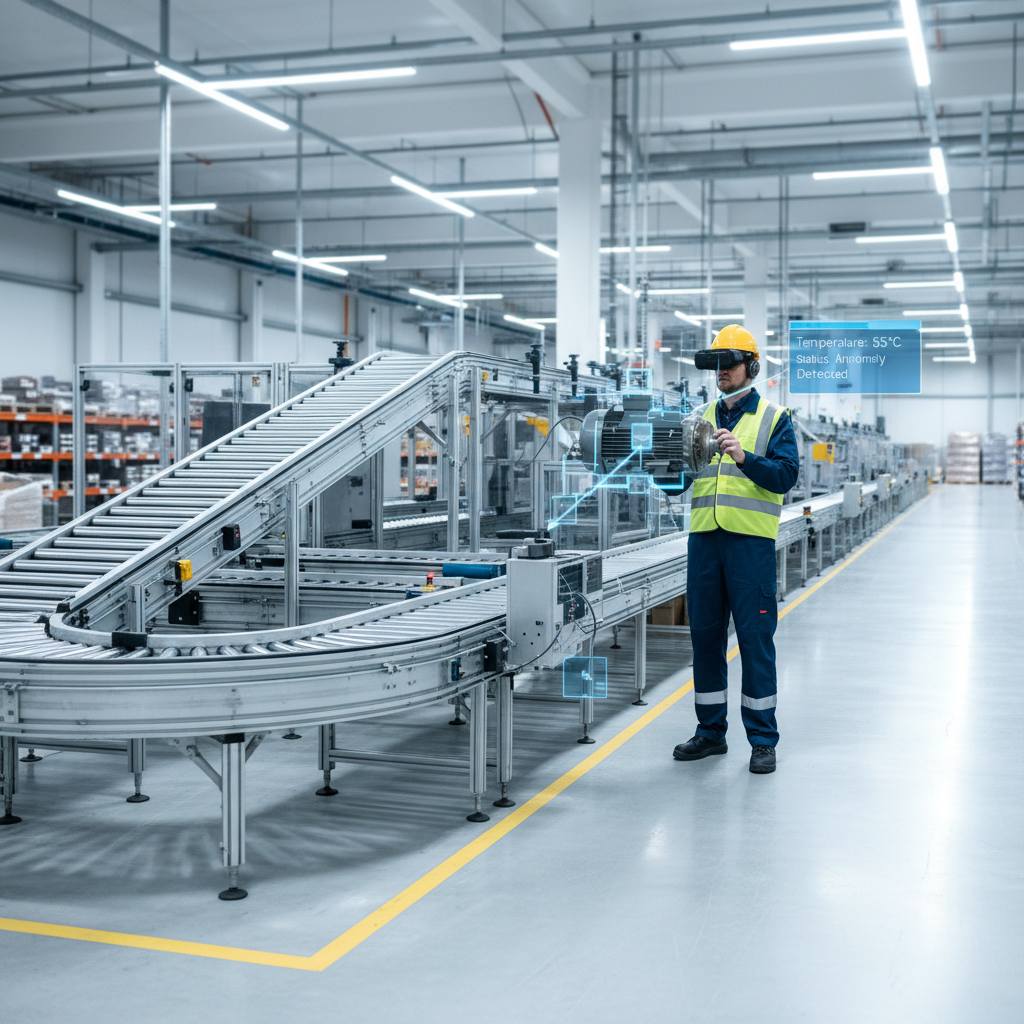
Predictive Maintenance for Conveyors: A Benelux Guide
Implementing predictive maintenance for conveyor systems can cut downtime by 30-50% and reduce overall maintenance costs by up to 40%. This guide details the technology, benefits, and implementation strategy for logistics hubs in the Benelux.

In the high-stakes logistics landscape of the Benelux, where every second counts, unplanned downtime is more than an inconvenience—it's a critical failure that can halt an entire operation. As warehouses in key hubs like Antwerp, Rotterdam, and Venlo become increasingly automated, the reliability of conveyor systems is paramount. Moving beyond traditional maintenance schedules, leading operators are now embracing predictive maintenance (PdM) to unlock unprecedented levels of efficiency and equipment longevity.
Definition
Predictive Maintenance (PdM) is a proactive maintenance strategy that uses data analysis tools and techniques to detect anomalies in operation and possible defects in processes and equipment so that they can be fixed before they result in failure. For a belt conveyor, this means analyzing data from sensors to predict when a component, like a motor or bearing, is likely to fail.
Key Numbers
| Metric | Typical range (Benelux 2026) | Notes |
|---|---|---|
| ROI Period | 18-24 months | Includes sensor hardware, software subscription, and implementation. |
| Downtime Reduction | 30% - 50% | Compared to a purely reactive maintenance strategy. |
| Maintenance Cost Reduction | 20% - 40% | Savings from fewer catastrophic failures and optimized labor. |
| Equipment Lifespan Increase | 20% - 30% | Reduced wear and tear from running components to failure. |
| Sensor Cost per Unit | €50 - €300 | Varies based on type (vibration, thermal, acoustic). |
| Energy Savings | 5% - 10% | Well-maintained systems run more efficiently. |
From Reactive to Predictive: The Maintenance Evolution
Historically, maintenance has been a reactive process. A component fails, the line stops, and a technician is called to fix it. This leads to costly, unplanned downtime. The next step was preventive maintenance, where parts are replaced on a fixed schedule, regardless of their actual condition. This is better, but often results in replacing perfectly good components, incurring unnecessary costs.
Predictive maintenance is the Industry 4.0 evolution. It adopts a condition-based approach, asking "What is the real-time health of this motor?" instead of "When was this motor last replaced?". This data-driven strategy maximizes component lifespan and minimizes disruption.
Core Technologies Behind PdM
A successful PdM program is built on a stack of modern technologies working in concert:
- IIoT Sensors: The foundation of PdM. These devices are attached to critical conveyor components (motors, bearings, gearboxes) and measure key performance indicators like vibration, temperature, acoustics, and power consumption.
- Connectivity & Data Collection: Sensor data is aggregated, often via a local PLC or gateway, and sent to a central platform. Technologies like OPC UA are crucial for ensuring interoperability between different machines and systems.
- Cloud Platform & AI/Machine Learning: The collected data is analyzed in the cloud. AI algorithms establish a baseline of normal operation and then detect subtle deviations that indicate a developing fault. When a potential failure is flagged, the system issues an alert.
- Integration with WMS/WCS: The most advanced systems integrate PdM alerts directly into the Warehouse Control System (WCS) or Warehouse Management System. This allows for automatically rerouting product flow or scheduling maintenance during planned quiet periods.
Maintenance Strategy Comparison
Choosing the right maintenance strategy has a significant impact on operational efficiency and budget. The table below compares the three main approaches for a medium-sized distribution center in the Benelux.
| Factor | Reactive Maintenance (Fix it when it breaks) | Preventive Maintenance (Time-based) | Predictive Maintenance (Condition-based) |
|---|---|---|---|
| Unplanned Downtime | High | Low | Very Low |
| Maintenance Costs | Very High (emergency repairs) | Medium (scheduled replacements) | Low (optimized replacements) |
| Equipment Lifespan | Short | Sub-optimal (premature replacements) | Maximized |
| Initial Investment | None | Low (planning software) | High (sensors, software, training) |
| Best for | Non-critical, low-cost components | Critical systems with predictable wear | Critical, high-cost systems where downtime is unacceptable |
Implementing a PdM Program: A Benelux Focus
For a warehouse manager in Belgium or the Netherlands, implementing a PdM program requires a structured approach.
H3: Step 1: Asset Criticality Assessment
You cannot monitor everything. Start by identifying the most critical components in your conveyor network. Which failure would cause the most significant bottleneck? Focus your initial investment there. For many, this will be the main sortation engine or key incline/decline belts. A robust roller conveyor system might have several critical drive sections to monitor.
H3: Step 2: Pilot Project and Technology Selection
Begin with a pilot project on a single critical conveyor line. Select a vendor that offers a complete solution: hardware (sensors), connectivity, and an intuitive software platform. Ensure the vendor has support staff within the EU to comply with data regulations and provide timely assistance.
It is vital that any new system can scale with your operations. Many companies find that their internal processes are a bottleneck to growth, a challenge that technology can help overcome. As highlighted in a recent analysis, companies grow, but their processes don't always keep up. A scalable PdM strategy is part of ensuring your material handling capabilities can support business ambitions.
Tangible Benefits in High-Throughput Environments
For e-commerce fulfillment centers and parcel hubs around Schiphol or Liège Airport, the benefits are immediate and substantial:
- Improved OTIF (On-Time In-Full): By preventing downtime during peak waves, you ensure customer orders are processed and shipped on schedule.
- Reduced Labor Waste: Maintenance can be scheduled during off-peak hours, and technicians arrive with the correct parts and a clear diagnosis, reducing repair time by 30-60 minutes per incident.
- Enhanced Safety: Predicting failures prevents catastrophic breakdowns, which can be a significant safety hazard for employees working near the conveyor lines.
- Lower Spare Parts Inventory: Instead of stocking numerous expensive components like motors, you can move to a just-in-time inventory model, holding only what the PdM system predicts you will need soon. This can reduce inventory holding costs by 15-25%.
Why Partner with Easy Systems for Your Maintenance Strategy?
Implementing a forward-thinking maintenance strategy requires more than just technology; it requires a partner with deep expertise in material handling automation. Easy Systems (a BOA Concept company) is a leading integrator of conveyor systems with a strong presence in the Benelux market. We don't just install hardware; we design, build, and maintain robust, intelligent systems tailored to the unique demands of your operation. Our approach is built on creating reliable, scalable solutions that minimize total cost of ownership. We can help you assess your current systems, identify critical assets, and develop a phased, ROI-driven roadmap towards a fully predictive maintenance environment. Partner with us to make your logistics operation more resilient, efficient, and future-proof.
Frequently asked questions
What is the average cost of a predictive maintenance system for conveyors in the Benelux?+
A pilot project for a critical conveyor line typically ranges from €5,000 to €15,000. A full-scale implementation for a medium-sized warehouse can cost between €30,000 and €80,000, with most companies achieving a full ROI within 18-24 months through reduced downtime.
How does predictive maintenance differ from preventive maintenance?+
Preventive maintenance involves servicing equipment at pre-determined intervals, regardless of condition. Predictive maintenance is condition-based; it uses real-time data from sensors to predict failures and alert you to perform maintenance only when necessary, saving costs and extending component life.
What data is collected for conveyor predictive maintenance?+
The most common data points are vibration analysis, thermal imaging, and acoustic analysis. These can detect imbalances in motors, overheating in bearings, and wear in gearboxes long before a human could notice. Power consumption is also monitored to track efficiency.
How much downtime can predictive maintenance realistically prevent?+
Studies and real-world applications show that predictive maintenance can reduce unplanned downtime by 30% to 50%. For a logistics hub in the Benelux, this can translate to hundreds of thousands of euros in saved revenue and labor costs annually.
Is my existing conveyor system compatible with predictive maintenance?+
Yes, most existing conveyor systems can be retrofitted for predictive maintenance. The process involves adding external IIoT sensors to critical components like motors and bearings. These sensors operate independently of the conveyor's own control system, making it a universally applicable upgrade.
What is the biggest challenge when implementing predictive maintenance?+
The biggest challenge is often not the technology itself, but the cultural shift from a reactive to a proactive mindset. It requires training staff, trusting the data, and integrating maintenance schedules with operational planning. Starting with a clear pilot project helps demonstrate value and build trust in the system.

The Easy Systems editorial desk reviews and fact-checks every Conveyor-Design article against Benelux project experience. Editors translate engineering decisions — throughput, peak factors, layout, integration — into plain-language guides for operations managers, project leads and decision-makers.
- Warehouse layout & slotting
- Order-profile analysis
- Vendor-neutral comparison
- Benelux logistics market