Predictive Maintenance for Conveyor Systems: Minimise Downtime in the Benelux
Predictive maintenance uses sensor data and AI to forecast equipment failures in conveyor systems, enabling proactive repairs before they cause costly downtime. This guide explores its benefits, costs, and implementation for logistics hubs in Belgium, the Netherlands, and Luxembourg.
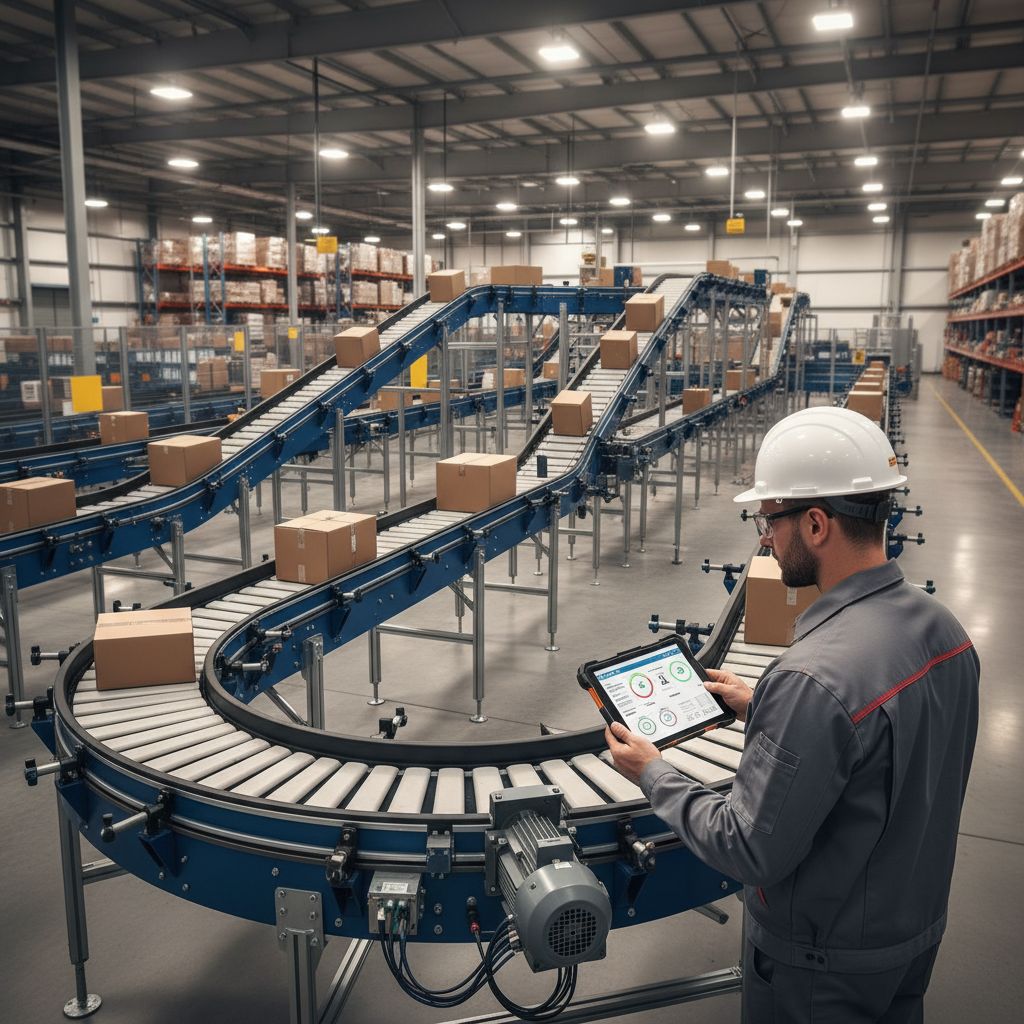
In the high-stakes logistics landscape of the Benelux, where every second of uptime counts, unplanned conveyor downtime is more than an inconvenience—it's a direct hit to profitability. As distribution centres in strategic hubs like Antwerp, Rotterdam, and Venlo face increasing pressure for speed and reliability, traditional maintenance schedules are no longer sufficient. Predictive Maintenance (PdM) offers a data-driven, proactive solution, transforming how businesses protect their most critical material handling assets.
Definition
Predictive Maintenance (PdM) is a proactive maintenance strategy that uses data analysis tools and techniques to detect anomalies in operation and possible defects in processes and equipment so they can be fixed before they result in failure. Unlike time-based preventive maintenance, PdM is condition-based, triggering maintenance activities only when they are actually needed.
Key Numbers
| Metric | Typical range (EU 2026) | Notes |
|---|---|---|
| Initial PdM System Investment | €15,000 – €75,000 | Per system; depends on number of sensors and software complexity. |
| Unplanned Downtime Reduction | 30% – 50% | Compared to reactive or purely preventive strategies. |
| Annual Maintenance Cost Reduction | 20% – 30% | Reduced labour for unnecessary checks and fewer emergency repairs. |
| Return on Investment (ROI) | 2 – 3 years | Faster ROI in 24/7 operations with high downtime costs. |
| Asset Lifespan Extension | 15% – 25% | Proactive care avoids catastrophic failures and cumulative wear. |
| Energy Savings (per motor unit) | 5% – 10% | Well-maintained components like motors and bearings run more efficiently. |
The Cost of Inaction: Reactive vs. Predictive Maintenance
For decades, many operations relied on a "run-to-failure" or reactive maintenance model. This approach seems cost-effective initially but carries immense hidden costs in the form of unplanned downtime, expensive emergency repairs, and collateral damage to other parts of the system. Preventive maintenance, based on fixed schedules, was an improvement but often leads to over-servicing and unnecessary part replacements. Predictive maintenance offers a superior, data-informed alternative.
| Aspect | Reactive Maintenance ("If it breaks, fix it") | Preventive Maintenance ("Fix it regularly") | Predictive Maintenance ("Fix it when it needs it") |
|---|---|---|---|
| Trigger | Equipment failure | Time, usage, or manufacturer's schedule | Real-time condition data and algorithms |
| Typical Cost | Very High (€5,000 - €25,000+ per hour of downtime) | Medium (Scheduled labour and parts) | Low (Just-in-time labour and parts) |
| Downtime | Unplanned & extensive | Planned & minimal | Planned & highly optimized |
| Labour Efficiency | Low (Emergency call-outs, overtime) | Medium (Risk of unnecessary work) | High (Targeted, specific interventions) |
| Asset Lifespan | Reduced | Extended | Optimized to maximum potential |
Core Technologies Powering PdM for Conveyors
Predictive maintenance isn't a single technology but an ecosystem of tools that work together. Data is collected directly from the conveyor system using sensors and then analysed by software to identify patterns that signal an impending failure.
Vibration Analysis
This is the cornerstone of PdM for mechanical systems. Sensors are placed on motors, bearings, and gearboxes to detect subtle changes in vibration frequencies. An increase in vibration can indicate bearing wear, misalignment, or imbalance long before the component fails audibly or catastrophically.
Thermal Imaging
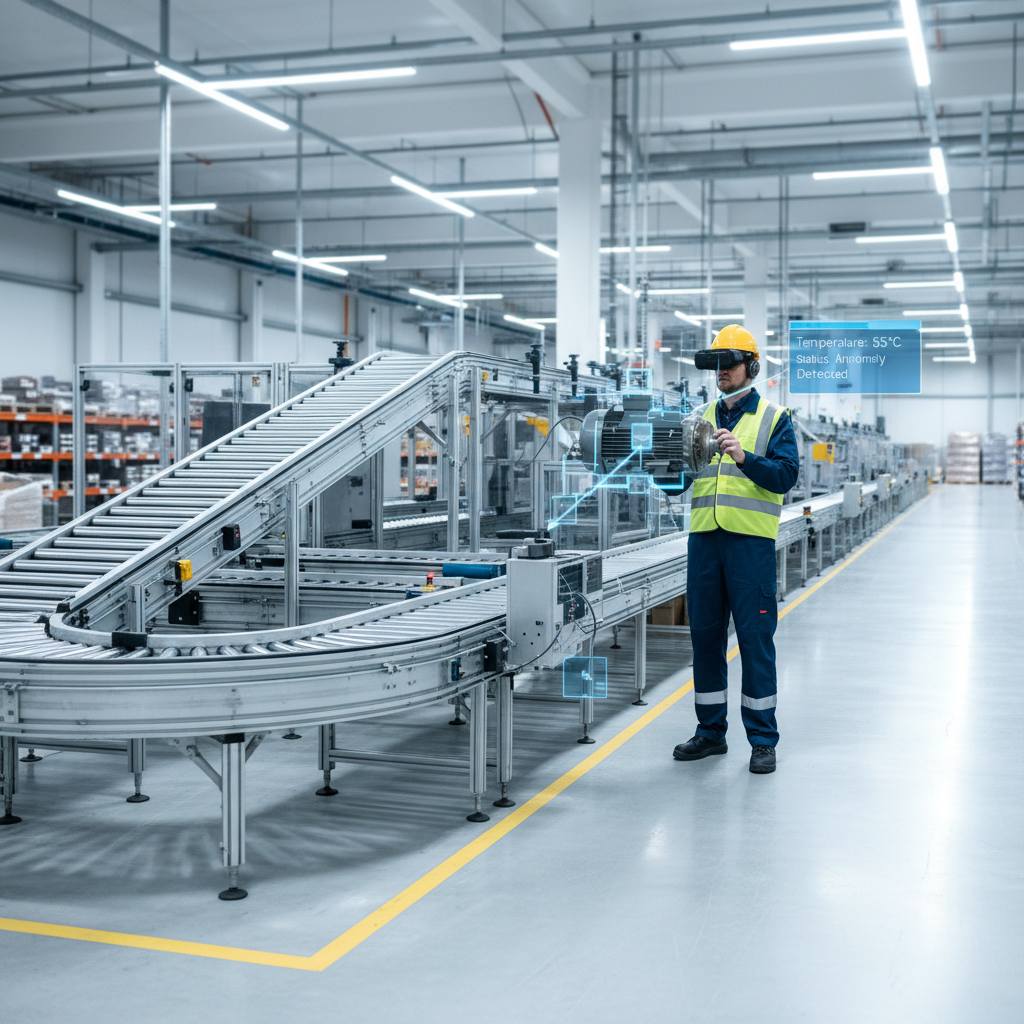
Infrared cameras, either handheld or fixed, monitor the temperature of critical components. Overheating motors, electrical connections in control panels, or high friction on a belt conveyor can be identified as hotspots. This allows for intervention before a fire hazard develops or a motor burns out, which is a major concern for insurance and safety compliance in the Benelux.
Acoustic Analysis
Similar to vibration analysis, acoustic sensors listen for changes in the sound profile of a running machine. High-frequency sounds can indicate lubrication issues or early-stage defects in rollers and bearings on a roller conveyor, which might be missed by vibration sensors.
Implementing a PdM Strategy in Your Benelux Warehouse
Transitioning to a predictive model is a strategic project. For a typical distribution centre in Belgium or the Netherlands, the process involves several key stages. As detailed in our post "Companies Grow, But Their Processes Don’t Always Keep Up," scaling operations requires scaling intelligence, not just hardware.
- Asset Criticality Assessment: Identify which conveyors or components would cause the most significant disruption if they failed. Start your PdM implementation there.
- Sensor Selection & Installation: Choose the right sensors (vibration, thermal, etc.) for the identified critical assets. Installation typically requires minimal downtime, often just a few hours.
- Data Integration: This is a crucial step. Sensor data must be fed into a central platform. Crucially, this platform should integrate with your existing Warehouse Execution System (WES) or the machine-level PLC to automatically generate work orders or alerts for the maintenance team.
- Baseline & Algorithm Training: The system collects data for a period (e.g., 2-4 weeks) to establish a "normal" operational baseline. From there, machine learning algorithms are trained to detect deviations that signify a potential fault.
- Roll-out & Refinement: Start with a pilot section and gradually roll out the system across the facility, refining alarm thresholds and response protocols as you go.
For a deeper dive into the mechanics and types of conveyor systems that benefit most from this, see our comprehensive guide to roller conveyor systems.
Key Components to Monitor on Your Conveyor System
Not every part of a conveyor needs a sensor. The focus should be on high-value, high-impact components whose failure would lead to significant downtime.
- Motors and Drives: The heart of the conveyor. Monitored for vibration, temperature, and electrical current draw. Anomalies can predict motor failure, bearing issues, or electrical faults.
- Gearboxes: Critical for speed and torque. Monitored via oil analysis (for particle contamination or degradation) and vibration analysis.
- Bearings: One of the most common failure points. Vibration and temperature sensors provide the earliest warnings of wear and tear, often weeks in advance.
- Conveyor Belts & Chains: Monitored for tension, alignment, and wear using vision systems or acoustic analysis to detect slipping or imminent snapping.
- Rollers: On long conveyor lines, individual roller failure can cause a jam or damage the belt. Acoustic and vibration sensors can identify a failing roller by its distinct sound or vibration signature.
Calculating the ROI for a Benelux Warehouse
The business case for PdM is strong, especially given the high operational costs in the Benelux. A simplified ROI calculation looks like this:
ROI = (Downtime Cost Reduction + Maintenance Savings) / PdM System Cost
For example, a 3PL in Venlo estimates that one hour of unplanned downtime on their main sorting line costs them €10,000 in missed schedules and labour costs. By implementing a €60,000 PdM system, they reduce unplanned downtime by 20 hours per year and save €40,000 in preventive maintenance labour and parts.
- Downtime Cost Reduction: 20 hours * €10,000/hour = €200,000
- Maintenance Savings: €40,000
- Total Annual Savings: €240,000
- ROI Period: €60,000 / €240,000 = 0.25 years, or just 3 months.
While this is a simplified example, it illustrates the powerful financial incentive, with most businesses seeing a full return on investment in 2 to 3 years.
Easy Systems: Your Partner in Proactive Conveyor Health
Implementing a successful predictive maintenance strategy requires more than just technology; it demands deep expertise in both conveyor systems and data integration. At Easy Systems, we don't just build conveyors; we build intelligent, resilient material handling solutions designed for the demands of modern logistics. Our systems are engineered with monitoring in mind, featuring accessible inspection points and seamless integration with the control systems that power PdM. We can help you identify critical assets, select the right monitoring strategies, and ensure your data flows from the sensor to your maintenance team, turning insights into action. Partner with us to move beyond reactive repairs and build a truly proactive, efficient, and long-lasting conveyor operation for your Benelux facility.
Frequently asked questions
What is the main benefit of predictive maintenance for conveyor systems?+
The primary benefit is a drastic reduction in unplanned downtime, often by as much as 50%. This directly increases throughput and reliability, preventing costly operational bottlenecks and ensuring delivery deadlines are met consistently.
How much does a predictive maintenance system cost in Europe?+
Initial investment for a conveyor line can range from €15,000 to €75,000, depending on the number of sensors and software sophistication. However, the system often pays for itself within 2-3 years through reduced downtime and maintenance costs.
What is the difference between predictive and preventive maintenance?+
Preventive maintenance is time-based (e.g., 'service every 500 hours'), often leading to unnecessary work. Predictive maintenance is condition-based ('service when data shows signs of wear'), which optimizes labour and part replacement, saving up to 30% in costs.
Which conveyor parts benefit most from predictive maintenance?+
High-impact, critical components benefit the most. This includes drive motors, gearboxes, main bearings, and electrical cabinets, where a failure would cause an immediate and total system shutdown.
How long does it take to see a return on investment (ROI) from PdM?+
For most 24/7 logistics operations in the Benelux, the ROI for a predictive maintenance program is typically between 2 to 3 years. For facilities with extremely high downtime costs, this can be under 12 months.
Can predictive maintenance be retrofitted onto older conveyor systems?+
Yes, it is highly feasible. Most conveyor systems installed in the last 15-20 years can be retrofitted with modern, non-invasive sensors. An initial assessment can quickly determine the compatibility and project scope for your specific hardware.

The Easy Systems engineering team designs, integrates and commissions conveyor systems and warehouse automation across Belgium, the Netherlands and Luxembourg. Combined experience covers roller and belt conveyors, sorters, AGV/AMR fleets, AutoStore, shuttle AS/RS and WMS/WCS integration for distribution centers and e-commerce fulfillment operations.
- Conveyor design (roller, belt, modular plastic)
- Sortation & merge logic
- AGV / AMR fleet integration
- AutoStore & shuttle AS/RS
- WMS / WCS integration