Predictive Maintenance for Conveyor Systems: Benelux Strategies
Discover how predictive maintenance transforms conveyor system reliability in the Benelux. This guide outlines practical steps, from sensor selection to data integration, to reduce downtime by up to 30% and cut maintenance costs.
In the hyper-competitive logistics landscape of the Benelux—Europe's premier distribution hub—every minute of operational uptime counts. The relentless pressure to meet tight delivery windows means that unexpected conveyor downtime is not just an inconvenience; it's a direct threat to profitability and customer satisfaction. This guide provides practical strategies for implementing predictive maintenance, moving beyond traditional schedules to a smarter, data-driven approach tailored for the European market.
Definition
Predictive Maintenance (PdM) is a proactive maintenance strategy that uses data analysis tools and techniques to detect anomalies in operation and possible defects in processes and equipment so that they can be fixed before they result in failure. For conveyor systems, this involves monitoring components like motors, bearings, and belts in real-time to forecast when a failure will occur.
Key Numbers
| Metric | Typical Range (EU 2026) | Notes |
|---|---|---|
| Downtime Reduction | 20-30% | Compared to reactive or purely preventive strategies. |
| Maintenance Cost Savings | 15-25% | Reduced overtime, fewer unplanned part replacements, and more efficient labor. |
| Initial Investment per Line | €10,000 - €50,000 | Includes sensors, data acquisition hardware, and software/platform setup for a single conveyor line. |
| Typical ROI | 1.5 - 3 years | Dependent on the cost of downtime and scale of implementation. |
| Energy Efficiency Gains | 5-10% | Well-maintained, efficient motors and components consume less power. |
| Asset Lifespan Increase | 10-20% | Proactive repairs prevent catastrophic failures that damage equipment. |
Why PdM is Critical for Benelux Logistics
The Benelux region, with its major ports like Rotterdam and Antwerp and central European location, is home to a high density of distribution centers. Labor costs are among the highest in Europe, making operational efficiency paramount. An unplanned stop on a central sorting line during peak hours can cost a facility tens of thousands of euros per hour. Predictive maintenance directly addresses these challenges by maximizing asset availability and minimizing costly emergency repairs.
Furthermore, the rise of e-commerce has led to 24/7 operations, putting unprecedented strain on material handling equipment. A traditional preventive maintenance schedule (e.g., "service every 500 hours") may be insufficient for a system running at 95% capacity or, conversely, wasteful for a system with lower utilization.
Comparing Maintenance Strategies
Understanding where PdM fits requires comparing it to other common approaches. Each has its place, but their impact on a modern DC's bottom line varies significantly.
| Strategy | Core Principle | Cost Profile | Downtime Risk | Best For |
|---|---|---|---|---|
| Reactive Maintenance | "If it ain't broke, don't fix it." | Low initial cost, very high long-term cost. | Very High | Non-critical, easily replaceable components. |
| Preventive Maintenance | "Fix it before it's likely to break." | Predictable, recurring costs. | Medium | Assets with a known, predictable failure curve. |
| Predictive Maintenance | "Fix it when it shows signs of breaking." | Higher initial investment, lowest long-term cost. | Low | Critical, high-cost-of-failure assets like sorters and main lines. |
Core Technologies Powering PdM
A successful PdM program is built on a stack of modern technologies working in concert. It's more than just adding a few sensors; it's about creating a data ecosystem.
1. IoT Sensors
The foundation of PdM is collecting the right data. For conveyor systems, the most valuable sensors include:
- Vibration Analysis: Mounted on motors, gearboxes, and bearings to detect imbalances, misalignments, or wear. A change in vibration signature is a primary indicator of a developing mechanical fault. This is especially useful for monitoring an MDR (Motorized Drive Roller) system.
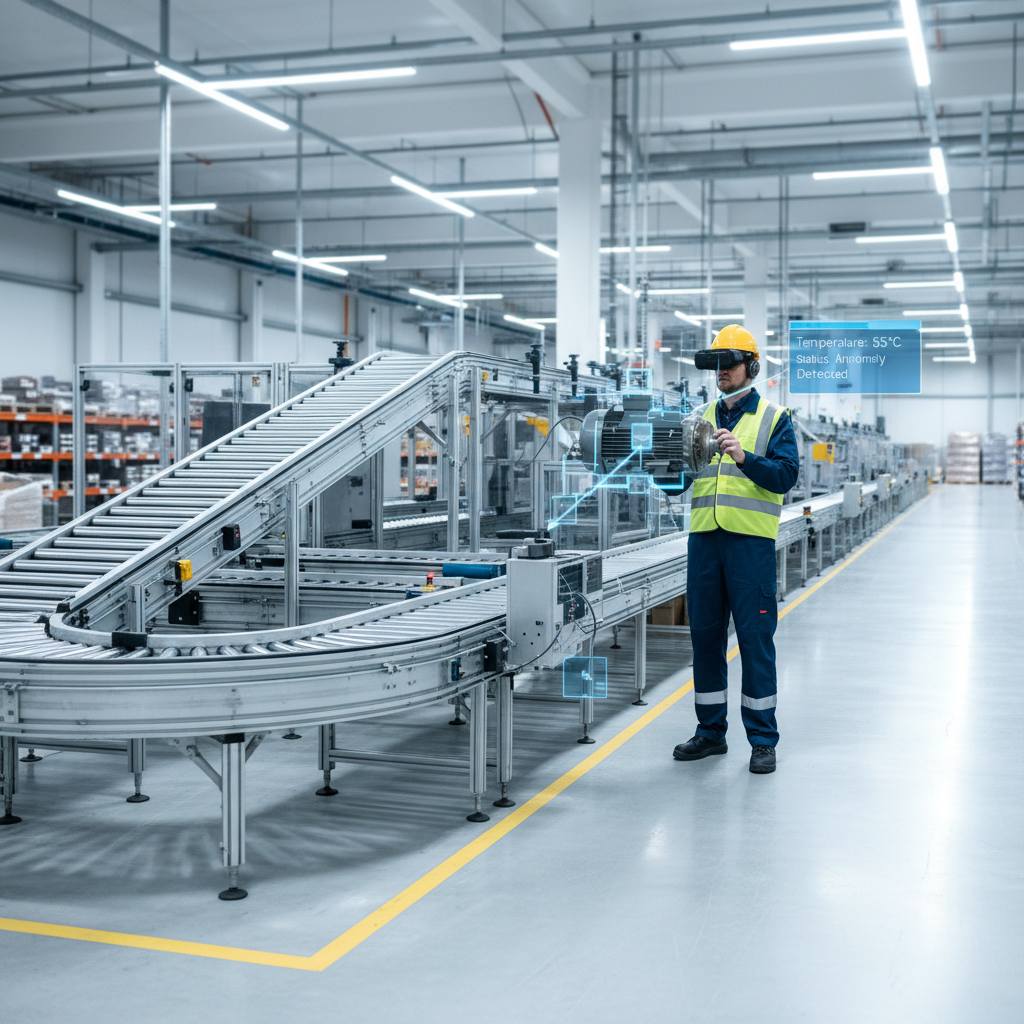
- Thermal Imaging: Contactless sensors or cameras monitor for overheating in electrical panels, motors, and friction points on belts. An unusual hot spot is a clear sign of a problem.
- Acoustic Analysis: Microphones "listen" to equipment, using AI to detect sound signatures associated with worn bearings or belt friction.
- Power Consumption: Monitoring the amperage draw of a motor can indicate increased strain, often a symptom of bearing failure or belt tension issues.
2. Data Acquisition and Connectivity
Sensor data needs to be collected and transmitted. This is often handled by a gateway device that aggregates data from multiple sensors. It might communicate directly with an on-site server or a cloud platform. The role of the PLC (Programmable Logic Controller) is evolving from pure control to a data source, feeding operational parameters into the PdM system.
3. AI and Machine Learning Platforms
This is where raw data becomes actionable intelligence. A cloud-based or on-premise platform analyzes incoming data streams to:
- Establish a Baseline: Learn the "normal" operating signature of the equipment.
- Detect Anomalies: Identify deviations from the baseline that signal a potential failure.
- Forecast Time-to-Failure: Predict the Remaining Useful Life (RUL) of a component, allowing maintenance to be scheduled at the most convenient, cost-effective time.
A Phased Implementation Strategy for Benelux SMEs
For small and medium-sized enterprises, a "big bang" implementation is often too risky and expensive. A phased approach is more practical.
- Stage 1: Identify a Critical Asset. Start with a single, crucial conveyor line where downtime is most painful. This could be a main sorter, an incline conveyor, or a pallet transport line. A defined pilot project limits risk and demonstrates value quickly.
- Stage 2: Deploy a Pilot Kit. Work with a partner to deploy a starter kit of sensors (e.g., vibration and temperature) and a data gateway on this pilot line. The goal is to collect baseline data for 4-6 weeks.
- Stage 3: Integrate and Analyze. Feed this data into a PdM software platform. Integrate the alerts with your existing ticketing system or Computerized Maintenance Management System (CMMS). The goal is to generate the first actionable alerts.
- Stage 4: Measure and Expand. After 3-6 months, evaluate the pilot. Measure the reduction in unplanned downtime and the cost savings. Use this business case to justify expanding the program to other critical conveyor lines in the facility. Look at a comprehensive solution like a roller conveyor system and identify its most vulnerable points.
Integration with Warehouse Control Systems (WCS)
The true power of predictive maintenance is unlocked when it is integrated with the broader warehouse software ecosystem. When a PdM system forecasts a motor failure on a specific conveyor zone, it shouldn't just create a maintenance ticket. This information can be fed directly to the Warehouse Control System. The WCS can then automatically reroute product flow to bypass the soon-to-fail zone, maintaining overall throughput while the maintenance team schedules a repair. As discussed in our blog, many companies find their processes lag behind their growth; integrating systems like PdM and WCS is a key step to aligning processes with scale.
Easy Systems: Your Partner for Intelligent Conveyor Maintenance
At Easy Systems, we design and build robust conveyor systems engineered for the demands of modern European logistics. But we understand that world-class hardware is only half the battle. True operational excellence comes from intelligent management and maintenance. We are not just a manufacturer; we are your partner in implementing smart, data-driven strategies for your material handling assets.
Our deep expertise in the Benelux market means we understand your operational pressures, from labor costs to uptime requirements. We design systems with maintenance in mind, incorporating features and components that are ready for the integration of predictive technologies. Whether you are considering your first PdM pilot or looking to optimize an entire network of conveyors, our engineering team can provide the practical advice and robust solutions needed to turn maintenance from a cost center into a competitive advantage.
Frequently asked questions
What is the typical cost of a predictive maintenance pilot for conveyors?+
A pilot project for a single critical conveyor line in a Benelux warehouse typically costs between €10,000 and €30,000. This includes sensors, hardware, and initial software setup, with a projected ROI often seen within 1.5 to 2 years due to downtime reduction.
What is the very first step to start with predictive maintenance?+
The first practical step is to conduct a Criticality Analysis. Identify which single conveyor system in your facility causes the most financial damage when it fails. This asset becomes the ideal candidate for your initial, low-risk pilot project, ensuring the fastest path to demonstrating value.
Do I need to hire data scientists to implement predictive maintenance?+
Not necessarily. Many modern PdM solution providers offer turnkey platforms with pre-built AI models for common equipment like conveyor motors and gearboxes. Your internal maintenance team can manage alerts and scheduling without needing deep data science expertise, especially for pilot projects.
How long does it take to see results from a conveyor PdM program?+
You can expect to see initial results, such as the first accurate failure predictions, within 3 to 6 months of a pilot project launch. A tangible return on investment, measured in reduced maintenance costs and increased uptime, typically becomes evident within 18 to 24 months.
Which sensors give the best value for conveyor predictive maintenance?+
For most conveyor systems, vibration and temperature sensors provide the best initial return on investment. They are relatively low-cost (around €200 - €500 per sensor) and are highly effective at detecting the most common mechanical failures in motors, bearings, and gearboxes.

The Easy Systems engineering team designs, integrates and commissions conveyor systems and warehouse automation across Belgium, the Netherlands and Luxembourg. Combined experience covers roller and belt conveyors, sorters, AGV/AMR fleets, AutoStore, shuttle AS/RS and WMS/WCS integration for distribution centers and e-commerce fulfillment operations.
- Conveyor design (roller, belt, modular plastic)
- Sortation & merge logic
- AGV / AMR fleet integration
- AutoStore & shuttle AS/RS
- WMS / WCS integration