Predictive Maintenance for Conveyor Systems: A Practical Guide
Transition from reactive repairs to a data-driven strategy. This guide explores how predictive maintenance uses sensors and AI to anticipate conveyor failures, helping you minimize costly downtime, extend equipment lifespan, and optimize your European warehouse operations.

In any modern distribution center, the constant flow of goods is paramount. Conveyor systems are the arteries of these facilities, and any unplanned stoppage can lead to costly backlogs and missed delivery targets. While traditional maintenance strategies have their place, the future of operational reliability lies in predictive maintenance (PdM). This data-driven approach transforms maintenance from a necessary expense into a strategic advantage, ensuring maximum uptime and asset longevity.
Definition
Predictive Maintenance (PdM) is a proactive maintenance strategy that uses data analysis tools and techniques to detect anomalies in operation and possible defects in processes and equipment so they can be fixed before they result in failure. For conveyor systems, this means using sensors to monitor the health of components in real-time and predicting when a failure is likely to occur.
Key Numbers
| Metric | Typical Range (EU 2026) | Notes |
|---|---|---|
| Downtime Reduction | 30-50% | Compared to a purely reactive maintenance strategy. |
| Maintenance Cost Reduction | 20-30% | Fewer overtime hours and less spent on emergency parts shipping. |
| Initial Investment (€/system) | €15,000 - €75,000 | Depends on system complexity, number of sensor points, and software choice. |
| Return on Investment (ROI) | 12-24 months | Faster ROI in high-throughput facilities where downtime costs are higher. |
| Asset Lifespan Increase | 10-20% | Proactive repairs prevent catastrophic failures and secondary damage. |
| Sensor Point Cost (per motor/bearing) | €150 - €500 | Includes sensor, mounting, and initial cabling. Wireless options are at the higher end. |
The Evolution from Reactive to Predictive Maintenance
For decades, maintenance in warehouses fell into two camps: "if it ain't broke, don't fix it" (reactive) or scheduled overhauls (preventive). While simple, these methods are inefficient. Reactive maintenance incurs maximum downtime, while preventive maintenance often replaces parts that still have significant operational life, wasting resources. Predictive maintenance offers a smarter, more efficient middle ground.
| Approach | Methodology | Pros | Cons |
|---|---|---|---|
| Reactive Maintenance | Repair or replace components only after they fail. | Low initial cost, minimal planning. | Highest downtime, high stress, potential for secondary damage, unpredictable costs. |
| Preventive Maintenance | Service equipment at pre-determined intervals (e.g., every 6 months). | More reliable than reactive, planned downtime. | Can perform unnecessary maintenance, doesn't prevent all random failures. |
| Predictive Maintenance | Use sensors and data analysis to predict failures and perform maintenance "just-in-time." | Minimizes downtime, reduces maintenance costs, extends asset life. | Higher initial investment, requires technical expertise and data analysis capabilities. |
From Theory to Practice
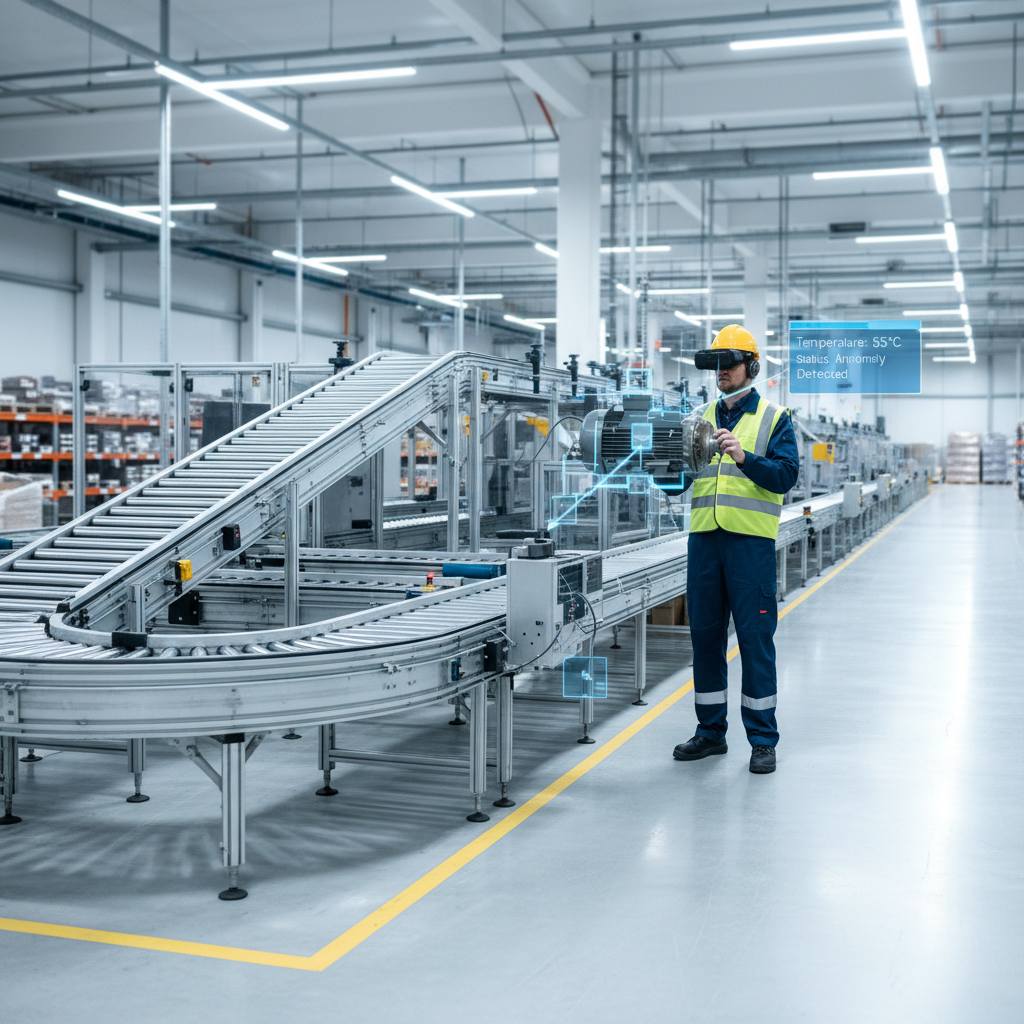
The transition to PdM involves a cultural shift. Instead of waiting for a breakdown, maintenance teams schedule interventions based on data-backed alerts. A motor showing increased vibration patterns might trigger a work order to inspect and lubricate its bearings during a planned quiet period, avoiding a full-blown failure during peak sorting hours.
Core Technologies Driving Predictive Maintenance
A successful PdM program is built on a foundation of modern technology. It's not just about collecting data, but collecting the right data and interpreting it correctly.
1. Condition-Monitoring Sensors
- Vibration Analysis: The most common technique. Small, mounted sensors can detect subtle changes in the vibration signatures of motors, bearings, and gearboxes, which often indicate developing issues like imbalance, misalignment, or wear.
- Thermal Imaging: Infrared cameras can identify components that are overheating, a classic sign of electrical issues, friction, or poor lubrication. This can be done with handheld devices or fixed-mounted cameras on critical components.
- Acoustic Analysis: Similar to vibration analysis, this method uses ultrasonic sensors to "listen" for high-frequency sounds that are inaudible to the human ear but indicate problems like air leaks or early-stage bearing wear.
- Oil Analysis: For systems with gearboxes, analyzing oil samples can reveal the presence of microscopic metal particles, indicating internal wear long before a failure occurs.
2. IoT and Data Connectivity
Sensors are the eyes and ears, but the Internet of Things (IoT) is the nervous system. IoT platforms connect these sensors, gather the data, and transmit it to a central processing location. In a modern warehouse, this data is often fed through the facility's network to the controlling PLC (Programmable Logic Controller) and then to a higher-level software system. This enables real-time monitoring from a central dashboard rather than manual checks on the floor.
Implementing a Predictive Maintenance Program
Transitioning to PdM is a strategic project that requires careful planning.
- Establish a Baseline: First, understand your current state. Analyze your maintenance logs from the past 1-2 years. Which conveyor lines fail most often? What are the most common points of failure? This data will help you prioritize your initial PdM efforts for maximum impact.
- Run a Pilot Project: Don't try to overhaul your entire facility at once. Select a single, critical conveyor line—perhaps a high-speed sortation outbound line or a crucial incline belt conveyor—and implement a pilot PdM program. This allows you to learn, refine your process, and demonstrate ROI.
- Select and Install Technology: Based on your pilot line's failure modes, choose the appropriate sensors. Focus on critical components like drive motors, main bearings, and gearboxes. A typical roller conveyor system might need vibration sensors on a dozen key drive units.
- Integrate and Analyze: Feed the sensor data into a PdM software platform. These systems use machine learning algorithms to learn the "normal" operating signature of your equipment and flag any deviations that signal a potential failure.
- Develop a Response Plan: An alert is useless without a clear plan of action. Define the workflow: When an alert is triggered, who is notified? What is the standard procedure for inspection? How is a work order generated and prioritized?
Challenges and Considerations in the European Context
While the benefits are clear, implementing PdM in Europe comes with specific considerations. Data privacy under GDPR is a factor if you're using cloud-based platforms, so ensure your provider is compliant. Furthermore, many warehouses operate a mix of new and legacy equipment. Integrating modern sensors with older control systems can be a challenge, often requiring gateway devices or a partial controls upgrade. Finally, there is a skills gap; finding maintenance technicians who are as comfortable with data dashboards as they are with a wrench is a growing challenge for operators.
Positioning for the Future: Easy Systems as Your Trusted Partner
Predictive maintenance is more than a technology; it's a philosophy of proactive, intelligent asset management. Integrating it effectively requires a deep understanding of both the equipment and the data it produces. A system built with maintenance in mind from day one, featuring standardized components and accessible sensor mounting points for technologies like MDR (Motor Driven Roller), provides a massive advantage.
This is where a partner like Easy Systems becomes invaluable. With deep expertise in designing and deploying modular conveyor solutions across Europe, we understand the operational realities of modern logistics. We help you integrate the right monitoring technologies from the outset, ensuring your system is not just efficient from day one, but also intelligent and resilient for years to come. Our approach ensures that maintenance data translates into actionable insights. To learn more about future-proofing your operations, see how companies adapt to growth: "Companies grow, but their processes don't always keep pace".
Frequently asked questions
What is the average cost to implement predictive maintenance on a conveyor line?+
Initial investment varies, but for a medium-sized European warehouse, budget between €15,000 and €50,000 for sensors, software, and integration on a critical line. The ROI is typically seen within 18 months due to significant reductions in unplanned downtime and emergency repair costs.
What is the difference between preventive and predictive maintenance?+
Preventive maintenance is time-based, meaning parts are replaced at fixed intervals (e.g., every 2,000 hours) regardless of condition. Predictive maintenance is condition-based; it uses real-time data from sensors to predict failures and perform maintenance only when necessary, which can reduce costs by 20-30%.
Which conveyor components are best for predictive maintenance?+
Focus on high-value, critical components whose failure would cause major disruption. This includes electric motors, gearboxes, primary drive bearings, and high-tension belts. Monitoring these can prevent over 80% of major mechanical downtimes.
Does predictive maintenance require special software?+
Yes. While sensors collect the data, specialized software is needed to analyze it. These platforms use AI and machine learning to identify patterns and predict failures. Many can integrate directly with your existing Warehouse Management System (WMS) or Warehouse Control System (WCS).
Can predictive maintenance be retrofitted onto older conveyor systems?+
Absolutely. Many PdM solutions are designed for retrofitting. Wireless vibration and temperature sensors can be easily attached to older motors and machines. The main challenge is often integrating the data output with older PLC or control systems, but gateway devices typically solve this.

The Easy Systems engineering team designs, integrates and commissions conveyor systems and warehouse automation across Belgium, the Netherlands and Luxembourg. Combined experience covers roller and belt conveyors, sorters, AGV/AMR fleets, AutoStore, shuttle AS/RS and WMS/WCS integration for distribution centers and e-commerce fulfillment operations.
- Conveyor design (roller, belt, modular plastic)
- Sortation & merge logic
- AGV / AMR fleet integration
- AutoStore & shuttle AS/RS
- WMS / WCS integration