
Predictive Maintenance for Conveyor Systems: A KPI Guide
Predictive maintenance transforms conveyor system upkeep from a reactive necessity to a proactive strategy. By leveraging IoT sensors and AI, it predicts component failures, allowing for scheduled repairs that drastically reduce costly unplanned downtime and extend equipment lifespan.
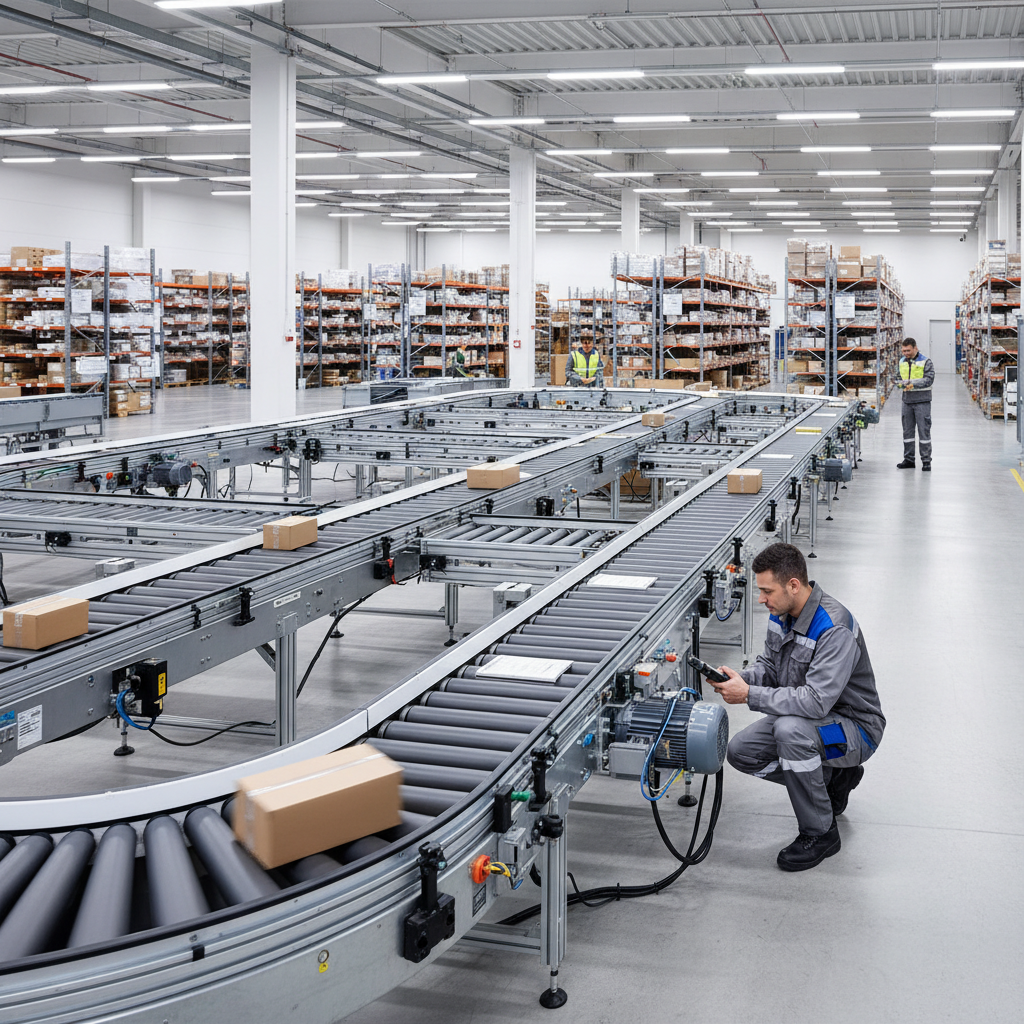
In the high-stakes world of European logistics, where every second counts, unplanned downtime is the enemy. A single stalled conveyor can bring an entire distribution center to a halt, jeopardizing delivery promises and incurring significant financial losses. This is why leading warehouse managers are shifting from traditional maintenance schedules to a smarter, data-driven approach: predictive maintenance (PdM).
Definition
Predictive Maintenance (PdM) is a proactive maintenance strategy that utilizes advanced data analysis and sensor technologies to monitor the real-time condition of equipment, enabling the prediction of potential failures before they occur. Unlike routine preventive maintenance, PdM triggers interventions only when necessary, optimizing resource allocation and maximizing equipment uptime.
Key Numbers
| Metric | Typical range (EU 2026) | Notes |
|---|---|---|
| Reduction in Unplanned Downtime | 30% - 50% | Varies based on system complexity and data maturity. |
| Maintenance Cost Savings | 15% - 30% | Achieved by minimizing emergency repairs and optimizing labor. |
| Return on Investment (ROI) | 1.5 - 3 years | Initial investment in sensors and software is offset by downtime savings. |
| Sensor Investment (per system) | €5,000 - €25,000 | Depends on the number of critical points monitored (motors, bearings, gearboxes). |
| Data Platform (SaaS) | €300 - €1,500 / month | Costs vary with the level of AI/ML analytics and user seats. |
| Component Lifespan Extension | 10% - 20% | For key components like motors, gearboxes, and belts on systems such as belt conveyors. |
The Evolution of Maintenance: From Reactive to Predictive
The approach to industrial maintenance has undergone a significant transformation. Understanding this evolution highlights the strategic advantage of PdM in modern logistics environments.
| Maintenance Strategy | Trigger | Advantages | Disadvantages |
|---|---|---|---|
| Reactive ("Run-to-Fail") | Equipment failure | Lowest initial cost, no planning needed. | Maximum downtime, high repair costs, safety risks, unpredictable. |
| Preventive (Time-Based) | Fixed schedule (e.g., every 6 months) | Reduces failures, more predictable than reactive. | Can lead to unnecessary maintenance, risk of over-maintenance, doesn't prevent all failures. |
| Predictive (Condition-Based) | Data-driven forecast of failure | Minimizes downtime, optimizes resource use, extends asset life, increases safety. | Higher initial investment in technology, requires new skills. |
While preventive maintenance was a step up from simply fixing things as they broke, it often results in replacing components that are still perfectly functional, creating unnecessary expense and waste. Predictive maintenance offers a superior alternative by using real-time data to make informed decisions, ensuring that repairs are made at the optimal moment: right before performance degrades or a failure occurs.
Core Technologies Driving Predictive Maintenance
A successful PdM program is built on a foundation of modern sensor and data analysis technology. These tools are the eyes and ears of your conveyor system, providing the raw data needed to forecast future problems.
- Vibration Analysis: Tiny, wireless sensors attached to motors, bearings, and gearboxes constantly measure vibration frequencies. An increase in vibration or a change in its pattern can be an early indicator of bearing wear, misalignment, or imbalance, often months before an audible or visible problem appears.
- Thermal Imaging: Infrared cameras, either handheld or fixed, monitor the temperature of electrical panels, connections, and drive components. Hotspots are clear signs of excessive friction, loose connections, or impending motor failure.
- Acoustic Analysis: Similar to vibration analysis, acoustic sensors can detect changes in the sound patterns of equipment. This is particularly effective for identifying issues in high-speed sorting systems or discovering lubrication problems.
- Power Consumption Monitoring: A motor that is beginning to fail will often draw more electrical current to achieve the same output. Monitoring energy usage at the component level can reveal inefficiencies that point to underlying mechanical issues.
- IIoT and Data Integration: The Industrial Internet of Things (IIoT) is the network that connects these sensors. Data is collected and often pre-processed at the edge before being sent to a central platform. This platform integrates data from sensors as well as from the PLC (Programmable Logic Controller) that governs the conveyor's basic functions.
Implementing a Predictive Maintenance Strategy
Transitioning to predictive maintenance is a strategic project, not just an IT upgrade. A phased approach is crucial for success.
Step 1: Criticality Analysis
You cannot monitor everything. Start by identifying the most critical components in your conveyor network. Which failure would cause the most significant bottleneck? Focus your initial investment on the motors, gearboxes, and diverters that are essential for maintaining throughput. A single conveyor line, like those covered in our comprehensive Roller Conveyor Guide, may have dozens of potential points of failure; prioritizing is key.
Step 2: Sensor Deployment and Data Collection
Once critical assets are identified, deploy the appropriate sensors. This can often be done by retrofitting existing machinery. Ensure a robust data collection infrastructure is in place to handle the flow of information from these new sources.
Step 3: Establish a Data Analytics Platform
The raw sensor data is useless without a platform to analyze it. This is where AI and Machine Learning come in. These platforms establish a baseline of "normal" operational behavior and then use algorithms to detect subtle deviations that signal a developing fault. The system learns over time, becoming more accurate in its predictions.
Step 4: Integration with CMMS and WCS
The true power of PdM is unlocked when its alerts are integrated with your other management systems. A predicted failure should automatically generate a work order in your Computerized Maintenance Management System (CMMS) and notify the relevant teams. Critically, it should also feed information to the WCS (Warehouse Control System), which can then intelligently re-route product flow to bypass the vulnerable area during a planned, low-impact maintenance window.
The Business Case: Benefits in the European Market
For a European 3PL or e-commerce fulfillment center, the benefits are compelling. The pressure to deliver goods faster and more reliably is immense. Predictive maintenance directly addresses this by dramatically reducing the risk of unplanned stoppages during peak hours. A German study indicated that the total cost of an hour of downtime in a large automated DC can exceed €100,000. By investing a fraction of that in PdM, you create a powerful buffer against such catastrophic losses. As many companies discover, their "processes don't always grow with them," and a reactive maintenance culture is often a major growth impediment. A proactive, data-driven approach is essential for scaling operations effectively, a topic we explore further in our analysis of how business processes must evolve with growth.
Common Challenges and How to Overcome Them
- High Initial Investment: The cost of sensors and software can seem daunting. The solution is to start small. Launch a pilot project on a single, critical conveyor line. Measure the ROI meticulously and use this business case to justify a broader rollout.
- Lack of In-House Skills: Your maintenance team may be experts in mechanics, but not data science. Partnering with a technology provider who offers a full-stack solution (hardware, software, and support) is often the most effective path.
- Data Overload: Without a smart system, you risk drowning in data. A quality AI platform is crucial. It should filter the noise and provide clear, actionable alerts, not just raw data streams.
Your Trusted Partner for Intelligent Conveyor Systems
Implementing a predictive maintenance strategy is a journey toward operational excellence. It requires a deep understanding of both material handling equipment and the underlying data infrastructure. At Easy Systems, we don't just build conveyors; we design intelligent, resilient, and future-proof logistics solutions for the European market.
Our modular conveyor systems are designed with maintenance and integration in mind. We provide the robust hardware that forms the backbone of your operation and partner with leading technology providers to integrate the sensor and software layers needed for a world-class predictive maintenance program. We help you move from a reactive "firefighting" mode to a proactive, data-driven strategy that delivers measurable improvements in uptime, cost-efficiency, and overall system lifespan. Contact us to explore how we can help you build a more predictable and profitable warehouse.
Frequently asked questions
What is the main difference between predictive and preventive maintenance?+
Preventive maintenance is performed on a fixed schedule (e.g., every 500 hours) regardless of the machine's actual condition. Predictive maintenance, however, is condition-based. It uses real-time data from sensors to predict a failure, and maintenance is only performed when it's genuinely needed, saving time and money.
How much does predictive maintenance for conveyors cost?+
The initial investment for a medium-sized conveyor system can range from €5,000 to €25,000 for sensors and hardware. Monthly software (SaaS) costs for the analytics platform typically run from €300 to €1,500. The total cost depends heavily on the number of critical points you decide to monitor.
How long does it take to see ROI from predictive maintenance?+
Most European warehouses see a full return on their investment within 1.5 to 3 years. The ROI is driven by significant reductions in unplanned downtime, which can cost tens of thousands of Euros per hour, and direct savings on maintenance labor and spare parts of 15-30%.
What kind of sensors are used for conveyor predictive maintenance?+
The most common sensors are for vibration analysis (on motors and bearings), thermal imaging (for electrical panels and friction points), and power consumption monitoring. Acoustic sensors can also be used to detect changes in operational noise, which can indicate a developing issue.
Can I apply predictive maintenance to an old belt conveyor system?+
Absolutely. Older systems are often excellent candidates for a PdM program. By retrofitting sensors onto critical components like the main drive motor and primary bearings, you can significantly extend the life of legacy equipment and achieve a high ROI by preventing costly failures.
How does predictive maintenance improve warehouse safety?+
PdM improves safety by preventing catastrophic equipment failures, which can be dangerous for personnel. It also reduces the need for emergency repairs, which are often rushed and performed under pressure in potentially high-traffic operational zones, increasing the risk of accidents.

The Easy Systems engineering team designs, integrates and commissions conveyor systems and warehouse automation across Belgium, the Netherlands and Luxembourg. Combined experience covers roller and belt conveyors, sorters, AGV/AMR fleets, AutoStore, shuttle AS/RS and WMS/WCS integration for distribution centers and e-commerce fulfillment operations.
- Conveyor design (roller, belt, modular plastic)
- Sortation & merge logic
- AGV / AMR fleet integration
- AutoStore & shuttle AS/RS
- WMS / WCS integration