Predictive Maintenance for Conveyor Belts: Minimize Downtime & Maximize Lifespan
Predictive maintenance for conveyors utilizes IoT sensors and AI to forecast equipment failures before they happen. This strategy shifts maintenance from a reactive to a proactive model, significantly cutting downtime and extending the lifespan of critical components.
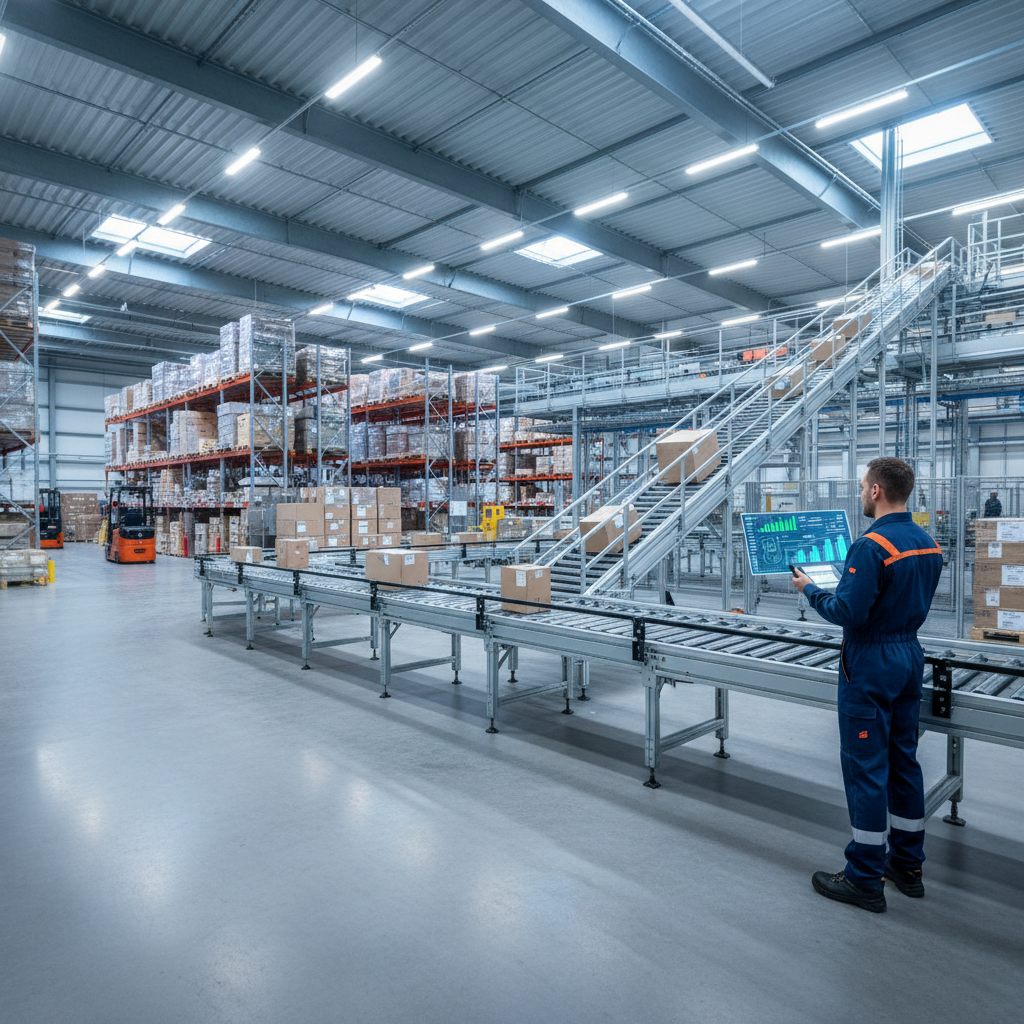
In any modern European warehouse or distribution center, the constant flow of goods is paramount. Conveyor systems are the arteries of these facilities, and any unplanned stop can have cascading financial consequences. Traditional maintenance strategies are no longer sufficient. This article explores predictive maintenance (PdM), a data-driven approach that transforms conveyor upkeep from a reactive necessity into a strategic advantage, ensuring maximum uptime and operational efficiency.
Definition
Predictive Maintenance (PdM) is a proactive maintenance strategy that uses data analysis tools and techniques to detect anomalies in operation and possible defects in processes and equipment so they can be fixed before they result in failure. For conveyor systems, this means using sensors to monitor the condition of components in real-time to predict, and therefore prevent, costly breakdowns.
Key Numbers
| Metric | Typical range (EU 2026) | Notes |
|---|---|---|
| Downtime Reduction | 30% - 45% | Compared to reactive maintenance strategies. |
| Maintenance Cost Reduction | 15% - 25% | Includes savings on labor, spare parts, and emergency call-outs. |
| Initial Investment (per line) | €5,000 - €25,000 | Varies based on complexity, number of sensors, and software. |
| Return on Investment (ROI) | 12 - 24 months | Calculated based on avoided downtime and maintenance savings. |
| Lifespan Extension | 20% - 40% | Proactive care reduces wear and tear on critical components. |
| Energy Savings | 5% - 10% | Well-maintained motors and bearings operate more efficiently. |
The Evolution of Conveyor Maintenance
Maintenance philosophy has evolved significantly, moving from a "fix it when it breaks" mentality to a highly sophisticated, data-centric model. Understanding this evolution is key to appreciating the value of PdM.
H3: Reactive Maintenance: The "Run-to-Failure" Model
The most basic approach, reactive maintenance involves repairing or replacing a component only after it has failed. This model is characterized by unplanned downtime, which can halt entire production or fulfillment lines, leading to significant financial losses (€10,000 - €50,000+ per hour in some e-commerce operations) and logistical chaos.
H3: Preventive Maintenance: The Schedule-Based Model
A step up from reactive, preventive maintenance is performed on a fixed schedule (e.g., time-based or usage-based). Technicians might replace bearings every 2,000 operational hours, regardless of their actual condition. While this reduces unexpected failures, it often leads to unnecessary work and the premature replacement of perfectly good components, incurring needless costs.
H3: Predictive Maintenance (PdM): The Data-Driven Model
PdM represents the pinnacle of maintenance strategy. Instead of relying on schedules, it uses real-time data to monitor the health of equipment and predict failures before they happen. This allows maintenance to be scheduled precisely when needed, minimizing disruption and maximizing the useful life of every component. It is a cornerstone of Industry 4.0 in logistics.
How Predictive Maintenance Works for Conveyors
A PdM system for conveyors involves several interconnected stages that turn raw sensor data into actionable maintenance tasks. This process ensures that potential issues are flagged and addressed with maximum efficiency. An effective PdM strategy can be applied to various systems, from simple roller conveyors to complex sorting machinery.
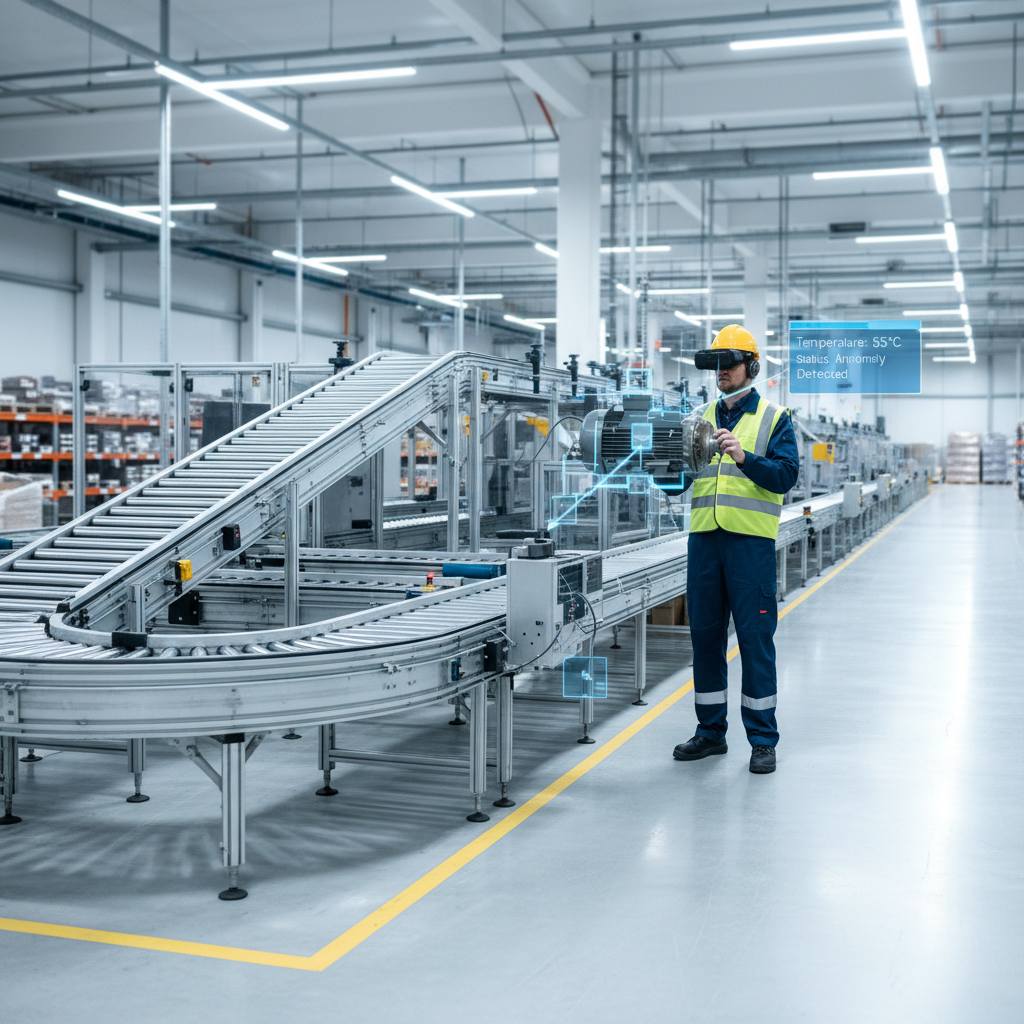
- Step 1: Data Acquisition: IoT sensors are the foundation of PdM. They are installed on critical conveyor components to collect data on various physical parameters. Common sensors include vibration analyzers for motors and bearings, thermal cameras for detecting overheating, and acoustic sensors for identifying abnormal noises.
- Step 2: Data Transmission & Storage: The collected data is transmitted wirelessly or via wired connections to a central system, which can be on-premise or cloud-based. This data is aggregated and stored for analysis.
- Step 3: Data Analysis: This is where the "predictive" power comes from. Machine learning (ML) algorithms analyze the incoming data streams, comparing them to historical data and established benchmarks to identify patterns that signal impending failure. An algorithm might learn that a specific vibration frequency in a motor increases by 8% in the 48 hours before it fails.
- Step 4: Actionable Insights: When the system predicts a potential failure, it generates an alert for the maintenance team via a dashboard, email, or integration with a CMMS (Computerized Maintenance Management System). This alert specifies the component at risk and the nature of the issue, allowing technicians to schedule a repair before failure occurs.
Key Components to Monitor on a Conveyor System
Not all parts of a conveyor are created equal. A successful PdM program focuses on the most critical and failure-prone components to maximize ROI.
| Component | Key Failure Indicators | Sensors Used |
|---|---|---|
| Motors & Drives | Overheating, unusual vibration, increased power consumption | Thermal, Vibration, Power Monitoring |
| Bearings | High-frequency vibrations (whining/grinding), temperature spikes | Vibration, Acoustic, Temperature |
| Conveyor Belts | Misalignment (tracking issues), slippage, surface wear, tension loss | Optical/Laser Scanners, Tension Sensors |
| Roller Conveyors / Pulleys | Seized rollers, excessive noise, vibration | Acoustic, Vibration, Rotational Speed |
Implementing a PdM Program: A Phased Approach
Transitioning to predictive maintenance is a strategic project, not just a technical upgrade. A phased approach ensures a smooth and successful implementation.
H3: Phase 1: Assessment and Pilot Project
Start by identifying the most critical conveyor lines—those where downtime has the greatest financial impact. Select one of these lines for a pilot project. This allows you to test technologies, validate ROI calculations, and build a business case for a wider rollout with a contained budget (typically €10,000 - €30,000).
H3: Phase 2: Technology Selection and Integration
Choose the right sensor hardware and analytics software for your needs. Consider factors like compatibility with your existing infrastructure, including legacy PLCs (Programmable Logic Controllers), and the ability to integrate with your WMS or CMMS. Scalability is crucial; the platform must be able to handle data from hundreds or thousands of sensors as you expand.
H3: Phase 3: Scalability and Continuous Improvement
Once the pilot project proves successful, systematically roll out the PdM solution across other critical assets. The journey doesn't end here. It's important to recognize that as companies grow, their processes must evolve. As we've noted before, many businesses find their operational workflows don't scale with increased demand, making data-driven optimization a continuous necessity. Use the collected data not only for maintenance but also to inform operational improvements and future conveyor design choices.
The Business Case for Predictive Maintenance
The primary driver for adopting PdM is financial. By preemptively fixing issues, businesses avoid the exorbitant costs of unplanned downtime. For a high-throughput e-commerce center, an hour of conveyor downtime during a peak period can easily result in over €100,000 in lost revenue and recovery costs. PdM also reduces maintenance labor costs by eliminating unnecessary scheduled tasks and optimizing the work of technicians. Furthermore, inventory of spare parts can be managed more effectively, reducing carrying costs. A motor that is replaced based on condition rather than a schedule might last an extra 1,500 hours, representing a direct cost saving and a more sustainable practice.
Challenges and Considerations for European Warehouses
While the benefits are clear, implementation in the European context comes with specific challenges. Data governance is paramount, and any cloud-based solution must be fully compliant with GDPR. Integrating modern IoT technology with older, a-PId systems, which may lack digital interfaces, can be complex and require specialized middleware. Finally, there is a skills consideration. A successful PdM program requires a team that understands not only mechanical engineering but also data analysis and IT, a blend of expertise that can be challenging to find or develop internally.
Easy Systems: Your Partner in Intelligent Conveyor Maintenance
At Easy Systems, we don't just design and build state-of-the-art conveyor systems; we engineer them for maximum longevity and reliability. We understand that in a modern logistics operation, the conveyor is not just a piece of hardware but a critical data-generating asset. Our modular systems are designed with maintenance and monitoring in mind, facilitating the easy integration of sensor technology. We partner with our clients to create a holistic maintenance strategy that aligns with their operational goals, helping them transition from a reactive to a predictive model. By choosing Easy Systems, you are investing in a trusted European partner committed to minimizing your downtime and maximizing your return on investment for years to come.
Frequently asked questions
What is the main benefit of predictive maintenance for conveyors?+
The primary benefit is a significant reduction in unplanned downtime, typically between 30% and 45%. This directly protects revenue and operational stability. It also lowers maintenance costs by 15-25% by ensuring work is only done when necessary, maximizing component life.
How much does a predictive maintenance system cost for a conveyor?+
Initial investment for a predictive maintenance system in a European warehouse typically ranges from €5,000 to €25,000 per critical conveyor line. This cost includes sensors, hardware, and software licensing. The final amount depends on the complexity of the system and the number of monitoring points.
What kind of sensors are used in conveyor predictive maintenance?+
The most common sensors used are vibration sensors for motors and bearings, thermal (infrared) sensors to detect overheating, and acoustic sensors to identify abnormal sounds. Power monitoring sensors and laser scanners for belt tracking are also frequently used to gather a complete operational picture.
How long does it take to see a return on investment (ROI) from PdM?+
Most companies see a full return on their predictive maintenance investment within 12 to 24 months. The ROI is driven by the high cost of avoided downtime, reduced labor for unnecessary maintenance checks, and lower spending on replacement parts.
Can predictive maintenance be added to an old conveyor system?+
Yes, retrofitting older conveyor systems for predictive maintenance is very common. Wireless IoT sensors and gateway devices can be installed on existing equipment with minimal disruption. This allows even legacy systems, installed 10-15 years ago, to benefit from modern data-driven maintenance strategies.
What is the difference between preventive and predictive maintenance?+
Preventive maintenance is time-based; tasks are performed on a fixed schedule (e.g., replace a part every 12 months). Predictive maintenance is condition-based; it uses real-time data from sensors to predict failures and alert you to perform maintenance only when it\'s actually needed.

The Easy Systems editorial desk reviews and fact-checks every Conveyor-Design article against Benelux project experience. Editors translate engineering decisions — throughput, peak factors, layout, integration — into plain-language guides for operations managers, project leads and decision-makers.
- Warehouse layout & slotting
- Order-profile analysis
- Vendor-neutral comparison
- Benelux logistics market