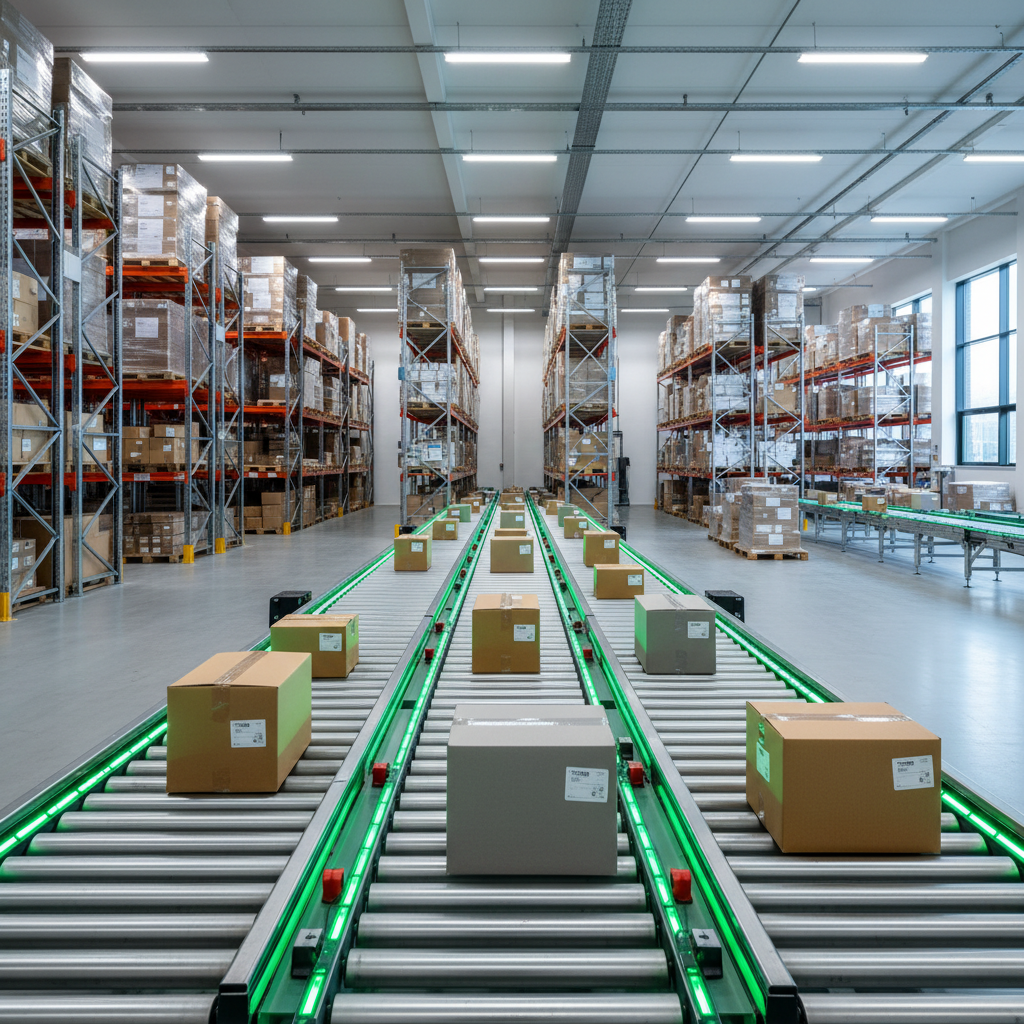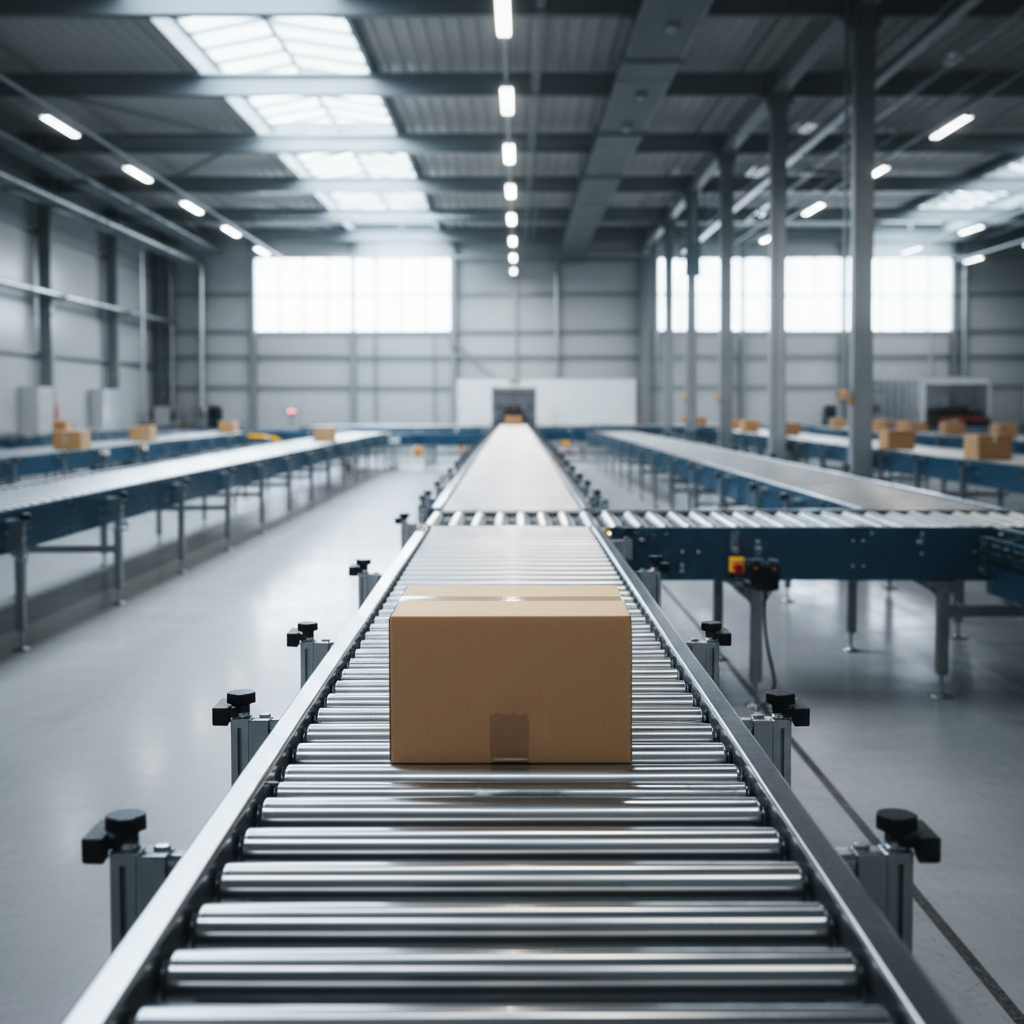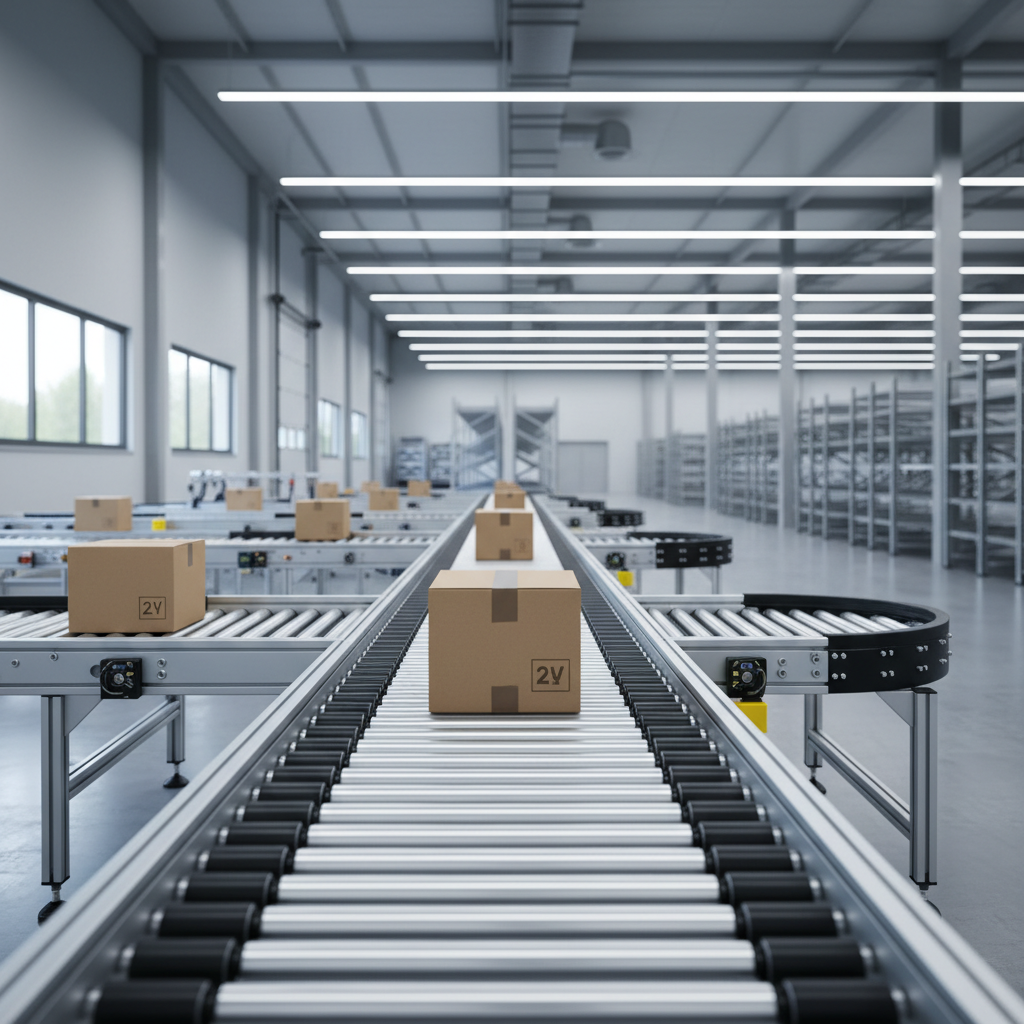
Modular Conveyors: Benelux Flexibility in Manufacturing & Logistics
Modular and reconfigurable conveyor systems offer unmatched flexibility for manufacturing and distribution centers in the Benelux, allowing businesses to adapt to changing demands, reduce downtime, and scale operations efficiently.
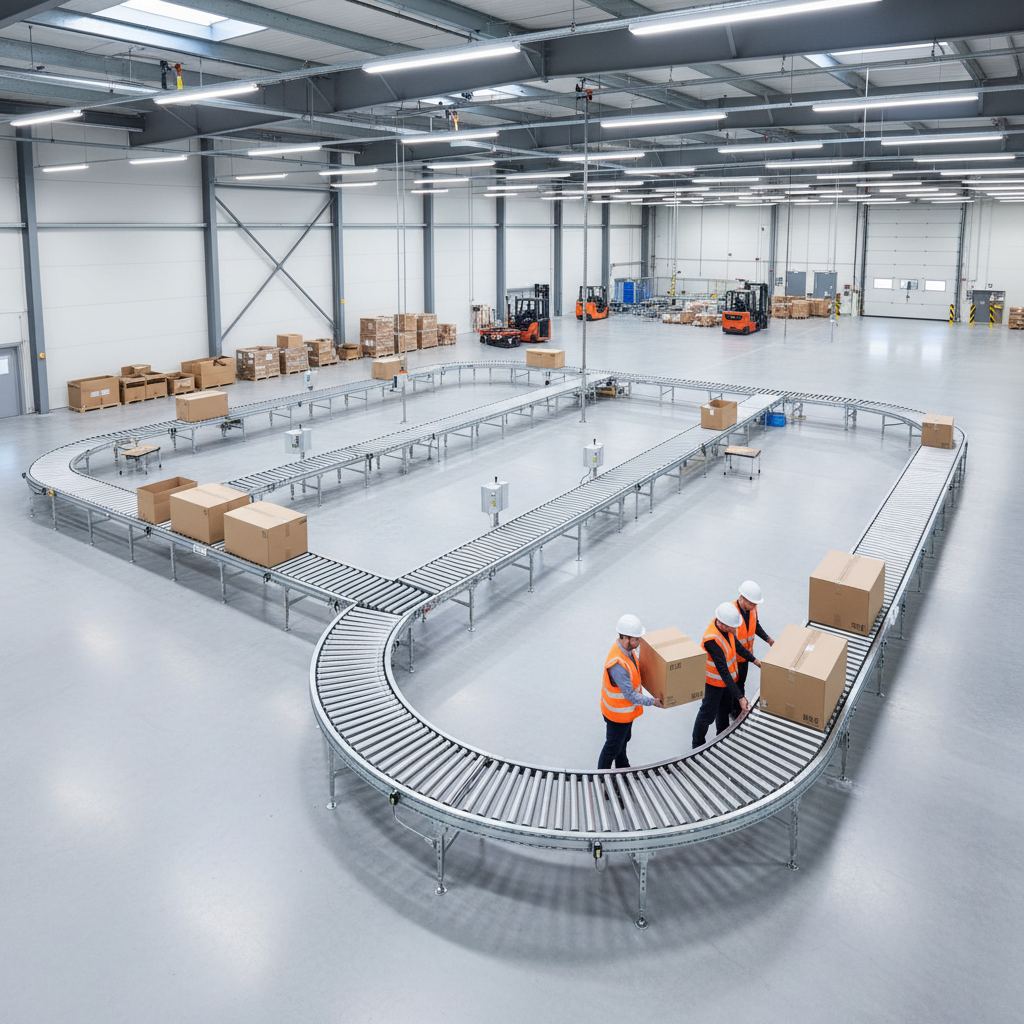
In the fast-paced logistics landscape of the Benelux, characterised by high labour costs and dense, interconnected supply chains, agility is no longer a luxury—it's a requirement for survival. Market demands fluctuate, product life cycles shorten, and seasonal peaks become more extreme. Traditional, custom-welded conveyor systems, once the backbone of the warehouse, are often too rigid to adapt. This article explores the rise of modular and reconfigurable conveyor systems as a strategic solution for manufacturing and distribution centres in Belgium, the Netherlands, and Luxembourg.
Definition
Modular and reconfigurable conveyor systems are material handling solutions constructed from a set of standardised, interchangeable modules or sections. Unlike monolithic traditional conveyors, these systems are designed for rapid assembly, disassembly, and rearrangement (reconfigurability), allowing a facility to easily change the conveyor's layout, length, or function with minimal downtime and technical expertise.
Key numbers
| Metric | Typical range (EU 2026) | Notes |
|---|---|---|
| Initial Investment (€/m) | €400 - €950 | Depends on technology (gravity vs. motorised), width, and load capacity. |
| Reconfiguration Time (per section) | 0.5 - 2 hours | Time to move, add, or remove a standard 2-3 meter module. |
| System Lead Time | 4 - 8 weeks | Significantly shorter than the 12-20 weeks for custom-fabricated systems. |
| Scalability (add-on capacity) | 500 - 1,000 CPH increments | Throughput can be increased by adding modules or sorters without a full redesign. |
| Typical ROI | 1.5 - 3 years | Achieved through reduced downtime, labour savings, and improved adaptability. |
| Energy Consumption (MDR) | 0.02 - 0.05 kWh per meter/hour | Zone-based operation of Motorized Drive Roller (MDR) systems results in significant energy savings. |
| Spare Part Stocking | Reduced by 60-70% | Standardisation means fewer unique components are needed on-hand. |
Core Principles of Modular Conveyor Design
The philosophy behind modular design is simple: create a system from a limited set of versatile, standardised building blocks. This "plug-and-play" approach is what provides the inherent flexibility. Key principles include:
- Standardised Dimensions: Modules come in fixed lengths (e.g., 1m, 1.5m, 2m, 3m) and widths (e.g., 400mm, 600mm, 850mm), ensuring they can be seamlessly connected.
- Interchangeable Components: Straight sections, curves, mergers, and diverters are all designed to fit together. A straight roller conveyor module can be easily swapped for a belt module of the same dimensions if product handling requirements change.
- Decentralised Intelligence: The use of Motorized Drive Rollers (MDR) with integrated logic controllers allows for localised zone control. This eliminates the need for complex, centralised PLC cabinets and extensive rewiring during layout changes.
- Pre-installed Cabling: Modules often come with pre-wired power and data connections, allowing them to be daisy-chained. This reduces installation and reconfiguration time from days to hours.
This approach contrasts sharply with traditional systems, which are often engineered as a single, bespoke unit for a specific task and location.
Reconfigurability in Practice: A Benelux Perspective
For a distribution centre in Antwerp or a production facility near Rotterdam, the ability to adapt is crucial. Consider these scenarios:
Scenario 1: Scaling for Peak Season
An e-commerce fulfilment centre anticipates a 50% increase in order volume for the holiday season. With a modular system, they can rent or purchase additional sorting modules and extension conveyors. These can be integrated into the existing layout over a weekend, adding temporary capacity without disrupting ongoing operations. After the peak, the system can be returned to its original footprint.
Scenario 2: Product Line Changes
A manufacturing plant in the Netherlands introduces a new product with different dimensions and handling needs. Instead of a complete overhaul, they can reconfigure their assembly line. A section of roller conveyor might be replaced with a modular plastic belt conveyor for better grip, or a 90-degree curve can be moved to redirect flow to a new packaging station. The cost and downtime are minimal compared to modifying a welded-frame system.
Moving a Production Line
As companies grow, they may need to reorganise their entire facility. The article on how processes often fail to scale with business growth highlights this challenge. A modular system can be completely disassembled, moved to a new location within the plant (or to a new building entirely), and reassembled in a different configuration. This preserves the initial investment, a concept known as "asset portability."
Modular vs. Traditional Conveyor Systems: A Comparison
The choice between a modular and a traditional system depends on long-term business strategy. While traditional systems may sometimes have a lower initial purchase price for very simple, static layouts, modular systems often provide a superior Total Cost of Ownership (TCO) in dynamic environments.
| Feature | Modular Conveyor Systems | Traditional (Custom) Conveyors |
|---|---|---|
| Flexibility & Reconfigurability | High; designed for easy layout changes. | Low; layout is fixed, changes require cutting and welding. |
| Initial Investment | Moderate; €400 - €950 per meter. | Low to High; can be cheaper for simple-static lines, but expensive for complex ones. |
| Lead & Installation Time | Short (4-8 weeks); plug-and-play assembly. | Long (12-20+ weeks); requires custom fabrication and complex installation. |
| Scalability | Excellent; add or remove modules to adjust capacity/length. | Poor; scaling often means a complete system replacement. |
| Downtime During Changes | Minimal (hours or a few days). | Extensive (weeks or months). |
| Resale Value / Portability | High; modules are standardised and can be reused or sold. | Very Low; system is specific to one layout and often sold as scrap. |
Key Technologies and Control Systems
The move towards modularity is powered by several key innovations in conveyor technology and control architecture.
Motorized Drive Rollers (MDR)
MDR technology is arguably the most significant enabler of modularity. Each "zone" of the conveyor (typically 1-2 meters long) is powered by a single roller with an integrated 24V DC motor. This has profound implications:
- Energy Efficiency: The conveyor only runs when a product is present, reducing energy consumption by up to 70% compared to traditional AC-motor driven systems.
- Simplified Control: Basic control logic (like zero-pressure accumulation) is handled locally by cards on the MDR itself, reducing the load on the central PLC.
- Safety: The low voltage (24V) and torque make the system inherently safer for operators.
Decentralised Control Architecture
Instead of routing all sensor and motor wiring back to a large, central control cabinet, modular systems use a decentralised I/O network. Fieldbus protocols like ASi or EtherCAT/IP allow modules to be connected with a single trunk cable for power and data. When reconfiguring the system, you simply unplug a module, move it, and plug it back in. The Warehouse Control System (WCS) automatically recognises the new topology, a task that would previously require days of an electrician's time.
Positioning Your Business for an Agile Future
For any business in the Benelux—from a 3PL in Venlo to a food producer in Wallonia—investing in modular conveyor systems is a strategic move to future-proof operations. It's an investment in the ability to say "yes" to new opportunities, whether that's a new client, a new product, or a new operational model. It transforms your internal logistics from a rigid constraint into a competitive advantage.
Choose a Partner, Not Just a Supplier
Implementing a flexible automation strategy requires more than just buying modules off a shelf. It demands a partner with deep expertise in logistics processes and a proven platform. Easy Systems specialises in modular conveyor solutions that empower businesses across the Benelux and Europe. Our approach is built on a foundation of robust, standardised components and a deep understanding of how to apply them to solve real-world challenges. We don't just sell conveyors; we deliver agile, scalable, and reconfigurable systems that grow with your business, ensuring your investment today remains valuable for years to come.
Frequently asked questions
What is the average cost of a modular conveyor system in the Benelux?+
The average cost for a modular conveyor system in the Benelux ranges from €400 to €950 per meter. The final price depends on the technology used, such as gravity rollers versus powered MDR zones, conveyor width (e.g., 500mm vs 800mm), and the required load capacity.
How quickly can you reconfigure a modular conveyor layout?+
Minor reconfigurations, like adding or moving a 3-meter section, can often be done in 2-4 hours. A major layout change involving multiple lines might take a weekend. This is up to 80% faster than traditional systems, where changes could take weeks.
Are modular conveyors suitable for food and beverage production?+
Yes, absolutely. Modular systems are available with stainless steel frames and food-grade modular plastic belts that are easy to clean and compliant with hygiene regulations. These systems provide the flexibility needed for frequent product changeovers in the food industry.
What is the typical lead time for a modular conveyor project?+
The lead time for a complete modular conveyor project is typically between 4 and 8 weeks, from order to delivery. This is significantly shorter than the 12-20 week lead times common for custom-fabricated, traditional conveyor systems.
How do modular conveyors improve workplace safety?+
Modular conveyors, especially those using 24V MDR technology, improve safety by operating at a low, safe voltage. They also run only when products are present and have features like zero-pressure accumulation, which prevents dangerous package pile-ups and crushing incidents.
Can I integrate a modular conveyor with my existing WMS?+
Yes. Modular conveyor systems are designed for integration. The Warehouse Control System (WCS) that manages the conveyor communicates with your Warehouse Management System (WMS) to direct product flow based on orders, routing, and sorting decisions from the WMS.

The Easy Systems engineering team designs, integrates and commissions conveyor systems and warehouse automation across Belgium, the Netherlands and Luxembourg. Combined experience covers roller and belt conveyors, sorters, AGV/AMR fleets, AutoStore, shuttle AS/RS and WMS/WCS integration for distribution centers and e-commerce fulfillment operations.
- Conveyor design (roller, belt, modular plastic)
- Sortation & merge logic
- AGV / AMR fleet integration
- AutoStore & shuttle AS/RS
- WMS / WCS integration