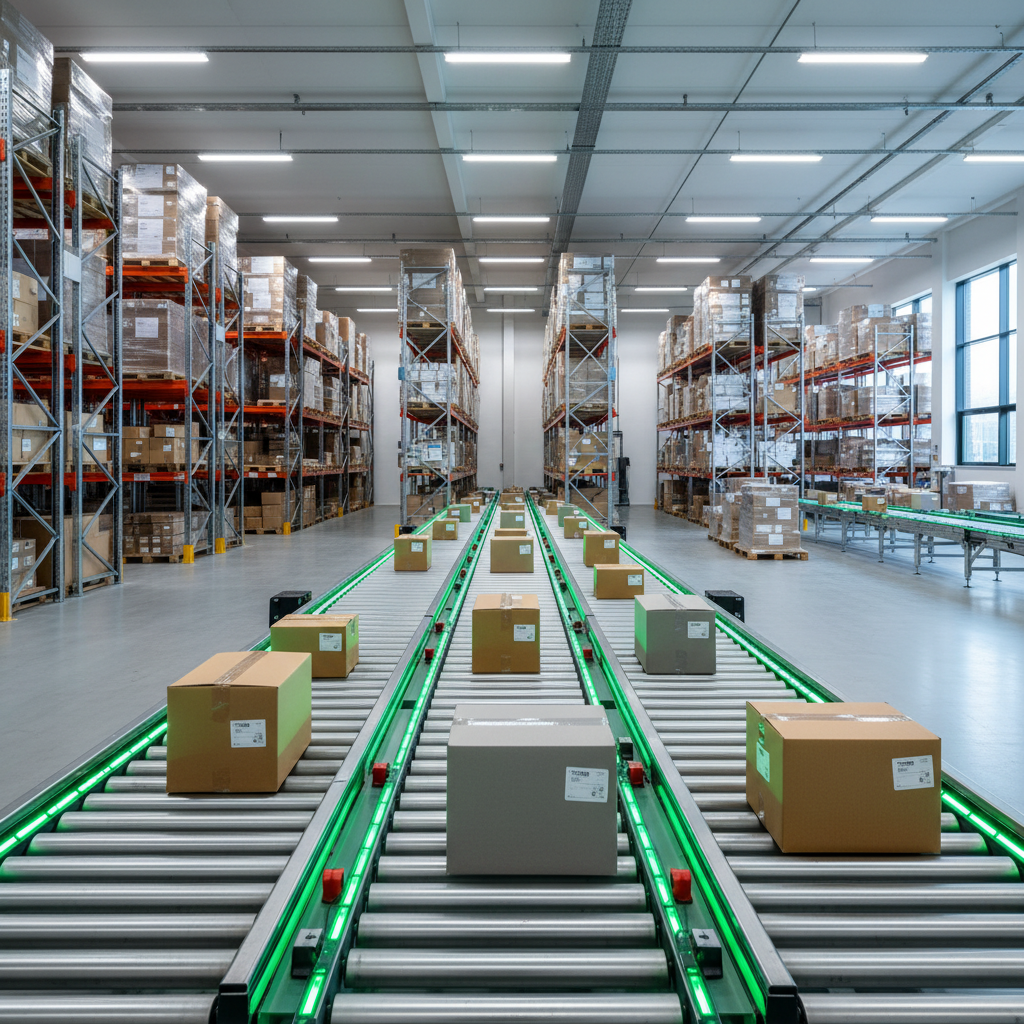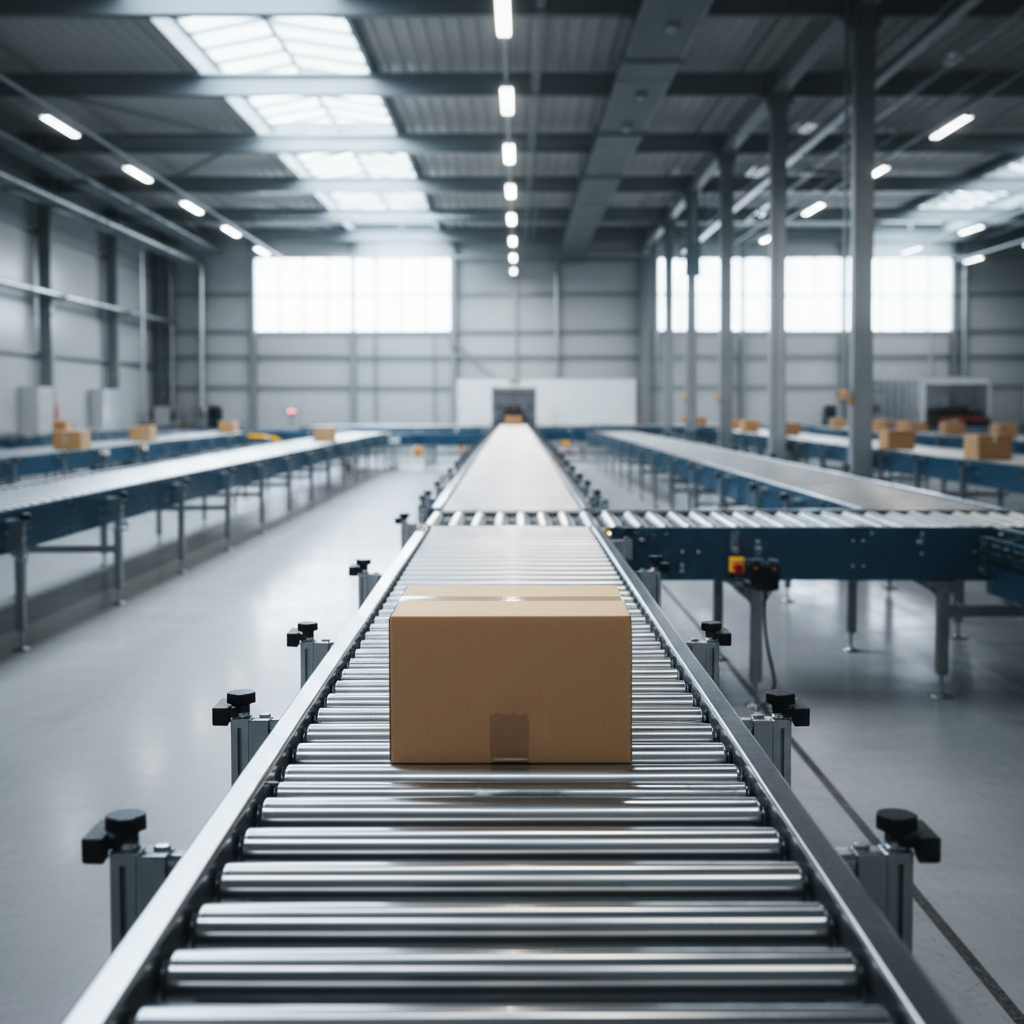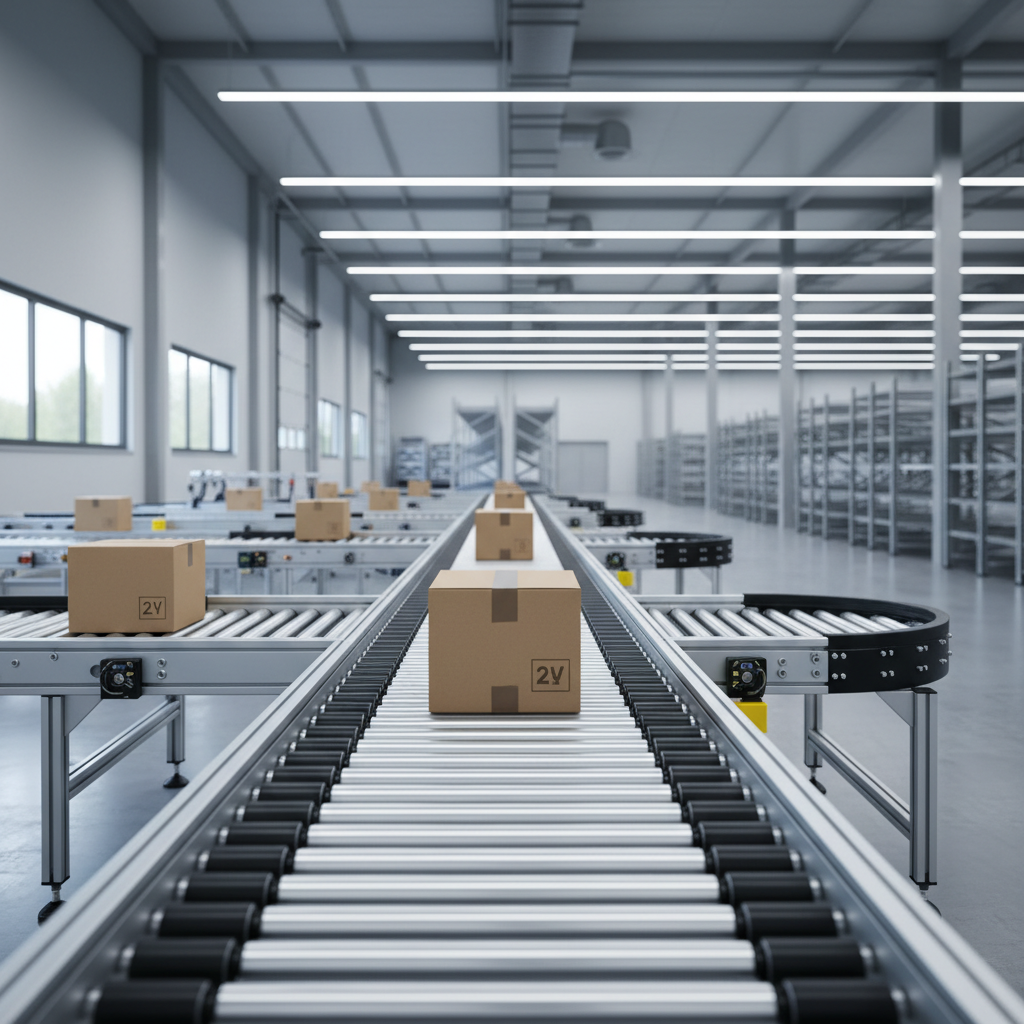
Modular Conveyor Systems: Flexible Production in the Benelux
Modular conveyor systems offer unparalleled flexibility for production and logistics in the Benelux. By using standardized, interchangeable modules, businesses can reconfigure layouts in hours, scale capacity from 500 to 10,000 CPH, and adapt to evolving market demands with minimal downtime.
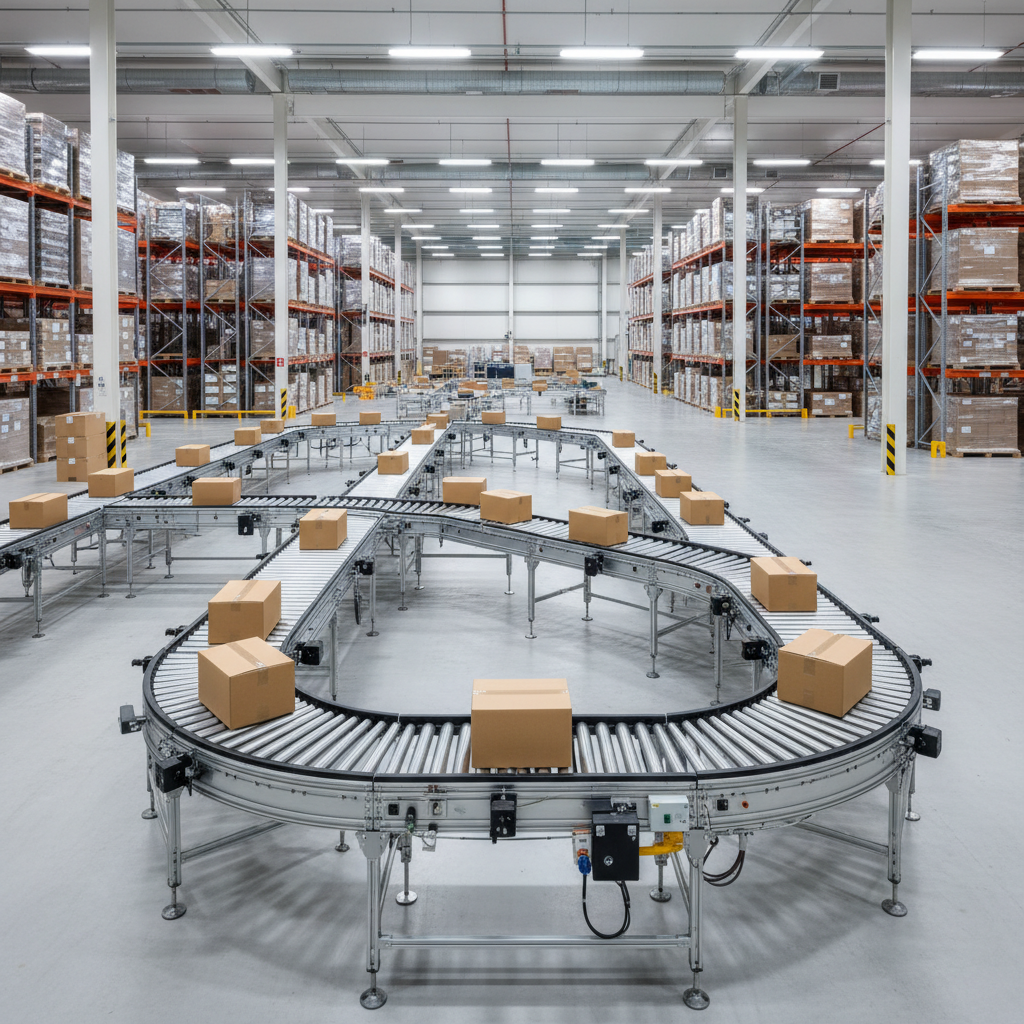
In the dynamic economic landscape of the Benelux, where e-commerce growth and supply chain volatility are the norms, operational agility is no longer a luxury—it's a necessity. Traditional, welded-frame conveyor systems, once the backbone of production, are proving too rigid for today's demands. This has paved the way for modular conveyor systems, a flexible and scalable solution that empowers businesses in Belgium, the Netherlands, and Luxembourg to adapt and thrive.
Definition
A modular conveyor system is a material handling solution constructed from a series of standardized, interchangeable sections or modules. These "plug-and-play" components (e.g., straight sections, curves, inclines, transfers) can be quickly assembled, reconfigured, and expanded with minimal engineering, allowing a company to alter its material flow path in response to changing production needs, warehouse layouts, or product dimensions.
Key Numbers
| Metric | Typical Range (EU 2026) | Notes |
|---|---|---|
| Investment Cost (€/m) | €400 - €1,200 | Depends on technology (roller vs. belt) and load capacity. |
| Reconfiguration Time | 2 - 16 hours | For a standard 50m line adjustment; significantly less than traditional systems. |
| Scalability (Throughput) | 500 - 10,000+ CPH | Capacity can be increased by adding modules or upgrading motor speeds. |
| Average ROI | 2 - 4 years | Achieved via reduced downtime, labor savings, and increased efficiency. |
| Typical Module Length | 500 mm - 3,000 mm | Standardized lengths allow for precise layout design. |
| Energy Consumption (MDR) | 0.02 - 0.05 kWh/hour/module | Run-on-demand technology offers significant savings over continuous systems. |
Why Modularity is Critical in the Benelux Market
The Benelux region is a major European logistics hub, characterized by high labor costs, limited space, and intense competition. This environment makes operational efficiency paramount. Modular systems address these challenges directly:
- Market Volatility: The ability to quickly introduce new product lines or change packaging formats without a complete system overhaul is a significant competitive advantage.
- E-commerce Growth: Seasonal peaks (like Black Friday or Sinterklaas) demand scalable solutions. Modular conveyors allow warehouses to ramp up throughput capacity temporarily and then scale back down, optimizing resource allocation.
- Space Constraints: Warehouses in urbanized areas like the Randstad or the Flemish Diamond are expensive and compact. Modular systems can be designed to maximize footprint efficiency and can be easily reconfigured when a facility layout changes.
Core Components of a Modular Conveyor System
The strength of a modular system lies in its simple, standardized components that work together seamlessly. While specific designs vary, most systems are built from a common set of building blocks.
Key Modules
- Straight Sections: The most common module, used for transport over a distance. Typically available in lengths from 500 mm to 3,000 mm.
- Curves: Used to change the direction of flow, commonly in 30, 45, 60, or 90-degree variants.
- Transfers & Merges: Right-angle transfers, 30/45-degree merges, and diverters are used to move products between different conveyor lines.
- Incline/Decline Modules: For transporting goods between different elevations, often connecting mezzanines or different floors.
For a deeper dive into the mechanics and types of roller-based systems, explore our comprehensive Roller Conveyor Guide.
Comparing Modular Conveyor Technologies
Modularity is a design philosophy, not a single technology. It can be applied to various types of conveyors, each with its own strengths. The choice depends heavily on the specific application, product characteristics, and desired throughput.
| Technology | Best For | Typical Max Load (kg/m) | Typical Speed (m/s) | Maintenance Complexity |
|---|---|---|---|---|
| Modular Roller Conveyor (MDR) | Zone-based conveyance of cartons, totes, and firm-bottomed items. High energy efficiency. | 50 kg | 0.5 - 1.5 m/s | Low (individual rollers/motors are easily replaced). |
| Modular Belt Conveyor | Irregularly shaped items, direct food contact, or applications requiring inclines. | 75 kg | 0.3 - 1.0 m/s | Medium (belt sections can be replaced, cleaning is critical). |
| Modular Plastic Belt Conveyor | Heavy-duty applications, accumulation, or environments with harsh conditions (wash-down). | 100+ kg | 0.2 - 0.8 m/s | Low to Medium (durable, but damage can require section replacement). |
The Financial Case for Modular Conveyors
While the initial investment per meter might be slightly higher than for a simple, traditional system, the Total Cost of Ownership (TCO) for modular conveyors is often significantly lower. The business case is built on flexibility and future-proofing.
Key Financial Benefits:
- Reduced Downtime: A damaged section can be swapped out in minutes or hours, not days. Reconfigurations that once took weeks of cutting and welding can now be done over a weekend.
- Lower Re-Engineering Costs: Adapting to a new product line doesn’t require a budget for a whole new conveyor. Existing modules are reused, and only new sections are purchased as needed.
- Scalable Investment: Companies can start with a basic system and add modules as they grow, spreading capital expenditure over time. This aligns investment directly with revenue growth.
Integration and Control: The Brains of the System
A modular hardware setup requires an equally modular and intelligent control system. Modern systems rely on a distributed architecture, moving intelligence down to the device level. At the heart of this is the PLC (Programmable Logic Controller) or a decentralized control card for each zone.
For the system to function as part of a cohesive warehouse operation, it must communicate with higher-level software. This is typically handled by a Warehouse Control System (WCS), which acts as a traffic cop, managing the flow of goods based on commands from the Warehouse Management System (WMS). This integration, often using standardized protocols like OPC UA, ensures that the conveyor system works in harmony with other automated systems and manual processes.
Future-Proofing Your Benelux Operations
Choosing a modular conveyor system is a strategic decision to future-proof your logistics. As business processes evolve, the system can evolve with them. Market pressures and changing customer expectations are a constant, and as companies grow, their processes must grow with them. A rigid, inflexible material handling system creates a bottleneck that limits potential. A modular system, by contrast, provides the physical flexibility needed to support continuous improvement and adaptation, ensuring your facility remains competitive for years to come.
Easy Systems: Your Partner for Modular Conveyor Solutions in the Benelux
In a market that demands agility, you need a partner who understands the nuances of flexible automation. At Easy Systems, we specialize in designing and implementing high-quality modular conveyor systems that are tailored to the specific needs of Benelux businesses. As the creators of the renowned BOA Concept range of modular conveyors, we provide robust, scalable, and cost-effective solutions that grow with your business.
Our experienced engineers work closely with you from initial design to final commissioning, ensuring your system delivers maximum ROI and prepares your operation for the challenges of tomorrow. Whether you are in e-commerce, manufacturing, or third-party logistics, we have the expertise to optimize your material flow. Contact us to discover how our modular approach can revolutionize your production and logistics.
'''Frequently asked questions
What is the average cost of a modular conveyor system in the Netherlands?+
The initial investment for a modular conveyor system in the Netherlands typically ranges from €400 to €1,200 per meter, depending on the technology (e.g., roller vs. belt) and complexity. A complete 50-meter system could cost between €20,000 and €60,000, with an ROI often realized in 2-4 years.
How long does it take to reconfigure a modular conveyor layout?+
Reconfiguration time is a key advantage. A minor layout change, like adding a new workstation, can be done in 2-4 hours. A major overhaul of a 100-meter line might take a small team 1-2 working days, compared to weeks for a traditional welded system.
Can modular conveyors handle different product sizes?+
Yes, they are designed for versatility. Most systems can handle a wide range of product sizes, from small polybags (50x50 mm) to large cartons (800x600 mm). The maximum weight capacity typically varies from 25 kg to 50 kg per meter, depending on the chosen module type.
Are modular conveyors energy-efficient?+
Modern modular conveyors, especially those using Motorized Drive Roller (MDR) technology, are highly energy-efficient. They operate on a run-on-demand basis, consuming power only when products are present. This can lead to energy savings of up to 70% compared to traditional, continuously running systems.
What is the typical lifespan of a modular conveyor system?+
A well-maintained modular conveyor system from a reputable European manufacturer has a typical lifespan of 15 to 20 years. Individual components like motors or belts may require replacement every 5-7 years, but the core framework and modules are built for long-term durability and reusability.
How do modular systems integrate with warehouse software like a WMS?+
Integration with a WMS is usually handled by a Warehouse Control System (WCS). The WCS translates high-level commands from the WMS (e.g., "move pallet A to station B") into low-level instructions for the conveyor's PLCs, ensuring a smooth and efficient flow of goods throughout the facility.

The Easy Systems editorial desk reviews and fact-checks every Conveyor-Design article against Benelux project experience. Editors translate engineering decisions — throughput, peak factors, layout, integration — into plain-language guides for operations managers, project leads and decision-makers.
- Warehouse layout & slotting
- Order-profile analysis
- Vendor-neutral comparison
- Benelux logistics market