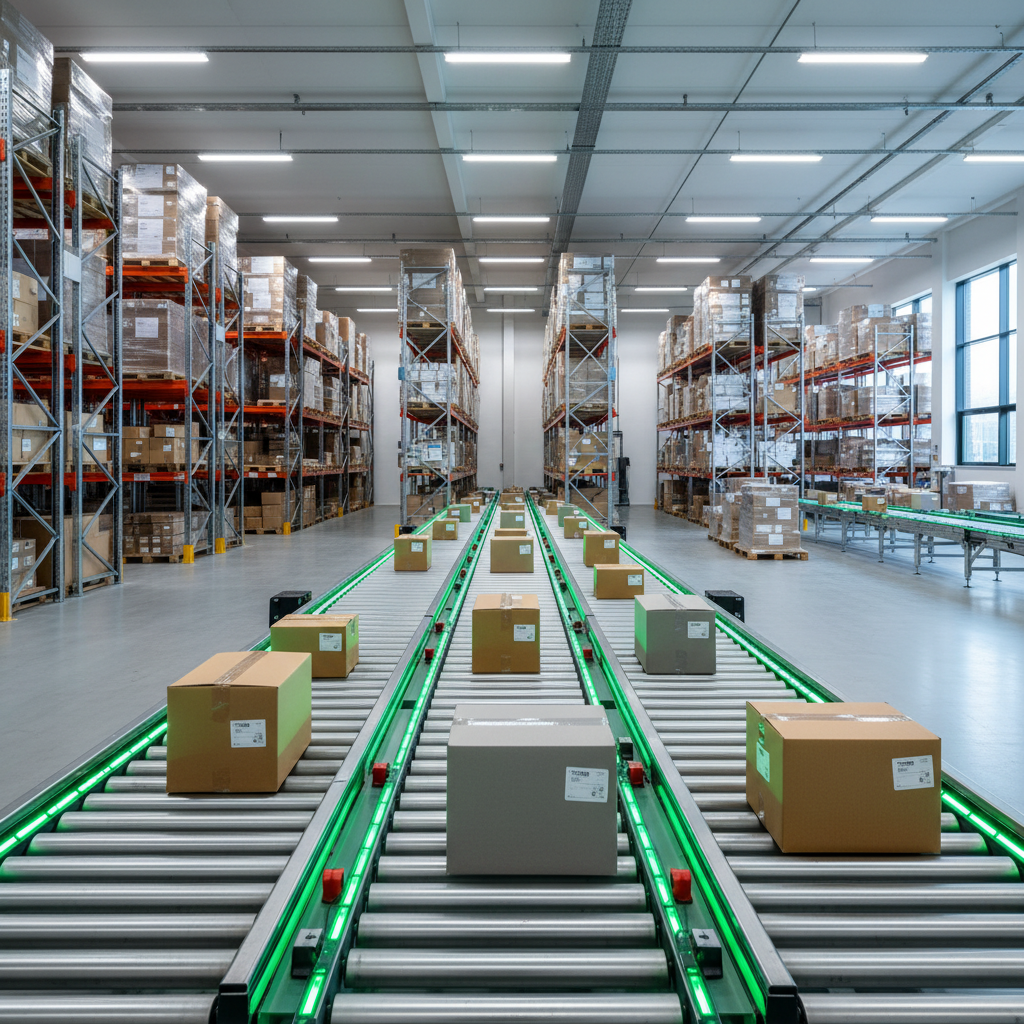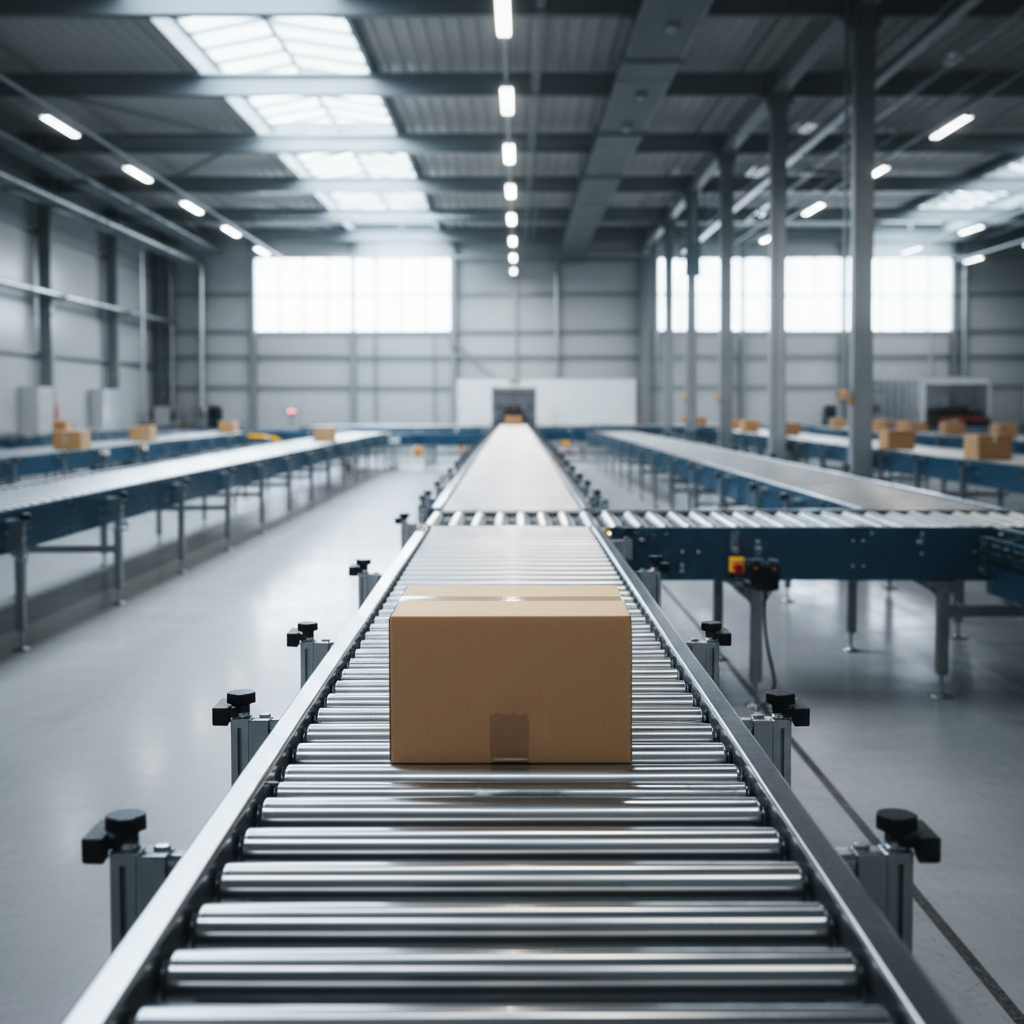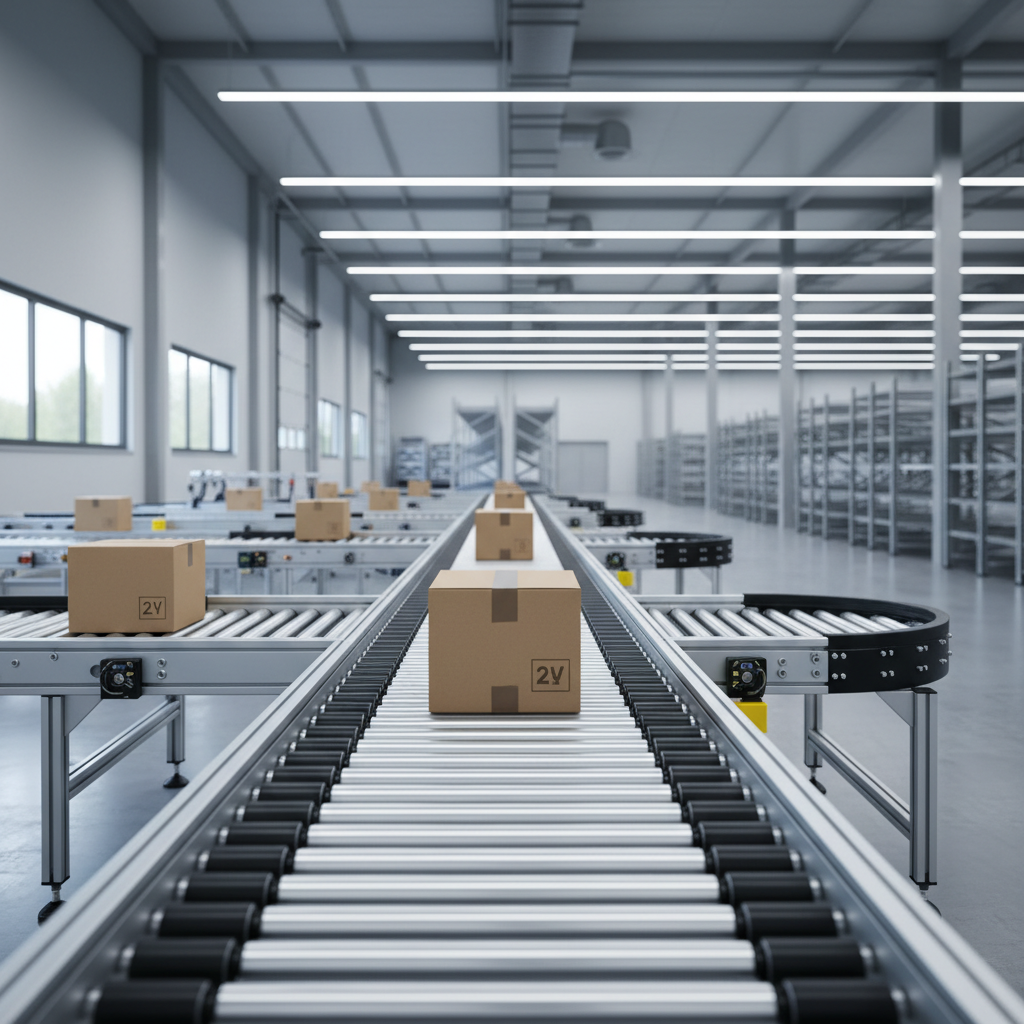
Modular Conveyor Systems: Flexibility for Future Growth
Modular conveyor systems utilize standardized, interchangeable sections for ultimate flexibility and scalability. This design allows warehouses to adapt layouts in hours, not weeks, reducing total ownership costs and preparing for future demand.
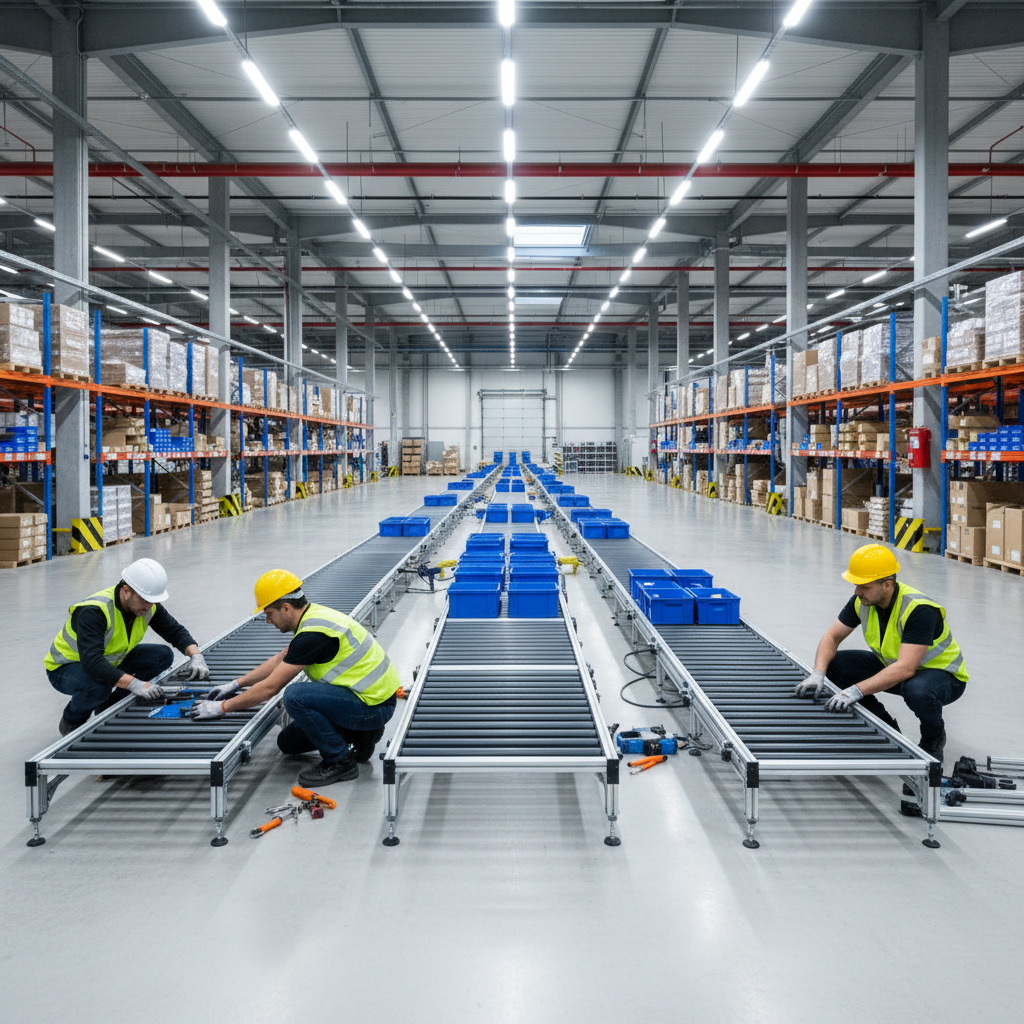
In today’s fast-paced logistics landscape, the only constant is change. Seasonal peaks, evolving product mixes, and unpredictable demand require warehouses and distribution centers to be more agile than ever. Traditional, monolithic conveyor systems, once the backbone of material handling, are often too rigid to meet these challenges. This is where modular conveyor systems emerge as a strategic solution, offering unprecedented flexibility and scalability to future-proof operations.
Definition
A modular conveyor system is a material handling solution constructed from standardized, self-contained sections or modules. Each module has a specific function (e.g., transport, accumulation, turning) and can be easily connected, disconnected, and reconfigured with other modules, much like building blocks, to create a customized transport line.
Key Numbers
| Metric | Typical range (EU 2026) | Notes |
|---|---|---|
| Initial Investment (€/m) | €350 - €700 | For standard 24V DC MDR roller conveyors. Varies with width and load capacity. |
| Throughput (Cartons/Hour) | 800 - 2,500 CPH | Dependent on speed, zone length, and control logic. |
| Typical Speed (m/s) | 0.2 - 1.5 m/s | Adjustable per module, often using Motorized Drive Rollers (MDR). |
| Reconfiguration Time | 2 - 48 hours | Compared to 1-3 weeks for traditional systems. Includes physical and software changes. |
| Payback Period (ROI) | 1.5 - 4 years | Faster ROI is driven by reduced downtime, labor savings, and adaptability. |
| Energy Consumption (kWh/100m) | 0.5 - 1.2 kWh | Significantly lower than traditional AC-powered systems due to run-on-demand technology. |
| Module Lifespan | 10 - 15 years | With regular maintenance of key components like rollers and belts. |
Core Principles of Modular Conveyor Design
The power of modularity lies in a few fundamental principles that differentiate these systems from their conventional counterparts.
Standardization and Interchangeability
The foundation of a modular system is a library of standardized components. This includes frame lengths (e.g., 1000mm, 1500mm, 2000mm), widths (e.g., 450mm, 600mm, 800mm), and functional modules like curves, mergers, and transfers. Because these components are designed to be universally compatible, a straight section from one part of the warehouse can be repurposed for a completely different line, ensuring maximum asset utilization.
Plug-and-Play Functionality
Modern modular systems are engineered for ease of assembly and disassembly. They feature pre-wired connectors for power and data, mechanical couplings that can be secured with simple tools, and decentralized control logic. This "plug-and-play" or "plug-and-produce" ethos means that expanding a line or changing a layout doesn't require extensive on-site electrical work or complex software reprogramming. A new 5-meter section can often be dropped in, connected, and commissioned in a matter of hours.
Decentralized Control
Instead of a single, massive PLC controlling the entire conveyor network, modular systems often employ a decentralized control architecture. Each module or small group of modules has its own local controller. This simplifies wiring, improves responsiveness, and enhances fault tolerance. If one module’s controller fails, it doesn’t bring down the entire system; it only affects a small, manageable segment.
Modular vs. Traditional Conveyor Systems: A Comparison
The choice between a modular and a traditional system has significant long-term implications for a warehouse's operational agility and financial performance.
| Feature | Modular Conveyor System | Traditional Conveyor System |
|---|---|---|
| Design Philosophy | Interchangeable, standardized building blocks. | Custom-engineered, one-piece, bespoke design. |
| Scalability | High. Sections can be added or removed incrementally. | Low. Expansion often requires a complete system redesign and replacement. |
| Flexibility | High. Layouts can be reconfigured quickly for new processes. | Very Low. The layout is fixed and expensive to alter. |
| Installation & Commissioning | Fast (days). Pre-wired and pre-tested modules. | Slow (weeks/months). Requires extensive on-site wiring and custom programming. |
| Maintenance | Simplified. Individual modules can be swapped out in minutes. | Complex. A single component failure can cause extensive downtime. |
| Total Cost of Ownership (TCO) | Lower, due to reusability, lower downtime, and energy efficiency. | Higher, due to inflexibility, higher modification costs, and energy use. |
Key Benefits of a Modular Approach
- Unmatched Scalability: A business can start with a small, 50-meter system and seamlessly expand it to 500 meters over several years as order volume grows. This "pay-as-you-grow" model aligns capital expenditure directly with revenue growth, avoiding premature over-investment.
- Enhanced Flexibility: Need to add a packing station or divert a line to a new sortation area? With a modular system, this involves adding or rearranging a few modules. This agility is critical in e-commerce, where fulfillment workflows may change seasonally.
- Reduced Downtime & Faster Maintenance: A faulty drive roller or sensor can be isolated and the entire module swapped out in under an hour, compared to hours or even days of downtime for repairing a traditional system. Spare parts inventory is also simplified due to standardization.
- Lower Total Cost of Ownership (TCO): While the initial per-meter cost might be comparable to some traditional systems, the TCO is significantly lower. Savings come from reduced labor for reconfiguration, minimized downtime, high energy efficiency (especially with 24V MDR technology), and the ability to reuse and redeploy assets instead of scrapping them.
Common Applications in European Warehouses
The versatility of modular systems makes them suitable for a wide range of applications across Europe, from micro-fulfillment centers in dense urban areas to large-scale distribution hubs.
E-commerce Fulfillment Centers
Dynamic environments that require frequent changes to picking paths, packing station layouts, and sortation destinations. Modular roller conveyors are perfect for creating adaptable zone routing and connecting disparate processes. An in-depth look at roller systems can be found in our comprehensive guide to roller conveyors.
Third-Party Logistics (3PL) Providers
3PLs serve multiple clients, each with unique product handling and fulfillment rules. A 3PL might need to reconfigure its entire floor plan when a new client is onboarded. Modular systems allow them to build, tear down, and rebuild conveyor lines with minimal disruption, offering tailored solutions for each client.
Manufacturing and Assembly Lines
In modern manufacturing, especially where product customization is high, assembly lines are no longer static. Modular belt conveyors can be used to create flexible cells that can be easily adapted for new product models, balancing workloads and integrating seamlessly with manual workstations.
Implementing a Modular System: What to Consider
A successful modular implementation requires careful planning that looks beyond the immediate need.
- Initial Layout Planning: Design the initial system with future modifications in mind. Use a grid-based approach and leave adequate "white space" to facilitate future changes without disrupting core infrastructure.
- Future Growth Projections: Analyze business forecasts to anticipate where and how the system might need to grow. Will you need more pick zones? A larger shipping sorter? Higher throughput? Plan the underlying electrical and data capacity for this future state.
- Integration with WMS/WES: The system's flexibility is only fully realized when supported by equally flexible software. Ensure your Warehouse Management System (WMS) or Warehouse Execution System (WES) can easily accommodate changes in routing logic and physical layout.
Many businesses find that their processes are a patchwork of fixes that evolved over time. As detailed in a recent analysis, companies grow, but their processes don't always grow with them, leading to inefficiencies that a modular system is specifically designed to solve. A holistic review before implementation is key.
Why Easy Systems is Your Trusted Partner for Modular Conveyors
In an era defined by agility, a modular conveyor system is more than just equipment; it’s a strategic investment in the long-term viability of your operation. It provides the physical infrastructure to adapt, evolve, and thrive amidst market uncertainty. At Easy Systems, we specialize in designing and implementing state-of-the-art modular conveyor solutions for the European market. Our approach is rooted in partnership. We don’t just sell hardware; we analyze your unique operational challenges and co-create a system that is not only efficient today but also inherently prepared for tomorrow. Leveraging standardized, high-quality components and intelligent, decentralized controls, we deliver systems that are robust, scalable, and easy to manage. Trust Easy Systems to build the flexible material handling backbone that will support your growth for years to come.
Frequently asked questions
What is the average cost of a modular conveyor system?+
In Europe, a standard modular roller conveyor system using 24V MDR technology typically costs between €350 and €700 per meter. The final price depends on factors like width, load capacity, and the complexity of control modules. A complete 100-meter system could range from €35,000 to €70,000.
How quickly can you reconfigure a modular conveyor layout?+
Minor changes, like adding a 3-meter section, can be done in 2-4 hours. A major reconfiguration of an entire wing of a warehouse, involving multiple lines, can typically be completed in a weekend (24-48 hours), compared to several weeks for traditional welded-frame conveyors.
Is a modular conveyor system energy efficient?+
Yes, extremely. Modular systems using Motorized Drive Rollers (MDR) and zero-pressure accumulation logic only run when a product is present. This can lead to energy savings of up to 70% compared to traditional conveyors with large AC motors that run continuously.
What is the maximum load capacity of a modular conveyor?+
Standard modules are typically designed for cartons and totes up to 50 kg. However, modular systems are also available for heavier loads. Modular pallet conveyor systems, for instance, can be designed to handle loads of 1,200 kg or more by using heavy-duty frames, rollers, and chain-driven modules.
Can modular conveyors be integrated with robots?+
Absolutely. The precise, controlled movement and defined interfaces of modular conveyors make them ideal for integration with robotic arms for picking, placing, or palletizing. The system's PLC or WCS can easily communicate with robot controllers for seamless handoffs.
How does scalability work with a modular conveyor?+
Scalability is a core feature. You can start with a basic line for transport. As volume grows, you can insert accumulation modules to create buffers, add curve modules to change direction, or plug in a sorter module to automate distribution. This is done without replacing the initial investment.

The Easy Systems editorial desk reviews and fact-checks every Conveyor-Design article against Benelux project experience. Editors translate engineering decisions — throughput, peak factors, layout, integration — into plain-language guides for operations managers, project leads and decision-makers.
- Warehouse layout & slotting
- Order-profile analysis
- Vendor-neutral comparison
- Benelux logistics market