Modular Conveyor Systems: Flexibility for Benelux Warehouses
Modular conveyor systems use pre-engineered sections that can be quickly assembled, reconfigured, and scaled. This makes them ideal for Benelux warehouses facing fluctuating demand and the need for future-proof, adaptable logistics operations.
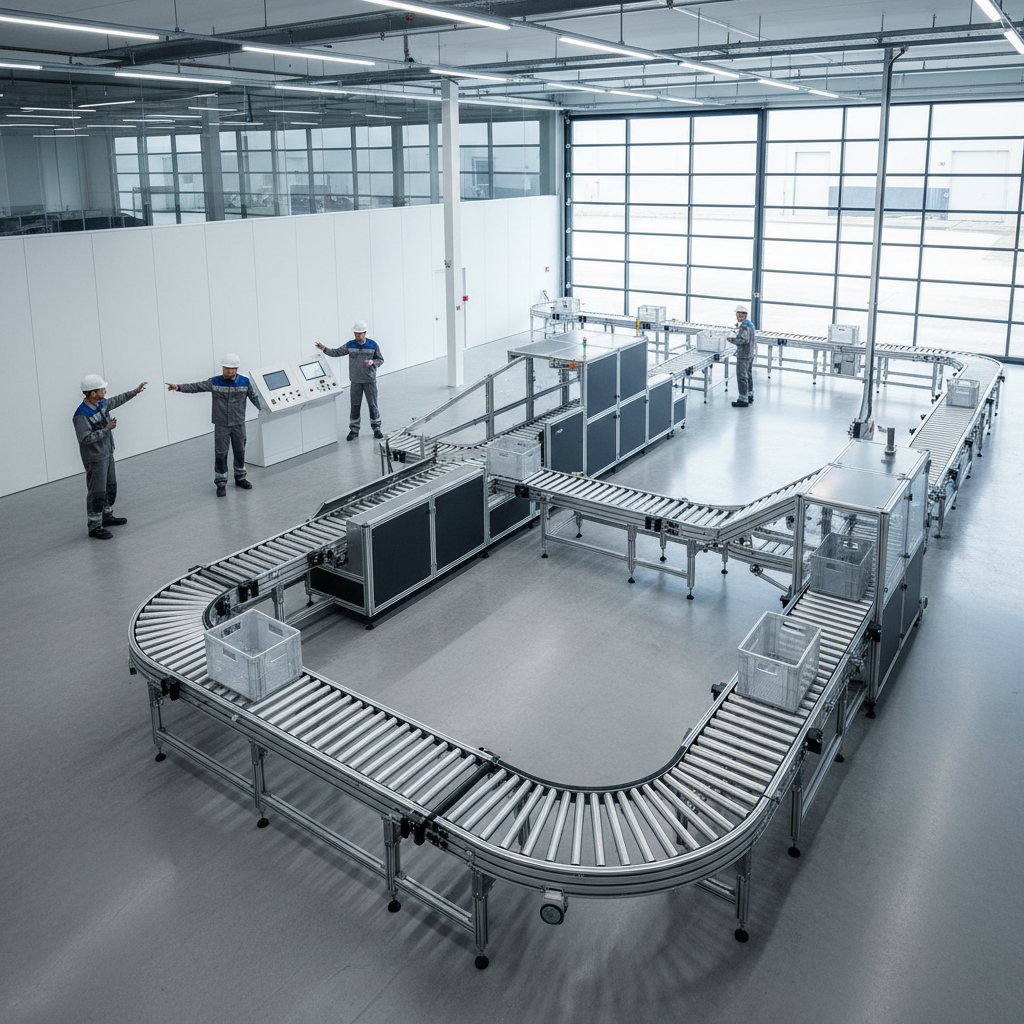
Warehouses and distribution centers across the Benelux—a pivotal logistics hub for Europe—are under immense pressure. The rapid growth of e-commerce, coupled with unpredictable consumer demand, labor shortages, and high operational costs, requires a new level of operational agility. Static, inflexible material handling systems are no longer viable. Modular conveyor systems have emerged as the definitive solution, offering the flexibility, scalability, and future-proofing that modern logistics operations demand.
Definition
A modular conveyor system is a material handling solution constructed from a series of standardized, pre-engineered, and interchangeable modules. These "plug-and-play" sections—such as straight tracks, curves, merges, and diverters—can be quickly assembled, reconfigured, and scaled, much like building blocks, to create a custom logistics workflow without the long lead times of traditional, custom-fabricated systems.
Key Numbers
| Metric | Typical range (EU 2026) | Notes |
|---|---|---|
| Throughput (parcels/hr) | 500 - 3,000 CPH | Per line; depends on MDR technology and parcel size. |
| Conveyor Speed (m/s) | 0.3 - 1.5 m/s | For Motorized Drive Roller (MDR) systems, offering variable speed. |
| Initial Investment (€/m) | €350 - €700 | For standard roller or belt modules. Excludes controls & installation. |
| Return on Investment (ROI) | 1.5 - 4 years | Accelerated ROI due to reduced installation & reconfiguration costs. |
| Reconfiguration Time (vs. Traditional) | 40-60% faster | Plug-and-play design minimizes welding, cutting, and complex wiring. |
| Energy Consumption (kWh/m/hr) | 0.02 - 0.05 kWh | For 24V DC MDR systems, which only run on demand. |
| System Lifespan (years) | 10 - 20 years | With proper maintenance and easy module replacement. |
Why Benelux Warehouses Need Modularity
The logistics landscape in Belgium, the Netherlands, and Luxembourg is characterized by a unique set of challenges. As a gateway to Europe, the region experiences immense traffic, but space is at a premium and land costs are high. This environment makes operational efficiency paramount. Traditional conveyors, welded and bolted to the floor, represent a rigid, long-term commitment. If product dimensions change, sorting logic needs updating, or throughput forecasts are revised, these legacy systems become a bottleneck.
Modular systems directly address this. A 3PL in Antwerp might need to reconfigure its outbound lines to accommodate a new client’s specific packaging. A flower distributor near Aalsmeer might experience seasonal peaks that require temporarily extending sorting capacity. An e-commerce fulfillment center in Luxembourg might need to integrate a new returns processing line. In each case, modularity allows these changes to happen in days or even hours, not weeks or months, ensuring the business remains agile and competitive.
Core Components of a Modular Conveyor System
The strength of a modular system lies in the seamless integration of its standardized components. While specific designs vary, most systems are built from a common set of building blocks.
Drive and Transport Modules
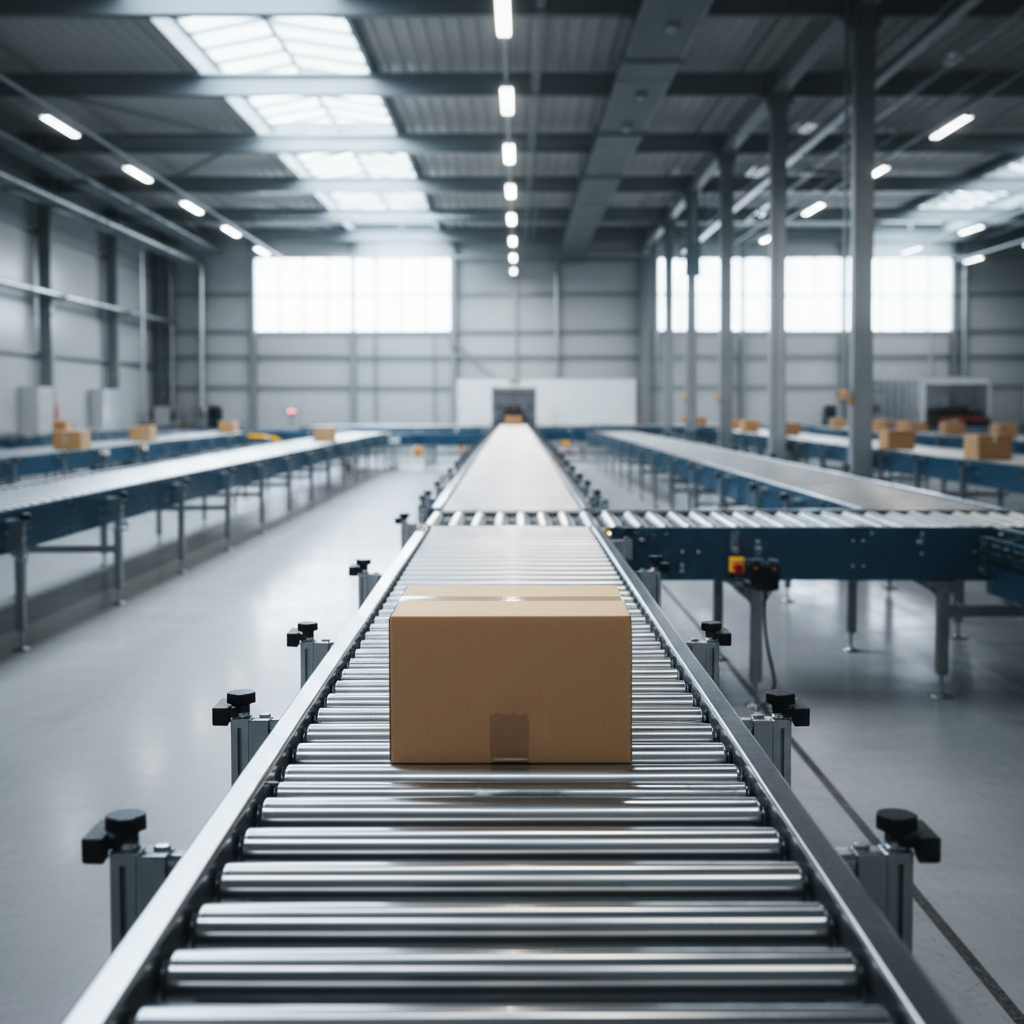
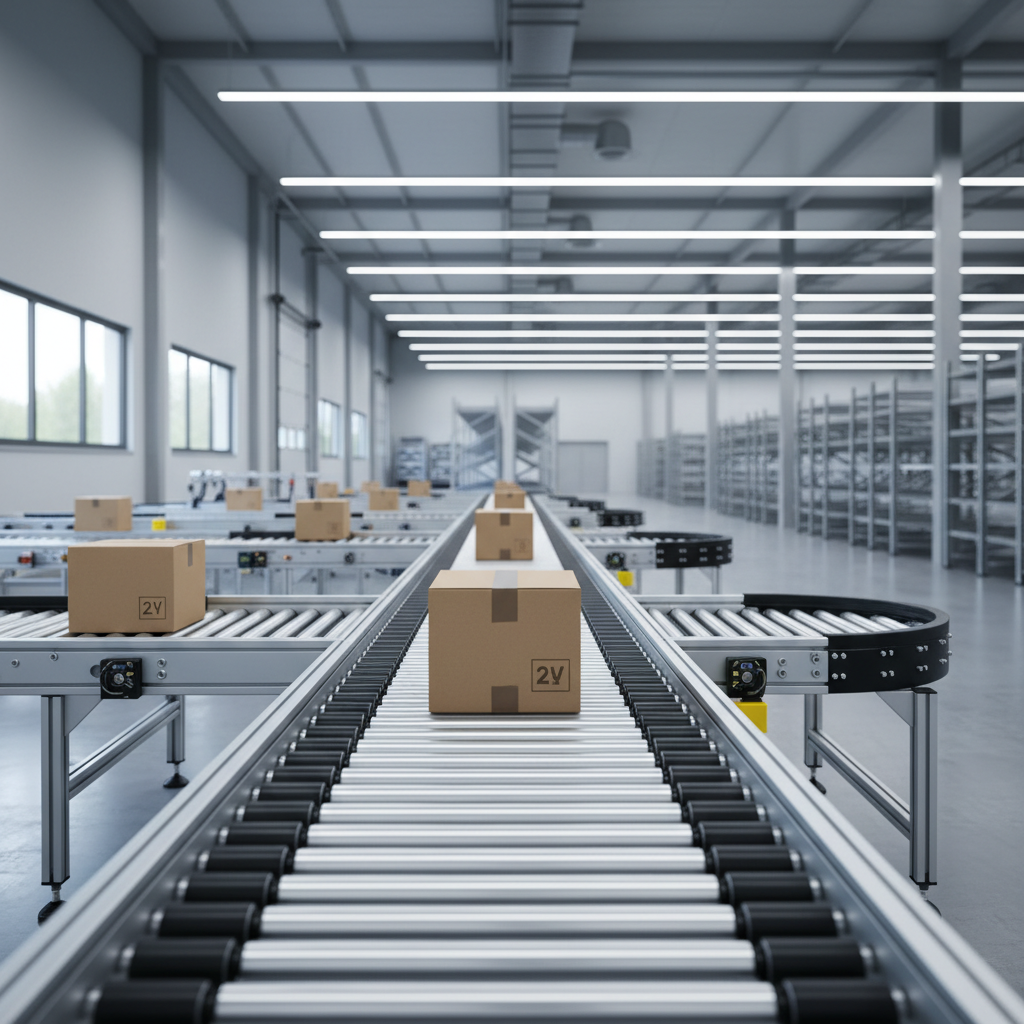
These are the backbone of the system. The most common type is the modular roller conveyor, often utilizing Motorized Drive Roller (MDR) technology. Each zone is powered by a 24V DC roller with an integrated motor, eliminating the need for long chains or belts driven by a single large AC motor. This creates a quieter, safer, and far more energy-efficient system, as sections only run when a product is present.
Control Systems
Intelligence is distributed in modular systems. While a central Warehouse Control System (WCS) or PLC (Programmable Logic Controller) manages the overall logic, local controllers on each module handle the immediate actions (e.g., "stop this box," "divert left"). This decentralized control, often using simple plug-in network cables, is a key enabler of rapid reconfiguration. Adding a new section is as simple as plugging it in and updating the WCS routing tables.
Functional Modules
Beyond simple transport, specialized modules perform specific tasks. These include:
- Merges/Inducts: To smoothly introduce boxes from multiple lines onto a single trunk line.
- Diverters/Sorters: To route packages to different destinations, such as packing stations, shipping lanes, or exception handling areas.
- Transfers: 90-degree transfer units to move totes and cartons between parallel conveyor lines.
- Lifts and Spirals: To transport goods vertically between different floor levels or over obstacles.
Modular vs. Traditional Conveyor Systems: A Comparison
The choice between a modular and a traditional system is a choice between short-term cost-cutting and long-term strategic investment. While a simple, unchanging A-to-B conveyor might be cheaper to build traditionally, any degree of operational uncertainty heavily favors a modular approach. The total cost of ownership (TCO) for modular systems is almost always lower when facility changes are factored in.
| Feature | Modular Conveyor System | Traditional Conveyor System |
|---|---|---|
| Design Philosophy | Pre-engineered, standardized modules | Custom-designed and fabricated for a specific layout |
| Installation | Bolted assembly, plug-and-play wiring | On-site welding, cutting, and custom wiring |
| Scalability | High; add, remove, or relocate modules easily | Low; expansion requires significant engineering and downtime |
| Lead Time | Short (weeks); modules are stock items | Long (months); requires custom design and fabrication |
| Initial Cost | Potentially higher per meter due to engineered modules | Often lower for very simple, static layouts |
| Total Cost of Ownership | Lower due to flexibility, reusability, and reduced downtime | Higher when any layout or process changes are needed |
Applications in E-commerce and Logistics
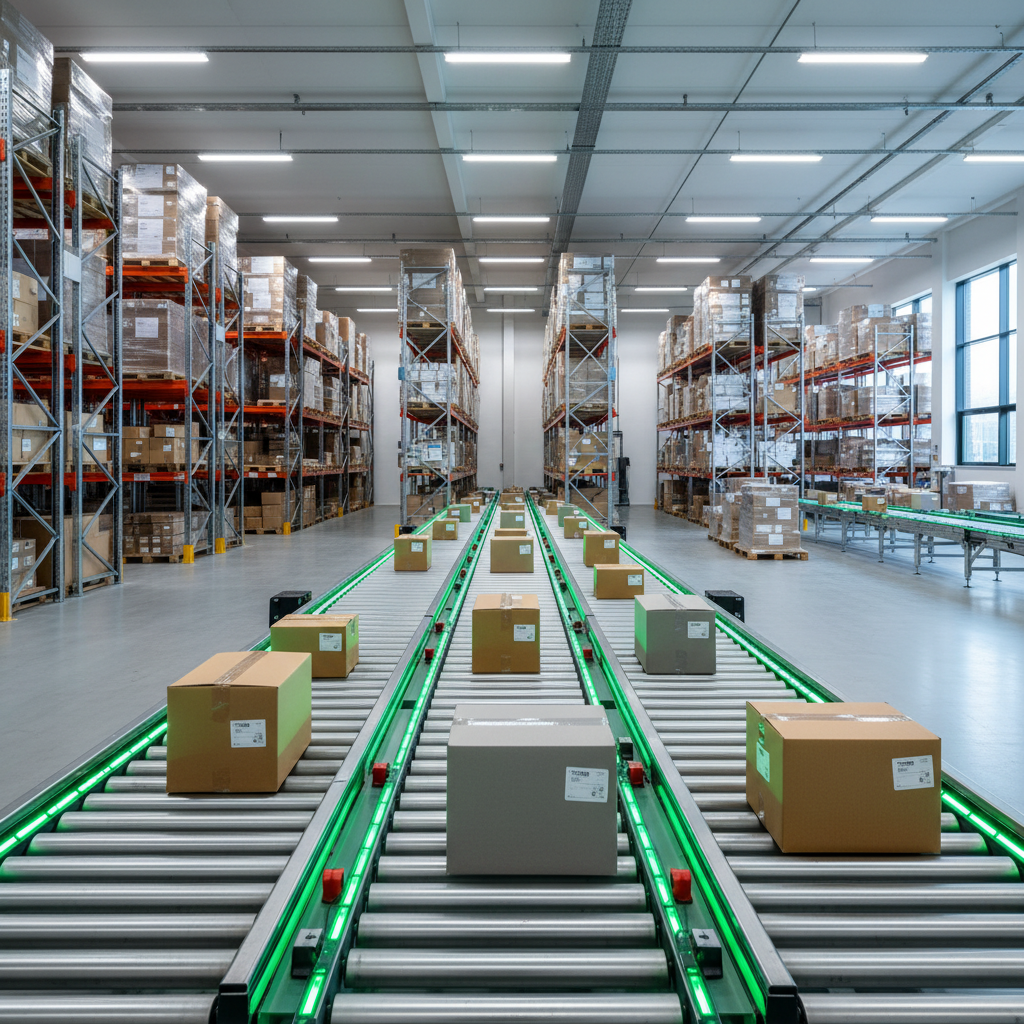
The benefits of modularity are most apparent in dynamic environments like e-commerce fulfillment and 3PL. In a modern DC, modular conveyors form the circulation system that connects discrete processes. A typical application involves creating a central loop or spine from which picking zones, packing stations, and shipping sorters branch off. For an in-depth look at the foundational technology, explore our comprehensive guide to roller conveyors.
When a company’s order profile changes—for instance, a shift from single-item orders to multi-line orders—the warehouse layout must adapt. With a modular system, new packing stations can be added along the main conveyor line, or a new put-wall system can be integrated with a dedicated conveyor feed, all with minimal disruption to the ongoing operation.
Implementing a Modular System in Your Warehouse
Successful implementation begins with a forward-looking design process. Instead of just solving today's problem, the key is to anticipate future needs. Where might you need to add capacity in two years? What new processes, like returns or value-added services, might be required? Designing a modular system with this foresight involves planning for extra space, electrical capacity, and data ports. As groeiende bedrijven maar al te vaak ervaren, groeien processen niet altijd mee met de bedrijfsgroei. A modular physical infrastructure provides the canvas for these future process adaptations, preventing logistical bottlenecks from constraining business development.
Easy Systems: Your Partner for Modular and Scalable Conveyor Solutions
Choosing the right modular conveyor system is about more than just hardware; it's about choosing a partner who understands the strategic value of flexibility. At Easy Systems, we specialize in designing and implementing modular conveyor solutions that are tailored to the unique demands of the Benelux market. We don't just sell modules; we provide future-proof logistics platforms.
Our process starts with a deep dive into your current and projected operational needs. We then leverage our extensive library of pre-engineered, proven modules—from high-speed MDR conveyors to robust pallet handling systems—to design a solution that is both cost-effective today and endlessly scalable for tomorrow. With our European manufacturing base and dedicated Benelux support teams, we deliver systems with short lead times and provide responsive, local service. Partner with Easy Systems to build a warehouse that can adapt and thrive, no matter what the future holds.
Frequently asked questions
What is the average cost of a modular conveyor system in the Benelux?+
A standard modular Motorized Drive Roller (MDR) system typically costs between €350 and €700 per meter for the hardware. Total project cost, including controls and installation, can range from €50,000 for a simple system to over €500,000 for a complex, multi-line installation.
How quickly can you reconfigure a modular conveyor line?+
A small-to-medium reconfiguration, like adding a new packing line, can often be completed in a single weekend (8-16 hours), minimizing operational disruption. This is up to 50% faster than traditional systems, which could take a full week.
Are modular systems suitable for heavy goods?+
Yes, while often associated with parcels, robust modular chain or pallet conveyor systems can handle loads from 50 kg up to 1,500 kg per pallet. These heavy-duty modules are designed with stronger frames and more powerful drives for demanding industrial applications.
What is the difference between modular belt and modular roller conveyors?+
Modular <a href="/glossary#roller-conveyor">roller conveyors</a> are ideal for flat-bottomed items like boxes and totes, offering efficient accumulation. Modular plastic belt conveyors provide a continuous surface, making them better for irregularly shaped items or inclines. They offer more surface stability but can have a higher cost per meter.
How does a modular conveyor integrate with a WMS?+
The modular conveyor's control layer (WCS/PLC) communicates with the Warehouse Management System (WMS). The WMS gives high-level commands (e.g., 'route carton to packing station 4'), and the WCS translates this into specific conveyor actions. Modern systems use standards like OPC UA for seamless communication.
Can I mix modules from different conveyor manufacturers?+
This is not recommended. While some components like rollers might have standard dimensions, the frame construction, drive systems, and control protocols are often proprietary. Using a single manufacturer ensures perfect compatibility, a unified control system, and a single point of responsibility for performance.

The Easy Systems engineering team designs, integrates and commissions conveyor systems and warehouse automation across Belgium, the Netherlands and Luxembourg. Combined experience covers roller and belt conveyors, sorters, AGV/AMR fleets, AutoStore, shuttle AS/RS and WMS/WCS integration for distribution centers and e-commerce fulfillment operations.
- Conveyor design (roller, belt, modular plastic)
- Sortation & merge logic
- AGV / AMR fleet integration
- AutoStore & shuttle AS/RS
- WMS / WCS integration