Energy Efficiency in Modern Conveyor Systems
Modern conveyor systems prioritize energy efficiency through advanced motor technology and operational strategies. This guide explores the impact of sustainability certifications and key technologies like MDR on reducing energy consumption and operational costs in European warehouses.
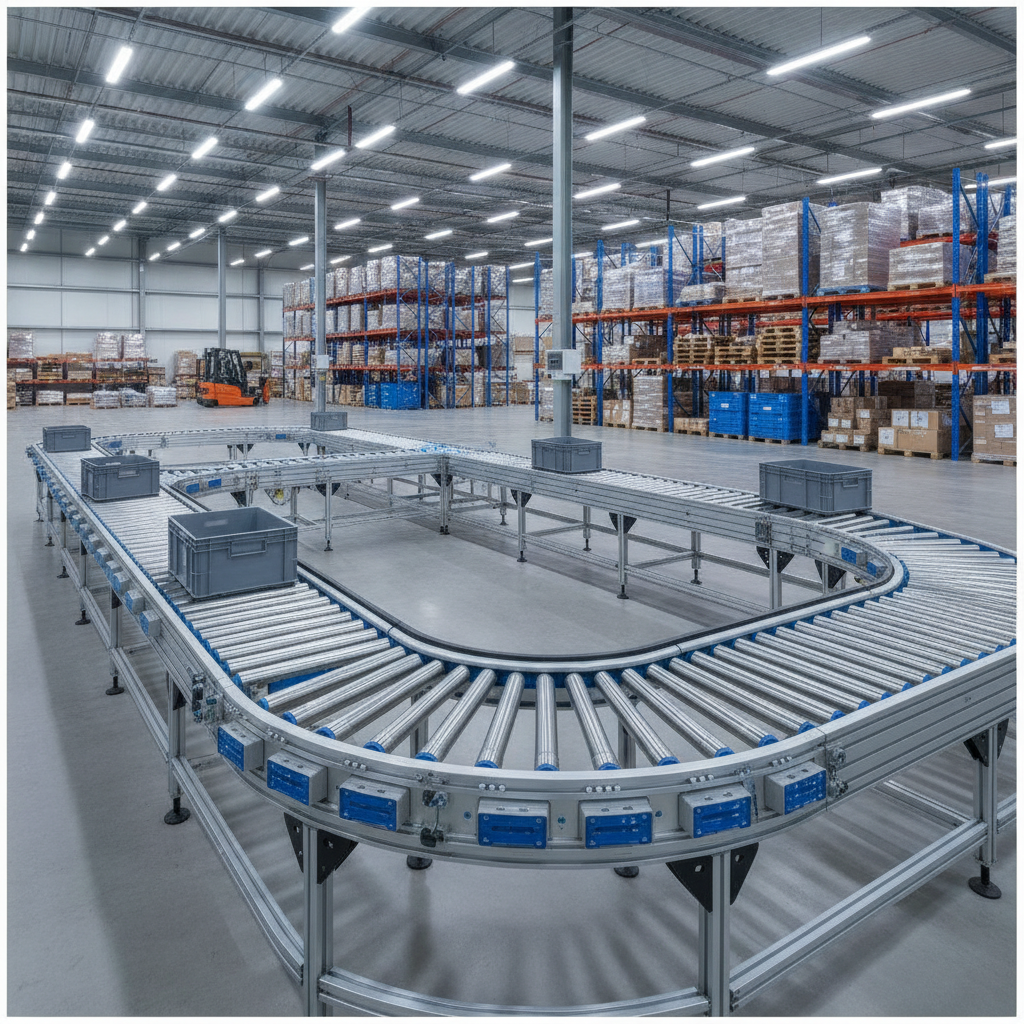
In the high-throughput world of logistics and manufacturing, conveyor systems are the circulatory system, essential for operational flow. However, their constant operation makes them significant energy consumers. As European regulations tighten and energy costs rise, focusing on energy efficiency and sustainability is no longer a choice but a competitive necessity. Modern systems leverage advanced motor technology, intelligent controls, and sustainable design principles to drastically cut operational expenditures and environmental impact.
Definition
Energy efficiency in conveyor systems refers to the optimization of their design and operation to minimize electrical energy consumption per unit of goods moved (e.g., kWh per item or per tonne-kilometre). It involves using efficient components like Motor Driven Rollers (MDR), implementing smart controls for on-demand operation, and adhering to sustainability standards and certifications.
Key Numbers
| Metric | Typical range (EU 2026) | Notes |
|---|---|---|
| Energy Savings Potential | 30% - 75% | Compared to systems with central AC motors running continuously. |
| Investment Cost (MDR) | €300 - €600 per meter | Higher initial cost than traditional systems but lower TCO. |
| Typical ROI | 2 - 4 years | Based purely on energy cost savings; can be faster with subsidies. |
| Motor Voltage | 24V or 48V DC | Low voltage is inherently safer and more efficient for zonal applications. |
| Energy Consumption (MDR) | 0.02 - 0.05 kWh per hour per zone | Highly dependent on load, speed, and active time. |
| Standby Power Consumption | 0 - 2 Watts per zone | "Sleep mode" or "run-on-demand" features virtually eliminate idle consumption. |
The Shift from AC Motors to DC Motor Driven Rollers (MDR)
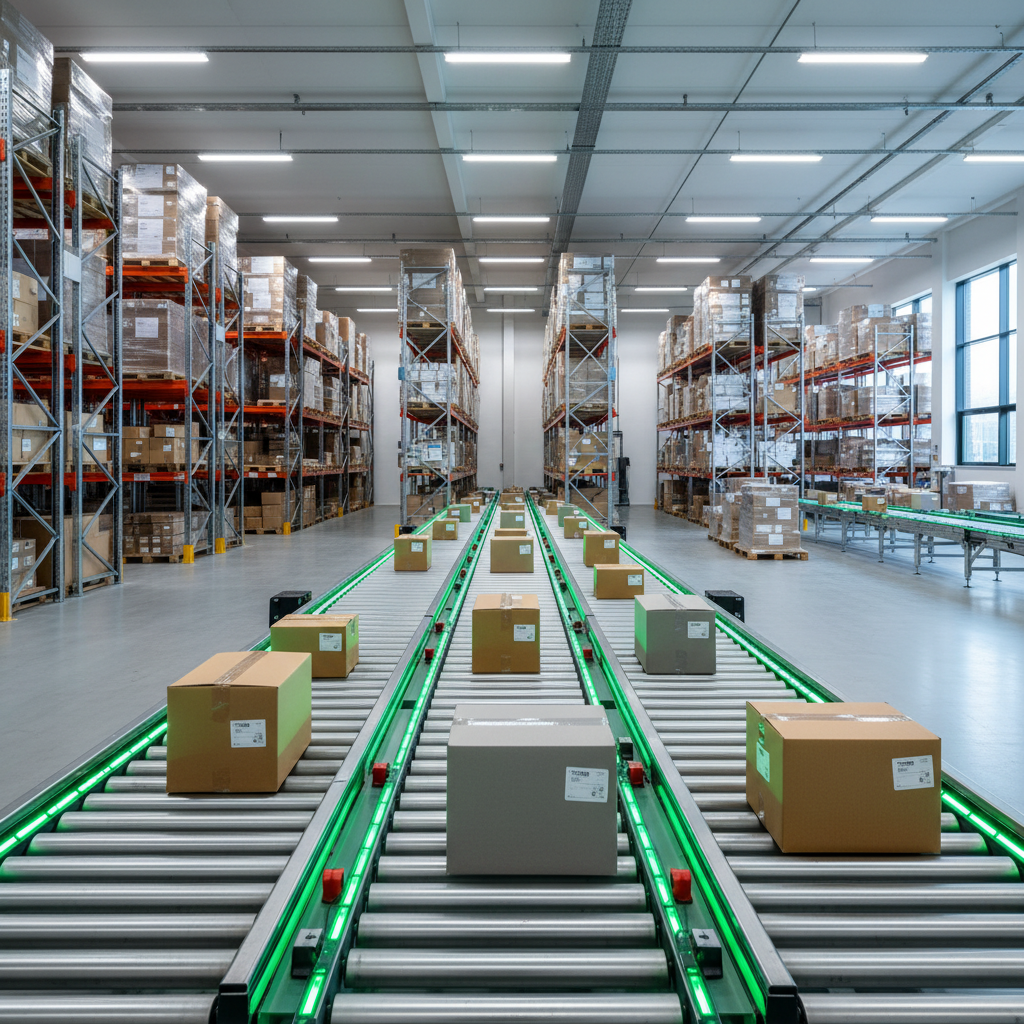
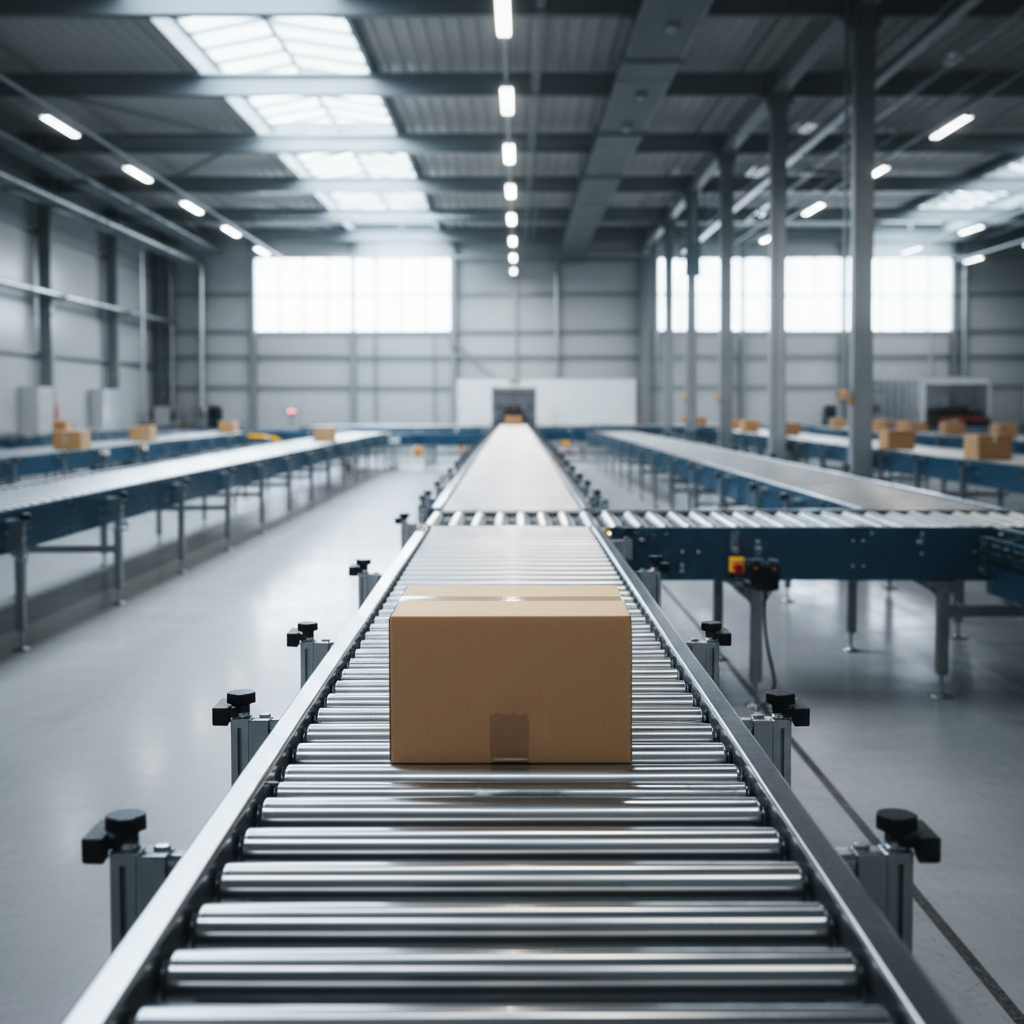
The most significant leap in conveyor energy efficiency comes from the shift away from traditional conveyor belts powered by a single, large AC induction motor. These legacy systems run continuously, regardless of whether products are present, leading to massive energy waste. The modern alternative is decentralized, zonal conveyor technology, primarily using Motor Driven Rollers (MDR).
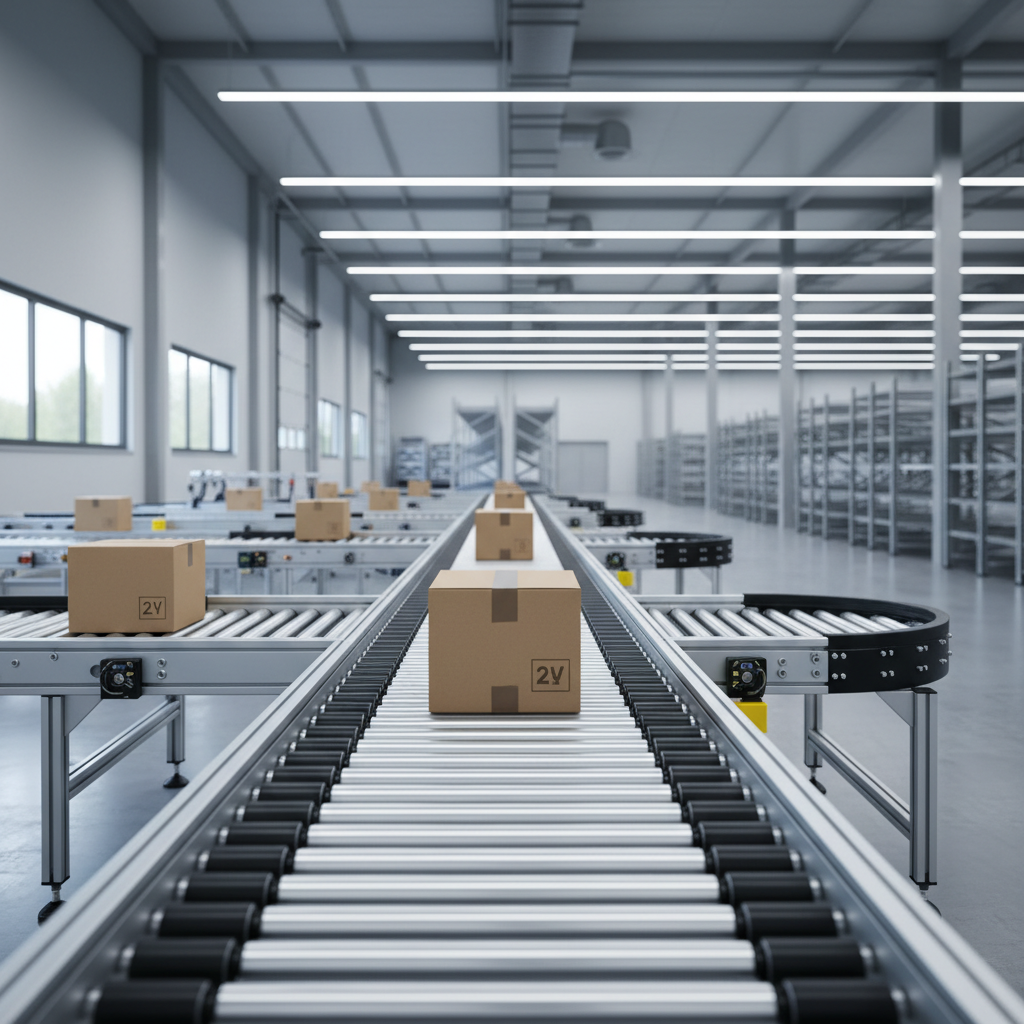
MDR systems, often based on 24V or increasingly 48V DC brushless motors, are integrated directly into the conveyor rollers. This allows for highly granular control. Each small section of the conveyor, or "zone," operates independently and only activates when a product needs to be moved. This principle, known as zero-pressure accumulation (ZPA), is a cornerstone of modern, efficient warehouse automation. When a zone is idle, its motor is off, consuming virtually zero energy.
This contrasts sharply with AC-powered systems that might consume 2-3 kWh continuously, whereas a comparable MDR system might only average 0.5-0.7 kWh for the same throughput by running on demand. For an in-depth analysis of roller conveyor technology, see our comprehensive Roller Conveyor guide.
Key Technologies and Strategies for Energy Efficiency
Beyond MDR, several other technologies and strategies contribute to a lower energy footprint.
Intelligent Zone Control & WCS Integration
Modern conveyors are not just hardware; they are intelligent systems. A Warehouse Control System (WCS) orchestrates the material flow, activating and deactivating conveyor zones with precision. By integrating sensor data, the WCS ensures that motors run only when necessary ("run-on-demand"), eliminating idle running and dramatically reducing energy use. This requires sophisticated logic to manage buffering and release of products between zones efficiently.
Regenerative Braking
In applications involving declines or deceleration, some advanced conveyor systems can capture kinetic energy. Instead of dissipating braking energy as heat, regenerative systems convert it back into electrical energy that can be used by other parts of the conveyor system or returned to the facility's power grid. While more common in systems like shuttle AS/RS, the principle is being explored for high-speed, high-load downhill conveyor lines, potentially reducing net energy consumption by 10-20% in specific scenarios.
Lightweight and Low-Friction Components
The basic physics of conveying cannot be ignored: moving mass requires energy. Manufacturers are increasingly using lightweight yet durable materials, such as aluminum for frames instead of steel, and low-friction plastics for wear strips and guide rails. A reduction in the overall weight of the conveyor belt or rollers directly translates to lower energy requirements for the motors. For instance, a modular plastic belt might be 30% lighter than a comparable steel chain, leading to a proportional decrease in the energy needed for motion.
The Role of Sustainability Certifications in Europe
In Europe, green building certifications are a major driver for adopting energy-efficient technologies in new logistics facilities. Standards like BREEAM (Building Research Establishment Environmental Assessment Method) and LEED (Leadership in Energy and Environmental Design) award credits for energy performance, directly influencing procurement decisions.
A new warehouse targeting a "BREEAM-Excellent" rating must demonstrate significant energy savings across all its systems, including material handling. This forces logistics managers and system integrators to look beyond the initial purchase price and evaluate the Total Cost of Ownership (TCO), where energy consumption is a major factor.
The table below compares key aspects of these certifications relevant to conveyor systems.
| Feature | BREEAM (EU Focus) | LEED (Global Standard) | Notes |
|---|---|---|---|
| Energy & Atmosphere | Heavy emphasis on 'Ene 01' credit for reduction of energy use and CO2 emissions. | 'Energy and Atmosphere' (EA) credit is a prerequisite. Focus on holistic building performance. | Both reward measured and verified energy savings from systems like conveyors. |
| Material Sourcing | Credits for responsible sourcing of materials (e.g., recycled steel/aluminum in frames). | 'Materials and Resources' (MR) credit for using sustainable and recycled-content materials. | Favors suppliers with transparent supply chains and environmental product declarations (EPDs). |
| Innovation | 'Inn 01' innovation credits can be awarded for exemplary performance or novel technologies. | 'Innovation in Design' (ID) credit rewards going above and beyond standard practices. | Using regenerative braking or ultra-low friction components could qualify. |
| Life Cycle Assessment | Encourages a whole-life carbon and cost analysis of the building and its systems. | Increasingly important, though historically less emphasized than in BREEAM. | This directly supports a TCO-based argument for investing in higher-quality, efficient conveyors. |
Calculating ROI for an Energy-Efficient Conveyor System
The business case for green logistics is built on a clear Return on Investment (ROI). While the initial capital expenditure for an MDR-based system can be 15-25% higher than a traditional system, the operational savings quickly compensate for this difference.
Consider a simplified scenario:
- A 100-meter conveyor line operating two shifts (4,000 hours/year).
- Electricity price: €0.25/kWh (a conservative average in the EU).
- Traditional System (AC motor): 3 kW continuous power = 12,000 kWh/year = €3,000/year.
- MDR System (48V DC): Average power of 0.7 kW (run-on-demand) = 2,800 kWh/year = €700/year.
The annual saving is €2,300. If the additional upfront investment for the MDR system was €6,000, the ROI is less than 3 years. As many businesses find that their processes don't scale with their growth, investing in scalable, efficient infrastructure becomes critical for long-term success.
Future Outlook: Towards Carbon-Neutral Conveying
Integration with On-site Renewables
The low-voltage DC nature of modern conveyor systems makes them perfectly suited for direct integration with on-site renewable energy sources, particularly solar panels. A 48V DC microgrid within a warehouse, fed by rooftop solar, could power large sections of the conveyor network directly, bypassing DC-AC-DC conversion losses and further reducing reliance on the grid.
Predictive Maintenance and AI
The next frontier is using AI and sensor data for predictive maintenance. By monitoring motor torque, temperature, and vibration, an AI-driven WCS can detect inefficiencies caused by failing bearings or debris. Proactively fixing these issues ensures the system always runs at peak efficiency, preventing energy waste before it becomes significant and avoiding costly downtime.
Easy Systems: Your Partner in Sustainable Conveyor Solutions
In an era defined by rising energy costs and environmental responsibility, choosing the right conveyor system is a strategic financial and ethical decision. At Easy Systems, we design and build modular, future-proof conveyor solutions with energy efficiency at their core. Our systems, built around advanced MDR technology and intelligent controls, are engineered to minimize your operational costs and carbon footprint.
We understand the demands of European sustainability standards like BREEAM and provide the technology and documentation to help you meet your green building goals. By focusing on robust design, high-quality components, and smart, on-demand operation, we deliver a lower Total Cost of Ownership and a clear, rapid return on investment. Partner with us to build a logistics operation that is not just efficient, but also sustainable and ready for the future.
Frequently asked questions
How much energy can an MDR conveyor system save?+
An MDR (Motor Driven Roller) conveyor system can reduce electricity consumption by 30% to 75% compared to a traditional conveyor with a continuously running AC motor. For a typical 100-meter line, this can translate into annual savings of over €2,000 in energy costs.
What is Zero-Pressure Accumulation (ZPA) and how does it save energy?+
Zero-Pressure Accumulation is a control method that divides a conveyor into zones that only activate when a product is present. This "run-on-demand" approach is the primary energy-saving feature of MDR systems, as it eliminates idle running, which can account for over 90% of the energy waste in older systems.
Is a 48V DC conveyor motor better than a 24V DC motor?+
48V DC motors are becoming the new standard for energy-efficient conveyors. They can deliver the same power as 24V motors with lower current, which reduces electrical losses (I²R losses) in cables and components. This makes them about 5-10% more efficient and allows for longer cable runs and more powerful rollers.
How does a BREEAM certification impact my conveyor system choice?+
BREEAM provides significant credits for energy efficiency. Choosing a highly efficient conveyor system, such as one with MDR and run-on-demand logic, directly contributes to achieving a higher BREEAM rating (e.g., 'Excellent' or 'Outstanding'). This can increase the property value and lower its operational carbon tax liability.
What is the typical ROI for an energy-efficient conveyor system?+
The Return on Investment (ROI) for upgrading to an energy-efficient MDR conveyor system is typically between 2 and 4 years. This is calculated based on the initial investment premium versus the annual savings in electricity costs, which can be substantial, often exceeding €20 per meter of conveyor per year.

The Easy Systems editorial desk reviews and fact-checks every Conveyor-Design article against Benelux project experience. Editors translate engineering decisions — throughput, peak factors, layout, integration — into plain-language guides for operations managers, project leads and decision-makers.
- Warehouse layout & slotting
- Order-profile analysis
- Vendor-neutral comparison
- Benelux logistics market