Circularity in Conveyor Systems: A Benelux Guide to Greener Logistics
Discover how to transition from linear to circular conveyor systems in your Benelux warehouse. This guide covers modular design, energy efficiency, and material recycling to create a more sustainable and cost-effective logistics operation.
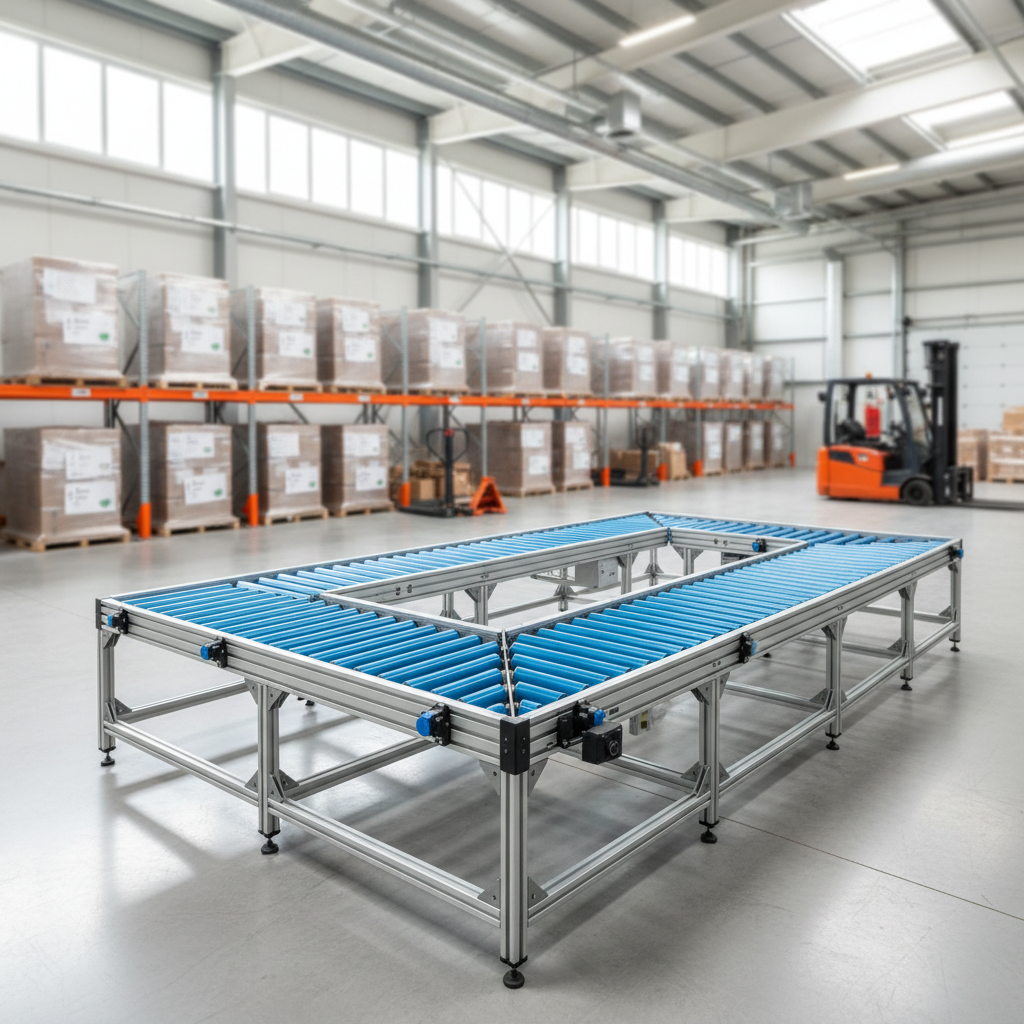
Key numbers
| Metric | Typical range (EU 2026) | Notes |
|---|---|---|
| Energy Savings (MDR vs. AC) | 50-70% | Achieved via 24V DC motors running only on-demand. |
| System Lifespan (Circular) | 15-20 years | Through modular design, refurbishment, and component reuse. |
| TCO Reduction | 20-35% | Over a 10-year lifespan compared to a traditional linear system. |
| Payback on MDR Retrofit | 2-4 years | Based on energy savings alone for a medium-sized facility. |
| Material Recyclability | >95% | For steel and aluminum frames, designed for disassembly. |
| Reconfiguration Cost | 10-25% of initial cost | Compared to 70-100% replacement cost for a rigid, linear system. |
The logistics sector, especially within the dense distribution network of the Benelux, is under increasing pressure to become more sustainable. The traditional linear model of "take, make, dispose" is no longer viable. This guide explores the practical application of circular economy principles to conveyor systems, offering a roadmap for warehouse managers in Belgium, the Netherlands, and Luxembourg to build greener, more cost-effective, and resilient logistics operations.
Definition
Circularity in conveyor systems refers to an industrial model where components and materials are designed for longevity, reusability, and recyclability. Instead of becoming waste at the end of their service life, system parts are intended to be recovered, refurbished, or remanufactured, thereby creating a closed-loop system that minimizes environmental impact and resource depletion.
The Linear Problem in Traditional Conveyor Systems
For decades, material handling systems were engineered with a primary focus on initial cost and immediate performance. This resulted in a linear lifecycle: systems were manufactured, installed, used until they wore out or became obsolete, and then scrapped. This approach poses several significant problems in the modern European context.
- Material Waste: Worn-out belts, damaged rollers, and obsolete frames are often sent directly to landfill. A typical system can contain hundreds of kilograms of steel, aluminum, and plastics that are never recovered.
- High Energy Consumption: Many older systems run on centralized 400V AC motors that operate continuously, regardless of throughput. An average 50-meter line of this type can consume thousands of kilowatt-hours per year, representing a significant operational cost and carbon footprint.
- Inflexibility and Obsolescence: A rigidly designed conveyor is a sunk cost. When operational needs change (a common occurrence as companies grow and processes evolve), the entire system often needs to be ripped out and replaced, generating immense waste.
Core Principles of a Circular Conveyor System
A circular approach reimagines the entire lifecycle of a conveyor system, from initial design to end-of-life. It is built on a foundation of long-term thinking and resourcefulness, revolving around a few key strategies.
Reduce: Energy Efficiency and Component Minimization
The most sustainable material is the one never used. This principle applies to both physical components and energy. Modern conveyor design achieves this through technologies like the Motorized Drive Roller (MDR). These 24V DC rollers power small sections of the conveyor independently and operate on-demand, only activating when a product is present. Compared to a single, continuously running AC motor, MDRs can reduce energy consumption by 50-70%, translating to thousands of euros in savings annually for a medium-sized facility.
Reuse: Modularity and Reconfiguration
Modularity is the cornerstone of circular hardware. A modular roller conveyor or belt system is constructed from standardized, interlocking parts. This "Lego-like" approach means that when your operational needs change, the system doesn’t become obsolete. Instead, it can be reconfigured, expanded, or even disassembled and moved to a new facility. This dramatically extends the useful life of the core components, shifting the investment from a disposable asset to a long-term, flexible tool.
Refurbish: Extending Lifespan Through Upgrades
In a circular model, wear-and-tear doesn’t automatically mean replacement. High-quality components are designed to be serviced and refurbished. Motors can have their brushes replaced, bearings can be re-lubricated, and control cards can be upgraded without discarding the entire unit. This maintenance-first approach not only reduces waste but also lowers the total cost of ownership by avoiding expensive new purchases.
Recycle: Material Selection and End-of-Life Planning
Even with reuse and refurbishment, components eventually reach a true end-of-life. A circular design plans for this from day one. This involves selecting materials that are easily recyclable, such as standard aluminum profiles and PET plastics, over complex composites. For instance, using a standard polyester belt conveyor belt is preferable to a complex multi-layer variant if it meets performance needs, as it simplifies the recycling process. Forward-thinking suppliers also offer buy-back or take-back programs, ensuring that old modules are properly dismantled and fed back into the material stream.
Comparing Linear vs. Circular Conveyor Lifecycles
The philosophical and practical differences between a linear and a circular approach are stark. The choice impacts everything from initial investment to long-term operational resilience. The following table highlights the key distinctions for a warehouse manager considering a new system.
| Feature | Linear (Traditional) Model | Circular (Sustainable) Model |
|---|---|---|
| Design Philosophy | Built for a single, fixed purpose. | Designed for Disassembly and Reuse (DfDR). |
| Material Choice | Cost-focused, often using mixed or composite materials that are hard to separate. | Prioritizes high-purity, recyclable/recycled materials like aluminum and PET. |
| Energy Consumption | High; typically uses continuously running 400V AC motors. | Low; uses on-demand 24V DC Motorized Drive Rollers (MDR). |
| End-of-Life | Scrap, landfill, or low-value recycling. | Refurbishment, remanufacturing, high-value recycling, supplier buy-back. |
| Maintenance | Reactive: replace components upon failure. | Predictive: monitor health to extend component life through timely service. |
| Long-Term Cost | Lower initial cost, but high TCO due to energy, replacement, and disposal costs. | Potentially higher initial cost, but significantly lower Total Cost of Ownership (TCO). |
The Business Case for Circularity in Benelux Warehouses
Adopting circularity isn't just an environmental choice; it's a strategic business decision with clear financial and competitive advantages, particularly in the highly regulated Benelux market. The push from the European Green Deal places clear expectations on businesses to reduce their carbon footprint and improve resource efficiency. Companies that lead in this transition will have a distinct advantage.
The financial argument centers on Total Cost of Ownership (TCO). A modular, MDR-powered system may require an initial investment that is 10-15% higher than a traditional alternative. However, the savings are recouped quickly. Drastically lower energy bills, reduced maintenance labor, and the elimination of costs associated with replacing an entire system make the circular option more economical within a 3-5 year timeframe. Furthermore, the inherent flexibility of modular systems, as detailed in our comprehensive roller conveyor guide, protects the initial investment against changing market demands, making it a future-proof asset.
Practical Implementation: A Phased Approach
Transitioning to a circular model can be done in phases. For existing facilities, a great first step is retrofitting energy-guzzling AC motors with efficient MDRs and intelligent control systems. This delivers immediate and measurable energy savings. When planning a new build or a major overhaul, specifying a fully modular system designed for disassembly is key. Work with suppliers who can demonstrate a clear end-of-life plan for their products, including refurbishment services or buy-back guarantees. Finally, training your maintenance team to think in terms of "repair and refurbish" rather than "rip and replace" is crucial for capturing the long-term value of a circular system.
Partnering for a Circular Future
The journey toward a circular logistics operation requires a partner who understands both the technology and the philosophy behind it. At Easy Systems, we are dedicated to this vision. Our conveyor systems are, by design, modular, flexible, and energy-efficient. We build with high-quality, recyclable materials and engineer our solutions for an extended, multi-purpose life in demanding Benelux distribution hubs.
We see a conveyor not as a disposable product, but as a long-term service platform. We work with our clients to design systems that can grow and adapt, providing expert advice on reconfiguration, upgrades, and responsible end-of-life management. By choosing Easy Systems, you are not just buying a conveyor; you are investing in a resilient, cost-effective, and sustainable material handling solution that supports your business goals and contributes to a greener logistics landscape.
Frequently asked questions
What is the main financial benefit of a circular conveyor system?+
The main financial benefit is a lower Total Cost of Ownership (TCO). While the initial investment might be slightly higher, substantial savings on energy (up to 70% with MDR), reduced replacement parts costs, and a much longer, flexible system lifespan result in significant long-term financial gains.
Can I retrofit my existing conveyor to be more circular?+
Yes, retrofitting is an effective first step. Replacing a central 400V motor with 24V Motorized Drive Rollers (MDR) can cut energy use by up to 70%. Upgrading control systems for on-demand operation further reduces waste. While a new system designed for circularity offers maximum benefit, retrofitting key components delivers a payback period of just 2-4 years through energy savings alone.
How does modularity help with circularity?+
A modular design allows for easy reconfiguration when your needs change, costing only 10-25% of the original investment versus a full replacement. Damaged sections or individual components like a drive roller can be swapped out in under 30 minutes, minimizing downtime and extending the system's usable life to 15-20 years.
What is a Motorized Drive Roller (MDR) and why is it important?+
A Motorized Drive Roller (MDR) is a conveyor roller with an integrated 24V DC motor. It powers small, independent zones, running only when an item is present. This on-demand operation is the main driver behind the 50-70% energy reduction compared to older AC-powered systems, making it fundamental for meeting 2026 EU sustainability targets.
What happens to components at their end-of-life?+
In a circular model, steel and aluminum frames are designed for disassembly and are over 95% recyclable. Key components like MDRs are returned to the manufacturer for refurbishment and redeployment, often costing only 40-60% of a new part. This recovery and reuse process dramatically reduces landfill waste and the carbon footprint from new production.

The Easy Systems engineering team designs, integrates and commissions conveyor systems and warehouse automation across Belgium, the Netherlands and Luxembourg. Combined experience covers roller and belt conveyors, sorters, AGV/AMR fleets, AutoStore, shuttle AS/RS and WMS/WCS integration for distribution centers and e-commerce fulfillment operations.
- Conveyor design (roller, belt, modular plastic)
- Sortation & merge logic
- AGV / AMR fleet integration
- AutoStore & shuttle AS/RS
- WMS / WCS integration