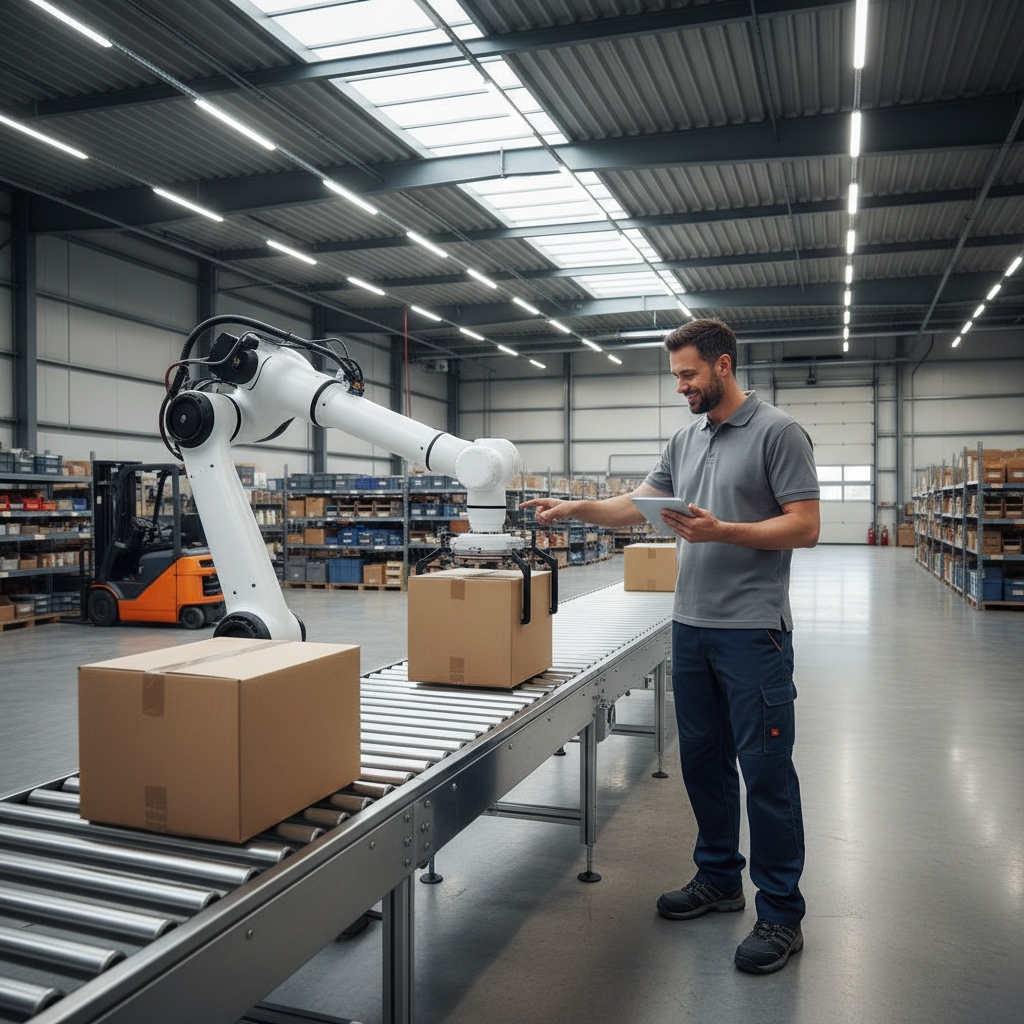
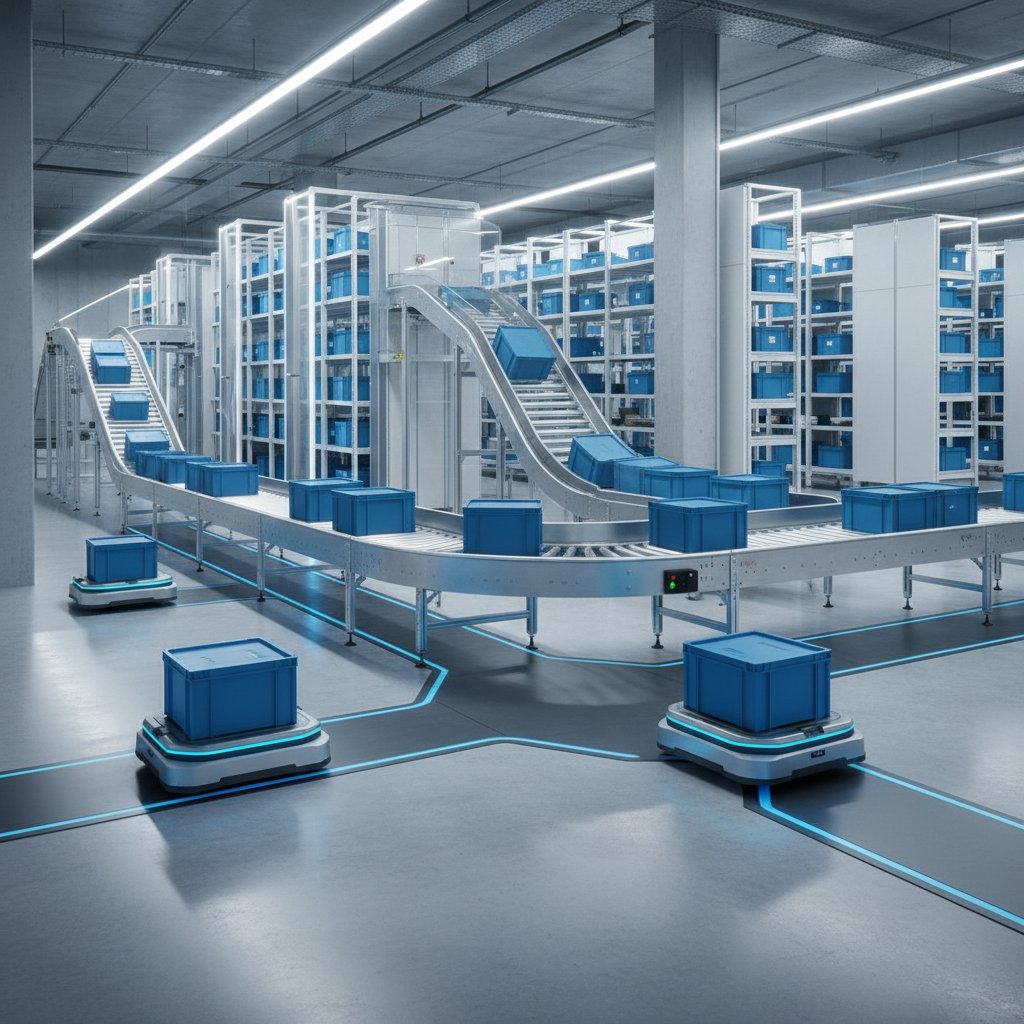
The Role of Robotics in Conveyor Loading and Unloading for DCs
Robotic automation is transforming how distribution centres handle conveyor loading and unloading. Discover the key technologies, benefits, and implementation strategies for European logistics leaders looking to enhance operational efficiency and safety.
In the high-velocity world of modern logistics, the points of transition—where goods are moved onto or off a conveyor system—have long been a source of inefficiency and a significant operational bottleneck. The manual labour required for loading and unloading is strenuous, repetitive, and costly. Today, European distribution centres are aggressively turning to robotics to automate these critical tasks, unlocking new levels of throughput, safety, and operational resilience.
The Manual Bottleneck: Why Traditional Loading/Unloading is Obsolete
For decades, the standard procedure for loading and unloading conveyors has involved human operators physically moving boxes from pallets to the conveyor line, and vice-versa. This method is fraught with challenges that directly impact the bottom line:
- High Labour Costs & Scarcity: The physical demands of the job lead to high staff turnover. Across Europe, finding and retaining labour for such strenuous roles is increasingly difficult and expensive, putting a cap on operational capacity.
- Ergonomic & Safety Risks: Repetitive lifting of heavy or awkward packages is a leading cause of musculoskeletal injuries in the logistics sector. According to Eurostat, handling, lifting, and carrying objects is a primary cause of non-fatal workplace accidents, leading to lost workdays and increased insurance premiums.
- Inconsistent Throughput: Human performance naturally varies. Pace can slow due to fatigue, breaks are necessary, and the speed of unloading can rarely match the maximum consistent speed of a high-performance conveyor system. This creates a classic bottleneck, where an expensive automated conveyor is starved of product.
- Product Damage: Manual handling errors can lead to dropped or mishandled packages, resulting in damaged goods, customer dissatisfaction, and costly returns.
Enter the Robots: Key Technologies Automating the Dock and Line
Robotic conveyor loading and unloading solutions are not a single technology but an integrated system of advanced components. Each part plays a crucial role in enabling a seamless, automated workflow.
Articulated Robotic Arms
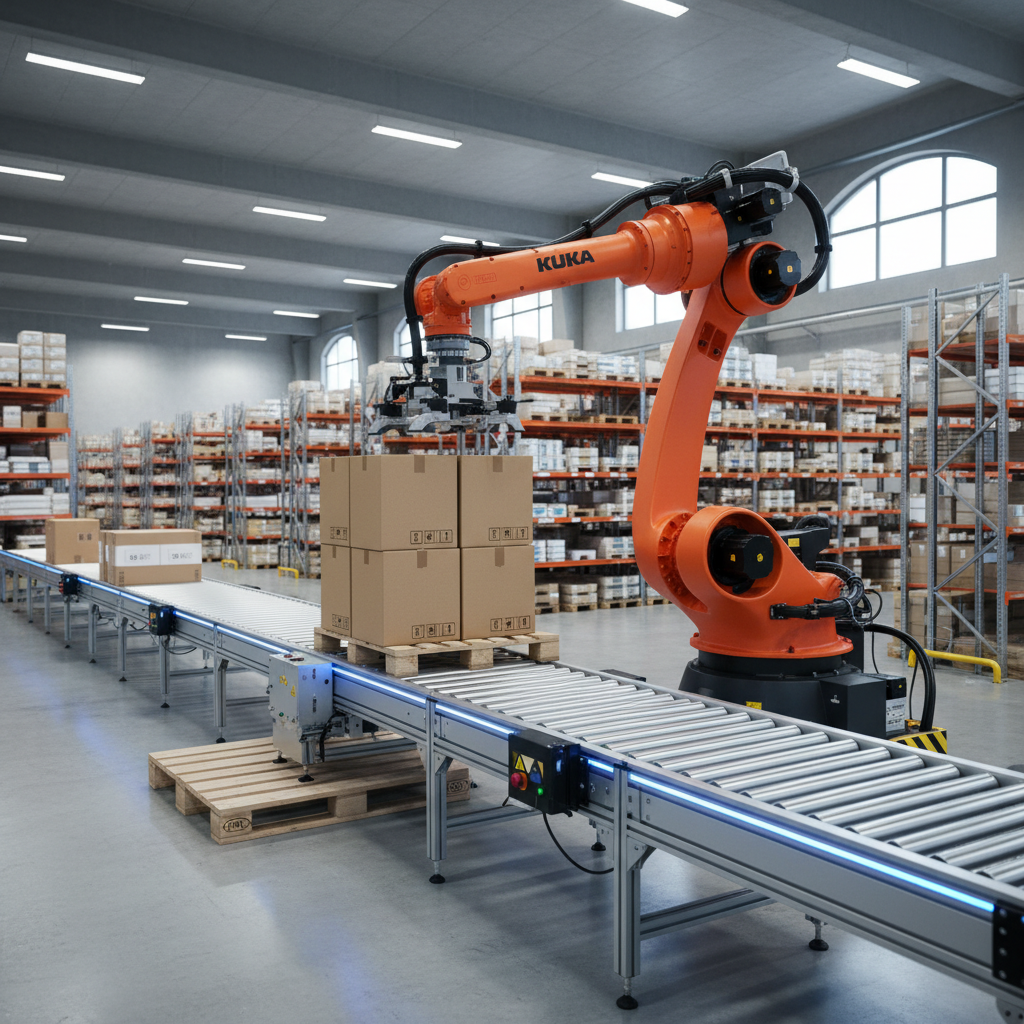
The core of the solution is typically a 6-axis articulated robotic arm, similar to those found in advanced manufacturing. Brands like KUKA (Germany), ABB (Switzerland/Sweden), and Fanuc (Japan) are prevalent in European facilities. These arms offer exceptional flexibility, reach, and payload capacity, allowing them to service pallets of various heights and place items precisely onto the conveyor belt.
Advanced Vision Systems
This is the "brain" of the operation. Modern systems use a combination of 3D cameras and AI-powered software to see and understand the environment. The vision system identifies the location, orientation, size, and shape of each box on a pallet, even when they are randomly stacked. This process, often called "singulation," allows the robot to pick one item at a time without disturbing others, which is critical for mixed-SKU pallets common in e-commerce and retail logistics.
Intelligent Gripping Technology
The "hand" of the robot, the end-of-arm tooling (EOAT), is vital for handling diverse products. The most common solution for case and box handling is the vacuum gripper. A grid of adjustable suction cups can conform to different box sizes and securely lift items weighing up to 30-50 kg. For more complex tasks, such as handling polybags or irregularly shaped items, adaptive finger grippers may be used.
The Operational Impact: Measurable Benefits for European DCs
Implementing robotic loading and unloading delivers tangible, quantifiable results. For a typical European distribution centre handling thousands of parcels per hour, the benefits are compelling:
- Increased Throughput: A robotic cell can consistently operate at a pace of 600 to over 1,000 picks per hour, 24/7. This can increase the throughput of a single conveyor induction line by more than 25% compared to manual operations.
- Reduced Labour Dependency: A single robotic cell can perform the work of 2-4 human operators per shift. For a 24/7 operation, this can mean reassigning 6-12 FTEs to more value-added tasks, drastically reducing dependency on a volatile labour market.
- Enhanced Safety: By automating the D-tasks (Dull, Dirty, Dangerous), the risk of lifting-related injuries is virtually eliminated in that area. This contributes to a safer work environment and reduces associated costs.
- Improved Accuracy and Quality: Robots place items with precision, ensuring proper orientation and spacing on the conveyor for downstream processes like scanning and sorting. This reduces jams and sorting errors, improving the overall quality of logistics execution.
Comparison: Manual vs. Semi-Automated vs. Fully Robotic Unloading
The decision to automate is a strategic one, involving a trade-off between investment and operational performance. Here’s how the options compare:
| Metric | Manual Unloading | Semi-Automated (e.g., Vacuum Lift Assist) | Fully Robotic Unloading |
|---|---|---|---|
| Throughput (Cases/Hour) | 200 - 400 per person | 400 - 600 per person | 600 - 1,000+ per cell |
| Labour Requirement (per line) | 2-3 operators | 1-2 operators | 0.25 operator (supervision) |
| Operational Cost | High (Wages, Benefits) | Medium (Wages, Maintenance) | Low (Energy, Maintenance) |
| Safety Risk | High (Repetitive Strain, Lifting Injuries) | Medium (Reduced Strain, but still manual) | Very Low (Eliminates manual lifting) |
| Initial Investment (CAPEX) | Very Low | Low | High |
| Typical ROI | N/A | 2-4 years | 1.5 - 3 years |
Navigating the Integration Challenge
A robotic cell is not an island. Its value is maximized when it is seamlessly integrated into the facility's digital and physical ecosystem. This is a complex task where expert guidance is paramount. The system must communicate with the Warehouse Management System (WMS) or Warehouse Control System (WCS) to receive information about incoming pallets and to report on unloading progress. Physically, the solution must be designed to fit the available space, respecting floor load limits and ceiling heights. Most importantly, the interface between the robot and the conveyor system must be flawless. The conveyor must be able to signal its status (ready, full, stopped) and the robot must place items with a precision that the conveyor can handle. This level of deep integration requires a partner with expertise in both robotics and conveyor systems. For more information on intelligent conveyor design, see how innovative Plug-and-Play modules can facilitate such integration at Easy Systems.
The Future is Now: Trends in Robotic Conveyor Handling
The technology continues to evolve rapidly. We are seeing a rise in AI-powered machine learning, where robots learn from experience to improve their picking strategies for new or unusual items. Furthermore, the emergence of Autonomous Mobile Robots (AMRs) is creating flexible unloading solutions that are not fixed to one location. An AMR could potentially service multiple dock doors or conveyor lines, moving to where the demand is greatest. Finally, the Robot-as-a-Service (RaaS) model is gaining traction in Europe, allowing companies to adopt this technology with a lower initial CAPEX, paying a monthly fee based on usage or picks.
Partnering for Success: Easy Systems as Your Trusted Advisor
Adopting robotic loading and unloading is more than a hardware purchase; it's a strategic transformation of your logistics process. The success of such a project hinges on a deep understanding of operational flow, system integration, and the intricate mechanics of material handling. A miscalculation in robot reach, gripper suitability, or a faulty handshake with the conveyor control system can negate the entire investment. At Easy Systems, we are experts in the design and implementation of intelligent conveyor systems that form the backbone of automated warehouses. We understand how to prepare your material flow for robotic automation, ensuring a seamless and efficient integration. Our approach is to be your trusted partner, analyzing your unique operational needs within the European context to design a holistic solution. We guide you from initial concept and simulation to full implementation and lifecycle support, ensuring your investment delivers the maximum possible return and positions your distribution centre for a more efficient and resilient future.
This article is part of the Conveyor-Design knowledge hub, edited by Easy Systems engineers who design conveyor and warehouse automation systems across the Benelux every week.
Frequently asked questions
Can robotic systems handle mixed SKUs and different package sizes?+
Yes, absolutely. Modern robotic unloaders use 3D vision and AI to identify and handle a wide variety of box and case sizes on the same pallet. This makes them perfectly suited for the complex demands of e-commerce and retail distribution.
What is the typical Return on Investment (ROI) for a robotic unloading system?+
The ROI varies depending on labour costs, number of shifts, and throughput, but many European businesses achieve a full ROI within 1.5 to 3 years. This is driven by direct labour savings, increased throughput, and improved safety.
Do we need to replace our entire conveyor system to use robots?+
Not necessarily. In many cases, robotic cells can be retrofitted to work with existing conveyor lines. A thorough site audit is required to assess the conveyor's type, height, speed, and control system to ensure a successful integration. Sometimes, only a small infeed section needs to be adapted.