The Future of Intralogistics: AI Robots & Modular Conveyors in Benelux
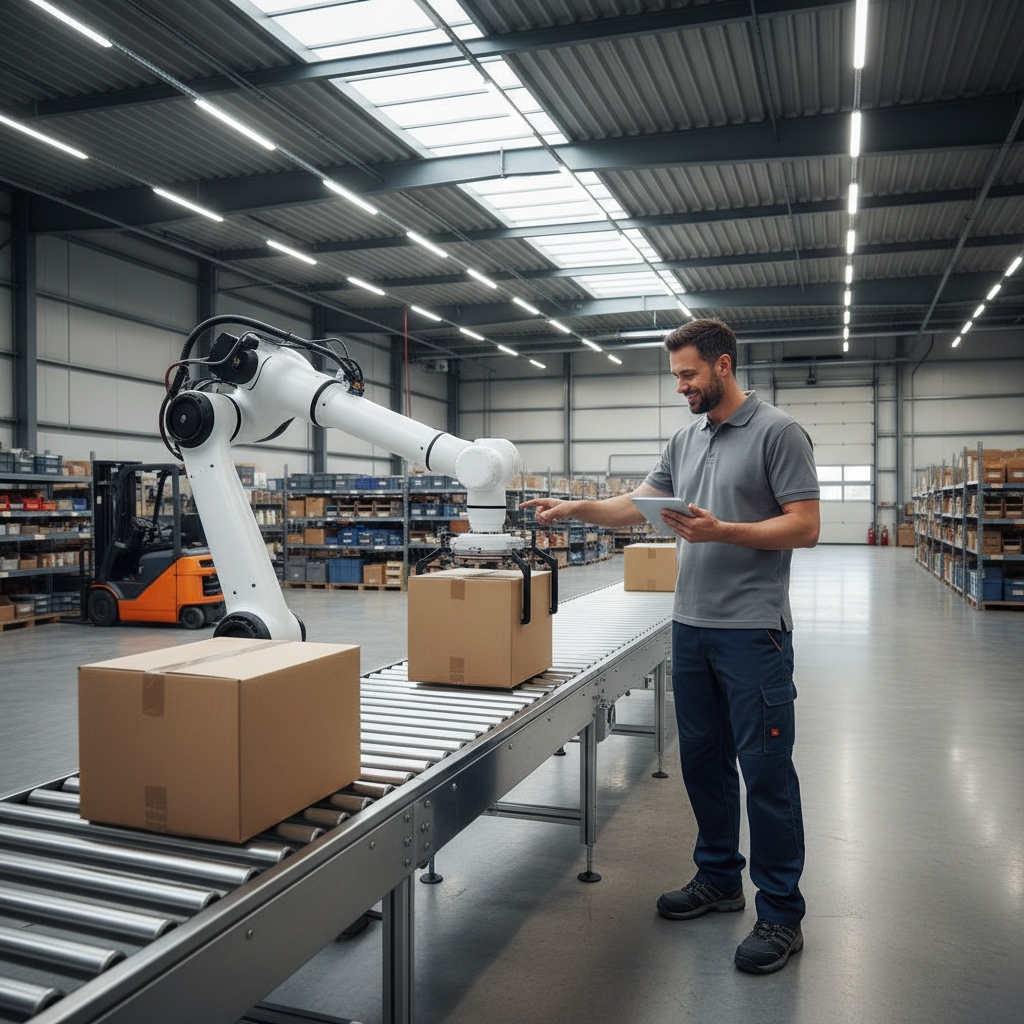
The future of Benelux intralogistics lies in the powerful synergy between AI-driven robots and modular conveyor systems. This integration creates highly flexible, scalable, and efficient warehouse operations to combat rising e-commerce demands and labour scarcity.
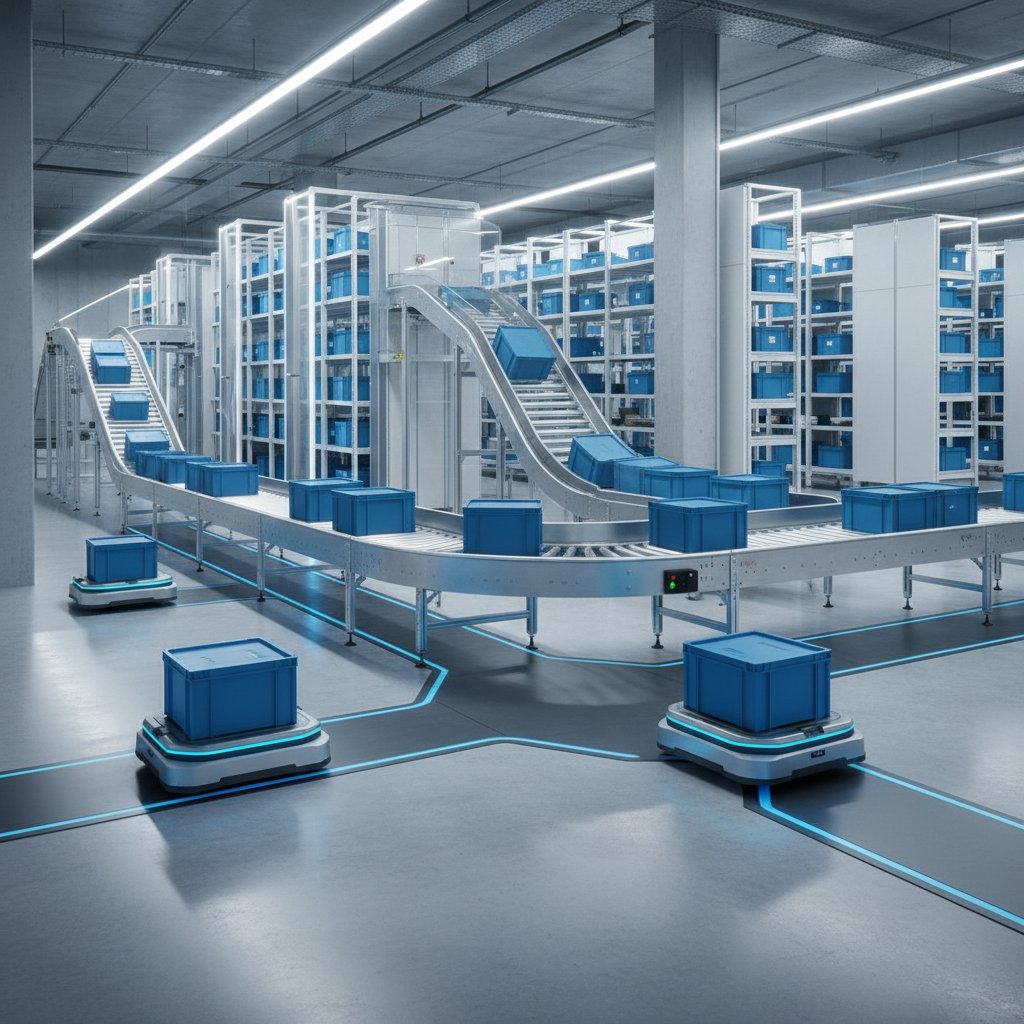
Warehouses across the Benelux region are at a critical juncture. The relentless growth of e-commerce, coupled with severe labour shortages and some of the highest land prices in Europe, has created a perfect storm. To navigate these challenges, forward-thinking logistics managers are looking beyond traditional automation. They are discovering that the future of intralogistics is not about a single piece of technology, but about the intelligent, seamless integration of AI-driven robotics and highly adaptable modular conveyor systems. This combination is redefining what’s possible inside the four walls of the modern distribution center.
Definition
Integrated intralogistics refers to the paradigm of creating a single, cohesive material handling ecosystem by combining AI-powered autonomous mobile robots (AMRs) with modular conveyor systems. This fusion moves beyond siloed automation, enabling a fluid, data-driven flow of goods that dynamically adapts to real-time operational demands, from receiving to shipping.
The Benelux Challenge: Labour, Land, and Speed
The logistics landscape in Belgium, the Netherlands, and Luxembourg is unique. As a premier European logistics hub, the region faces intense pressure. E-commerce demand continues to surge by 10-15% annually, drastically increasing order volumes and the need for speed and accuracy. Simultaneously, attracting and retaining warehouse staff has become a primary operational challenge, pushing labour costs upwards.
Compounding this is the scarcity and cost of industrial land. Prime logistics real estate near major hubs like Antwerp, Rotterdam, and Venlo can command prices upwards of €750 per square meter. This financial reality makes it imperative to maximize the productivity of every square meter. Traditional, sprawling, and inflexible automation systems are no longer a viable long-term solution. The strategic imperative is to build up, not out, and to create systems that can be easily scaled and reconfigured—a challenge perfectly addressed by integrated, modular solutions.
The Power Couple: AI Robots meet Modular Conveyors
Viewing AMRs and conveyors as competing technologies is a common misconception. In reality, their true power is unleashed when they work in concert. Think of it as a city's transport network: modular conveyors act as the high-capacity, efficient motorways for goods, while AI-robots are the intelligent, flexible vehicles that handle the last-mile delivery to and from these main arteries.
- Modular Conveyors: These systems, often using 24V DC motorized rollers, provide the backbone for high-volume transport over fixed paths. They excel at moving large quantities of totes, boxes, or pallets from A to B—for example, from the receiving dock to a central storage zone, or from a picking area to packing and shipping. Their modularity allows for easy extension and modification.
- AI-Driven Robots (AMRs): Autonomous Mobile Robots are the agents of flexibility. They navigate dynamically, without the need for fixed infrastructure like wires or magnetic tape. They are ideal for tasks requiring complex decision-making and movement, such as retrieving a specific storage tote for a "goods-to-person" picking station, moving finished orders to a consolidation point, or handling returns.
In an integrated system, a Warehouse Management System (WMS) or Warehouse Control System (WCS) dispatches tasks. A tote might travel 100 meters on a high-speed roller conveyor, then be picked up by an AMR for the final 10-meter journey to a specific picker. This synergy ensures that each technology is used for what it does best, creating a system that is far more efficient and flexible than the sum of its parts.
System Components: A Closer Look
Building an integrated system requires a clear understanding of the core components and their capabilities.
Autonomous Mobile Robots (AMRs)
Unlike their predecessors, Automated Guided Vehicles (AGVs), which follow fixed paths, AMRs use technologies like SLAM (Simultaneous Localization and Mapping) to navigate a facility dynamically. If an obstacle is in their path, they can intelligently route around it. This makes them ideal for the fluid environment of a modern warehouse. Typical AMRs used in these integrated systems can handle payloads from 100 kg to 500 kg and travel at safe speeds of 1-2 m/s, collaborating with human workers.
Modular Conveyor Systems
The "modular" aspect is key. These systems are built from standardized sections—straight modules, curves, mergers, and diverts—that can be assembled and reconfigured like building blocks. Modern systems often use motorized 24V DC rollers (MDR), which offer quiet, safe, and energy-efficient operation. A key benefit is "zero pressure accumulation," allowing items to be buffered along the conveyor without contact, preventing damage and managing flow to downstream processes like robotic palletizing or AMR pickup points.
Comparing Traditional vs. Integrated Systems
The shift to an integrated model represents a fundamental change in automation philosophy. The following table highlights the key differences for a typical Benelux distribution center:
| Feature | Traditional Siloed Automation | Integrated AI-Robot-Conveyor System |
|---|---|---|
| Flexibility | Low. Fixed infrastructure, difficult to change workflows. | High. Workflows are software-defined; AMRs and modular conveyors can be easily redeployed. |
| Scalability | Difficult and expensive. Requires major redesign and downtime. | Excellent. Add more robots or conveyor modules incrementally as volume grows. Start with 10 robots, scale to 100. |
| Throughput | Static. Capped by the design of the fixed system. | Dynamic. Can be boosted for seasonal peaks by adding more robots; up to 300% increase in picking efficiency. |
| Implementation Time | Long (18-24 months). Requires significant structural changes. | Shorter (6-12 months). Phased implementation is possible, less invasive to the building. |
| ROI Horizon | Longer (5-7 years). High initial CAPEX. | Shorter (2-3 years). Lower entry cost and ability to scale investment with returns. |
Implementation Roadmap for Benelux Warehouses
Adopting an integrated system is a strategic project that requires careful planning. A phased approach is highly recommended to manage risk and ensure success.
- Process Analysis & Data Collection: The first step is a deep dive into your current operations. Analyze order profiles, SKU velocity, and material flow. Identify the key bottlenecks. This data is the foundation for a successful design. How many picks per hour? What are the average travel times?
- Conceptual Design & Simulation: Using the collected data, model a future-state workflow. Simulation software can demonstrate how AMRs and conveyors would interact, predicting throughput, potential congestion points, and the required number of assets (robots, conveyor meters).
- Pilot Program: Don't try to automate everything at once. Start with a single, well-defined process. Goods-to-person picking or returns handling are excellent candidates for a pilot program. This allows your team to gain experience and demonstrate value quickly.
- Phased Rollout & Integration: Once the pilot is successful, develop a roadmap for a facility-wide rollout. This involves deep integration with your WMS. A robust Warehouse Control System (WCS) is essential to act as the "air traffic controller," orchestrating tasks between the WMS, the robots, and the conveyor hardware.
The Role of Data and AI: Beyond Movement
The "AI" in AI-driven robots is about more than just navigation. The true long-term benefit comes from the data these integrated systems generate. Every movement, every task, and every delay creates a data point. A sophisticated WCS or overarching AI layer can use this information for:
- Predictive Maintenance: The system can predict when a conveyor motor or a robot wheel needs service based on usage and sensor feedback, preventing costly unplanned downtime.
- Dynamic Slotting: By analyzing real-time picking data, the AI can recommend moving fast-selling items to more accessible locations to minimize robot travel time, continuously optimizing the warehouse layout.
- Workload Balancing: The system can intelligently distribute tasks among picking stations or zones to prevent bottlenecks and ensure a smooth, consistent operational flow, even during demand spikes.
Why Easy Systems is Your Partner for Future-Proof Automation
The successful fusion of AI robotics and modular conveyors is not just a hardware challenge; it's an integration and software challenge. Choosing an integration partner with deep expertise in both domains is critical to unlocking the full potential of your investment. A partner must understand material flow, the physical constraints of a building, and the complex software layer that makes it all work together seamlessly. This is where a specialist integrator becomes invaluable. They can analyze your unique operational DNA and design a system that is not only efficient from day one but also flexible and scalable for the future. For Benelux companies embarking on this journey, collaborating with a seasoned expert is the first step towards building a truly resilient and competitive intralogistics operation. To explore how modular conveyor solutions form the backbone of these advanced systems, you can find foundational knowledge and product insights at Easy Systems, a leader in adaptable material handling technology.
This article is part of the Conveyor-Design knowledge hub, edited by Easy Systems engineers who design conveyor and warehouse automation systems across the Benelux every week.
Frequently asked questions
What is the typical ROI for integrating AMRs and modular conveyors?+
The typical Return on Investment (ROI) for an integrated AMR and conveyor system is between 2 to 3 years. This is faster than traditional heavy automation due to lower initial costs, phased implementation, and immediate gains in throughput and labour efficiency.
Can these systems be retrofitted into an existing Benelux warehouse?+
Yes, absolutely. One of the main advantages of this integrated approach is its suitability for retrofitting. Modular conveyors are less invasive than traditional systems, and AMRs require minimal infrastructure changes, making them ideal for upgrading existing facilities without major structural alterations.
How many robots and how much conveyor do I need?+
The exact number depends entirely on your specific operational data: order volume, number of SKUs, warehouse size, and desired throughput. A thorough data analysis and simulation phase is essential to accurately determine the required assets for an optimal and cost-effective design.
What is the role of a Warehouse Control System (WCS) in this setup?+
The WCS acts as the brain or 'air traffic controller' of the operation. It sits between your Warehouse Management System (WMS) and the physical hardware, translating business rules into specific tasks and directing the robots and conveyors in real-time to execute the material flow efficiently.